


 Whatsapp :
 Home
HomeHow Many Amps Does a 550-Watt Solar Panel Produce? A Definitive Guide to Solar Performance & The Sunchees Advantage
 Aug 25,2025
 0
0
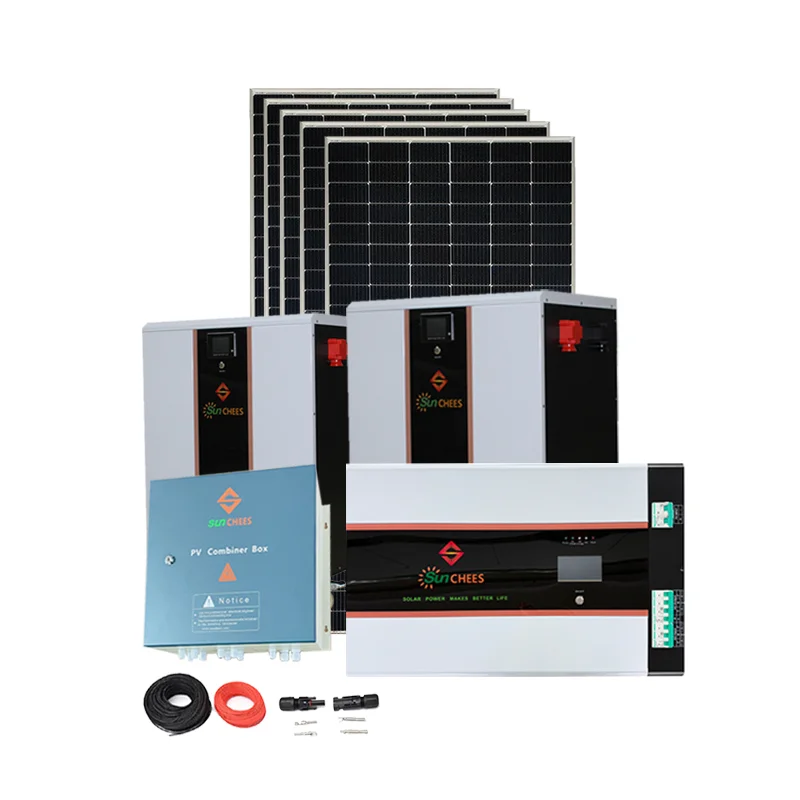
 sunchees solar system
How Many Amps Does a 550-Watt Solar Panel Produce? A Technical and Practical Breakdown
The question of how many amps a solar panel produces is fundamental to understanding a solar power system's performance. The amps, or current, represent the flow of electrical charge that the panel generates, which is then used to power devices or charge batteries. While a quick calculation can provide a theoretical number, a comprehensive understanding requires a deeper look into the technical specifications and real-world factors that influence a panel's output.
A simplified way to calculate the amps is by using the fundamental relationship between power, voltage, and current, known as Ohm's Law. This law states that power (P) in watts is the product of current (I) in amps and voltage (V) in volts, which can be expressed as: P=V×I. Therefore, to find the current, one can rearrange the formula to: I=P/V. For a 550-watt panel, a simple calculation would involve dividing 550 watts by an assumed voltage. However, this method only provides an idealized value and does not account for the complexities of a solar panel's operation.
Deeper Insights: Unpacking Solar Panel Specifications & The Reality of Performance
To truly determine how many amps a solar panel produces, it is necessary to examine the specific electrical parameters provided in its datasheet. These values are measured under controlled, standardized conditions and are essential for accurate system design.
Understanding the Technical Specs: Imp vs. Isc and Vmp vs. Voc
Solar panel datasheets provide four key electrical parameters that define its performance:
-
Open Circuit Voltage (Voc): This is the maximum voltage the panel can produce when there is no electrical load connected, meaning no current is flowing. This is a theoretical maximum voltage value.
-
Short Circuit Current (Isc): This is the maximum current the panel can produce when its positive and negative terminals are shorted together. Similar to Voc, this is a theoretical maximum current value.
-
Voltage at Maximum Power (Vmp): This is the voltage at which the panel operates most efficiently to generate its maximum power output.
-
Current at Maximum Power (Imp): This is the current the panel produces when operating at its maximum power point.
The actual maximum power of a solar panel, denoted as Pmax, is the product of its voltage and current at the point of peak efficiency, expressed as: Pmax=Vmp×Imp. The nominal rated wattage of a panel, such as 550W or 600W, corresponds to this Pmax value.
While the Isc represents the absolute maximum current the panel can theoretically produce, the most relevant number for real-world application and system design is the Imp, as this is the current the panel will typically deliver under optimal operating conditions. For example, the Sunchees XTL-600 monocrystalline solar panel, which has a rated power of 600W, has a specified Imp of 14.30A and a Vmp of 43.32V. A quick calculation confirms that its maximum power output is indeed 43.32V×14.30A, which equals approximately 619.36W. This specific example highlights that the actual current output is determined by the panel's design and is not a simple division of its wattage by an arbitrary voltage.
The Importance of Standard Test Conditions (STC)
All the electrical parameters listed on a solar panel's datasheet, including Voc, Isc, Vmp, and Imp, are measured under "Standard Test Conditions" (STC). These conditions are a set of uniform parameters used by manufacturers to ensure fair and consistent performance comparisons between different products. The three core conditions for STC are:
-
An irradiance (light intensity) of 1000 watts per square meter, which is equivalent to the intensity of direct midday sun.
-
A module temperature of 25°C (77°F).
-
An air mass (AM) of 1.5, which is a standardized solar spectrum.
The values on a datasheet, therefore, represent the peak performance of a solar panel in an ideal, controlled environment. In the real world, a solar panel will rarely operate at these exact conditions, which means its actual power and current output will almost always be less than the STC rating. Understanding this is crucial for managing expectations and accurately projecting system performance.
Factors That Affect a 550-Watt Solar Panel's Output in the Real World
Beyond the standardized test conditions, several environmental and physical factors directly influence a solar panel's current output and overall efficiency.
-
Sunlight Intensity and Tilt: The amount of amps a panel produces is directly proportional to the intensity of the sunlight, also known as irradiance. On a cloudy or hazy day, the irradiance is significantly lower than 1000 W/m², leading to a reduced current output. Furthermore, the angle at which the sun's rays strike the panel's surface, or its tilt angle, is critical for maximizing energy production throughout the day.
-
Temperature: While it might seem counterintuitive, solar panels become less efficient as their temperature increases. As the panel gets hotter, its voltage output decreases, which in turn reduces the overall power output, even if the current slightly increases. This means a panel will perform more efficiently on a cool, sunny day than on a hot one with the same level of sunlight.
-
Shading and Soiling: This is one of the most critical and often overlooked factors affecting a solar panel's performance. The cells within a solar panel are wired in a series string. The power output of this entire string is limited by its weakest cell. If even a small portion of a single cell is shaded by a tree branch, a chimney, or even a bird dropping, it can have a disproportionate and dramatic effect on the entire panel's output. For instance, shading a single cell can cause the panel's power output to drop by 50% or more. This occurs because the shaded cell acts as a bottleneck, reducing the current for all the other cells in the string. To prevent this significant loss of energy, it is essential to ensure panels are installed in a location with minimal shading and to clean them regularly to remove dust, debris, or snow.
Powering Your Future with Sunchees
The complexities of solar panel performance highlight the importance of choosing a complete, reliable system designed for stability and efficiency. Sunchees offers a compelling solution by providing comprehensive solar power systems engineered for seamless integration and long-term performance.
The Sunchees Advantage: Quality, Reliability, and Support
Sunchees has been a global provider of solar energy solutions since 2008, with a strong focus on delivering high-quality, dependable products. A primary differentiator is the company's core technology: the autonomous development of both its inverters and lithium batteries. This approach ensures that all system components are 100% compatible, eliminating the common issues of performance mismatch and reduced stability that can arise from using a combination of different third-party brands. The result is a more stable system with a lower failure rate, providing greater peace of mind for residential and commercial users.
The commitment to quality is reflected in the durability of the products. The Sunchees solar panels come with a 25-year linear power warranty, while the overall system is designed for a lifespan of up to 25 years. Furthermore, the company provides robust, customer-centric support. This includes comprehensive remote installation guidance and, for larger systems (50kW and above), the provision of a free on-site engineer to assist with the installation. The company also offers a delivery guarantee, promising a 5% penalty payment if an order is delayed, and provides regular production updates to customers.
Sunchees System Spotlight: Finding the Perfect Fit
Choosing the right solar power system depends entirely on a user's specific energy needs. Sunchees offers a range of off-grid solar kits that are perfectly configured for various applications, from residential homes to small commercial facilities.
Choosing the Right System: From 10kW to 30kW for Your Home or Business
The following table provides a quick overview of three popular Sunchees off-grid solar systems, detailing their key specifications and typical use cases.
|
Model |
Inverter Power |
Solar Panel Configuration |
Battery Capacity (kWh) |
Annual Generation (approx.) |
Recommended Area |
Typical Application |
|
10kW |
10000W |
9 × 600W (5.4kW) |
17 kWh |
7,000–8,000 kWh |
~25㎡ |
Residential, Cabins, Farms, Off-grid RV |
|
20kW (Split Phase) |
20000W |
24 × 600W (14.4kW) |
40.8 kWh |
24,000–30,000 kWh |
~70㎡ |
Residential Villas, Small Factories, Remote Supply |
|
30kW (Three Phase) |
30000W |
50 × 600W (30kW) |
108 kWh |
22,000–24,000 kWh |
~155㎡ |
Small Factories, Resorts, Off-Grid Communities |
The 10kW off-grid system is an excellent choice for a typical residential home, small shop, or an off-grid cabin. Its compact design and robust battery storage can provide reliable power for daily life and reduce or eliminate dependency on the utility grid.
The 20kW split-phase system is designed for larger residential villas or small factories with higher energy demands. Its increased solar panel capacity and substantial battery bank make it ideal for powering multiple appliances and ensuring a stable power supply in areas with frequent outages.
For more demanding applications like small-scale factories, off-grid resorts, or remote communities, the 30kW three-phase system offers a robust solution. With 50 solar panels and a massive 108 kWh battery bank, it can power high-load equipment, provide silent and clean energy for extended periods, and serve as a reliable alternative to noisy, fuel-dependent generators.
Real-World Applications: Savings and Scenarios
One of the most compelling reasons to invest in a solar power system is the potential for significant financial savings and energy independence. A detailed analysis of a system's generation capacity in relation to average household consumption can provide a clear picture of its value.
How Much Can You Save and How Long Will the Power Last?
Calculating potential savings is straightforward: simply multiply the system's annual electricity production by the average cost of electricity in a given area. Using the average annual generation figures for Sunchees systems, one can project the annual savings and the duration of power independence during an outage.
|
Sunchees System |
Scenario & Typical Daily Load |
Annual Generation (Approx.) |
Annual Savings (Avg. US Rate) |
Battery Backup (Days) |
|
Small Family (20-25 kWh/day) |
7,500 kWh |
$1,100 - $1,700 |
0.7 - 0.8 days |
|
|
Large Family/Small Business (60-70 kWh/day) |
27,000 kWh |
$4,000 - $5,000 |
0.6 - 0.7 days |
|
|
Off-Grid Community/Small Factory (90-100 kWh/day) |
23,000 kWh |
$3,400 - $4,300 |
1.1 - 1.2 days |
These calculations demonstrate the substantial financial benefits of a Sunchees system over its long lifespan. Beyond the monetary savings, the analysis of battery backup duration highlights the true value of an off-grid system: the ability to maintain power and critical operations during grid outages, a feature that provides priceless peace of mind.
How Many Amps Does a Solar Panel Produce? And Other FAQs
-
Q: How many amps does a 550-watt solar panel produce on a cloudy day?
-
A: The current output (Imp) of a solar panel is directly related to the intensity of sunlight. On a cloudy day, the irradiance can be significantly lower than the Standard Test Conditions of 1000 W/m². This will drastically reduce the amp production, sometimes to a fraction of its rated output.
-
-
Q: What is the difference between solar panel amps and volts?
-
A: In simple terms, amps (current) are the rate of flow of electricity, while volts (voltage) are the electrical pressure or force that pushes the current. To use a water analogy, amps are the flow rate (gallons per minute), and volts are the water pressure. Both are necessary to produce power, which is the total work done.
-
-
Q: What does a 10kW Sunchees solar system power?
-
A: A 10kW Sunchees solar system is well-suited for typical residential applications, providing enough power to run a household's essential appliances, lighting, and HVAC systems. It is also an excellent choice for off-grid applications such as cabins, small workshops, or farms.
-
-
Q: What is the lifespan of a Sunchees solar system?
-
A: Sunchees systems are engineered for longevity, with a designed lifespan of up to 25 years. The solar panels themselves come with a 25-year linear power warranty, while the batteries have a 3-year warranty and the inverters have a 2-year warranty.
-
Conclusion
Understanding how many amps a solar panel produces is far more complex than a simple calculation. It requires a detailed appreciation of technical specifications, the influence of real-world environmental factors, and the importance of a well-engineered, integrated system. The analysis shows that a panel's output, whether a 550-watt or Sunchees' 600-watt model, is a dynamic value tied to its operating conditions. By choosing a high-quality, comprehensively designed solution from a reputable provider like Sunchees, users can ensure their solar power system operates at peak efficiency, delivering consistent power and substantial long-term savings. The combination of proprietary technology, robust warranties, and dedicated customer support makes a Sunchees system a reliable investment in energy independence.
 Best Solar Panel Factory in China: 2025 Buyer’s Guide
 You May Also Like



 Tel
Tel
 Email
Email
 Address
6th Floor, Zhonghe Zinan Industrial Park, No. 1 Zinan Changang West Road, Nanzhuang Town, Chancheng District, Foshan City, Guangdong Province. China (Mainland)