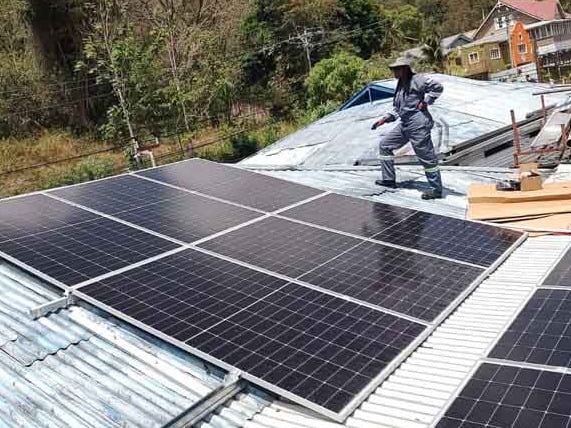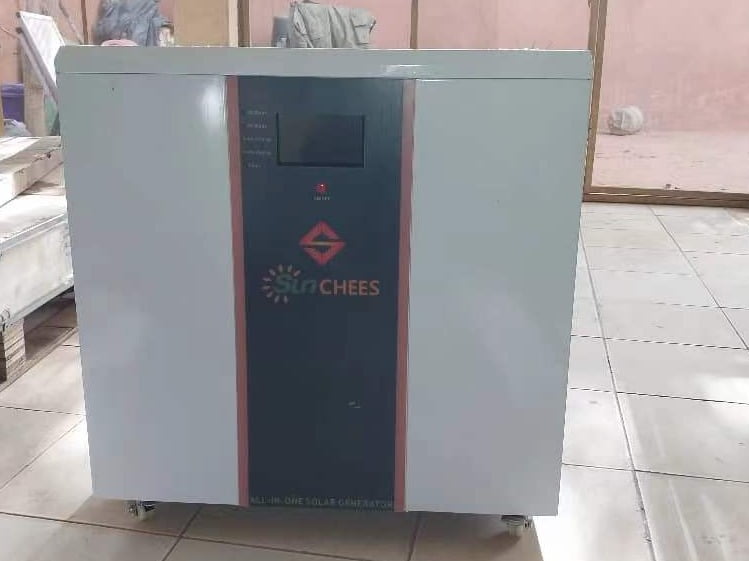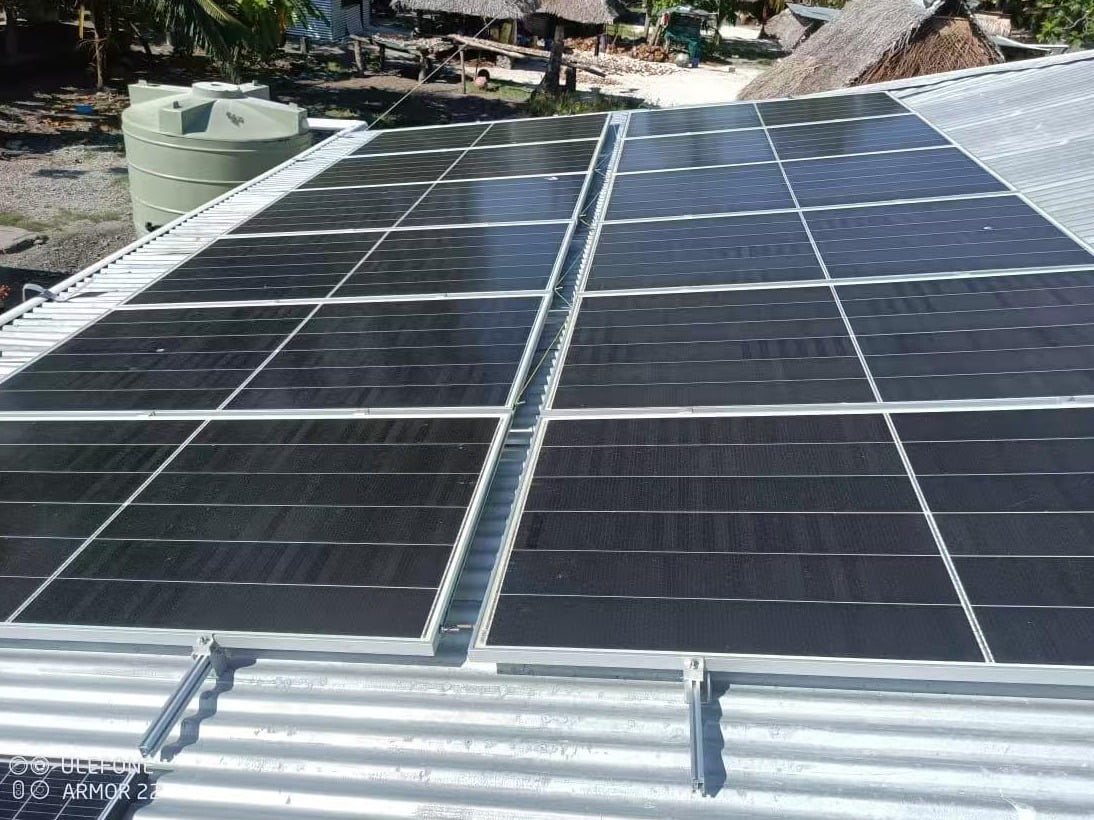
12+ Years OEM/ODM Solar Power System Solutions / Let The World Not Lack Of Electricity


 Whatsapp : +86 13690853732Whatsapp : +86 13690853732
198 kW solar Panel (600 W × 330 panels)
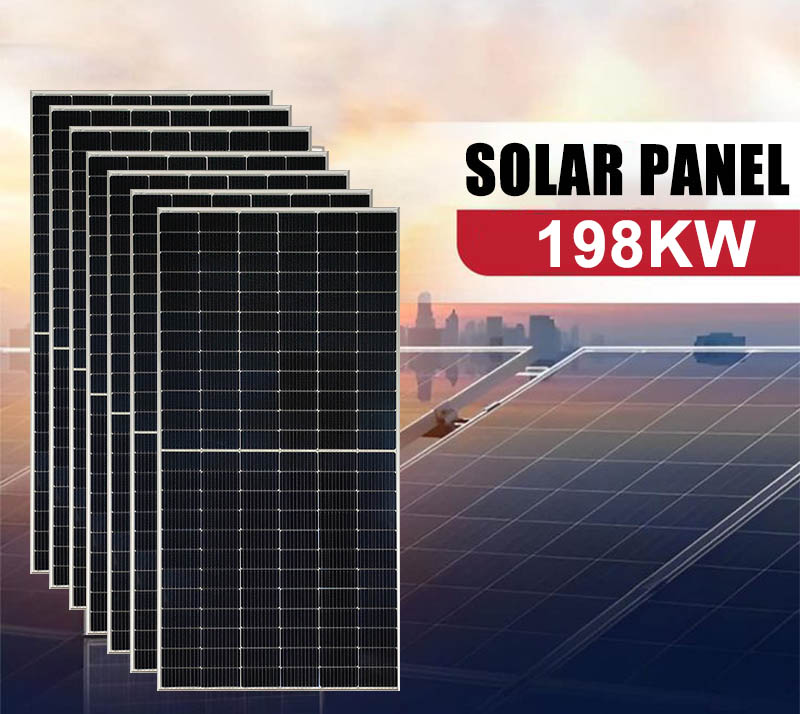
A 200kW solar panel array is a common size for commercial and industrial solar projects. It is suitable for hotels, factories, warehouses, farms, schools, office buildings, commercial buildings, and resorts.
For buyers planning a solar project of this size, the key questions are usually:
This guide focuses on the solar panel array itself. For detailed electrical parameters, mechanical dimensions, temperature coefficients, certifications, and warranty information, please refer to the Specification section on this product page.
|
|
|
|
|
|
|
|
|
|
|
|
|
|
|
|
|
|
|
|
|
|
|
|
|
|
|
|
|
|
|
|
|
|
|
|
This solution uses 330 pieces of 600W high-efficiency monocrystalline solar panels, with a total installed capacity of approximately 198kW. It is commonly classified as an approximately 200kW commercial solar panel array.
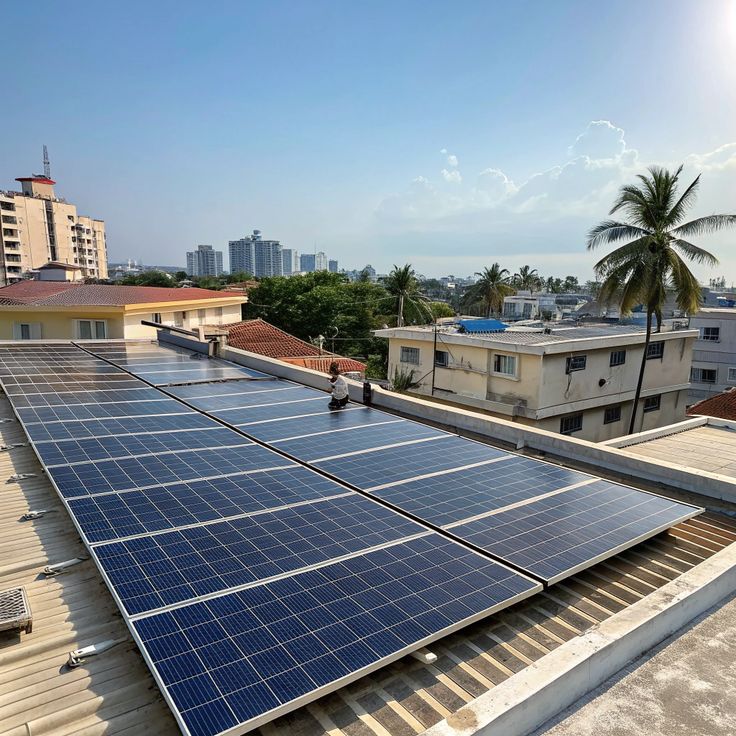
In Caribbean, island, and coastal markets with strong solar resources, this size of solar array can typically generate around 320,000–360,000 kWh of clean electricity per year.
This amount of electricity can usually support:
The number of solar panels depends on the wattage of each module.
|
|
|
|
|
|
|
|
|
|
|
|
|
|
|
Using higher-power solar modules can reduce the total number of panels, mounting structures, cable connection points, and installation workload.
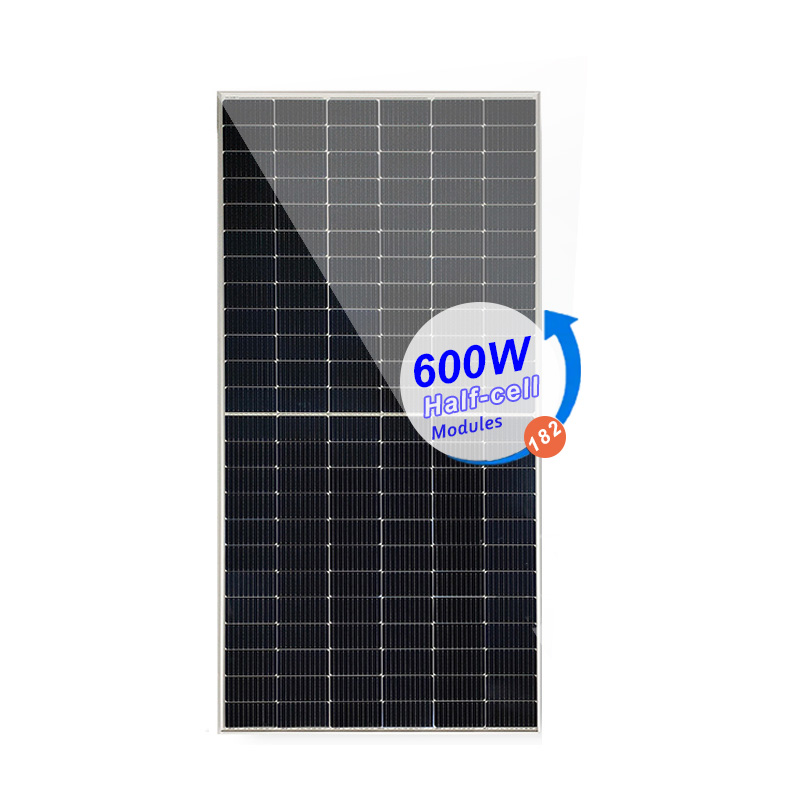
Sunchees’ 200kW solar panel array uses 600W monocrystalline solar modules, so an approximately 200kW solar panel array requires 330 panels.
This product uses 600W monocrystalline solar panels, suitable for commercial, industrial, and large rooftop photovoltaic projects.
|
|
|
|
|
|
|
|
|
|
|
|
|
|
|
|
|
|
|
|
|
|
|
|
|
|
|
For Caribbean hotels, factories, warehouses, and commercial buildings, solar panels need not only high generation efficiency but also the ability to withstand humidity, strong UV exposure, salt mist, and long-term outdoor conditions.
Each 600W solar panel measures:
2115 × 1052 × 40 mm
The area of one module is approximately:
2.23 m²
The net module area of 330 panels is approximately:
330 × 2.23 m² = approx. 736 m²
However, actual installation also needs to consider panel spacing, tilt angle, maintenance pathways, edge clearance, shading avoidance, and site layout.
|
|
|
|
|
|
|
|
|
|
|
|
For commercial rooftop projects, around 900–1,000 m² of usable roof space is usually required to install this approximately 200kW solar panel array properly.
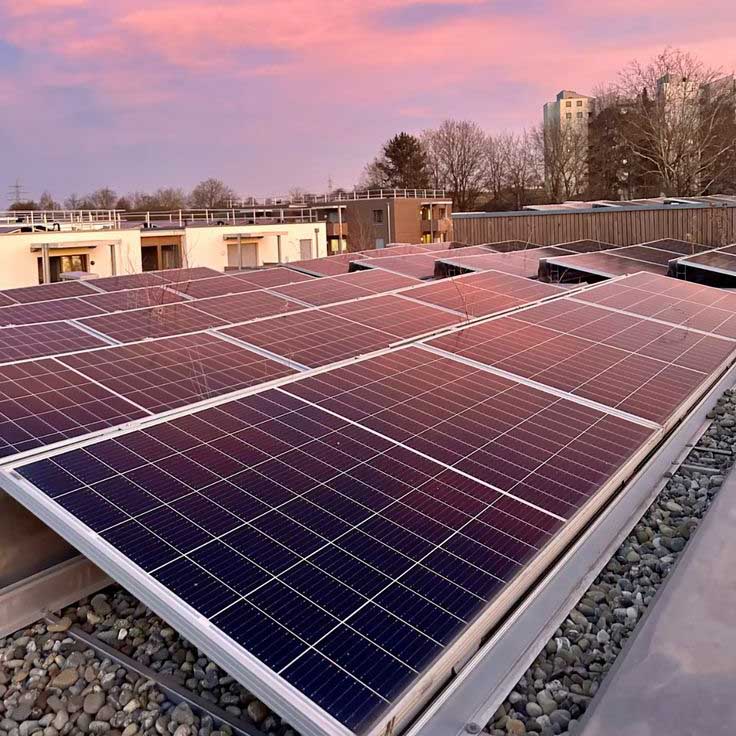
Before planning a solar project, it is important to measure the actual usable roof area, not just the total building footprint.
Common measurement methods include:
Formula:
Usable Roof Area = Total Roof Area − HVAC Equipment Area − Water Tank Area − Skylight Area − Fire Access Path − Shaded Area
For example:
Estimated usable roof area:
1,200 − 120 − 100 − 50 = 930 m²
In this case, the roof can usually meet the installation requirements of an approximately 200kW solar panel array.
For ground-mounted solar projects, both module area and row spacing need to be considered.
Common measurement methods include:
The calculation should consider:
For this solution, although the net module area is approximately 736 m², actual ground-mounted installation usually requires around 1,700–2,100 m² of land to maintain good energy yield and reduce row-to-row shading.
To further evaluate site conditions and solar generation potential, project owners can refer to the following tools and organizations:
For ground-mounted projects, the total required land area is usually larger because row spacing must be reserved to reduce shading.
|
|
|
|
|
|
|
|
|
|
|
|
If the roof area is sufficient and the structure is suitable, rooftop installation is usually the preferred option for commercial projects.
So how can you determine whether a roof is large enough for an approximately 200kW solar panel array?
For this solution, the usable roof area usually needs to be around 900–1,000 square meters. This refers to installable roof area, not the total building area. Equipment rooms, water tanks, elevator rooms, ventilation facilities, fire access paths, and permanently shaded areas should be deducted before calculating the available solar installation area.
As a reference:
Besides area, the following conditions should also be evaluated:
If it is difficult to judge roof suitability accurately, project owners can first use building drawings, roof photos, drone images, or Google Maps satellite images for preliminary evaluation, and then confirm the final installable capacity through an on-site survey.
If the roof area is limited, the structure is unsuitable, shading is severe, or future expansion is required, a ground-mounted solution can be considered.
Each solar panel weighs 20.5 kg, and this system uses 330 panels.
|
|
|
|
|
|
|
|
|
|
|
|
|
|
|
This weight refers only to the solar panels. It does not include mounting structures, cables, cable trays, inverters, electrical cabinets, or other installation accessories.
For rooftop projects, a structural assessment is recommended before installation to confirm roof load capacity, waterproofing conditions, and long-term safety.
Solar energy production depends on several factors, including:
Formula:
Annual Energy = System Capacity × Peak Sun Hours × 365 × Performance Ratio
Based on a 198kW system capacity:
|
|
|
|
|
|
|
|
|
|
|
|
|
|
|
|
|
|
|
|
In the Caribbean, many regions receive around 5.5–6.0 peak sun hours per day, so this approximately 200kW solar panel array can typically generate around 320,000–360,000 kWh per year.
|
|
|
|
|
|
|
|
|
|
|
|
|
|
|
|
|
|
|
|
Caribbean and island markets usually have strong solar resources and relatively high commercial electricity costs, making solar power a practical investment for hotels, factories, warehouses, and commercial buildings.
This 200kW-class solar panel array is suitable for the following applications:
|
|
|
|
|
|
|
|
|
|
|
|
|
|
|
|
|
|
|
|
|
|
|
|
When buyers evaluate a 200kW solar panel project budget, they may be referring to two different cost categories:
If calculating solar panel procurement cost only, pricing is usually based on cost per watt.
Solar Panel Cost = 198,000W × Current Module Price per Watt
The final price may be affected by the following factors:
|
|
|
|
|
|
|
|
|
|
|
|
|
|
|
|
|
|
|
|
|
For Caribbean and island projects, buyers should consider not only module cost but also ocean freight, cargo insurance, export declaration fees, destination customs clearance, import duties and taxes, port handling fees, warehousing charges, local transportation, and installation-related costs.
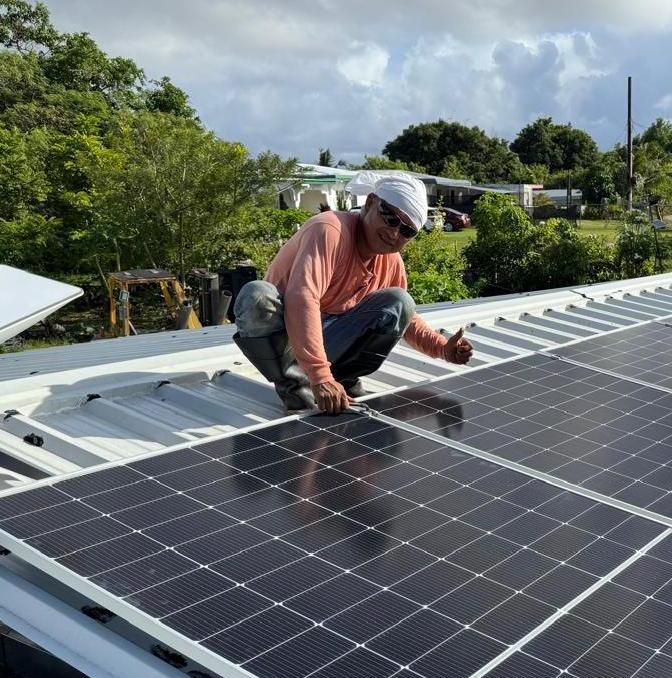
For example, if a project is located in Jamaica and uses Kingston Port as the destination port, the cargo is usually shipped by sea to Kingston, then cleared through customs, collected from the port, and transported locally to the project site. Depending on the project, additional costs may include lifting equipment, on-site construction, electrical works, and grid-connection application fees. The final cost depends on cargo volume, weight, port charges, and the distance from the port to the project location.
|
|
|
|
|
|
|
|
|
|
|
|
|
|
|
|
|
|
|
|
|
|
|
|
|
|
|
|
|
|
|
|
|
|
|
|
Assuming this system generates approximately 340,000 kWh per year and using an emission factor of 0.7 kg CO₂/kWh:
|
|
|
|
|
|
|
|
|
|
|
|
For hotels, factories, warehouses, and commercial buildings, solar power can reduce electricity costs while supporting ESG goals and lowering dependence on fossil fuels or diesel generators.
In the Caribbean, solar support policies vary by country, but many markets have introduced mechanisms to encourage distributed solar power development.
|
|
|
|
|
|
|
|
|
|
|
|
|
|
|
|
|
|
In addition to government policies, many Caribbean solar projects may access green financing from development institutions, green funds, or commercial banks. Potential financing sources include the Caribbean Development Bank, the World Bank Group, the International Finance Corporation, and local financial institutions offering sustainable energy loan programs.
For hotel, resort, factory, and commercial building owners, the following factors should be reviewed when evaluating a solar project:
For hotels and resorts serving international travelers, solar power can do more than reduce long-term operating costs. It can also strengthen green brand positioning and meet the sustainability expectations of customers, investors, and business partners.
More international hotel groups, tour operators, and corporate clients are now paying attention to ESG performance, carbon management, and sustainable procurement standards. In some markets, solar projects can also support ESG reporting, carbon reduction planning, green building certification, and broader sustainability strategies.
If using 600W solar panels, an approximately 200kW solar array requires 330 panels, with a total capacity of approximately 198kW.
Usually, around 900–1,000 m² of usable roof area is required. The exact area depends on roof shape, tilt angle, maintenance pathways, and shading conditions.
The total weight of 330 modules is approximately 6,765 kg, or about 6.8 tons. This includes solar panels only and does not include mounting structures or other installation accessories.
In Caribbean regions or areas with strong solar resources, it can typically generate around 320,000–360,000 kWh per year.
Yes. A 200kW-class solar array is commonly used for hotels, factories, warehouses, commercial buildings, farms, and schools with medium to large electricity demand.
Yes. The panels use an aluminum alloy frame and come with TUV, IEC, and CE certifications, making them suitable for long-term outdoor commercial solar projects.
Yes. Expansion is possible, but available area, inverter capacity, grid-connection conditions, cable sizing, and the overall electrical design should be evaluated in advance.
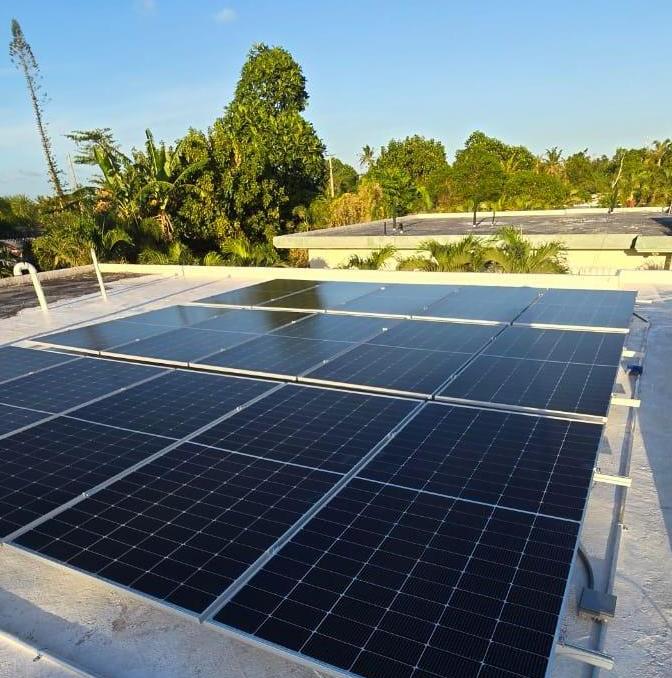
If you are planning a commercial or industrial solar project, you can provide the following information:
|
|
|
|
|
|
|
|
|
|
|
|
|
|
|
|
|
|
|
|
|
Based on this information, Sunchees can help estimate the required panel quantity, installation area, expected annual energy production, equipment configuration, and procurement plan.
Solar Panel Electrical Parameter at STC
|
Maximum Power |
600W |
|
Operating Voltage at Maximum Power |
44.66 V |
|
Operating Current at Maximum Power |
13.44 A |
|
Open Circuit Voltage |
52.81 V |
|
Short Circuit Curent |
14.46A |
|
Module Efficiency |
23.20 |
|
Power Tolerance |
0~+5W W |
*Standard test conditions(STC):airmass AM1.5,irradiance 1000W/m2,cell temperature 25℃.
Electrical Parameter at NOCT
|
Maximum Power |
445W |
|
Operating Voltage at Maximum Power |
40.62V |
|
Operating Current at Maximum Power |
10.97A |
|
Open Circuit Voltage |
49.44V |
|
Short Circuit Current |
11.63A |
Solar panel Data
|
Cell Type |
182Monocrystalline |
|
Number of Cells |
144 pcs(6x24) |
|
Module Dimension |
2279*1134*30mm |
|
Weight |
33kg |
|
Glass |
3.2mm high transmittance,anti-reflection coated tempered glass |
|
Back Sheet |
transparent |
|
Frame |
Anodized aluminum alloy |
|
Junction Box |
Protection degree IP68 |
|
Cable |
4mm区,+400-200MM/±1400MM Photovoltaic dedicated cable |
|
Quantity of diodes |
3 |
|
Wind Load/Snow Load |
2400pa/5400pa |
|
Connector |
Compatible MC4 connector |
Company profile
Sunchees was founded in 2008, head office and factory is located in Foshan, Guangdong. China,but its sales network has spread to more than 100 countries and regions around the world.
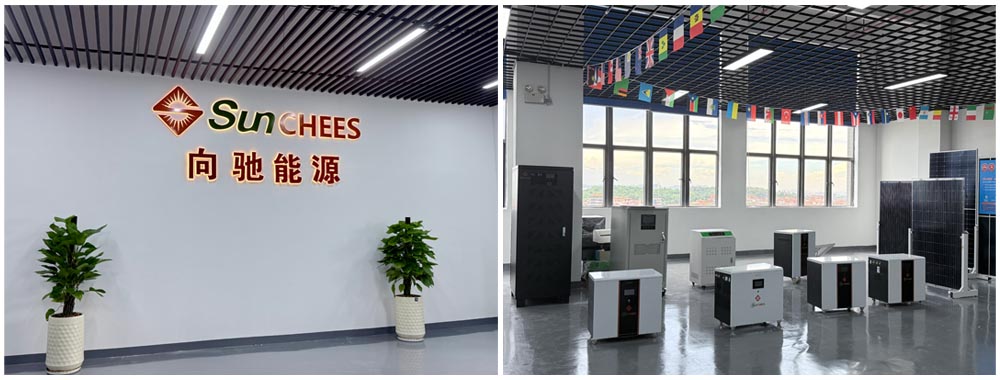
Main business: solar power system one stop solutions, solar inverter , solar air conditioner system, solar street light system . solar DC power system ect .
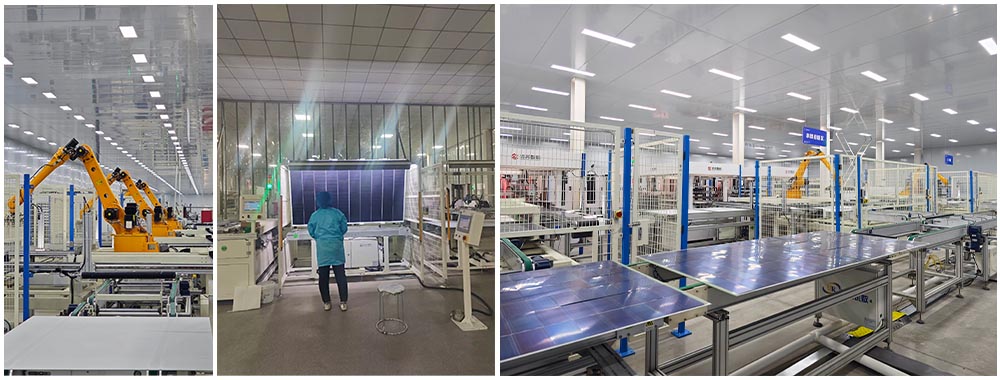
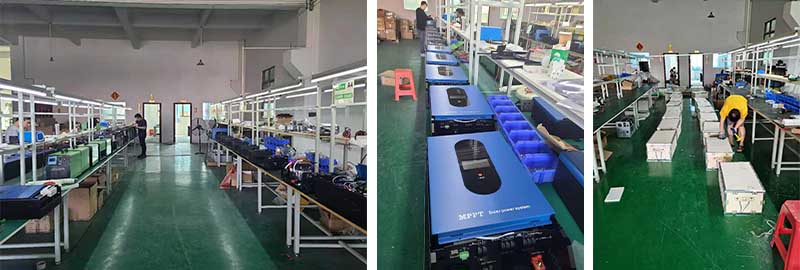
Sunchees products are widely used in home, agriculture, industry, finance, electric power, transportation, security, new energy. Its stable and excellent performance have been widely recognized.


| Parameter Name | Parameter Value |
|---|---|
| Solar Panel - Max power | 600W * 330PCS |
| Solar Panel - Solar Cell | Monocrystalline |
| Solar Panel - Maximum Power Current (IMP) | 13.90A |
| Solar Panel - Output Tolerance | ±3% |
| Solar Panel - MaximumPowerVoltage(VMP) | 39.18V |
| Solar Panel - Open Circuit Voltage(VOC) | 47.40V |
| Solar Panel - Short Circuit Current(ISC) | 14.01A |
| Solar Panel - Temperate coefficient of Isc | 0.05%/℃ |
| Solar Panel - Frame | Aluminum alloy frame |
| Solar Panel - Temperature range | -40℃~ +85℃ |
| Solar Panel - Product Dimension | 2115 * 1052 *40 mm |
| Solar Panel - Weight | 20.5 kg |
| Solar Panel - Certificates | TUV、IEC,CE |
| Solar Panel - Warranty | 25Years |
 Case
Case

 Tel
Tel
 Email
Email
 Address
6th Floor, Zhonghe Zinan Industrial Park, No. 1 Zinan Changang West Road, Nanzhuang Town, Chancheng District, Foshan City, Guangdong Province. China (Mainland)


 Home
Home

 Mar 21,2022