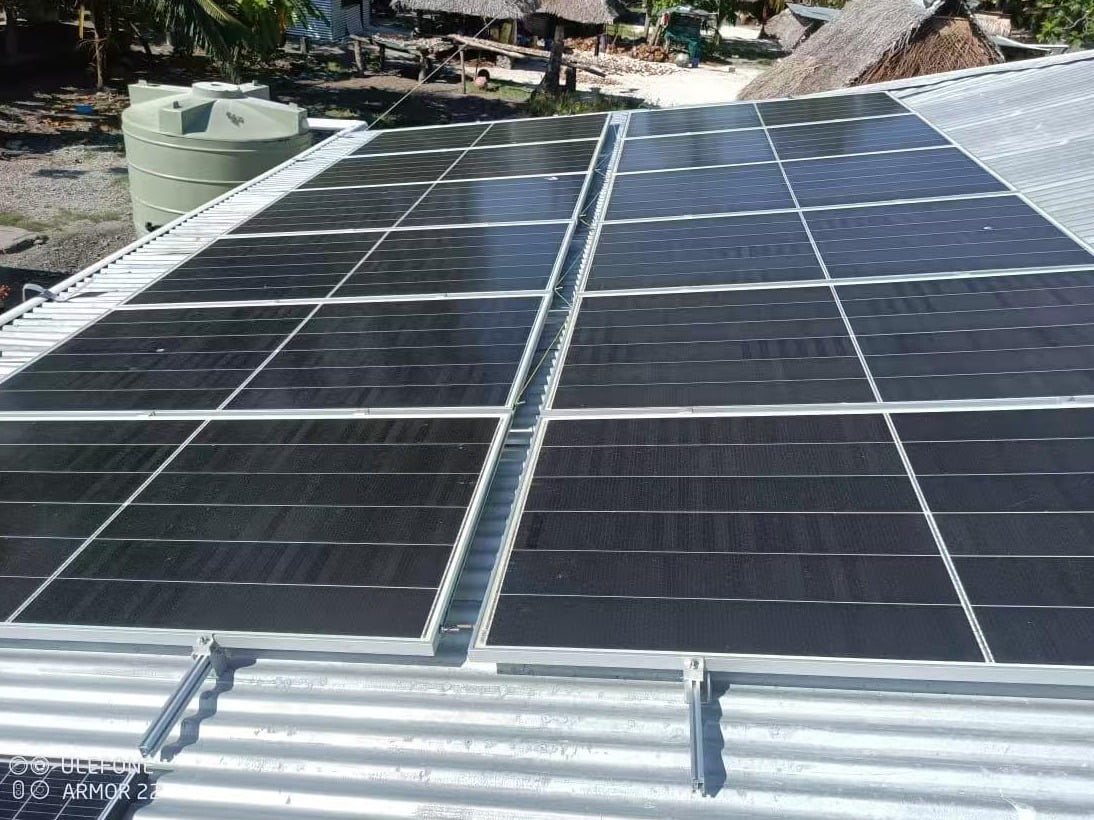
A 480kW solar panel array is a medium-to-large commercial solar project size. It is suitable for commercial and industrial applications with high daytime electricity demand, such as hotels, resorts, factories, warehouses, farms, schools, supermarkets, commercial buildings, and industrial parks.
For buyers planning a solar project of this size, the key questions are usually:
How many solar panels are required?
How much rooftop or land area is needed?
How much does the complete solar panel array weigh?
How much electricity can it generate each year?
Is it suitable for coastal, island, high-temperature, and high-humidity environments?
What technical parameters should be checked before procurement?
This guide focuses on the 480kW solar panel array itself. For detailed electrical parameters, mechanical dimensions, temperature range, certification information, and warranty terms, please refer to the Specification section on this product page.
Using 800 pieces of 600W monocrystalline solar panels, a 480kW solar panel array can provide a large amount of clean electricity for commercial and industrial projects. In the Caribbean, island markets, tropical coastal regions, and other locations with strong solar resources, this size of solar array can typically generate approximately 770,000–890,000 kWh per year. The actual energy output depends on project location, solar irradiation, installation angle, shading, temperature, inverter configuration, system efficiency, and maintenance conditions.
This amount of energy can typically support:
Part of the daytime electricity demand of large hotels or resorts
Daytime production loads for small and medium-sized factories
Lighting, ventilation, office loads, cold storage, or equipment use in warehouses
Public-area electricity demand for schools, hospitals, supermarkets, and commercial buildings
Agricultural electricity applications such as water pumps, cold rooms, and processing equipment
Under strong peak sunlight conditions, a 480kW solar panel array can produce close to 480kW of DC power.
How Many Solar Panels Are Needed for a 480kW Solar Array?
The number of solar panels depends on the power rating of each module.
For this product configuration:
480kW = 480,000W 480,000W ÷ 600W = 800 panels
Therefore, a complete 480kW solar panel array requires approximately 800 pieces of 600W solar panels.
Solar Panel Power
Quantity Required for 480kW
450W
Approx. 1,067 Panels
550W
Approx. 873 Panels
600W
800 Panels
700W
Approx. 686 Panels
Using higher-power solar modules can reduce the total number of panels, while also reducing the quantity of mounting structures, cable length, electrical connection points, and installation labor.
For commercial solar projects, 600W monocrystalline solar panels provide a practical balance between panel quantity, installation efficiency, procurement cost, and project construction convenience.
What Type of Solar Panel Is Used for a 480kW Solar Array?
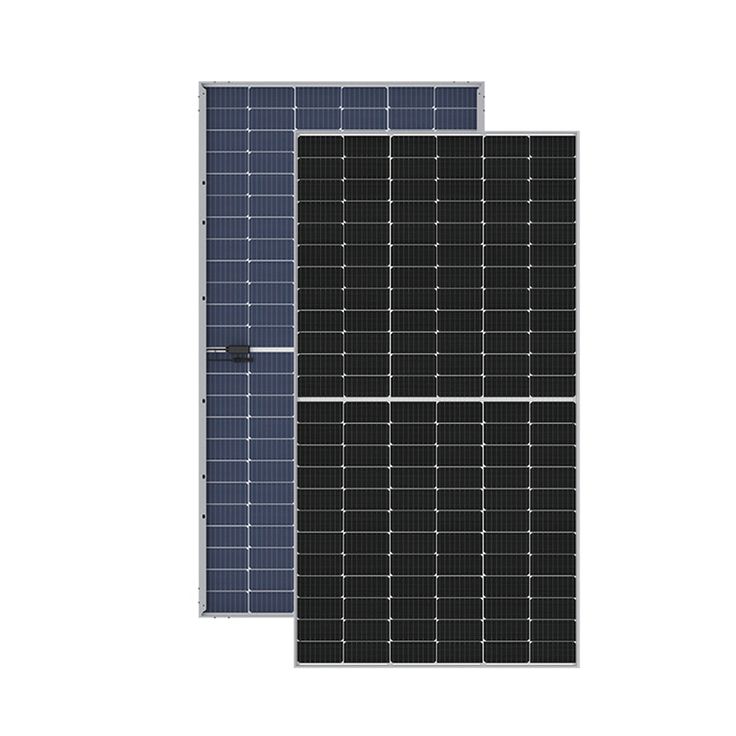
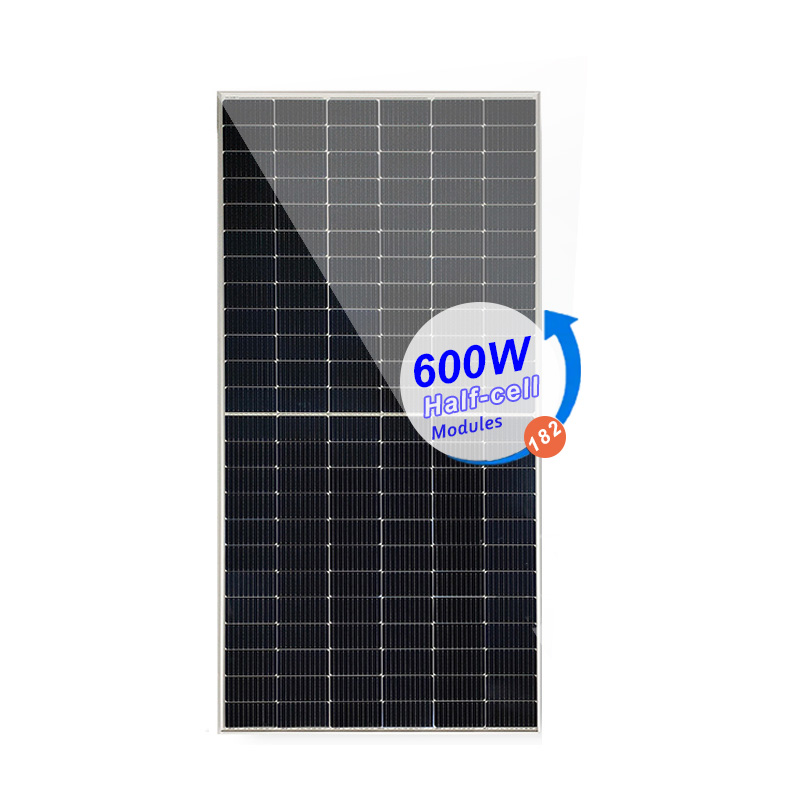
This 480kW solar panel array uses 600W monocrystalline solar panels.
Monocrystalline solar panels are commonly used in commercial and industrial solar projects because they provide higher power output and better long-term energy performance. They also allow more solar capacity to be installed within limited rooftop or land area.
Solar Panel Technical Description
The detailed technical parameters, size specifications, certification information, and warranty conditions of the 600W monocrystalline solar panels used in this solution are listed in the product specification section of this page. Buyers can directly refer to the corresponding parameter table for complete product data.
Why Choose 600W Monocrystalline Solar Panels?
Product Feature
Project Value
600W High Power Output
Fewer panels are required for the same array capacity
Monocrystalline Solar Cells
Helps improve power generation per square meter and long-term energy performance
Aluminum Alloy Frame
Enhances structural strength for outdoor installation
-40℃ to +85℃ Temperature Range
Suitable for hot, cold, and temperature-variable regions
±3% Output Tolerance
Helps buyers understand the possible output range
TUV, IEC, CE Certifications
Supports international project procurement and compliance requirements
25-Year Warranty
Suitable for long-term commercial solar investment
For hotels, factories, warehouses, farms, resorts, and commercial buildings, solar panels need to operate outdoors for many years under high temperature, strong sunlight, humidity, wind, rain, and dust. Therefore, module power, structural strength, certifications, and warranty terms should all be confirmed before procurement.
How Much Area Is Required for a 480kW Solar Panel Array?
Each 600W solar panel measures 2115 × 1052 mm.
Single panel area:
2.115 m × 1.052 m = approx. 2.225 m²
Net area for 800 panels:
2.225 m² × 800 panels = approx. 1,780 m²
However, the actual installation area cannot be calculated only based on the panel surface area. It must also include module spacing, maintenance walkways, roof edge clearance, tilt angle, layout design, front-row and back-row shading distance, and site conditions.
Installation Type
Area Required
Net Module Area
Approx. 1,780 m²
Rooftop Installation Area
Approx. 1,950–2,150 m²
Ground-Mounted Installation Area
Approx. 3,600–4,500 m²
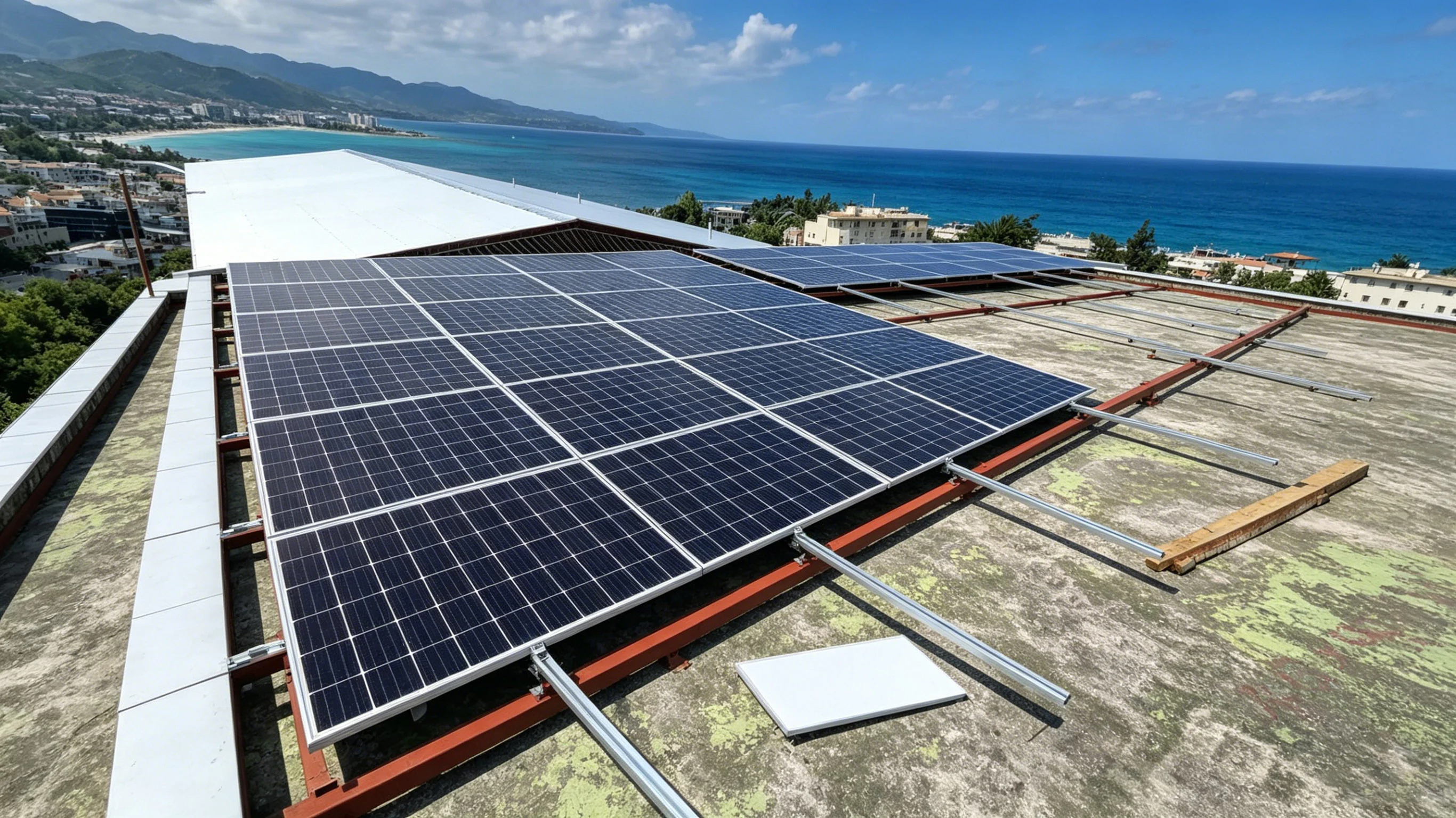
For most commercial rooftop projects, installing a 480kW solar panel array usually requires approximately 1,950–2,150 m² of usable rooftop area.
For ground-mounted projects, more land area is required because sufficient spacing must be left between panel rows to reduce shading and allow convenient maintenance access.
480kW Rooftop Installation vs Ground-Mounted Installation
Uses existing rooftop space and reduces land occupation
Ground-Mounted Solar Array
Farms, industrial parks, open land, large-scale projects
More flexible layout, easier maintenance, and easier future expansion
If the building has enough rooftop area, suitable structural load capacity, and limited shading, rooftop installation is usually the preferred option.
If the roof area is insufficient, the structure is not suitable, shading is serious, or the rooftop needs to be reserved for other equipment, ground-mounted installation may be more suitable. For farms, industrial parks, and large open-land projects, ground-mounted systems are also easier to maintain and expand in the future.
How Much Does a 480kW Solar Array Weigh?
Using 800 pieces of 600W solar panels, the total module weight is approximately 16.4 tons.
Item
Value
Weight per Panel
20.5 kg
Panel Quantity
800 Panels
Total Module Weight
16,400 kg
Equivalent Weight
Approx. 16.4 Tons
This calculation only includes the weight of the solar panels themselves. It does not include mounting structures, rails, clamps, cables, cable trays, inverters, combiner boxes, protection devices, or other installation accessories.
For rooftop projects, a structural assessment is recommended before installation to confirm whether the building roof can support the long-term additional load of the solar system.
Typical Additional Roof Load Reference
The final roof load depends on roof type, mounting method, wind resistance requirements, and whether ballast blocks are used.
Roof / Mounting Type
Typical Additional Load
Metal Roof
Approx. 15–25 kg/m²
Concrete Flat Roof with Ballast
Approx. 30–60 kg/m²
Concrete Flat Roof with Anchoring
Approx. 20–35 kg/m²
For newer industrial buildings, warehouses, and commercial buildings, a 480kW solar array is usually feasible if the roof structure is properly designed.
For older buildings, lightweight roofs, wooden structures, or roofs with corrosion problems, an engineering assessment must be carried out before installation.
300kW vs 480kW vs 500kW Solar Panel Array
Item
300kW
480kW
500kW
600W Panel Quantity
500 Panels
800 Panels
834 Panels
Net Module Area
Approx. 1,112 m²
Approx. 1,780 m²
Approx. 1,856 m²
Rooftop Installation Area
Approx. 1,200–1,335 m²
Approx. 1,950–2,150 m²
Approx. 2,000–2,230 m²
Total Module Weight
Approx. 10.25 Tons
Approx. 16.4 Tons
Approx. 17.1 Tons
Daily Energy Yield in High-Sun Regions
Approx. 1,350–1,550 kWh
Approx. 2,100–2,450 kWh
Approx. 2,200–2,550 kWh
Typical Applications
Medium-Sized Hotels / Factories
Large Hotels / Factories / Warehouses
Industrial Parks / Large Commercial Facilities
A 480kW solar panel array is close to the 500kW commercial solar project range. This solution uses 800 pieces of 600W solar modules, with a total installed capacity of 480kW. The panel quantity is simple and organized, making procurement, shipping, and project configuration management easier. It is suitable for factories, warehouses, farms, hotels, and other applications that require large commercial solar capacity.
How Much Electricity Can a 480kW Solar Panel Array Generate Each Year?
Solar power generation is affected by peak sun hours, system efficiency, installation orientation, shading, temperature, inverter efficiency, dust, and maintenance conditions.
Estimated formula:
Annual Energy = System Capacity × Peak Sun Hours × 365 × Performance Ratio
For a 480kW solar array:
Peak Sun Hours
PR 80%
PR 85%
4.5 Hours
Approx. 630,720 kWh
Approx. 670,140 kWh
5.0 Hours
Approx. 700,800 kWh
Approx. 744,600 kWh
5.5 Hours
Approx. 770,880 kWh
Approx. 819,060 kWh
6.0 Hours
Approx. 840,960 kWh
Approx. 893,520 kWh
In the Caribbean, island markets, tropical coastal regions, the Middle East, Africa, Southeast Asia, and other markets with strong solar resources, many projects can use 5.5–6.0 peak sun hours as an initial estimate. Therefore, a 480kW solar panel array can typically generate approximately 770,000–890,000 kWh per year.
From a practical application perspective, this level of electricity generation can support many types of commercial and industrial electricity demand. For example:
It can cover the annual electricity use of approximately 150–300 average households, depending on local household electricity consumption.
It can provide major power support for a hotel with around 80–200 rooms, covering a large portion of electricity demand for air conditioning, lighting, hot water systems, and public areas.
It can support the daily operation of small and medium-sized factories, food processing plants, cold storage facilities, warehouse centers, agricultural irrigation projects, or commercial complexes.
For office buildings, schools, hospitals, resorts, and shopping centers, it can significantly reduce electricity purchased from the grid.
If the project location has continuous sunny days and is equipped with a properly sized battery energy storage system, excess daytime solar power can be stored for nighttime use, further increasing the project’s energy self-sufficiency rate. In some island, remote-area, mining, farming, and off-grid community projects, a 480kW solar array combined with a battery energy storage system and backup generator can achieve a high level of off-grid operation. If the storage capacity is sufficient and the load is properly matched, it may even support long-term independent power supply.
From an economic perspective, if the local commercial electricity price is USD 0.10–0.20/kWh, a 480kW solar array generating approximately 770,000–890,000 kWh per year may help save around USD 77,000–178,000 in electricity costs annually. For island countries, tourism resort areas, or diesel-generation regions with higher electricity prices, the actual savings may be higher, and the project payback period can be significantly shortened.
480kW Solar Performance Reference for Caribbean and Coastal Markets
Country / Region
Estimated Peak Sun Hours
Estimated Annual Energy Production
Jamaica
Approx. 5.5–6.0 Hours
Approx. 770,000–890,000 kWh
Bahamas
Approx. 5.5 Hours
Approx. 770,000–820,000 kWh
Barbados
Approx. 5.5–5.8 Hours
Approx. 770,000–860,000 kWh
Dominican Republic
Approx. 5.3–5.7 Hours
Approx. 745,000–850,000 kWh
Other Coastal Commercial Projects
Depends on Specific Location
Project-Specific Calculation Required
Several commercial and utility-scale solar projects close to or above the 500kW range have already been built in the Caribbean. For example, Barbados has developed multiple solar power projects ranging from hundreds of kilowatts to several megawatts in recent years. Jamaica’s Paradise Park Solar Farm, with a capacity of around 51MW, is one of the representative large-scale solar PV projects in the Caribbean. The Cayman Islands, Aruba, and the Bahamas have also developed commercial solar systems ranging from hundreds of kilowatts to several megawatts for hotels, resorts, airports, warehouse facilities, and public utility projects.
From a return-on-investment perspective, the Caribbean region usually has strong solar power generation potential, while many islands have historically relied on diesel power generation. Commercial electricity prices are often higher than those in mainland North America. In markets such as Barbados, Jamaica, and the Bahamas, commercial users that install solar PV systems for self-consumption may achieve attractive long-term electricity savings, depending on local electricity prices, net metering policies, financing costs, and system utilization rates. For hotels, cold storage facilities, factories, and large commercial buildings with high daytime loads, a solar project close to the 500kW scale can significantly reduce electricity expenses and continue generating stable value over a system lifetime of more than 20 years.
For island and coastal environments, buyers should also pay attention to wind resistance design, salt mist corrosion, humidity, roof structure, mounting material, grounding design, and long-term maintenance.
How Is the Cost of a 480kW Solar Panel Array Calculated?
When buyers research “480kW solar panel cost,” they may be referring to two different types of cost:
The cost of solar panels only
The cost of a complete solar power system, including solar panels, inverters, mounting structures, cables, combiner boxes, protection devices, installation, testing, and commissioning
If only solar panel procurement cost is calculated, pricing is usually based on USD per watt.
Item
Calculation
Array Capacity
480,000W
Solar Panel Cost
480,000 × Current Module Price per Watt
The final price can be affected by the following factors:
Factor
Impact on Price
Module Power
Higher-power modules can reduce total panel quantity and installation work
Solar Cell Type
Monocrystalline modules are commonly used for commercial projects
Order Quantity
Larger procurement quantities usually allow better pricing
Certification Requirements
TUV, IEC, and CE certifications support international project compliance
Shipping Destination
Ocean freight varies by country, port, and shipping route
Import Duties
Depends on local regulations
Project Type
Rooftop, ground-mounted, coastal, and industrial projects may require different accessories
For Caribbean, island, and coastal projects, buyers should also consider ocean freight, port charges, customs clearance, local transportation, mounting system requirements, and installation costs.
How Much Carbon Emission Can a 480kW Solar Panel Array Reduce?
Assuming an annual energy generation of around 830,000 kWh and a grid emission factor of 0.7 kg CO₂/kWh:
Item
Value
Annual Energy Generation
Approx. 830,000 kWh
Emission Factor
0.7 kg CO₂/kWh
Annual Carbon Reduction
Approx. 581 Tons CO₂
For hotels, resorts, factories, and commercial buildings, this size of solar panel array can help reduce dependence on fossil fuels, support ESG targets, and improve long-term energy sustainability.
The actual carbon reduction should be calculated based on the local grid emission factor or the type of energy source being replaced.
Frequently Asked Questions
Question
Answer
How many solar panels are needed for a 480kW solar array?
Approx. 800 panels when using 600W modules.
What capacity is 600W × 800 panels?
600W × 800 panels = 480,000W, equal to 480kW.
How much rooftop area is required?
Approx. 1,950–2,150 m² of usable rooftop area is usually recommended.
How much land area is required for ground installation?
Approx. 3,600–4,500 m², depending on layout and row spacing.
How much does this solar panel array weigh?
Approx. 16.4 tons for the solar panels only.
What type of solar cells are used?
Monocrystalline solar cells.
How much electricity can it generate each year?
Approx. 770,000–890,000 kWh per year in high-sun regions.
Is it suitable for hotels and factories?
Yes. It is especially suitable for commercial and industrial facilities with high daytime electricity demand.
Is it suitable for coastal or island environments?
Yes, but suitable mounting structures, anti-corrosion materials, and engineering design should be selected.
Can the system be expanded later?
Yes, but roof or land area, inverter capacity, grid connection conditions, and electrical design must be confirmed.
What certifications are available?
TUV, IEC, and CE.
What is the warranty?
25 years.
Get a 480kW Solar Array Project Assessment
To estimate the right solar panel array configuration for your project, please provide the following information:
Information Needed
Purpose
Project Location
Estimate local solar resources and annual energy yield
Available Roof or Land Area
Calculate possible installation capacity
Installation Type
Determine whether rooftop or ground-mounted installation is more suitable
Building or Land Type
Recommend a suitable mounting structure
Monthly Electricity Consumption
Estimate system capacity and potential savings
Project Application
Match the system to hotel, factory, warehouse, farm, or commercial building needs
Destination Country or Port
Estimate shipping and procurement costs
Based on this information, we can help estimate the required solar panel quantity, installation area, expected annual energy generation, total module weight, and suitable procurement plan for your 480kW solar panel array.
Solar Panel ElectricalParameteratSTC
Maximum Power
600W
Operating Voltage at Maximum Power
44.66 V
Operating Current at Maximum Power
13.44 A
Open Circuit Voltage
52.81 V
Short Circuit Curent
14.46A
Module Efficiency
23.20
Power Tolerance
0~+5W W
*Standard test conditions(STC):airmass AM1.5,irradiance 1000W/m2,cell temperature 25℃.
Electrical Parameter at NOCT
Maximum Power
445W
Operating Voltage at Maximum Power
40.62V
Operating Current at Maximum Power
10.97A
Open Circuit Voltage
49.44V
Short Circuit Current
11.63A
Solar panel Data
Cell Type
182Monocrystalline
Number of Cells
144 pcs(6x24)
Module Dimension
2279*1134*30mm
Weight
33kg
Glass
3.2mm high transmittance,anti-reflection coated tempered glass
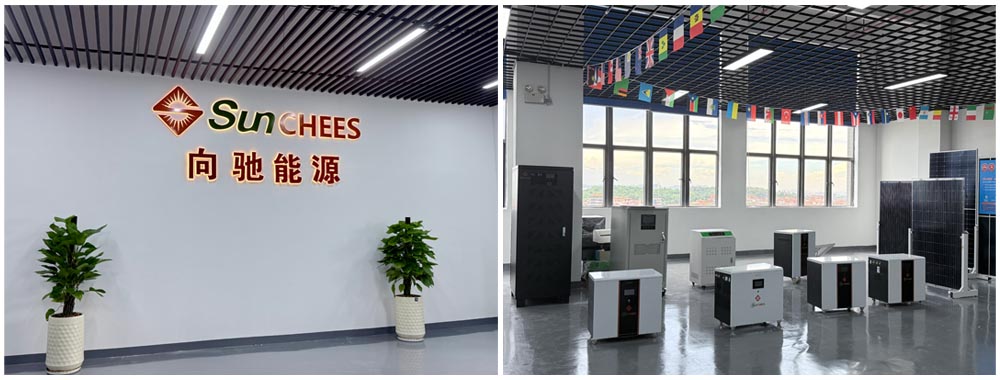
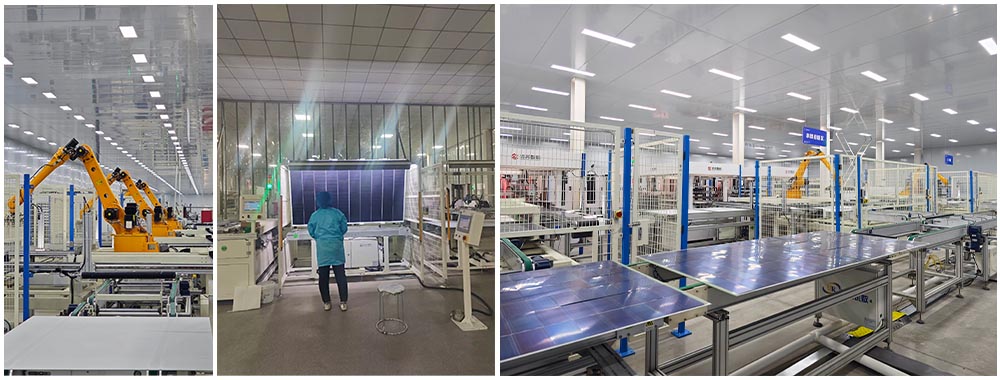
Sunchees was founded in 2008, head office and factory is located in Foshan, Guangdong. China,but its sales network has spread to more than 100 countries and regions around the world.
Sunchees products are widely used in home, agriculture, industry, finance, electric power, transportation, security, new energy. Its stable and excellent performance have been widely recognized.



 Whatsapp :
 Home
Home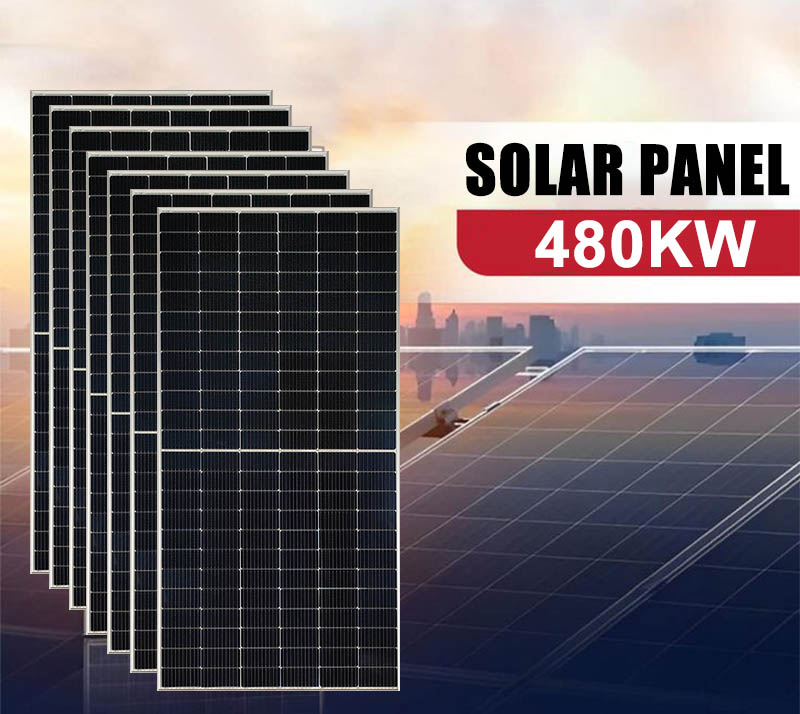





 Case
Case
 Mar 21,2022

 Tel
Tel
 Email
Email
 Address