


 Whatsapp :
 Home
HomeSingle-phase vs Split-phase vs Three-phase vs All-in-One Solar Systems: Beginner’s Guide
 Jul 11,2025
 0
0
 sunchees solar system
What Are Phases in Solar Power Systems?
Electricity flows differently in homes, businesses, and factories. Solar systems must match your building’s power type, called a “phase”.
In simple terms:
-
Single-phase = 1 live wire + 1 neutral
-
Split-phase = 2 live wires + 1 neutral (North America only)
-
Three-phase = 3 live wires + 1 neutral (commercial/industrial)
-
All-in-one = Integrated system for multiple phases
Quick Comparison: Single-phase, Split-phase, Three-phase, All-in-One
|
Feature |
||||
|
Voltage |
220–240V (EU/Asia), 120V (US) |
120V + 240V (US/Canada) |
380–415V (EU/Asia), 208V (US) |
Depends on model |
|
Wiring |
L + N |
L1 + L2 + N |
L1 + L2 + L3 + N |
Supports multiple types |
|
Typical Use |
Homes worldwide |
Homes (US/Canada) |
Factories, businesses |
Homes & businesses |
|
Battery Support |
Optional |
Optional |
Optional |
Built-in |
What Is Single-phase in Solar?
Simple Definition
Single-phase power uses one live wire (L) and one neutral (N). It’s standard in most homes worldwide.
Best For
-
Small to medium homes
-
Solar systems up to ~10kW
Watch Out
A single-phase inverter cannot connect directly to a three-phase power grid.
What Is Split-phase? (For US & Canada)
Simple Definition
Split-phase is unique to North America. Split-phase power is mainly used in the US and Canada because their residential grids provide 120V and 240V from a center-tapped transformer, unlike most countries that use single-phase 220–240V. (Split-phase electric power - Wikipedia )
It provides:
-
120V for small devices
-
240V for large appliances (dryers, ovens)
This works using two 120V lines (L1 & L2) that are 180° out of phase.
Best For
-
Homes in the US and Canada
-
Solar systems serving 120V and 240V devices
What Is Three-phase in Solar?
Simple Definition
Three-phase uses three live wires (L1, L2, L3) and a neutral (N). It’s common in businesses and large buildings for stable, high-power delivery.
Best For
-
Factories
-
Commercial buildings
-
Homes with heavy-duty equipment (rare)
Watch Out
Three-phase inverters need all three phases. Using them in single-phase homes can lead to errors.
What Is All-in-One?
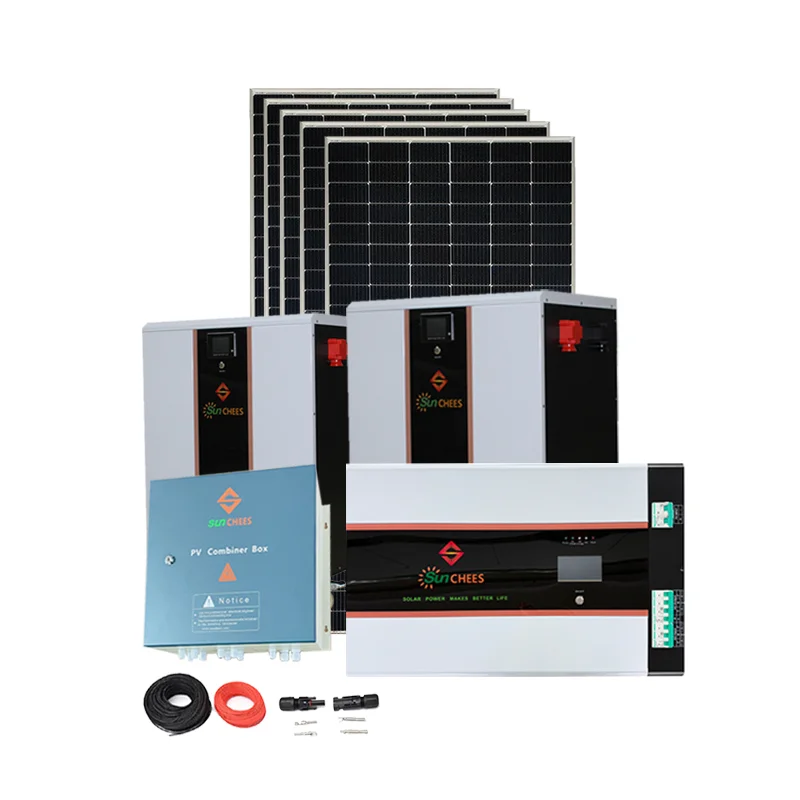
An all-in-one solar system combines the battery, inverter, and controller into one single unit.
Simple Definition
All-in-one systems combine:
-
Inverter
-
Battery management
-
Charge controller
-
Monitoring
This reduces installation time and space.
Best For
-
Homeowners wanting a simple “plug and play” solution
-
Small businesses with hybrid needs
What Happens If You Connect the Wrong Inverter?
|
Wrong Connection |
Problem |
|
Single-phase inverter → 3-phase grid |
Won’t sync; shuts down |
|
Three-phase inverter → 1-phase grid |
Error codes; no power output |
|
Split-phase inverter → Single-phase grid |
Partial power or system failure |
|
Wrong frequency (50Hz/60Hz) |
Malfunctions or possible damage |
Frequently Asked Questions (FAQ)
Can I use a three-phase inverter in a single-phase house?
No. Three-phase inverters require all three phases to work. Using one in a single-phase house causes errors or no output.
Can I use a single-phase inverter in a three-phase building?
Yes, but it will only power single-phase loads. Three-phase machines won’t run.
How do I check my home’s phase type?
Look in your breaker box:
-
2 wires (L + N): Single-phase
-
3 wires (L1 + L2 + N): Split-phase
-
4 wires (L1 + L2 + L3 + N): Three-phase
Or call your utility company.
Are all-in-one solar systems better?
For most homes, yes. They simplify installation and work with batteries. For large commercial systems, separate components may be better.
Key Takeaways
-
Single-phase: Standard for most homes worldwide
-
Split-phase: Only for US/Canada homes
-
Three-phase: For businesses and heavy loads
-
All-in-one: Easiest installation with battery support
-
Always match your inverter to your grid type.
Sunchees, founded in 2008 in Foshan, China, specializes in fully integrated solar systems—including inverters and lithium batteries designed in-house for seamless compatibility. With projects in 200+ countries and a focus on off-grid and hybrid solutions, Sunchees ensures stable, long-lasting systems and expert support for residential and commercial clients.
 HME Solar Power Panel: The Ultimate Guide to Residential Solar Power Systems
 You May Also Like



 Tel
Tel
 Email
Email
 Address
6th Floor, Zhonghe Zinan Industrial Park, No. 1 Zinan Changang West Road, Nanzhuang Town, Chancheng District, Foshan City, Guangdong Province. China (Mainland)