


 Whatsapp :

 Home
600 Watt Solar Panel Kit – Complete Off-Grid Power Guide with Sunchees High-Efficiency Solutions
 Aug 11,2025
 0
 sunchees solar system
600 Watt Solar Panel Kit – Detailed Guide for Off-Grid, RV, Marine, and Cabin Power
A 600 watt solar panel kit is more than just a panel – it’s a ready-to-install power system for generating and using renewable energy anywhere, from RVs and boats to remote homes and farms. This guide covers every component, expected performance, Sunchees’ high-efficiency hardware, and real-world setup tips.
What’s Inside a 600 Watt Solar Panel Kit?

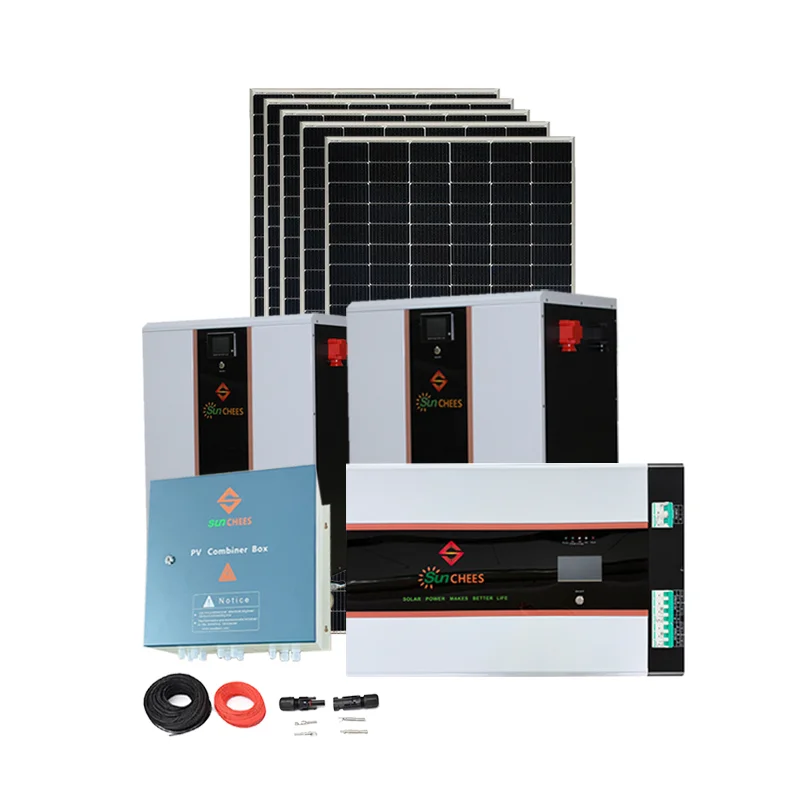
A standard 600 watt solar panel kit usually contains:
|
Component |
Recommended Specification |
Purpose |
|
Solar Panel(s) |
600W total (1×600W, 2×300W, 3×200W, or 6×100W) |
Convert sunlight into DC power |
|
Solar Charge Controller |
MPPT or PWM, sized for panel Voc/Imp |
Regulates charging, prevents overcharge/discharge |
|
Battery Bank |
LiFePO₄, AGM, or GEL |
Stores solar energy for later use |
|
Inverter |
Pure sine wave, matched to battery voltage |
Converts DC to AC for appliances |
|
PV Cables & MC4 Connectors |
UV-resistant 4–6mm² |
Safe, efficient power transfer |
|
Mounting Brackets |
Aluminum/stainless steel |
Secure installation on roofs, RVs, or boats |
|
(Optional) Accessories |
Fuse/breakers, monitoring unit |
Safety and performance tracking |
Power Output – What Can a 600 Watt Solar Panel Kit Run?
Under ideal conditions (full sun, 5 hours/day):
-
Peak Output: 600W
-
Daily Energy: ~3 kWh
Practical Uses:
-
Small fridge (24h)
-
LED lighting + fan + phone/laptop charging
-
Small water pump
-
Daily RV or camping electricity needs
Sunchees 600W Solar Panel – Premium Module for Off-Grid Kits
The Sunchees 600W monocrystalline solar panel is designed for maximum efficiency and durability, either as a standalone unit or within a 600 watt solar panel kit.
Technical Specifications:
|
Parameter |
Value |
|
Model |
XTL-600 |
|
Rated Power (Pmax) |
600W |
|
Power Tolerance |
0~+5W |
|
Voltage at Pmax (Vmp) |
43.32V |
|
Current at Pmax (Imp) |
14.30A |
|
Open Circuit Voltage (Voc) |
51.45V |
|
Short Circuit Current (Isc) |
13.62A |
|
Efficiency |
23.83% |
|
Size |
2279×1134×30 mm |
|
Weight |
27.5 kg ±5% |
|
Frame |
30mm anodized aluminum alloy |
|
Glass |
3.2mm AR-coated tempered glass |
|
Cell Layout |
144 pcs (6×24) |
|
Junction Box |
IP68 rated |
|
Cable |
PV cable 4.0mm² |
|
Connector |
MC4 EVO2 / TS4 |
|
Cell Type |
Monocrystalline 182×91mm |
Durability & Protection:
-
IP68 waterproof junction box and connectors
-
Salt-mist, ammonia, and PID resistance
-
Passed 2400Pa wind load & 5400Pa snow load tests
-
Hook-shaped aluminum frame for increased structural strength
How Many 600W Solar Panels Do You Need for a Whole House Off-Grid Solar System?
To calculate how many 600W solar panels are needed for a whole house off-grid solar system, three factors are essential:
- Daily household electricity consumption (kWh).
- Daily peak sun hours during the least sunny winter month.
- The rated wattage (W) of each solar panel.
1. Formula for Calculating the Number of Solar Panels
Number of Solar Panels = (Daily Electricity Consumption × 1,000) ÷ (Peak Sun Hours × System Efficiency × Solar Panel Wattage)
For a whole house off-grid solar system, 75% overall system efficiency can be used for an initial estimate, accounting for losses from the inverter, wiring, temperature, and battery charging and discharging. Actual efficiency should be adjusted based on equipment and environmental conditions.
For example:
- Daily electricity consumption: 30 kWh
- Winter peak sun hours: 3 hours
- System efficiency: 75%
- Solar panel wattage: 450W
(30 × 1,000) ÷ (3 × 0.75 × 450) = 29.6 panels
This means at least 30 × 450W solar panels are theoretically required, providing 13.5 kW of installed solar capacity.
If using 600W solar panels instead:
(30 × 1,000) ÷ (3 × 0.75 × 600) = 22.2 panels
At least 23 × 600W solar panels would be required, providing 13.8 kW of installed solar capacity.
However, these calculations only estimate average winter electricity generation. A fully off-grid solar system also requires additional solar generation capacity, battery storage, and a backup power solution to handle consecutive cloudy or rainy days.
2. How to Find Accurate Winter Peak Sun Hours
The NREL PVWatts Solar Calculator can estimate monthly solar electricity generation based on your location, solar panel tilt angle, and orientation.
To estimate winter sunlight for a 600W solar panel system:
- Enter your home address or ZIP Code.
- Enter the planned solar system capacity, such as 1 kW.
- Select the solar panel tilt angle (Tilt) and orientation (Azimuth).
- Check Monthly Solar Radiation, generally expressed in kWh/m²/day.
Under equivalent surface conditions, this value can be used as an approximate estimate of daily peak sun hours. For example, 3.2 kWh/m²/day corresponds to approximately 3.2 peak sun hours.
For an off-grid solar system, use the least sunny winter months rather than annual averages.
3. Winter Peak Sun Hours for 600W Solar Panels in Caribbean Countries
Winter solar irradiation varies across the Caribbean, directly affecting the number of 600W solar panels required for off-grid electricity generation.
- Cuba and the northern Caribbean may receive only 3.2–3.7 peak sun hours during December.
- Jamaica and Puerto Rico typically receive approximately 4–4.5 hours during their least sunny winter months.
- Some locations in the Dominican Republic can reach approximately 5.4 hours on tilted solar panel surfaces.
- In parts of Colombia's northern coast, November may have lower solar irradiation than December through February.
|
|
|
|
|
|
|
|
|
|
|
|
|
|
|
|
|
|
|
|
|
|
|
|
|
|
|
|
|
|
|
|
|
|
|
|
|
|
|
|
|
|
Data sources: Havana, Kingston, San Juan, and Barranquilla are based on NASA POWER monthly average GHI data. Camagüey data comes from a 1981–2016 ground observation study. Dominican Republic values represent irradiation on tilted solar panel surfaces and are not directly comparable with horizontal GHI data.
4. How Many 600W Solar Panels Are Needed for a Home Using 30 kWh per Day?
Assuming 30 kWh daily electricity consumption, 600W solar panels, and 75% overall system efficiency, the estimated panel requirements for selected Caribbean locations are:
|
|
|
|
|
|
|
|
|
|
|
|
|
|
|
|
|
|
|
|
|
|
|
|
For a fully off-grid solar system, an additional 25% solar capacity reserve is recommended.
|
|
|
|
|
|
|
|
|
|
|
|
|
|
|
|
|
|
|
|
|
|
|
|
These quantities represent average monthly electricity generation requirements, not guaranteed uninterrupted power.
For Caribbean installations, hurricanes, heavy rainfall, shading, and consecutive low-sunlight days must also be considered. Adding more 600W solar panels should never compromise rooftop wind resistance or structural safety.
5. How to Match 600W Solar Panels With Off-Grid Inverters and Lithium Batteries
For a whole house off-grid solar system using 600W solar panels, the following equipment can be considered:
- Off-grid inverter: 10–15 kW, 120/240V split-phase inverter for a typical U.S.-style residential electrical system.
- LiFePO4 lithium battery storage: 60–100 kWh, depending on the required number of backup days.
- Backup generator: Recommended for extended cloudy periods, tropical storms, and Caribbean rainy seasons.
The following configurations assume daily electricity consumption of 30 kWh.
|
|
|
|
|
|
|
|
|
|
|
|
|
|
|
|
|
|
|
|
|
|
|
|
|
|
|
|
|
|
|
|
|
|
|
|
The recommended inverter capacity is based on possible simultaneous operation of air conditioners, water pumps, refrigerators, and other appliances rather than the total rated wattage of the 600W solar panels.
If household peak demand is only 5–6 kW, a smaller off-grid inverter may be sufficient. Higher simultaneous loads may require a larger inverter.
The inverter must also provide adequate PV input capacity and compatible MPPT voltage and current ranges for the electrical specifications of the 600W solar panels.
6. How Much Lithium Battery Storage Is Needed for a 600W Solar Panel Off-Grid System?
Battery storage capacity for an off-grid solar system depends mainly on daily electricity consumption and the required backup duration, rather than the number of 600W solar panels alone.
Assuming 30 kWh daily electricity consumption, 90% usable battery capacity, 90% inverter efficiency, and no solar generation during the backup period:
|
|
|
|
|
|
|
|
|
|
|
|
|
|
|
These values are rounded upward with a small reserve. Actual storage requirements should be based on the desired number of days of autonomy.
If using 51.2V 200Ah LiFePO4 batteries:
Each battery provides approximately 10.24 kWh of nominal storage capacity.
|
|
|
|
|
|
|
|
|
|
|
|
|
|
|
|
|
|
|
|
|
|
|
|
These estimates assume no electricity generation from the 600W solar panels during the backup period and do not include additional allowances for battery aging.
When connecting multiple LiFePO4 batteries in parallel, the installation must comply with the manufacturer's BMS, current, and communication requirements.
7. How to Choose the Right Off-Grid Inverter for 600W Solar Panels
The inverter size should be determined by the household's simultaneous power demand, not simply by the installed wattage of the 600W solar panels.
For example, installing 19 × 600W solar panels provides 11.4 kW of solar capacity, but this does not automatically mean an 11.4 kW inverter is required.
Consider the following household loads:
|
|
|
|
|
|
|
|
|
|
|
|
|
|
|
|
|
|
|
|
|
If the simultaneous household load is 7.5 kW, adding approximately 25% additional capacity gives:
7.5 kW × 1.25 = 9.375 kW
Therefore, a 10–12 kW off-grid solar inverter may be suitable for this configuration.
However, air conditioners and water pumps may require additional surge power during startup. The inverter's surge capability and the lithium battery BMS discharge current must be checked separately to ensure the entire 600W solar panel off-grid system operates safely and reliably.
600 Watt Solar Panel Kit – Standard Off-Grid Configuration
|
# |
Component |
Spec |
Qty |
Notes |
|
1 |
Solar Panel |
Sunchees 600W mono (Vmp≈43V, Imp≈14A) |
1 |
≥ 23% efficiency |
|
2 |
MPPT Controller |
60A, PV input ≥ 100V |
1 |
Auto 12V/24V/48V |
|
3 |
Battery Bank |
LiFePO₄ 24V 100Ah (2.56kWh) |
1 |
≥ 4000 cycles |
|
4 |
Inverter |
24V DC → 220V AC, 1500W (3000W peak) |
1 |
Pure sine wave |
|
5 |
PV Cable |
4–6mm² |
— |
UV resistant |
|
6 |
MC4 Connectors |
IP68 |
2 pairs |
Quick connect |
|
7 |
Mounting Brackets |
Aluminum/stainless |
— |
Roof/ground/RV |
|
8 |
Protection |
Fuse/breaker |
— |
Overload/short circuit |
Recommended Inverter for a 600 Watt Solar Panel Kit
Selection Guide:
-
Type: Pure sine wave
-
Input Voltage: 24V DC (or 12V for smaller banks)
-
Output Voltage: 220–240V AC (or 110V for US/Japan)
-
Continuous Power: ≥ 1500W
-
Peak Power: ≥ 3000W
Sunchees 3kW Off-Grid Hybrid Inverter – For Future Expansion
If you plan to expand beyond 600W, the Sunchees HIC-3KW hybrid off-grid inverter is an excellent choice.
Key Features:
-
Built-in MPPT charge controller
-
Hybrid input: solar + battery + grid/generator
-
Touch color display with daily/monthly/total data
-
Compatible with lithium, GEL, and lead-acid batteries
-
Multiple protections: voltage, temperature, short-circuit, overload
-
Low-frequency transformer design for inductive loads (motors, pumps, ACs)
-
Expected lifespan: up to 8 years with proper use
Sunchees Brand Advantages
|
Feature |
Details |
|
Founded |
2008, Foshan, China |
|
R&D |
100% in-house inverter & battery design |
|
Customization |
OEM, brand-specific panels, full system & solar AC solutions |
|
Lifespan |
Up to 25 years |
|
Installation |
Remote guidance, free on-site for ≥50kW |
|
Lead Time |
5–7 days (samples), 10–20 days (bulk) |
|
Warranty |
Panels: 10 yrs; Batteries: 3 yrs; Inverters: 2 yrs |
|
Global Reach |
200+ countries, strong in Caribbean & Latin America |
|
Customer Care |
Production updates & post-install satisfaction follow-up |
FAQ – 600 Watt Solar Panel Kit
Q1: Can a 600 watt solar panel kit run an air conditioner?
A: Not for standard AC units. It’s suitable for small DC ACs or efficient appliances.
Q2: Is 600W enough for an off-grid cabin?
A: Yes, for lighting, refrigeration, electronics, and small loads.
Q3: Which battery is best for 600W solar?
A: 24V 100Ah LiFePO₄ for ~3kWh daily energy storage.
Q4: Why choose MPPT over PWM?
A: MPPT improves energy harvest with high-voltage panels like Sunchees 600W.
Q5: Can the system be expanded later?
A: Yes, especially with Sunchees hybrid inverters that support extra panels.
 50 kW Solar Plant Cost in 2025: Complete Guide, ROI, and Real-World Examples
 You May Also Like



 Tel
 Email
 Address
6th Floor, Zhonghe Zinan Industrial Park, No. 1 Zinan Changang West Road, Nanzhuang Town, Chancheng District, Foshan City, Guangdong Province. China (Mainland)