


 Whatsapp :
 Home
HomeGuide to Investing in a 1 Megawatt Solar Plant: Costs, Logistics, and Global ROI
 Jan 23,2026
 30
30
 sunchees solar system
The transition to renewable energy is no longer just an environmental statement; it is a high-stakes financial strategy. For industrial giants and government entities, a 1 megawatt solar plant represents the threshold where solar energy shifts from a "utility supplement" to a "powerhouse asset."
Whether you are looking to hedge against rising energy costs in the Caribbean or leverage tax credits in the United States, understanding the anatomy of a 1 megawatt solar plant is essential for a successful procurement journey.
1. Defining the Scale: How Big is a 1 Megawatt Solar Plant?
A 1 megawatt solar plant (1MW) is a Commercial & Industrial (C&I) grade facility. To visualize its physical and energetic footprint, consider the following metrics:
- Hardware Scale: Approximately 1,800 to 2,500 high-efficiency panels (500W+ spec).
- Land Requirement: Ground-mount systems require 1.5 to 2 standard football fields (approx. 10,000 – 16,000 m²). Rooftop installations need roughly 8,000 – 10,000 m².
- Energy Output: Depending on local irradiance, it generates 1.2 million to 1.5 million kWh annually, enough to power 200–300 average homes for a year.
Why Procurement Requires Customization
While core hardware is standardized, the 1 megawatt solar plant solution must be tailor-made. Factors like terrain (slopes vs. flat roofs), grid interconnection standards, and local environmental permits make every project unique.
2. Global Economic Logic: Why Invest in a 1 Megawatt Solar Plant?
The motivation for purchasing a 1 megawatt solar plant varies significantly by geography:
|
|
|
|
|
|
|
|
|
|
|
|
|
|
|
|
3. Core BOM (Bill of Materials) for a 1 Megawatt Solar Plant
A professional 1 megawatt solar plant is a complex assembly. Below is a high-density breakdown of the essential components for a standard ground-mounted system:
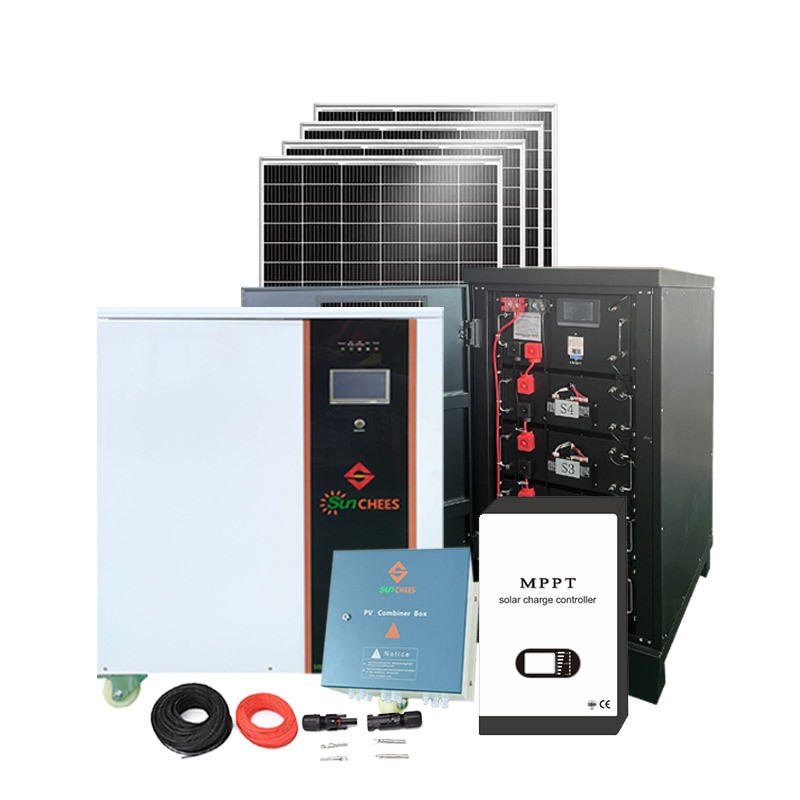
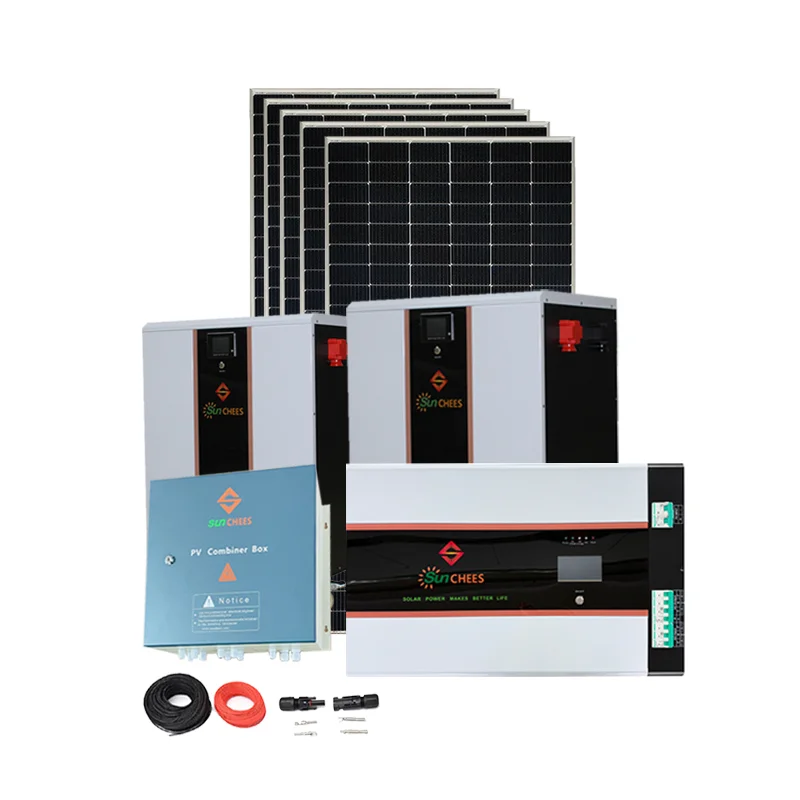
A. Power Generation (DC Side)
- Solar Modules: 1,820+ units (550W+ Mono PERC/N-Type). Note: Sunchees now offers free upgrades to bifacial double-glass modules, increasing efficiency by over 1.5%.
- Mounting Structures: Hot-dip galvanized steel or aluminum alloy with site-specific foundations.
- DC Combiner Boxes: 10–12 units (with lightning protection).
- Solar Cables: ~10,000 meters of 4mm²/6mm² UV-resistant, dual-layer cables.
B. Power Transformation (AC Side)
- Inverters: 4–10 units (100kW – 250kW string inverters).
- AC Distribution Cabinet: High-density cabinet with industrial-grade circuit breakers.
- Step-up Transformer: 1,250kVA unit (converting 0.4kV to 10kV/35kV for grid entry).
C. Monitoring & Balance of System (BoS)
- Data Logger: RS485/WiFi/4G communication for real-time tracking.
- Weather Station: Irradiance sensors and anemometers to calculate the Performance Ratio (PR).
4. Case Study: 1.8MW Distributed Success in Nigeria
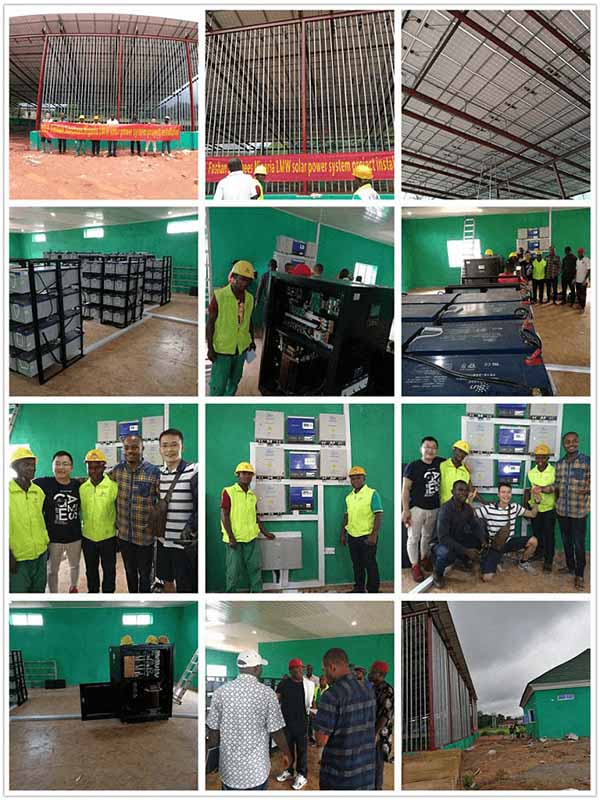
A powerful example of professional execution is the Sunchees 1.8MW project for the Nigerian Government. This project highlights the "Step-by-Step" energy transition model:
- The Trust Test (2017): 100kW pilot for a university clinic. Successful 24/7 operation for one year proved system reliability.
- The Expansion (2018): 1 megawatt solar plant (distributed as 10x100kW units) for schools and hospitals.
- The Customization (2019): An additional 700kW using mixed capacities (50kW to 350kW) to match specific building loads.
Key Insight: This project utilized a Distributed Deployment strategy. Instead of one massive field, the 1 megawatt solar plant was split across several locations, increasing fault tolerance and reducing the need for expensive long-distance transmission lines.
5. Procurement Excellence: Why Partner with Sunchees?
When investing in a 1 megawatt solar plant, the "Manufacturer vs. Middleman" distinction is critical. Established in 2008 in Foshan, China, Sunchees provides a vertically integrated advantage:
- System Integrity: Sunchees develops its own inverters and lithium batteries. 100% compatibility ensures a lower failure rate compared to mixed-brand systems.
- Global Hardship Experience: Their "Survivalist Tech" is proven in high-instability grids like Nigeria and hurricane-prone zones like Jamaica.
- Delivery Guarantees: A strict penalty clause—5% of the contract value for any delivery delays—ensures your project stays on schedule.
- On-Site Support: For systems over 50kW, Sunchees dispatches engineers globally for installation guidance. Local installers can complete setup in as little as 5 days.
Unique Engineering Features
- Mobility: Specialized equipment designs include wheels for easy repositioning (excluding panels).
- Flood Resilience: For high-risk areas, Sunchees offers wall-mount options for sensitive electronics to keep hardware above water levels.
- Transparency: Production is tracked by dedicated staff with regular updates. Follow their real-world installations on Instagram, TikTok, and YouTube.
6. Q&A for a 1 Megawatt Solar Plant
Q: What is the typical CAPEX for a 1 megawatt solar plant in 2026?
A: Globally, costs range between $500,000 and $900,000 USD. Hardware accounts for roughly 55%, while "soft costs" (permits, interconnection, and labor) account for 45%.
Q: Can a 1 megawatt solar plant operate entirely off-grid?
A: Yes. In regions like Nigeria or remote Caribbean islands, a 1 megawatt solar plant combined with a Sunchees lithium battery storage system provides full energy independence, bypassing unstable national grids.
Q: How do bifacial double-glass modules impact a 1 megawatt solar plant?
A: These modules capture light from both sides, increasing yield by over 1.5% and eliminating the "hot spot effect," which significantly extends the system's 25-year lifespan.
Q: Is it better to build one centralized 1 megawatt solar plant or several smaller units?
A: Distributed units (e.g., 5 x 200kW) are often superior for commercial portfolios. This setup allows for easier grid approval, simpler maintenance, and localized power consumption.
Next Step: Are you ready to audit your land or rooftop for a 1 megawatt solar plant? Contact our engineering team at Sunchees for a free site-specific ROI analysis and a customized BOM.
 72 Solar Cells vs. 144 Cells: Why Jamaican homeowners are upgrading in 2026
 You May Also Like



 Tel
Tel
 Email
Email
 Address
6th Floor, Zhonghe Zinan Industrial Park, No. 1 Zinan Changang West Road, Nanzhuang Town, Chancheng District, Foshan City, Guangdong Province. China (Mainland)