


 Whatsapp :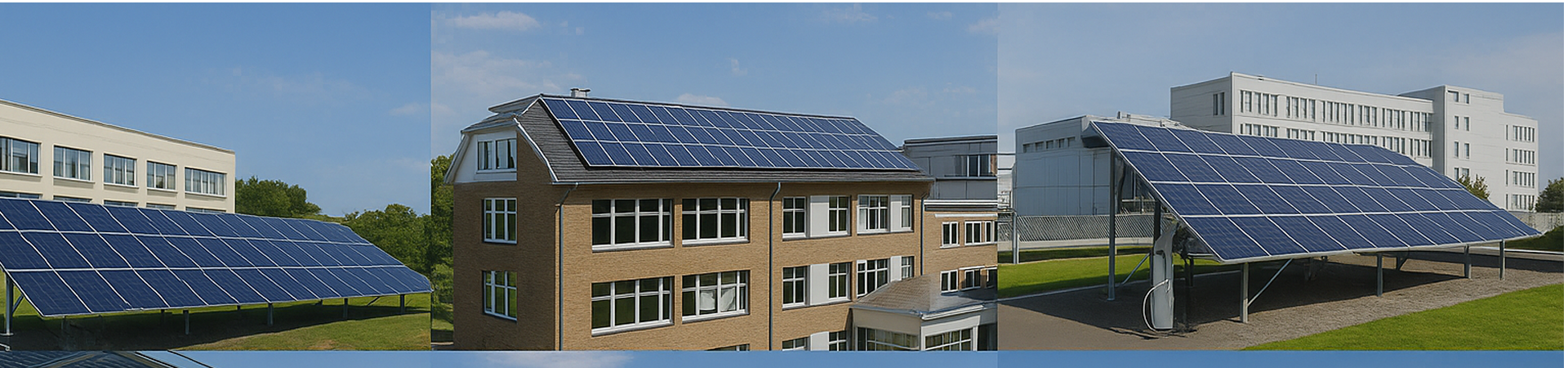
 Home
HomeCommercial Solar for Retail Centers: Rooftop, Carport and Battery Solutions
 Aug 24,2026
 0
0
 sunchees solar system
Once a retail center opens for the day, air conditioning, lighting, escalators, tills and refrigeration begin drawing power together. Much of that demand occurs while a solar array is producing. Rooftop or carport solar can reduce grid purchases during these trading hours, while battery storage can move part of the solar energy into the evening peak or keep selected equipment running through an outage. A final design uses the center's 15-minute load data, usable roof and parking area, utility connection conditions, and a list of equipment that must remain available when grid power fails.
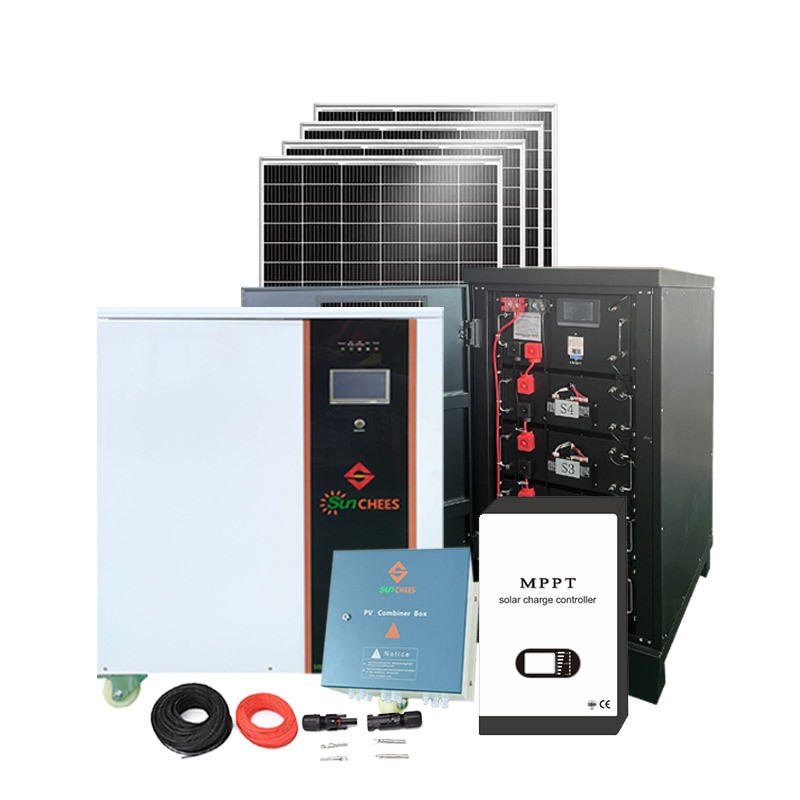
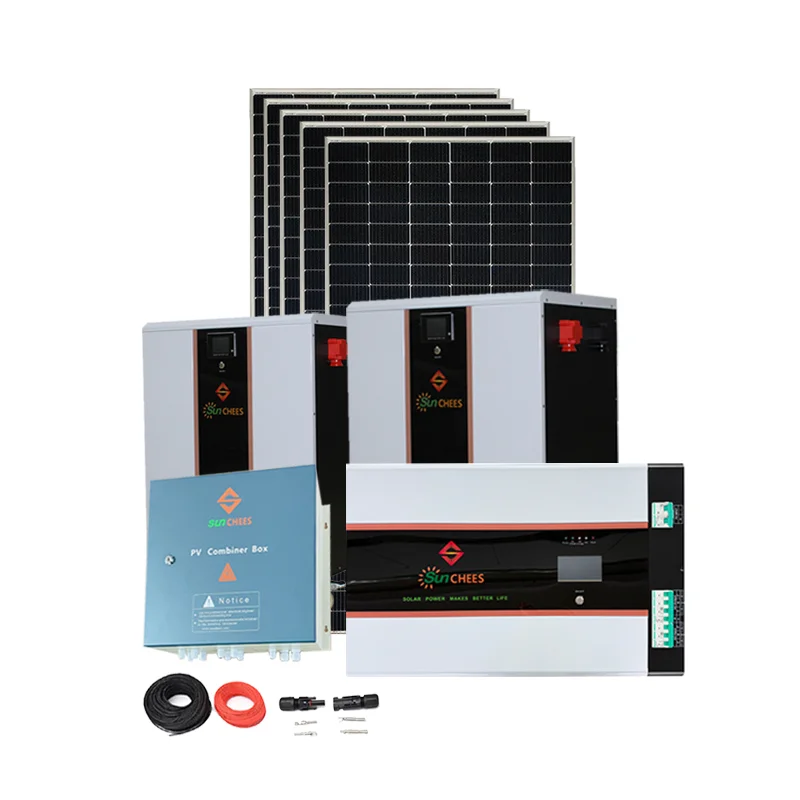
We supply 50kW, 100kW and 300kW commercial solar system configurations for neighborhood retail, standalone supermarkets, outlets and shopping centers. We treat simultaneous power, daily solar generation and battery duration as separate sizing questions, then combine the modules, inverters, storage and distribution arrangement around the site.
Why Retail Operating Hours Work Well with Solar
Retail demand usually continues from late morning into the evening. HVAC rises during hot daylight hours, while grocery refrigeration, food-service cooling, escalators and common-area lighting remain active through trading hours. The U.S. Department of Energy's retail and grocery resources identify HVAC and refrigeration as important retail-building energy systems. This creates a practical opportunity to use solar generation on site instead of exporting it at a lower value or curtailing it.
When the array connects behind the landlord's main meter or a common-area meter, the connected equipment uses the solar electricity first. Grid purchases fall by the amount the property consumes from the array at that time. Where the tariff includes demand charges, solar and storage can also help manage the afternoon peak. A savings model still requires the local tariff, 15-minute load data and expected self-consumption ratio.

Where Solar Fits Across a Retail Property
Rooftop Solar Supports Stable Daytime Loads
Enclosed malls, supermarkets and big-box stores often have large, continuous roofs. A rooftop array can serve common-area HVAC, lighting, escalators, management offices and supermarket refrigeration connected behind the same meter. The usable area must leave room around drains, skylights, rooftop plant, access routes and fire pathways. Remaining roof life and structural conditions also determine whether the mounting system uses clamps, anchors or ballast. For a deeper roof assessment, see our commercial rooftop solar guide.
Solar Carports Turn Parking Areas into Generation Space
When air-conditioning plant, ventilation equipment or tenant services occupy the roof, an open car park can provide additional solar capacity. Solar canopies give customers shaded parking and can supply parking lights and EV chargers. Charging power can follow live solar output or be scheduled around midday generation so that EV demand does not stack on top of the center's HVAC peak. Whole Foods installed a 324kW parking-lot solar canopy at its Brooklyn store, while IKEA has combined solar parking structures with storage at several U.S. locations.
Battery Storage Extends Solar into Later Trading Hours
The battery's job follows the business objective. A property with a reliable grid may use a smaller battery for demand management and evening load shifting. A center exposed to outages can place tills, security, network equipment, emergency lighting and selected refrigeration on a critical-load circuit. The U.S. Department of Energy explains that ordinary grid-dependent PV normally disconnects when utility power fails. Backup operation requires a compatible island-capable inverter, battery storage, transfer and protection equipment, and a defined critical-load distribution system.
A Generator Covers Long Outages and Extended Low-Sun Periods
Retail centers with a weak grid, or no grid at all, commonly retain a generator. A microgrid controller coordinates solar, batteries, utility power and the generator. During the day, solar serves the operating load and replenishes the battery. The battery can carry part of the evening load, and the generator starts when stored energy reaches its set threshold or poor solar conditions continue. This arrangement reduces generator runtime without installing an oversized battery for occasional long outages.
Choose 50kW, 100kW or 300kW by Simultaneous Load
Floor area and store count are useful for early screening, but 15-minute load data determines the final system size. Two centers of similar size can have very different peaks because one has central air conditioning, a cold room or a larger food-service mix. The preliminary load ranges below retain about 20% operating headroom for compressor, pump and escalator starts. They are planning ranges rather than new equipment ratings.
|
|
|
|
|
|
|
|
|
|
|
|
|
|
|
|
|
|
|
|
The store counts are planning illustrations, not measured market averages. HVAC, refrigeration, kitchens and charging equipment remain the controlling inputs.
A Like-for-Like Solar Generation Example
The following comparison uses five peak sun hours per day and an 80% performance ratio. The performance ratio accounts for temperature, wiring, inverter and soiling losses. Local solar resource, orientation, shade and equipment selection will move the result.
|
|
|
|
|
|
|
|
|
|
|
|
|
|
|
|
|
|
|
|
These numbers support early comparison rather than site-specific production guarantees. A project design replaces the common assumptions with local irradiance, final array layout, shading and temperature data.

A 50kW System Fits Small Neighborhood Retail and Critical Business Loads
A 50kW tier works best for a small property without a large central HVAC plant or extensive cold storage. One planning example uses 6kW for lighting, 12kW for five split air conditioners, 3kW for tills, monitoring and network equipment, 7kW for freezers and a small cold room, and 4kW for pumps, signs and other equipment. The combined 32kW load leaves headroom for starting current and modest future additions.
Recognizable projects include a neighborhood center with a pharmacy, convenience store, bakery and small food outlet; a furniture showroom; a hardware or automotive-accessories retailer; or a fuel-station convenience store with an office. Store count gives the first picture, while the rated power of central air conditioning, cold rooms and electric kitchens gives the final answer.
At a larger shopping center, the same 50kW tier can operate as a dedicated critical-load system. During an outage, it may retain tills, security, network equipment, emergency lights and part of the refrigeration load while ordinary lighting and non-critical air conditioning are reduced. Review the Sunchees 50kW commercial off-grid system with grid backup.
Large central air conditioning, extensive cold storage, several high-power electric kitchens operating together, or full overnight operation of the entire center move beyond this tier's practical scope. In those projects, 50kW is better assigned to a defined critical-load subsystem.
A 100kW System Fits a Standalone Supermarket or Small Shopping Center
The 100kW tier supports a more concentrated commercial load. One preliminary scenario uses 15kW for lighting, 25kW for HVAC and ventilation, 18kW for display refrigeration and a small cold room, 8kW for escalators and pumps, and 6kW for tills, security and office equipment. The combined load is about 72kW. Electric cooking, larger cold rooms and fast EV charging can push the peak above this range and should appear separately in the equipment schedule.
This tier can suit a standalone supermarket, community-center common areas, a furniture or building-material store, a small outlet center, or a tourism retail-and-food property. At a medium shopping center, 100kW usually supplies a defined group of important loads; a project covering all tenants and central HVAC moves into a larger capacity class. See the Sunchees 100kW commercial solar system.
Our current 100kW product range shows approximately 108kWh and 215kWh storage directions. A simple nominal-energy calculation gives about 1.08 hours at a 100kW load or 2.16 hours at a 50kW load for 108kWh. A 215kWh cabinet gives about 2.15 hours and 4.3 hours respectively. Real operating time is shorter after energy reserve and conversion losses, so the quotation fixes the selected cabinet, usable energy and backup-load target.
A 300kW System Fits a Supermarket-Anchored Community Center
The 300kW tier can bring central HVAC, supermarket refrigeration, common-area lighting, escalators, pumps and selected food-service equipment into one system. A 207kW planning scenario includes 90kW for HVAC and ventilation, 45kW for supermarket refrigeration, 30kW for lighting, 18kW for escalators and pumps, and 24kW for food service, offices and security. The remaining capacity accommodates starting current, weather changes and operating adjustments.
Our current 300kW commercial off-grid system lists 645kWh of nominal storage. If 85% of that energy is assumed to reach the AC loads after reserve and conversion losses, the planning example has about 548kWh available.
|
|
|
|
|
|
|
|
|
|
|
|
|
|
|
|
|
|
|
|
Temperature, actual depth of discharge, energy reserve, conversion efficiency and control settings will change the duration. A site that must maintain a high load through the night can add storage cabinets or allow the generator to continue supply when the battery reaches its set threshold.
A 300kW system can also be the first phase of a regional mall project, serving common areas and the anchor supermarket. Mall of Africa reported 6.086MWp of installed PV for its 2025 financial year. That scale shows why 300kW is more likely to be a manageable subsystem than a whole-property system at a large regional mall.

Multi-Tenant Retail Starts with the Meter That Receives the Solar Power
A standalone supermarket or single-brand store usually has one main electricity responsibility, which makes connection and savings allocation relatively direct. A multi-tenant center may have a landlord common-area meter, a separate anchor-store meter and individual tenant meters. Solar behind the common-area meter first reduces purchases for HVAC, escalators, parking and property-management equipment. Whether a particular tenant can receive solar power depends on the metering structures and lease settlements allowed in that market.
A U.S. Department of Energy-hosted Regency Centers case demonstrates one approach. The shopping-center owner held a 253kW rooftop system and sold the output to Trader Joe's through a power purchase agreement. The case reported that the array offset about 65% of the store's electricity use. A new project may use landlord self-consumption, a tenant PPA, allocation below a master meter or another locally permitted structure. Roof ownership, meter relationships and market rules determine the appropriate route.
Retail Properties Already Using Solar
|
|
|
|
|
|
|
|
|
|
|
|
|
|
|
|
|
|
|
|
|
|
|
|
These external projects illustrate retail solar formats and scale. Generation, savings and backup performance remain specific to the conditions and design at each property.
What We Use to Size a Retail Solar Project
Send us the latest 12 months of electricity bills, 15-minute load data, trading hours and a list of the main equipment. For a multi-tenant property, include the relationship between common-area, anchor-store and tenant meters. If outage protection is part of the project, identify the equipment that must remain on and the target number of hours. Roof or parking drawings help establish usable area, shading and connection locations.
Our engineering team uses these records to prepare a preliminary load allocation, recommended PV capacity, critical-load battery size, operating mode and equipment list. This makes it possible to compare a 50kW, 100kW, 300kW or larger system on the same assumptions before the local EPC completes structural, electrical, interconnection and permitting design.
Find the Right Starting Tier for Your Retail Project
If daytime simultaneous load stays below 40kW, begin by screening the 50kW tier. A measured load of 60-80kW usually enters the 100kW tier. A community shopping center with sustained load close to 200kW can begin with the 300kW tier. Properties with peaks above 300kW, extensive central HVAC or a major cold chain can add storage cabinets, expand the PV array or divide the project into common-area, anchor-store and critical-load phases.
Send us your bills, load curve, equipment power, trading hours and outage target. We will return a preliminary capacity and equipment recommendation with its assumptions visible, ready for review with your local installation and approval team.
Frequently Asked Questions
Can a 50kW solar system supply a small shopping center?
Yes, when normal simultaneous load stays around 30-40kW and the property does not have large central HVAC or extensive cold storage. At a larger center, 50kW can instead support tills, security, network equipment, emergency lighting and selected refrigeration.
Is a 100kW system enough for a large supermarket?
A 100kW tier is a reasonable starting point when HVAC, refrigeration, lighting and other simultaneous loads remain around 60-80kW. Large cold rooms, electric cooking and fast EV charging can push the peak above 100kW. The equipment schedule and 15-minute load data provide the final answer.
How much roof area do 50kW, 100kW and 300kW systems need?
Our 50kW page recommends approximately 240m². The net module area for 160 large-format modules in the 100kW tier is about 413m²; an initial roof screen can allow roughly 500-600m² after access, edge clearances and layout space. Our 300kW array page gives approximately 1,400-1,500m² of rooftop area. Rooftop equipment, fire routes, tilt and shade affect the final layout.
Can rooftop solar keep a shopping center open during an outage?
It can maintain selected equipment when the system includes battery storage, an island-capable inverter, transfer and protection equipment, and a critical-load distribution circuit. Ordinary grid-tied PV normally disconnects when the utility fails. Define which tills, security, network, emergency-lighting and refrigeration loads must operate and for how many hours before sizing the battery and controls.
Does every retail center need a battery?
A property focused on reducing daytime purchases, with a reliable grid, can begin with grid-tied solar. Battery storage becomes useful for demand management, evening load shifting or outage protection. The first capacity calculation multiplies critical-load power by the target hours, then adds energy reserve and conversion losses.
Can multiple tenants share rooftop solar?
Possible structures include landlord common-area self-consumption, a PPA serving an anchor tenant and allocation below a master meter. Virtual metering is an additional route only after the project-country utility confirms that separate tenant accounts can participate. Record the utility account holder, meter points, roof owner and lease responsibility before equipment procurement.
How long does commercial solar for a retail center take to pay back?
Payback follows installed cost, annual generation, on-site self-consumption, retail electricity price, export value, demand charges, financing and local incentives. A preliminary model can calculate first-year energy value as expected annual self-consumption multiplied by the displaced electricity price, then add verified demand savings and incentives separately. We keep these assumptions visible so the project team can see how a tariff or self-consumption change affects the result.
Editorial Sources
- U.S. Department of Energy: Retail, Food Service, & Grocery
- U.S. Department of Energy: Solar and Resilience Basics
- Regency Centers landlord-retailer PPA case
- Whole Foods Market Brooklyn case
- Attacq Integrated Report 2025
- Mall of Africa facilities
- IKEA Adelaide solar microgrid
- IKEA U.S. Baltimore solar car park
- Simon Premium Outlets solar projects
- Sunchees 50kW system
- Sunchees 100kW system
- Sunchees 300kW system
- Sunchees 300kW solar array
 You May Also Like



 Tel
Tel
 Email
Email
 Address
6th Floor, Zhonghe Zinan Industrial Park, No. 1 Zinan Changang West Road, Nanzhuang Town, Chancheng District, Foshan City, Guangdong Province. China (Mainland)