


 Whatsapp :
 Home
HomeWhy Every Home and Business Needs a Stand Alone Solar Power System Jamaica
 Mar 13,2026
 0
0
 sunchees solar system
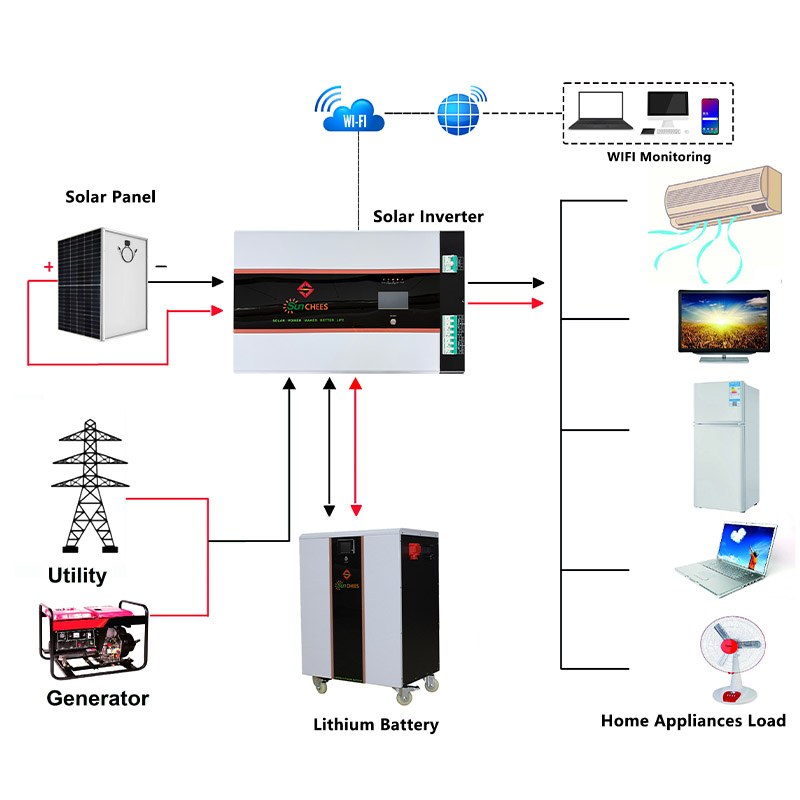
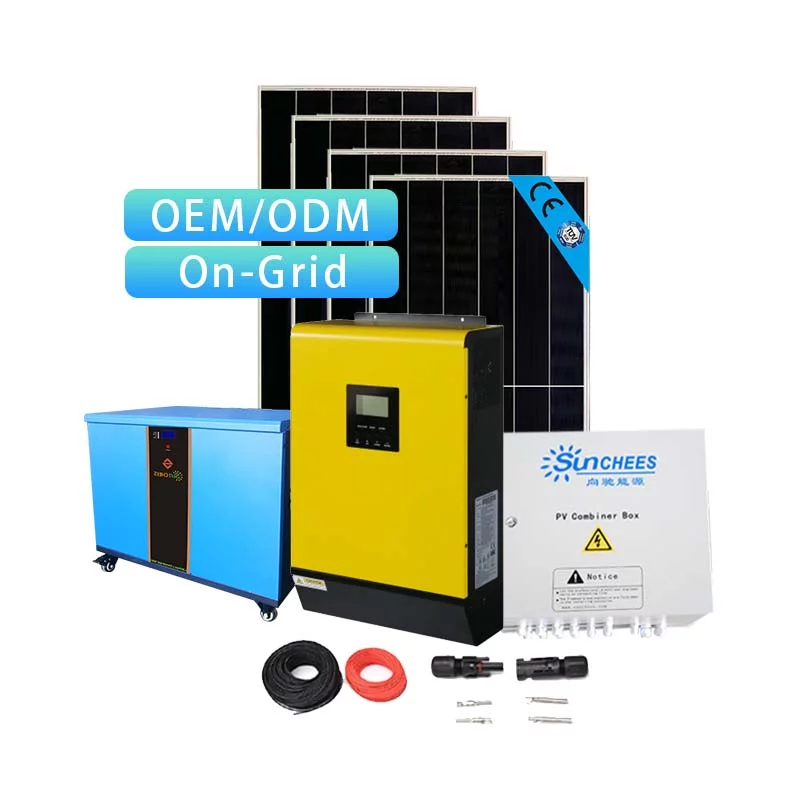
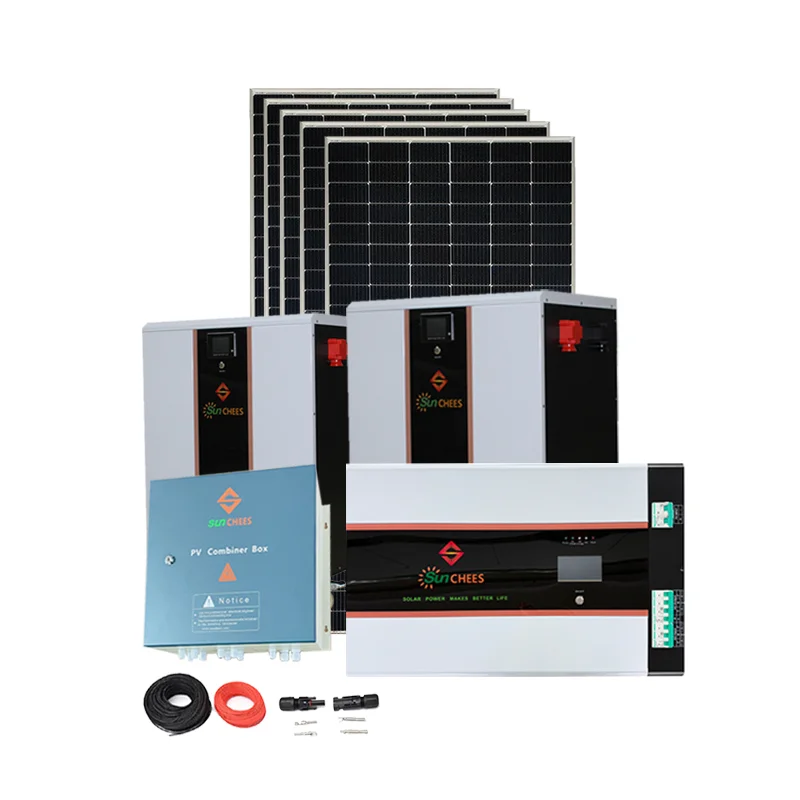
Whether you are trying to escape exorbitant monthly electric bills or protect your property from devastating storm-induced blackouts, securing a reliable energy source is no longer a luxury—it is a necessity. A stand alone solar power system jamaica (also known as an off-grid system) is a self-sufficient power plant for your home or business. It relies on four core components: solar panels to capture sunlight, a battery bank to store the energy, an inverter to convert DC to usable AC power (110V/220V), and a controller to protect the battery from overcharging.
By putting the most valuable, actionable information first, this guide will help you understand how these systems operate, how to size them correctly, and what equipment genuinely lasts in harsh, coastal climates.
The Core Motivation: Escaping High Costs and Grid Instability
While property owners in the Caribbean and the United States face different local challenges, the driving demand for off grid solar power systems is identical: maximizing energy security and saving money.
Jamaica vs. USA: A Comparative Look at Energy Needs
|
|
|
|
|
|
|
|
|
|
|
|
|
|
|
|
|
|
|
|
Technical Deep Dive: Isolation vs. Grid Collaboration
A common question is how an off grid solar system interacts with an existing utility grid. Even if a system is capable of standing alone, modern technology allows it to collaborate smartly with the grid using a Hybrid Inverter. This device acts as an intelligent "traffic cop" for your electricity.
- Solar Priority Mode: During the day, sunlight powers your home and charges your battery bank.
- Battery Backup: When the sun sets, the system seamlessly transitions to battery power.
- Grid as a Last Resort: If there are days of heavy rain and the battery drops below a safe threshold, the inverter will automatically pull from the grid (or a generator) to power your home and recharge the battery.
Crucial Safety Feature: When the public grid goes down, your inverter immediately initiates Anti-Islanding. Within milliseconds, it physically disconnects from the grid. This ensures your off grid solar electric systems do not send power backward into the power lines, protecting utility workers making repairs.
Collaboration and Isolation Modes
|
|
|
|
|
|
|
|
|
|
|
|
|
|
|
|
|
|
|
|
Sizing Your Setup: 10kW vs. 15kW Complete Off Grid Solar System
Selecting the right size is critical. Undersizing leads to power shortages, while oversizing wastes capital. Here is a breakdown of two highly effective off-grid solar system packages with batteries:
1. The 10kW / 48V / 13.3kWh System (The Home All-Rounder)
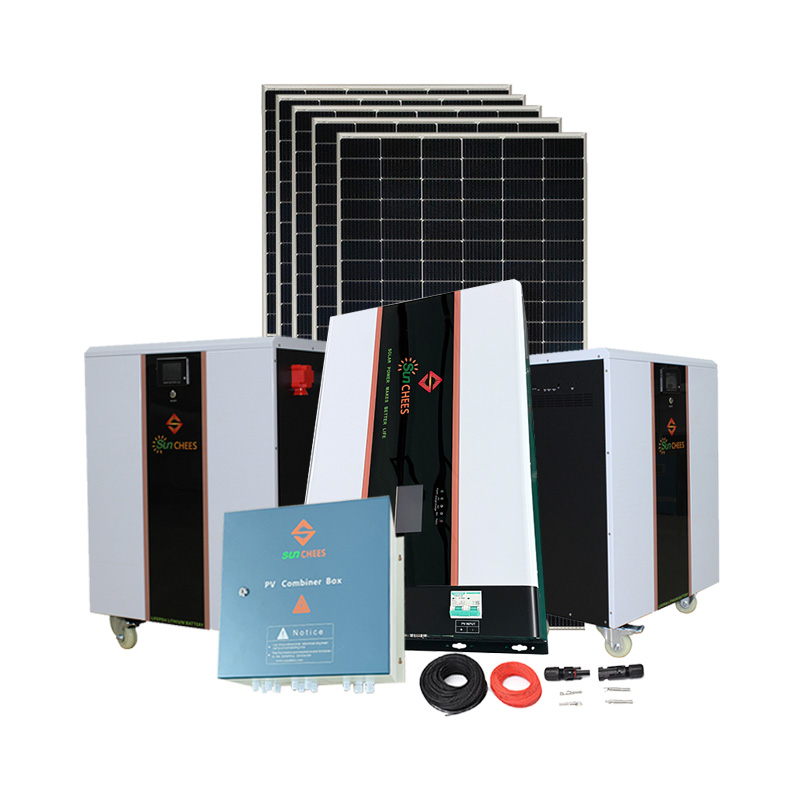
This system utilizes a highly standardized 48V architecture and a 260Ah lithium battery.
- Power Capability: Can handle 2-3 standard air conditioners, a large refrigerator, and multiple computers simultaneously.
- Target User: Perfect for a standard 3-bedroom home in Florida needing hurricane backup, or a residential home in Jamaica looking to drastically cut utility bills.
- Advantage: Uses modular solar power components that are easy to install and expand later.
2. The 15kW / 102V / 30.7kWh System (The Heavy-Duty Commercial/Villa Grade)
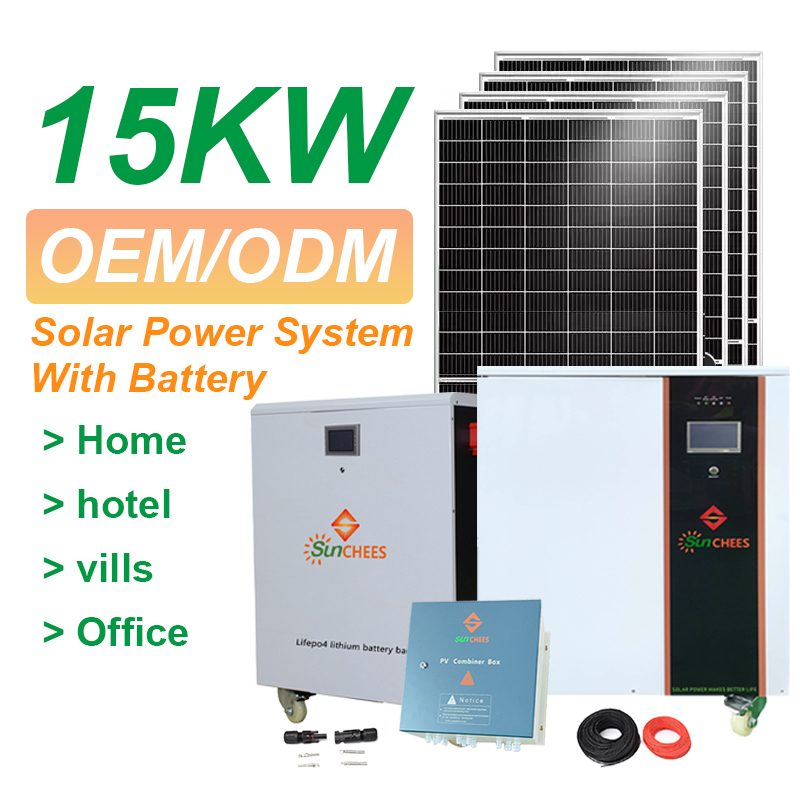
This system steps up to a high-voltage 102V architecture and utilizes an industrial-grade IGBT module inverter. IGBTs are designed to absorb massive surge currents that would fry standard MOSFET inverters.
- Power Capability: Can comfortably start heavy inductive loads like central AC units, deep-well water pumps, and commercial refrigeration.
- Target User: Ideal for coastal boutique resorts in Negril, agricultural farms, or large, fully-electric U.S. villas.
- Advantage: Higher voltage means lower current, which translates to less heat generation and greater safety—critical for systems operating in hot climates.
Expert Tip for Coastal Installations: If you live near the ocean, ensure your mounting brackets are made of anodized aluminum or hot-dip galvanized steel to prevent rapid salt-mist corrosion.
Hardware Reliability: The Sunchees Advantage
When investing in solar panels for off grid living, hardware compatibility is the biggest point of failure for mixed-brand setups. This is why choosing vertically integrated off grid solar products is highly recommended.
Sunchees, a manufacturer based in Foshan, China (established in 2008), provides engineered solutions explicitly designed for regions like Jamaica, Costa Rica, and the broader Latin American/Caribbean markets.
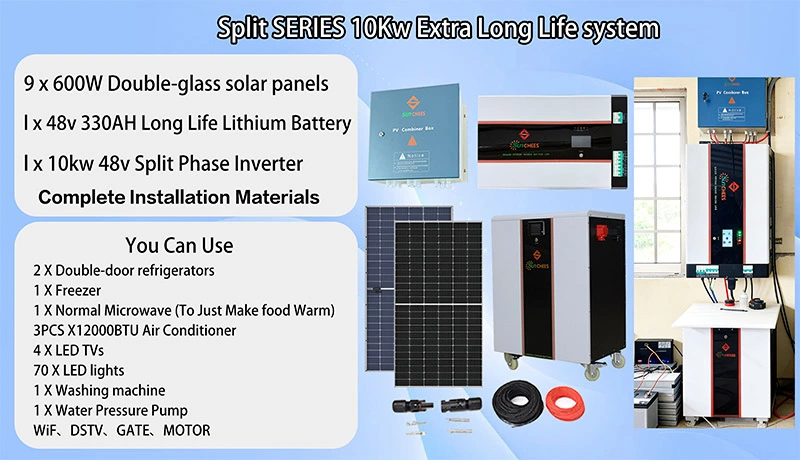
Here is why their engineering approach solves real-world off-grid challenges:
- 100% Component Compatibility: Sunchees independently develops their inverters and lithium batteries. They communicate flawlessly, reducing fault rates to near zero.
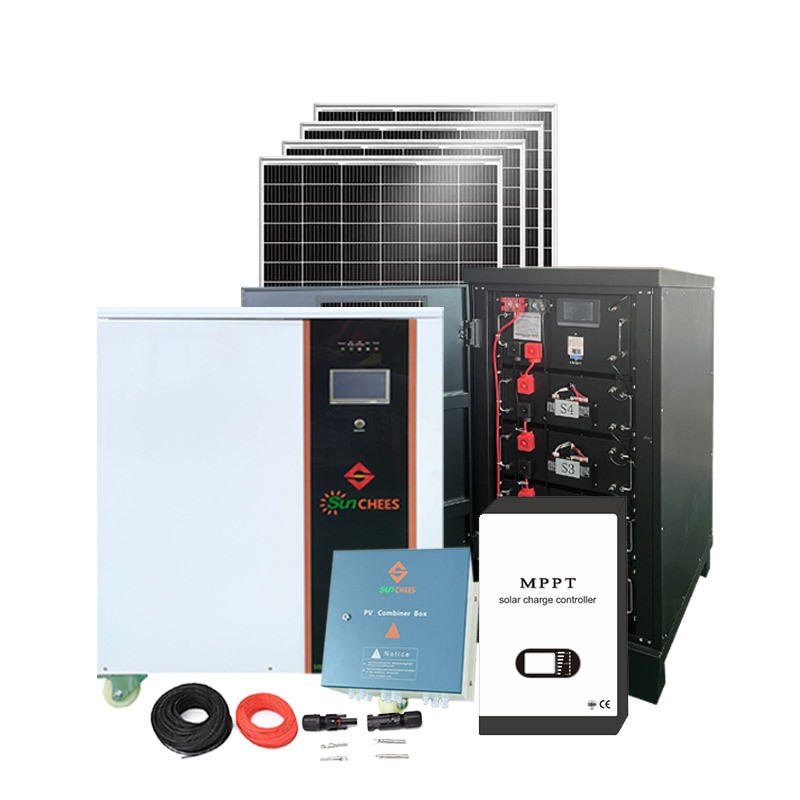
- Practical & Safe Design: The battery cabinets are designed with heavy-duty wheels for mobility. While wall-mounting is an option, keeping a heavy battery mobile allows you to move it to higher ground easily if your area is prone to hurricane flooding.
- Advanced Panel Technology: Sunchees currently offers a free upgrade to double-glass bifacial solar panels. These panels generate power from both sides, increasing efficiency by over 1.5% and preventing dangerous hot-spot effects.
- Long-Term Durability: Utilizing high-grade LiFePO4 (Lithium Iron Phosphate) batteries, the system is rated for 6000+ cycles (lasting up to 15-20 years with daily use). These batteries remain highly stable even in 60°C ambient heat.
- Guaranteed Delivery & Support: Sunchees is highly transparent (active on Instagram, TikTok, YouTube, and Facebook) and backs their promises financially: any delay in delivery incurs a 5% contract penalty. For systems over 50kW, they dispatch engineers globally for free installation. For standard residential systems, local installation partners in Jamaica can have your system running and debugged in just 5 days.
- Robust Warranties: 10 years on panels, 3 years on lithium batteries (with free replacement for manufacturing defects like deformation), and 2 years for the inverter/controller (with free PCB replacements).
Frequently Asked Questions (FAQ)
Q: How much money can a stand alone solar power system jamaica save a business?
A: With commercial grid electricity in Jamaica costing around $0.29/kWh, a 15kW system generating 60 kWh per day can save a business roughly $17 daily, or over $6,000 annually. Most systems see a full return on investment in just 3 to 4 years.
Q: Can I use an off the grid solar kit to power a remote property without any utility poles?
A: Absolutely. A kit solar off grid is specifically designed for properties with zero grid access. By correctly sizing your solar array and battery bank, you can live comfortably without ever needing a utility company. It is the perfect solution for off grid cabin solar setups in mountainous or rural areas.
Q: What makes Sunchees off grid solar products different from assembling parts myself?
A: Assembling disparate parts often leads to communication errors between the battery's BMS and the inverter. A complete off grid solar system from Sunchees features proprietary, matching hardware, ensuring seamless performance, higher safety, and a 25-year system design life.
Q: Are these systems safe during extreme weather and flooding?
A: Yes. Beyond the electronic anti-islanding safety features, Sunchees battery cabinets feature wheeled designs. Unlike fixed wall-mounted units, this allows you to easily unplug and relocate your heavy battery storage to a safer, elevated room if storm surges or flooding are imminent.
 Best Home Solar System in Jamaica: Sunchees vs SunGoldPower vs Premier Energy Solution vs GETSOL Warehouse vs Enersave vs Total Solar
 You May Also Like



 Tel
Tel
 Email
Email
 Address
6th Floor, Zhonghe Zinan Industrial Park, No. 1 Zinan Changang West Road, Nanzhuang Town, Chancheng District, Foshan City, Guangdong Province. China (Mainland)