


 Whatsapp :
 Home
Home10kW Home Battery Backup in Montserrat: A Three-Storey St. Peter Case
 Aug 05,2026
 0
0
 sunchees solar system
For a three-storey, five-bedroom house, the most useful questions are not simply “How many kilowatts?” Buyers need to know which everyday loads the system can serve and which circuits will remain available when the grid is down. This St. Peter project used a 10kW-class single-phase system, twelve 600W double-glass solar panels and two 300Ah lithium batteries for household loads including refrigeration, lighting and television. Installation and electrical commissioning took three days.
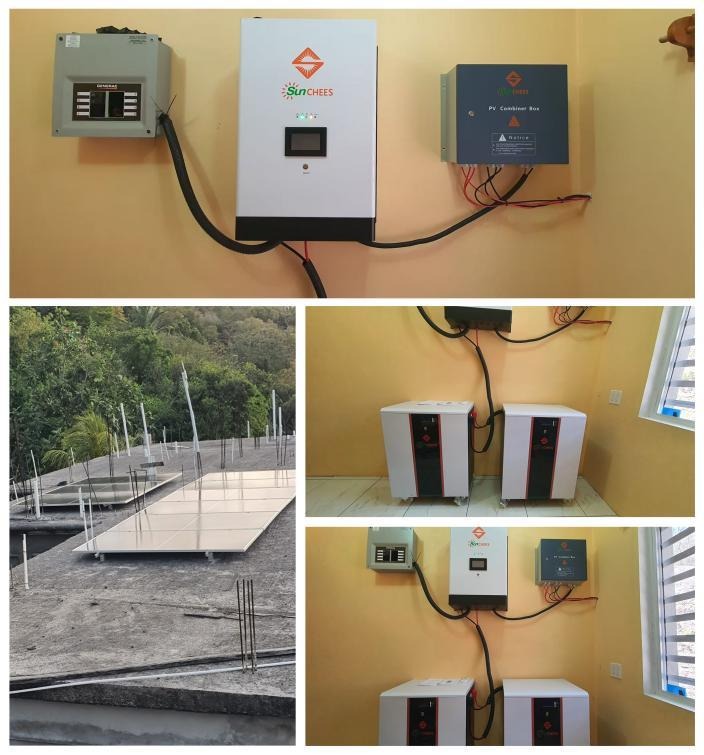
The St. Peter project includes a flat-roof solar array, wall-mounted power equipment and two floor-standing batteries.
Project specifications
|
|
|
|
|
|
|
|
|
|
|
|
|
|
|
|
|
|
|
|
|
|
|
|
How a five-bedroom home should approach battery backup
The number of bedrooms helps describe the size of a property, but it does not determine the right solar or battery capacity. A useful design starts with daily electricity use, the share used at night, the circuits that matter during an outage, and the starting power of equipment such as refrigerators, pumps and air conditioners.
This project used two 300Ah batteries. The source record did not state their voltage, so it would be misleading to publish a definite kWh figure for the installed pair. If the delivered batteries were 51.2V models, their calculated nominal energy would be about 15.36kWh each and 30.72kWh in total. A buyer should always ask for battery voltage, amp-hours, nominal kWh and usable kWh on the same quotation.
Why the 7.2kWp array and 10kW system rating are different
The twelve 600W panels add up to a 7.2kWp DC array. The 10kW figure describes the system or inverter power class. The panels produce solar energy during the day, the inverter supplies AC loads, and the batteries hold part of that energy for later use. Keeping those three functions separate makes quotations much easier to compare.
For a new home, we use roof orientation, shading, temperature, system losses and local solar conditions to estimate generation. We then use the household load profile to determine the array, inverter and storage capacity. This is more reliable than choosing a standard package from bedroom count alone.
Site information that matters in a three-storey house
A multi-level home can require longer cable routes, clearer distribution-board zoning and carefully chosen equipment locations. The project photo shows wall-mounted inverter and control equipment with two batteries positioned at floor level. For a new installation, the equipment area should be assessed for dryness, ventilation, service clearance, water exposure, cable protection, weight and access by children or other occupants.
Critical-load distribution also deserves advance planning. Refrigeration, essential lighting, internet, security and a water pump may be prioritised. Air conditioning, electric water heating and other high-power loads need to be checked against the inverter's continuous and surge ratings as well as the battery's discharge capability.
Preparing a flat roof for Montserrat weather
Montserrat's public solar projects have previously addressed hurricane conditions, coastal exposure and corrosive sea air in their engineering specifications. Homeowners can use the same practical checklist: roof structure, anchor layout, roof-edge wind zones, mounting and fastener materials, corrosion protection, drainage and a future inspection schedule.
Every roof and wind exposure is different. Ask the project team to record the mounting material, anchoring method, project design wind speed and structural responsibility. Those details are more useful than a general “hurricane-proof” label.
What the three-day project schedule included
The on-site installation and commissioning took three days. That record shows that work can be concentrated once the roof, electrical layout, equipment positions and cable routes are ready. Equipment purchasing, shipping, roof preparation and any distribution-board work still need their own time in the project plan.
Before accepting the system, request commissioning records for string voltage and polarity, insulation, grounding, protective devices, inverter settings, battery communication, charging and discharging, backup circuits and monitoring. These documents are valuable if the system later needs maintenance or remote technical support.
How Sunchees confirms a system for a larger Montserrat home
Send us twelve months of electricity use, distribution information for each floor, the circuits you want during an outage, roof and equipment-location photos, cable-route information, and details of shading, drainage, wind and salt exposure. We use the room count as background, then size the solar array, inverter and storage around measured use and your backup priorities.
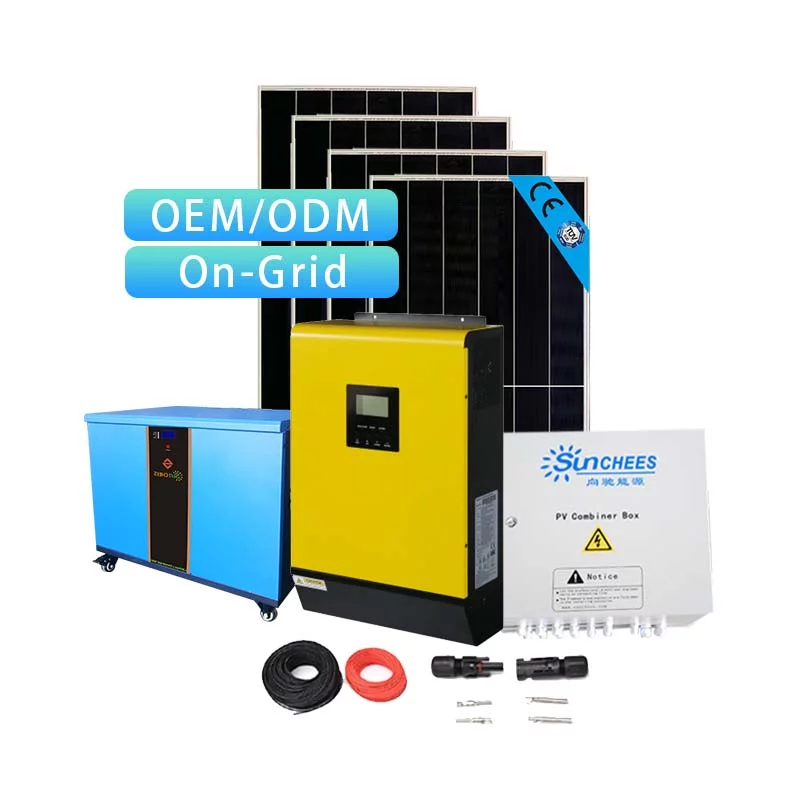
You can find more local background in our solar energy guide for Montserrat and review the equipment category on the Sunchees 10kW complete solar home system page. The component quantities and battery capacity for a new property should be confirmed in its final engineered bill of materials.
Frequently asked questions
Does every five-bedroom home need a 10kW system?
No. Bedroom count is only an indication of property size. The correct capacity depends on daily energy use, simultaneous loads, motor starting power, backup priorities, available roof area and the required backup duration.
How many kWh are stored in two 300Ah batteries?
Amp-hours cannot be converted to kWh without the battery voltage. If each battery is rated at 51.2V and 300Ah, two would provide about 30.72kWh of total nominal energy. Ask the supplier to state voltage, amp-hours, nominal kWh and expected usable kWh.
Why is a 7.2kWp array paired with a 10kW-class system?
The 7.2kWp figure is the peak rating of the twelve solar modules, while 10kW describes the system or inverter power class. Final matching depends on the inverter's input range and MPPTs, the batteries, local solar conditions and the intended load strategy.
How long will the batteries run the whole house during an outage?
There is no responsible fixed answer without the battery voltage, usable energy and actual outage load. Send us the appliances that must remain on and their expected operating time, and we can estimate a practical backup plan.
What should be confirmed before installing in a three-storey house?
Confirm each floor's electrical distribution, the critical-load circuits, cable routes, equipment weight and service space, roof structure, drainage, shading, wind conditions and salt exposure before the final design is issued.
Editorial sources
 6kW Solar System in Montserrat: A Modern Concrete Home in St. Peter
 You May Also Like



 Tel
Tel
 Email
Email
 Address
6th Floor, Zhonghe Zinan Industrial Park, No. 1 Zinan Changang West Road, Nanzhuang Town, Chancheng District, Foshan City, Guangdong Province. China (Mainland)