


 Whatsapp :
 Home
Home6kW Solar System in Montserrat: A Modern Concrete Home in St. Peter
 Aug 06,2026
 0
0
 sunchees solar system
If your priorities are refrigeration, lighting, television and other routine loads—and you want solar plus battery support without using a large section of roof—this St. Peter project is a useful example. The modern concrete home has five bedrooms and three bathrooms. Its single-phase installation used a 6kW-class system, six 600W double-glass solar panels and one 51.2V 260Ah lithium battery. Installation and electrical commissioning took three days.
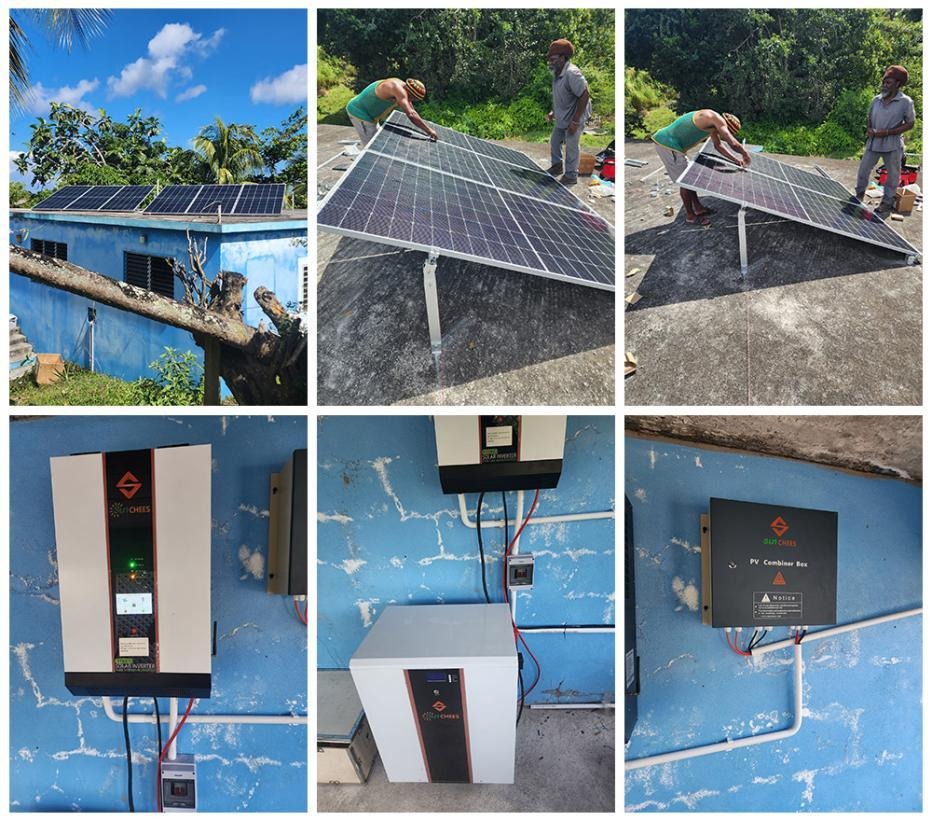
The St. Peter installation combines a compact six-panel flat-roof array with indoor power and battery equipment.
Project specifications
|
|
|
|
|
|
|
|
|
|
|
|
|
|
|
|
|
|
|
|
|
|
|
|
Understanding 6kW, 3.6kWp and 13.31kWh
Each figure describes a different part of the system. 6kW is the system or inverter power class. The six 600W modules make a 3.6kWp DC solar array. The 51.2V 260Ah battery provides approximately 13.31kWh of nominal stored energy.
The inverter rating relates to AC load capacity, the panel rating relates to daytime solar generation, and the battery rating relates to stored energy for later use. When comparing quotations, check all three figures along with the inverter's MPPT input range, string design, motor-starting requirements and your intended backup period.
Who may benefit from a compact six-panel array
The project photo shows six modules grouped on the concrete flat roof. A compact array can interest buyers with limited roof space or those who want to support a selected portion of everyday electricity use while adding battery backup.
A five-bedroom layout describes the house but does not prove that a particular capacity is suitable. Refrigerators, lights and televisions behave very differently from air conditioners, electric water heaters, ovens and pumps. For a new project, we compare electricity bills and an appliance list with the expected solar production to decide whether a 3.6kWp array and 13.31kWh nominal battery match the buyer's goals.
How one 51.2V 260Ah battery can be used
Multiplying the nameplate voltage and amp-hours gives about 13.31kWh of nominal energy. The system keeps part of the battery capacity in reserve for protection, and conversion and cable losses also reduce the energy available to AC appliances.
During an outage, a separate critical-load circuit can prioritise refrigeration, lighting, internet and other essential equipment. Higher-power loads such as air conditioning or electric heating need closer review. We estimate backup time from the selected loads and expected operating hours; we do not assign a fixed runtime from the battery label alone.
Flat-roof installation and maintenance checks
A flat-roof design needs to preserve drainage and waterproofing, provide safe maintenance access, allow appropriate module spacing and address wind loading. Montserrat's public solar work has previously considered hurricane exposure, corrosive sea air and coastal conditions. A residential mounting design should likewise be checked against the actual roof and site.
The project photo shows the modules raised above the roof surface. For a new quotation, ask for the anchoring method, project design wind speed, and mounting and fastener materials to be identified. Maintenance records should cover fasteners, grounding, cable support, corrosion, ponding water and module damage in accordance with the final engineering documents.
What the three-day installation involved
The recorded on-site installation and commissioning period was three days. Once equipment is available and roof and electrical conditions are known, site work can be scheduled efficiently. Shipping, roof preparation, weather and any distribution-board work still need to be allowed for separately.
At handover, retain the module and equipment model numbers, string diagram, protective-device details, inverter settings, battery-communication record, charge and discharge tests, critical-load tests, monitoring access and maintenance guidance. This information helps the owner understand the system and supports later servicing.
How Sunchees checks a 6kW-class system for a Montserrat home
Send us your electricity bills, the appliances that must remain available, roof and equipment-location photos, shading details, distribution-board information and the site's wind, salt and drainage conditions. We will assess power, solar generation and storage separately, then propose a configuration matched to your household.
The Sunchees 6kW solar system reference page provides a starting point for the equipment category. This specific case used six 600W modules and one 51.2V 260Ah battery. For local background and planning questions, see our solar energy guide for Montserrat.
Frequently asked questions
Why does a 6kW-class system have only 3.6kWp of solar panels?
The 6kW figure normally describes the system or inverter power class. The six 600W solar modules add up to 3.6kWp. Their final match should be checked against the inverter input range and MPPTs, the battery, local solar conditions and the intended load strategy.
How long can a 13.31kWh battery support a five-bedroom home?
Backup time depends on usable battery energy, average outage load, starting power, state-of-charge settings, temperature and system efficiency. An appliance list is required before a useful estimate can be made.
Can six 600W panels power the entire home?
The six panels provide 3.6kWp of peak solar capacity and can support selected everyday loads, including refrigeration, lighting and television. The proportion of the home's electricity they cover depends on daily consumption, weather and appliance operating times, so a new project should be checked against bills and a load list.
Is this system off-grid or hybrid?
The source record identifies a single-phase solar and battery system but does not state its operating mode. The installed inverter model and single-line diagram are needed to confirm that. A new quotation should specify whether the system is off-grid, hybrid or designed with utility bypass according to the site's supply and backup objectives.
What should be checked for a flat-roof installation in Montserrat?
Check the roof structure, anchoring, wind-pressure zones, mounting and fastener materials, corrosion protection, drainage, waterproofing, grounding, cable support and maintenance access. Keep the engineering and commissioning records with the system documents.
Editorial sources
 20kW-Class Hotel Solar System in St. Thomas: A 40kWh Battery Case Study
 You May Also Like



 Tel
Tel
 Email
Email
 Address
6th Floor, Zhonghe Zinan Industrial Park, No. 1 Zinan Changang West Road, Nanzhuang Town, Chancheng District, Foshan City, Guangdong Province. China (Mainland)