


 Whatsapp :
 Home
Home20kW-Class Hotel Solar System in St. Thomas: A 40kWh Battery Case Study
 Aug 08,2026
 0
0
 sunchees solar system
We configured this solar-plus-storage system for a small hotel in St. Thomas, U.S. Virgin Islands. The hotel occupies a three-story, island-style building with six guest rooms and four bathrooms. Its everyday loads include refrigerators, lighting, televisions, air conditioners and laundry equipment, while battery backup helps the property maintain selected services during grid outages and hurricane season.
The system combines 24 × 600W solar panels, a 25kW split-phase inverter and 40kWh of lithium battery storage. The panels follow the slope of the metal roof, making practical use of the available roof area. The local installation team completed the main installation in four days and finished commissioning on day five, with remote technical support from our team.
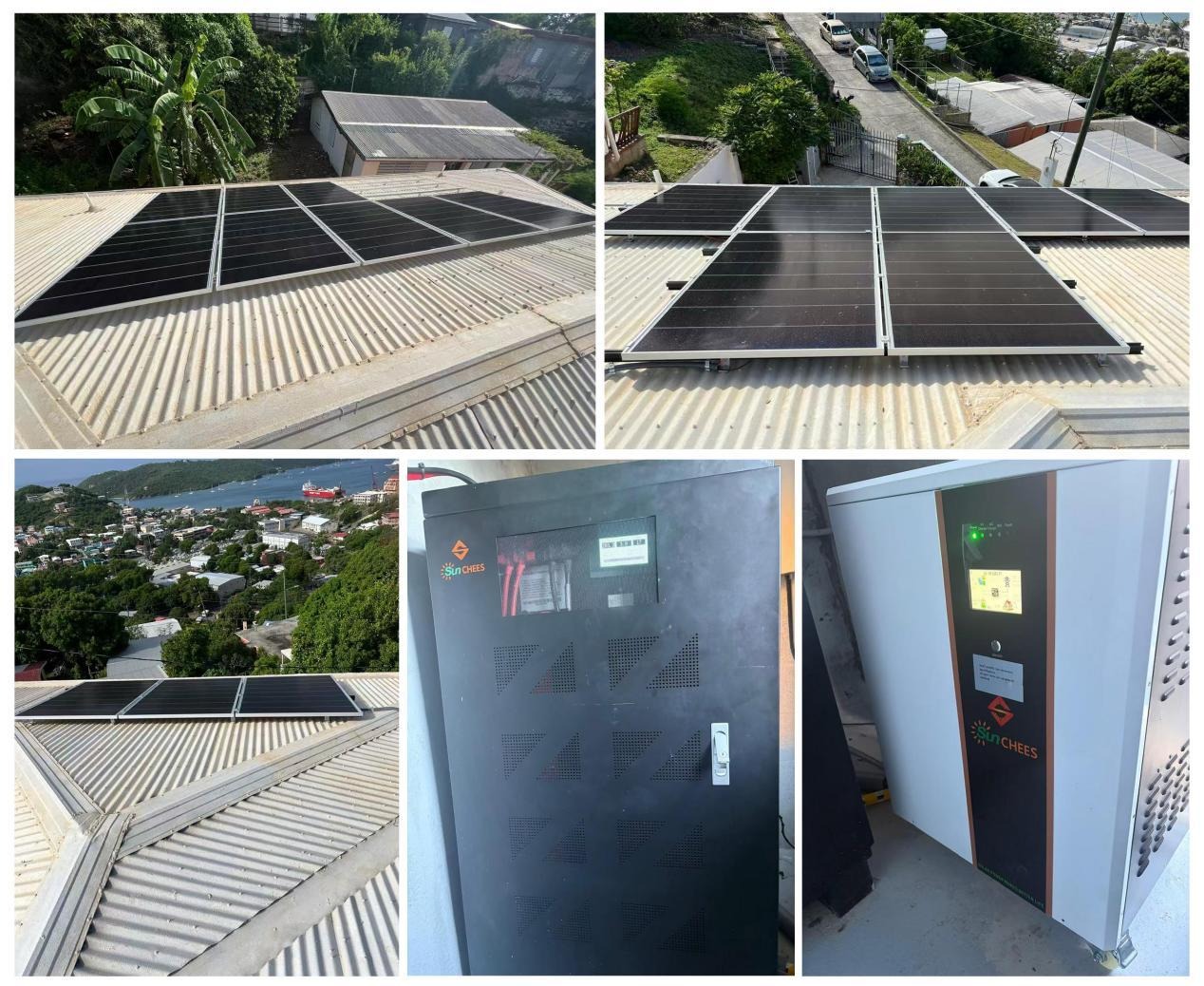
Sunchees hotel solar project in St. Thomas, showing the metal-roof PV array, split-phase power equipment and lithium battery storage.
St. Thomas Hotel Solar Project at a Glance
|
|
|
|
|
|
|
|
|
|
|
|
|
|
|
|
|
|
|
|
|
|
|
|
|
|
|
|
|
|
How 14.4kWp, 25kW and 40kWh Work Together
Hotel solar proposals often contain several capacity figures. Each number describes a different part of the system:
- 14.4kWp solar array: The combined DC nameplate capacity of 24 × 600W panels. This is the part that generates electricity during daylight hours.
- 25kW split-phase inverter: The power-conversion platform that supplies AC loads and manages changes in demand, including the starting requirements of larger equipment.
- 40kWh battery: The energy-storage capacity available for nighttime use and selected loads during outages.
A project may use a convenient system-class name during early discussions, while the final design lists the PV array, inverter, battery and connected loads separately. We follow the same approach when preparing a new proposal so buyers can see what each component is expected to do.
Hotel Solar Sizing Starts with the Operating Load
The number of guest rooms gives us useful context, but equipment ratings and operating schedules determine the final configuration. Refrigerators, freezers, Wi-Fi, security equipment and essential lighting may run continuously. Air conditioners, pumps, kitchen appliances and laundry equipment add higher running loads and, in some cases, significant startup demand.
For a hotel or guesthouse, we normally organize the load list into three groups:
- Continuous services: Refrigeration, internet, security, reception equipment and essential lighting.
- Managed loads: Guest-room air conditioners, pumps, kitchen equipment and shared-area appliances.
- Scheduled loads: Washing machines, dryers, electric water heaters and other high-demand equipment that can operate at selected times.
This gives critical hotel services priority during an outage and helps the local installation team plan the backup panel, transfer protection and equipment startup sequence.
What Can a 40kWh Hotel Battery Support?
Backup duration depends on usable battery energy and the property's average outage load. A simple planning example makes the relationship easier to understand:
- Battery nameplate capacity: 40kWh
- Planning allowance: 40kWh × 80% = 32kWh
- Example average critical load: 4kW
- Estimated planning duration: 32kWh ÷ 4kW = about 8 hours
A 4kW critical-load profile could cover refrigeration, internet, essential lighting, reception equipment and selected fans or rotating air-conditioning loads. Daytime solar production may continue serving loads and recharging the battery, while weather, occupancy, air-conditioner use and load management will affect the actual operating time.
For a formal proposal, we also account for usable battery capacity, inverter efficiency, continuous discharge power and the property's measured load profile. The eight-hour figure is an initial planning example; the final estimate comes from the selected equipment and measured hotel loads.
Why Split-Phase Power Matters in St. Thomas
A split-phase system can support a property that uses both 120V and 240V circuits. Lighting, televisions, internet equipment and general receptacles usually sit on smaller branch circuits, while air conditioners, pumps and some commercial equipment may need higher voltage or greater starting capacity.
This project uses a 25kW split-phase inverter. For a new hotel project, we review the main panel, air-conditioner and pump nameplates, any existing generator, maximum simultaneous load and startup requirements. The local licensed team can then finalize the one-line diagram, protection, distribution and site settings.
Planning Solar for a Pitched Metal Roof in the USVI
Rooftop solar in St. Thomas has to account for wind exposure, salt air, drainage and future maintenance. Here, the array follows the pitch of the metal roof in a low-profile layout, with space for ventilation and service access.
When we prepare a similar proposal, we ask for wide roof photos, information about the metal panels and roof framing, building height, nearby shading, the main electrical panel and the proposed equipment location. The local design and installation team then confirms attachment points, project-specific wind loads, roof-edge pressures, corrosion protection, cable routes and permit documents for the actual address.
The U.S. Virgin Islands Department of Planning and Natural Resources provides renewable-energy, electrical and roof-mount documentation for local projects. Routine maintenance should include the racking connections, cable restraint, seals and drainage, with an additional inspection after severe wind events.
From Installation to Commissioning in Five Days
With the site information prepared in advance, the local team completed the modules, inverter, battery and main electrical work during the first four days. Day five covered commissioning, while Sunchees provided remote support for the system configuration.
A complete handover can include checks for:
- PV string voltage, polarity and insulation;
- grounding, breakers and protection settings;
- inverter output and split-phase load balance;
- battery communications, charging and discharging;
- outage transfer and critical-load operation; and
- monitoring access and basic operator training.
Advance planning helps keep on-site work efficient. Shipping, permits, roof preparation and any electrical upgrades follow the schedule required by each property.
Grid Connection and Outage Operation in the USVI
Grid-connected projects in the territory follow the current Virgin Islands Energy Office Net Energy Billing process and the applicable VIWAPA interconnection requirements. The local licensed team should confirm the current application, inspection, protection and metering documents for the project.
Solar panels and battery backup also have distinct roles during an outage. A properly configured storage system needs backup-capable inverter controls, transfer or isolation protection and a defined critical-load panel. The U.S. Department of Energy's solar and resilience guidance explains why these controls are part of a solar-plus-storage design.
How We Configure a Solar System for Your Hotel
If you are planning solar for a hotel, guesthouse, villa or multi-bedroom property in St. Thomas, St. Croix, St. John or another Caribbean island, we can size the panels, inverter and battery around your operating load.
To begin, send us:
- your last 12 months of electricity bills or daily energy use;
- quantities and nameplate photos for air conditioners, refrigerators, freezers, pumps and laundry equipment;
- photos of the roof, main electrical panel and proposed equipment location;
- the equipment you want to keep running during an outage;
- grid voltage and information about any existing generator; and
- the project island and preferred installation schedule.
Our team can then prepare an initial sizing recommendation, equipment list and quotation, followed by coordination with the local installer for site confirmation and commissioning support.
Contact us through the WhatsApp button on the Sunchees website or email admin@sunchees.com. Include the island, property type and estimated loads in your message so we can start with the right system range.
You can also read our US Virgin Islands solar planning guide or review the current Sunchees 600W bifacial dual-glass solar panel. The final project configuration and warranty follow the models and terms listed in the approved quotation and order documents.
Frequently Asked Questions
What is the total capacity of 24 × 600W solar panels?
Twenty-four 600W panels provide 14.4kWp of total DC nameplate capacity. The project also includes a 25kW split-phase inverter and 40kWh of battery storage for AC power delivery and energy storage.
Can a 40kWh battery run a hotel all night?
Runtime depends on the hotel's average outage load. Using an 80% planning allowance gives 32kWh from a 40kWh nameplate battery. At an average critical load of 4kW, the planning example is about eight hours. We refine the estimate using the property's air-conditioning, refrigeration, lighting, pump and appliance data.
Will the system continue supplying power during a WAPA outage?
With battery storage, backup-capable output, transfer protection and a critical-load panel, the system can support selected equipment within its design limits. We coordinate the outage sequence, load priorities and commissioning tests with the local installation team.
Can this system run every guest-room air conditioner at once?
The number of air conditioners that can run together depends on each unit's input power, startup method, occupancy and other simultaneous loads. Send us the nameplate details and expected operating pattern so we can check inverter continuous power, startup capacity and battery discharge power.
Does a St. Thomas rooftop solar project need local permits?
Rooftop solar and electrical work follow the current permit, inspection and technical-document requirements for the project location. The local licensed design and installation team handles site documents and construction, while Sunchees supplies equipment documentation and remote technical support.
Are federal tax incentives available for a hotel solar project in 2026?
Commercial projects may be eligible under current provisions such as Section 48E. The applicable percentage and eligibility depend on project timing, labor requirements, equipment sourcing and the business's tax position. A tax professional familiar with USVI and federal rules should review the project documents. See the IRS Clean Electricity Investment Credit guidance for current federal information.
Can Sunchees configure a similar system for another Caribbean hotel?
Yes. We use this project as a reference point, then adjust the panel, inverter and battery capacity for the property's energy use, equipment, roof, voltage, outage goals and local installation conditions.
Editorial Sources
 A 10kW Ground-Mount Solar and Battery System for a Five-Bedroom Home in St. Peter, Montserrat
 You May Also Like



 Tel
Tel
 Email
Email
 Address
6th Floor, Zhonghe Zinan Industrial Park, No. 1 Zinan Changang West Road, Nanzhuang Town, Chancheng District, Foshan City, Guangdong Province. China (Mainland)