

 Whatsapp :
 Home
HomeA Solar Retrofit for a Five Bedroom Home in Liberia Costa Rica
 Aug 19,2026
 0
0
 sunchees solar system
Panels cover part of a green metal roof, while indoor power equipment shares space with household storage shelves. This project in Liberia, Costa Rica, brought solar generation and battery storage into a two storey home with five bedrooms and two bathrooms.
The household uses a refrigerator, lighting and air conditioning. We completed the work in two days, finishing on December 1, 2024. Panels follow the roof slope, with the inverter, distribution equipment and battery connected indoors.
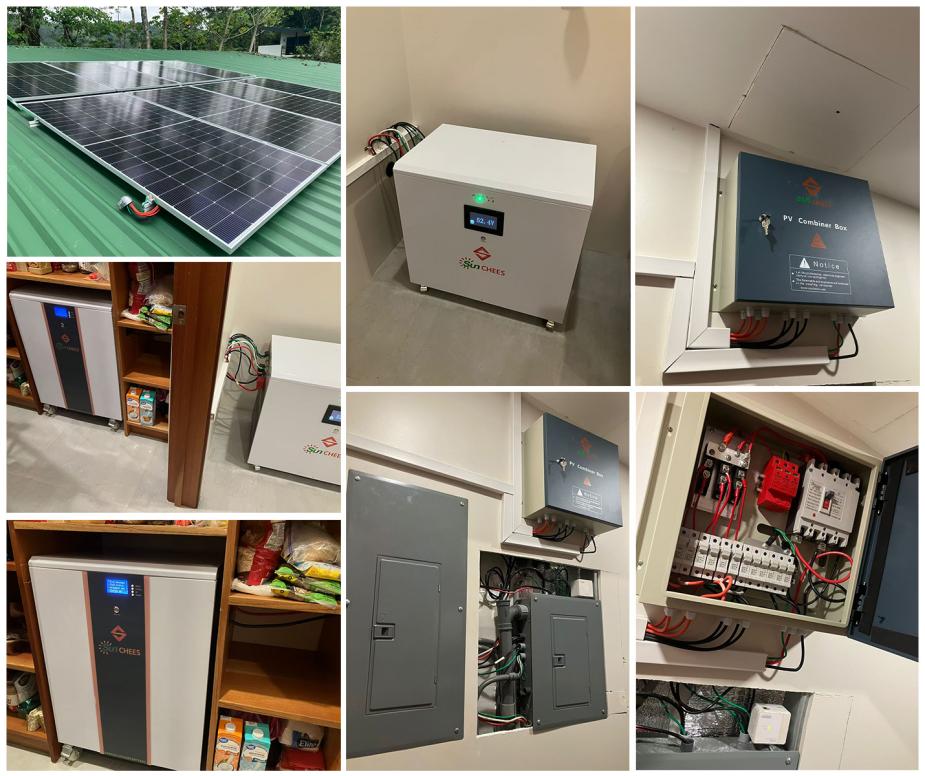
Panels on a green metal roof in Liberia and indoor power equipment beside existing household storage shelves.
A roof that works through changing seasons
Liberia is in Costa Rica's North Pacific region. National meteorological information describes a distinct dry and rainy season on the Pacific side, generally with a dry period from December to March and a rainy period from May to October. The installation was completed near the usual beginning of the dry season, but year round use also needs to account for charging conditions during wetter months.
The panels sit close to the slope of the existing metal roof. Making use of sunlight goes hand in hand with attending to drainage and weatherproofing around roof connections. On days when cooling is needed while the sun is available, solar can supply some of that demand directly. Refrigeration, lighting and air conditioning used after sunset need stored electricity or another power source.
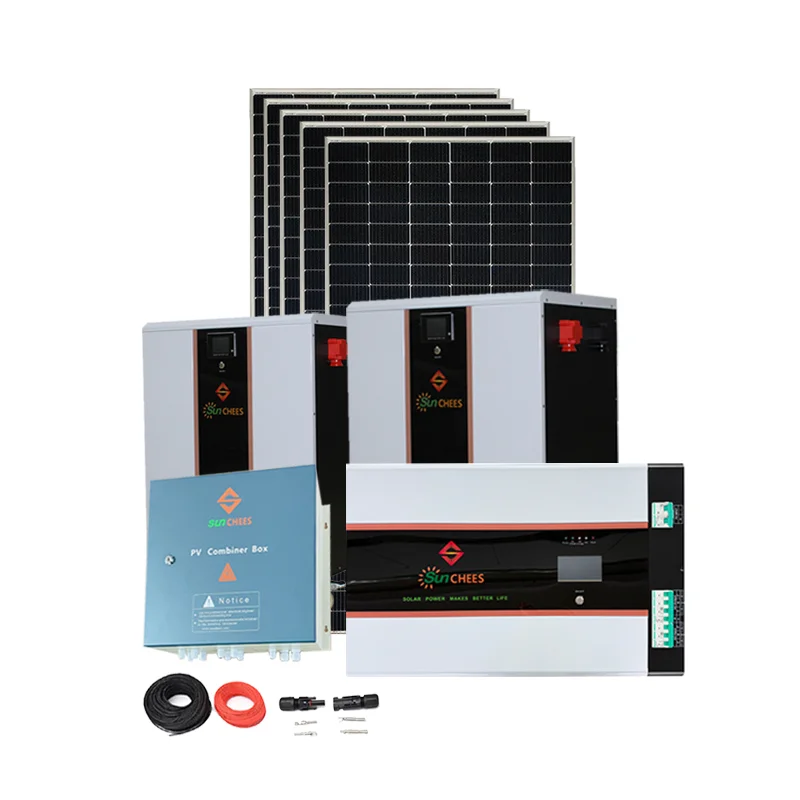
Twelve 600W panels form a 7.2kWp array, paired with a 10kW split phase inverter and a 51.2V 300Ah lithium battery. The battery holds approximately 15.36kWh of nominal energy, allowing some daytime generation to be used later. How long it lasts depends on the appliances running and the charge remaining.
Finding room for equipment inside an existing home
The indoor photographs show a cabinet between storage shelves, with packaged household items still nearby. Distribution and protection equipment is mounted on the wall. Equipment dimensions, access for servicing and the existing storage arrangements all need to be considered together.
Seasonal rooftop generation, room for equipment indoors and evening cooling are connected parts of this retrofit. The installation brings them together within the spaces the home already has.
Plan Your Solar Project with Sunchees
Founded in 2008 and based in Foshan, Guangdong, China, Sunchees develops its own inverters and lithium batteries and provides customised solar power and solar air conditioning solutions for homes and businesses. We support OEM requirements and your choice of solar panel brand, with remote installation guidance throughout the process, from equipment configuration to on-site installation support.
If you are considering solar for your home or business, share your project location, building photographs and everyday electricity needs with us. We can discuss a system and installation arrangement that suits the site and how you use it.
We are transparent and active. You can find us on Instagram, TikTok, YouTube, and Facebook.
 Solar Power for Radio and Shared Spaces at a Mission in Bafata
 You May Also Like



 Tel
Tel
 Email
Email
 Address
6th Floor, Zhonghe Zinan Industrial Park, No. 1 Zinan Changang West Road, Nanzhuang Town, Chancheng District, Foshan City, Guangdong Province. China (Mainland)