Solar Power for a Mission Radio Station in Guinea-Bissau
Aug 21,2026
0
sunchees solar system
For a radio station, electricity is not just another utility. If the power stops, the transmitter, mixing console and audio equipment stop with it. At a mission site in Guinea-Bissau, the same supply also needs to serve lights and shared spaces used by the people who live and work there.
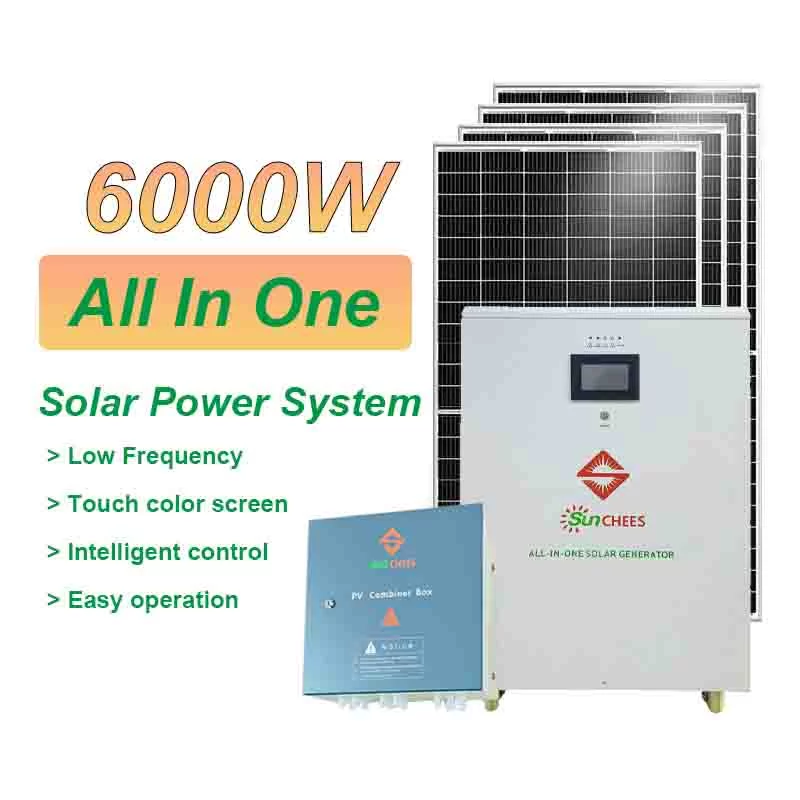
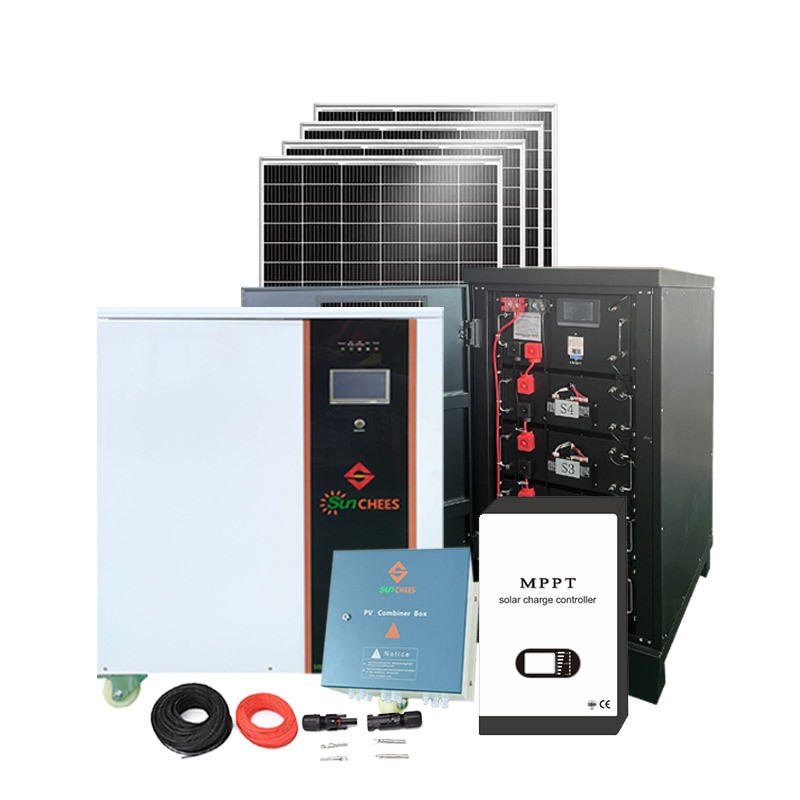
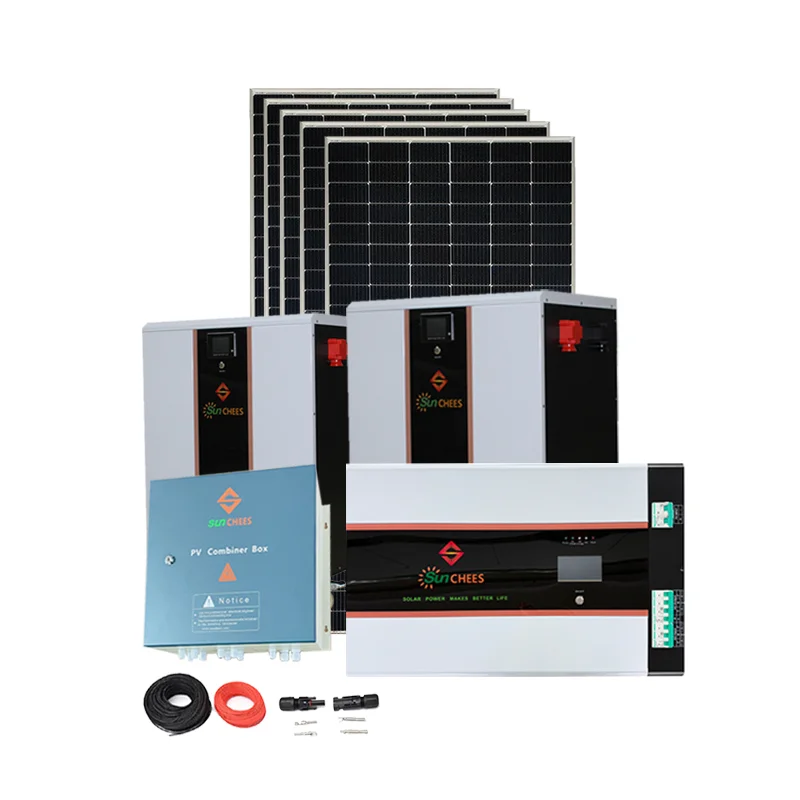
That made the brief practical: give the station a local source of solar power and stored energy that could support its everyday work. The finished Sunchees system combines a 5kW inverter class, six 600W solar panels and a 260Ah battery bank. Installation and commissioning took two days, and the project was completed on Apr 18, 2026.
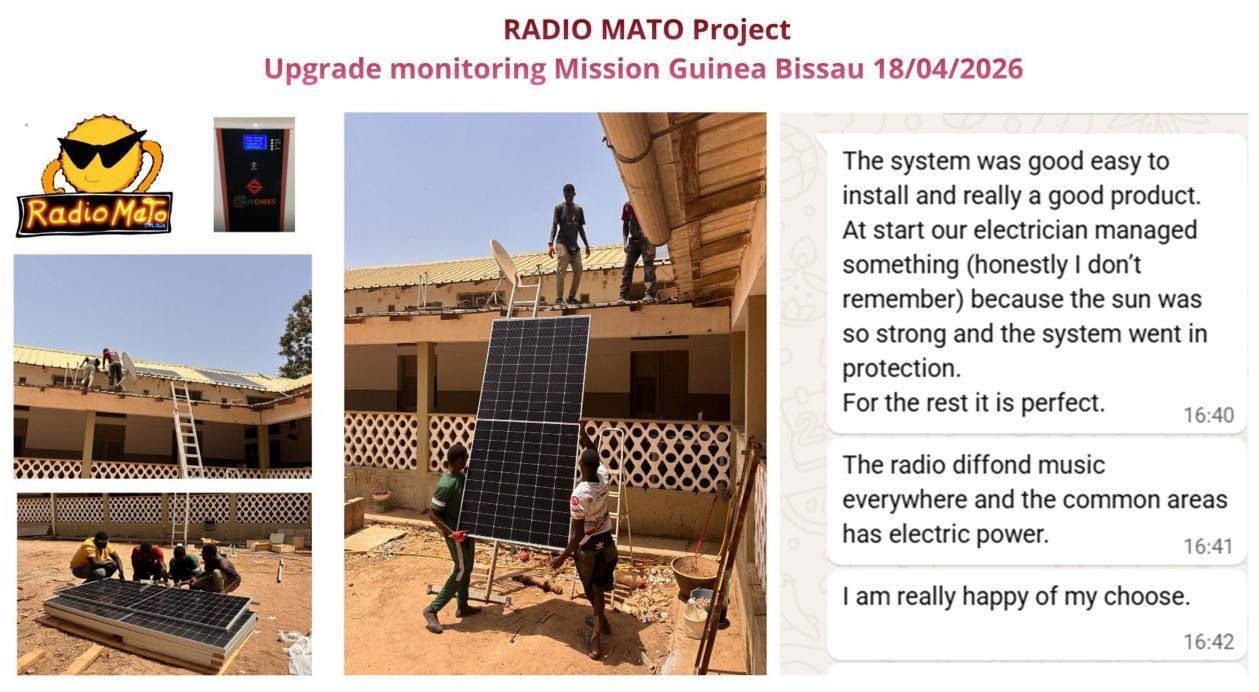
The result is best described in the customer's own words: the radio plays music, the common areas have electric power, and he is happy with his choice.

The Guinea-Bissau mission project: solar panels on the sloped metal roof, Sunchees equipment on site and the customer's original feedback.
Why a Mission Radio Station Needs Its Own Power Source
Guinea-Bissau's electricity access rate was about 33% in the World Bank's 2024 project assessment. The same assessment says secondary systems serving cities such as Bafatá rely on diesel generation and that supply is affected by fuel logistics. This country-level background explains why organisations may value an energy source they can operate on site. Conditions at an individual building still need to be assessed separately.
Radio makes that need especially visible. An FM transmitter may run for long periods, while the studio has a mixing console, audio equipment, network devices and lighting. If the building also includes bedrooms, bathrooms and common areas, the system has to balance the station's core work with ordinary daily use.
Solar power is already used by community broadcasters in Guinea-Bissau. In 2020, the United Nations reported that solar installations at a group of remote radio and television stations allowed some of them to extend their broadcast hours. That is useful local context, not a performance claim for this project; the outcome here is supported by its own installation record and customer feedback.
What Was Installed
|
|
|
|
|
|
|
|
|
|
|
|
|
|
|
|
|
|
|
|
|
|
|
|
|
|
|
|
|
|
The 5kW and 3.6kWp figures describe different parts of the system. The 5kW rating is the inverter or AC load class. It affects which appliances can operate together. The six panels provide 3.6kWp of rated DC solar capacity, which affects how much energy the array can collect during the day. Actual solar production changes with panel temperature, orientation, roof pitch, shade and system losses.
The Customer's Test Was Simple: Does the Station Have Power?
The customer did not describe the project with a spreadsheet of technical results. His message focused on what changed at the site:
“The radio diffond music everywhere and the common areas has electric power. I am really happy of my choose.”
That is the most meaningful result recorded for this project. The solar system is part of the station's daily routine: it supports radio equipment on one side and power for shared spaces on the other. Runtime and energy savings would require separate monitoring data.

The customer's original WhatsApp feedback.
How Long Can a 260Ah Battery Run the Station?
Calculating runtime from 260Ah also requires the battery voltage. The conversion is voltage × 260Ah ÷ 1,000 = nominal kWh. The source record leaves this battery bank's voltage and chemistry unconfirmed, so its project-specific runtime remains open until the nameplate and settings are checked.
For a planning example only, a 51.2V, 260Ah battery would contain about 13.31kWh of nominal energy. If a designer provisionally allows 80% usable capacity and 90% inverter efficiency, the AC-side energy would be about 9.58kWh. On those assumptions, a steady 1kW average load would run for roughly 9.6 hours, while a 2kW average load would run for roughly 4.8 hours. These are calculation examples, not measured results from the mission station.
The real design should begin with two numbers: average power and simultaneous peak power. The transmitter and studio equipment may create a fairly steady base load. Pumps, refrigerators, air conditioners or other motors can add larger starting peaks. Listing each device's input power and operating schedule is the reliable way to size the inverter in kW, the solar array in kWp and the battery in kWh.
What the Initial Protection Event Tells Us
The customer also recalled that, during the initial installation, the sun was very strong and the system entered protection. The electrician handled the issue, and the customer said the rest of the experience was perfect.
That account should not be turned into a guessed diagnosis. A protection event means the inverter, charge controller or battery detected a condition outside its configured limits. The exact cause could only be established from the fault code and measurements taken at the time.
Useful commissioning records include the displayed fault code, each PV string's open-circuit voltage, the inverter's MPPT input range, equipment temperature, charge current and battery-management-system status. Those details help separate PV-voltage, temperature, charging-parameter and battery-protection paths, making remote technical support much more precise.
Guinea-Bissau has a strong solar resource: IRENA reports an average annual global horizontal irradiation of about 2,042kWh/m². That helps explain the opportunity for solar generation and makes temperature, PV string voltage and equipment ventilation important design checks. The national average provides context. Site-specific modelling should use the roof's orientation, tilt and shade profile, followed by operating data after commissioning.
Planning Solar Power for a Similar Radio or Mission Site
If your site needs to support both broadcasting and common areas, start with a load list containing five columns: equipment name, nameplate power, quantity, daily operating hours and whether it must remain on during an outage. Give the FM transmitter, mixing console, amplifiers, router and lighting their own rows. Record the starting power of pumps, refrigerators or air conditioners separately.
Send that list with the site voltage, required backup time, roof photographs and distribution-board photographs. Sunchees can then recommend the panel quantity, inverter power, battery capacity and connection approach around the actual operating schedule. You can first review a 5kW off-grid solar system reference, then contact Sunchees with the station details.
Frequently Asked Questions
Is this a 5kW or a 3.6kWp solar system?
Both figures are correct, but they describe different equipment. The 5kW figure is the inverter or AC load class. Six 600W panels provide 3.6kWp of rated DC solar capacity. Simultaneous equipment use is checked against inverter kW; daily solar collection depends on array kWp, local sunlight and system losses.
How long can a 260Ah battery run a 1kW load?
The 260Ah label is only one input. A usable answer also needs the battery voltage, permitted discharge limit, inverter efficiency and the average power of every device running at the same time. Temperature and battery age should be included when the runtime target is finalised.
What should be recorded if strong sun coincides with a protection event?
Photograph the fault code and monitoring screen first. Record each PV string's open-circuit voltage, equipment temperature, charge current and battery-management-system status, then compare them with the inverter's MPPT range and charging settings. These measurements are needed before assigning a cause.
Can another radio station copy this exact configuration?
Not safely from the 5kW label alone. Another station may have a different transmitter power, broadcast schedule, voltage or night load. Its equipment nameplates and operating hours should be collected first so the inverter, panels and battery can be sized separately.
Editorial Sources
- World Bank — Guinea-Bissau Solar Energy Scale-up and Access Project (2024)
- World Bank — Implementation Status & Results Report (2026)
- IRENA — SIDS at a Crossroads (2024)
- United Nations in Guinea-Bissau — Community radio stations convert to solar energy (2020)
- Sunchees — 5kW off-grid solar system reference

Home
A 10kW Solar and Battery System for a 4-Bedroom Home in Zanzibar
You May Also Like

Tel
Email
Address