A 10kW Solar and Battery System for a 4-Bedroom Home in Zanzibar
Aug 28,2026
64
sunchees solar system
Why Zanzibar homes often consider solar and battery storage together
Zanzibar receives all of its electricity from mainland Tanzania through three submarine cables. Tanzania’s 2026 National Energy Compact reports that Zanzibar’s electricity connectivity rate was 57% in 2024, while the islands continue to invest in grid expansion, solar generation and battery storage.
For a home that already has a grid connection, rooftop solar can serve part of the daytime demand, while a battery can move some of that energy into the evening or keep selected appliances available during an outage. A useful home design therefore starts with three questions: how much energy the home uses during the day, how much it wants to keep for the night, and which appliances may run at the same time.
This project brings those questions into a real four-bedroom home. The two-storey house has two bathrooms, with everyday loads including a refrigerator, lighting and television. Its single-phase system combines a 10kW system rating, twelve 600W modules on the sloped roof, and one 51.2V 300Ah lithium battery. Installation and electrical commissioning took two days.

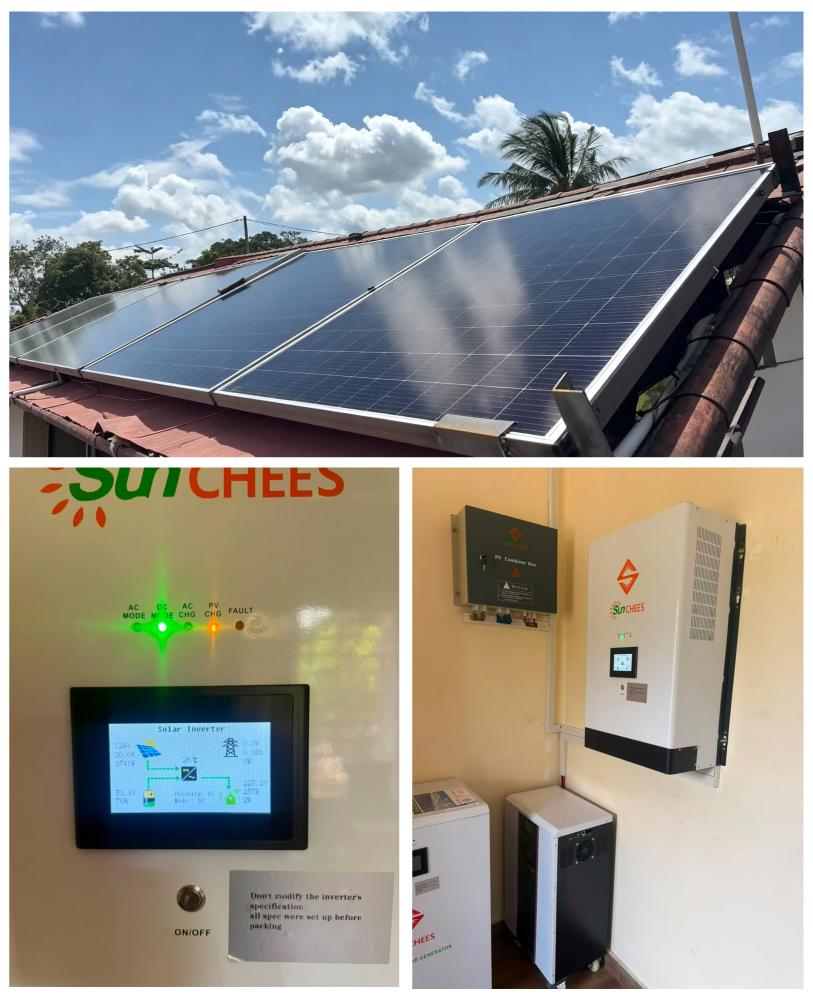
A Zanzibar home with twelve rooftop solar modules and Sunchees inverter and battery equipment installed indoors.
What was installed at this home
|
|
|
|
|
|
|
|
|
|
|
|
|
|
|
|
|
|
|
|
|
|
|
|
|
|
|
The project record calls this a 10kW system, while the twelve 600W modules add up to 7.2kWp. If a family wants to run a refrigerator, television, air conditioner and water pump at the same time, the 10kW rating is the first number to consider. When estimating how much energy the roof can produce during the day, the 7.2kWp array is the relevant starting point. Air conditioners and pumps can briefly draw more power as they start, so their exact models still matter.
What 15.36kWh can mean for an evening at home
The battery’s nominal energy is calculated as 51.2 V × 300 Ah ÷ 1,000 = 15.36 kWh. The amount available to household appliances will be lower because the system keeps a safety reserve for the battery and loses some energy during conversion. Temperature and the battery’s condition also affect the result.
Two simple evening scenarios show the difference. If the refrigerator, lights, television and internet equipment average 500W for ten hours, they use about 5kWh. If the average load rises to 1.5kW over the same period, the home needs about 15kWh—already close to the battery’s full nominal energy, with little room for conversion losses or the battery reserve.
That is why the answer to “Will it last all night?” depends on what is actually switched on. Air conditioners and water pumps can raise the power required at one moment, while electric water heaters and cooking appliances can consume a large amount of energy over a shorter period. The 10kW system rating, 15.36kWh battery and 7.2kWp rooftop array each answer a different part of the household’s energy plan.
How much can twelve panels produce in a day?
The project photo shows twelve modules mounted on the home’s sloped roof. Together, they provide 7.2kWp of capacity, equivalent to a 7.2kW peak rating under standard test conditions. Daily production then changes with the roof direction and pitch, shade from nearby trees or buildings, module temperature and dirt on the glass.
The World Bank’s solar maps for Tanzania can help with an initial view of the long-term solar resource. A design for one particular home also needs its location, roof direction, pitch and hours of shade. Once the system is running, daily and monthly records from the inverter or monitoring platform provide the most useful picture of how that roof performs.
For a home in Zanzibar’s island environment, the handover pack should name the mounting and fastener materials, mark every roof penetration and cable entry, and record the earthing and electrical protection. Those details give the owner clear places to inspect for loosening, corrosion or water entry instead of relying on the installation photo alone.
Systems with the same 10kW name can use different components
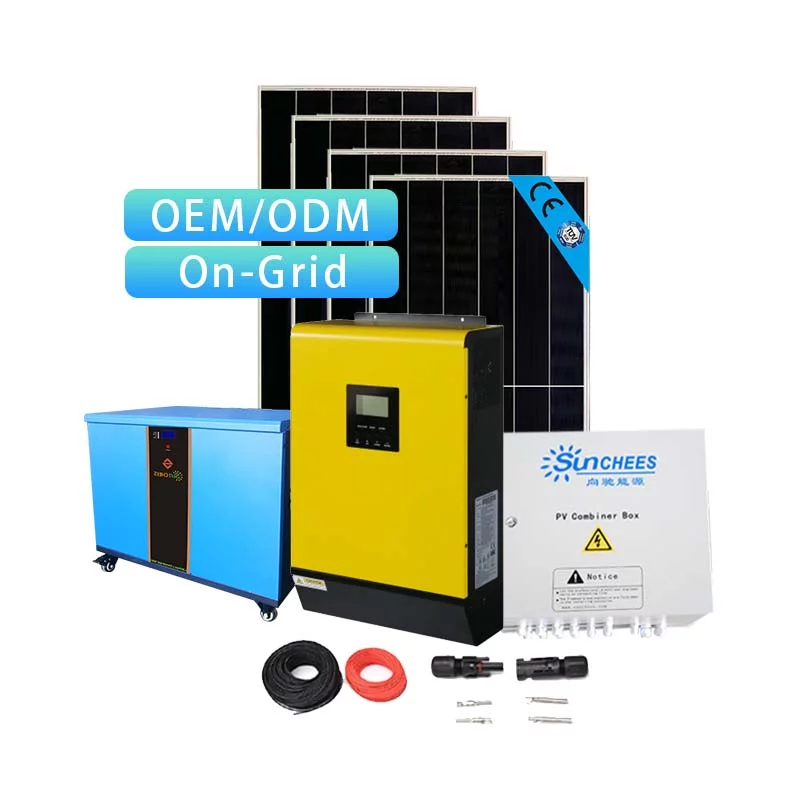
A 10kW system does not always come with the same number of panels or the same battery capacity. This Zanzibar project uses twelve 600W modules and one 51.2V 300Ah battery. The current Sunchees 10kW system reference shows a different general configuration.
The number of bedrooms gives a sense of the property, but the appliances determine the system design. A four-bedroom home using mainly refrigeration, lighting, television and internet equipment has a different load profile from one running several air conditioners, a water pump, an electric water heater and electric cooking appliances. Appliance power ratings and daily operating hours show whether this project’s 10kW, 7.2kWp and 15.36kWh combination is suitable for another home.
How to size a system for your own home
If you are planning residential solar in Zanzibar or elsewhere in Tanzania, start with a recent ZECO bill and a list of your appliances, their power ratings and daily operating hours. Mark the appliances that must stay on during an outage. Photos of the roof and distribution board help define the panel area and wiring scope, while model numbers for air conditioners, pumps and refrigerators help estimate their starting power.
Send us those details together with your preferred backup time. We can use them to recommend the inverter size, panel quantity and battery capacity, then prepare a project equipment list and connection proposal. You can first review our 10kW solar system reference and off-grid solar system options, then send us your bill, appliance list and roof photos.
Frequently asked questions
Is this a 10kW system or a 7.2kWp system?
Both numbers are correct, but they describe different parts of the installation. The 10kW project rating helps assess which appliances can run together. The twelve 600W modules total 7.2kWp, which is used when estimating daytime solar production.
How much energy is stored in a 51.2V 300Ah battery?
Its nominal energy is 15.36kWh. The usable amount will be lower after the battery’s safety reserve and conversion losses are included, and it can also change with temperature and battery condition.
Can 15.36kWh run a refrigerator, lights and television all night?
Add the appliances’ average power over the whole evening. An average 500W load for ten hours uses about 5kWh. An average 1.5kW load for ten hours uses about 15kWh, which is already close to the battery’s nominal energy. A project-specific answer also needs the battery settings and every load that will be running.
Can another four-bedroom home use the same configuration?
It should be recalculated from that home’s appliances. Air conditioners, pumps, water heaters, cooking equipment and refrigerators can have very different power ratings and operating times, which changes the inverter, panel and battery requirements.
Will every similar installation take two days?
Two days is the recorded on-site period for this Zanzibar project. Roof construction, cable routes, distribution-board work and material readiness change the amount of work at another home, so its installation period should be confirmed in the site proposal.
Editorial sources
- World Bank — Tanzania National Energy Compact, 2026
- World Bank — Zanzibar Energy Sector Transformation and Access Project
- World Bank — Zanzibar Poverty Assessment
- World Bank Data Catalog — Tanzania solar irradiation and PV power potential maps
- Zanzibar Utilities Regulatory Authority — Tariffs
- Sunchees — 10kW solar system reference

Home
When the Local Substation Went Down: A South African Home Solar Backup Story
You May Also Like

Tel
Email
Address