


 Whatsapp :
 Home
HomeInstalled Jun 10, 2026: 10kW/15kWh Solar System for a Kingston Flat-Roof Home
 Aug 13,2026
 0
0
 sunchees solar system
Jamaica's average solar irradiation of about 5kWh/m²/day gives homes a useful daytime energy resource. Grid reliability gives storage a separate purpose: OUR's 2023 JPS figures record 11.8 sustained interruptions and 2,403.3 interrupted minutes per average customer. This four-bedroom Kingston project combines a modest 3.6kWp array, a 10kW inverter and 15kWh of nominal storage to reduce part of the daytime grid load and preserve selected circuits during an outage.
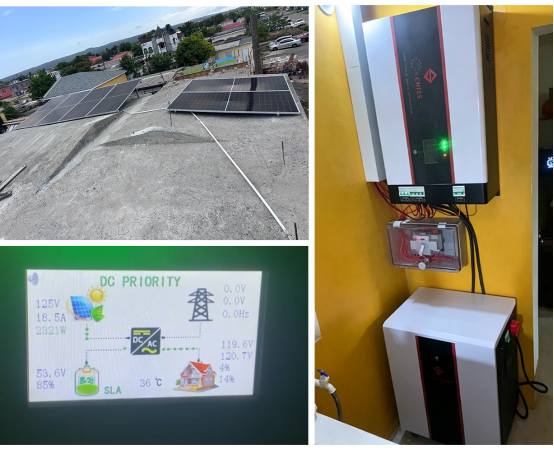
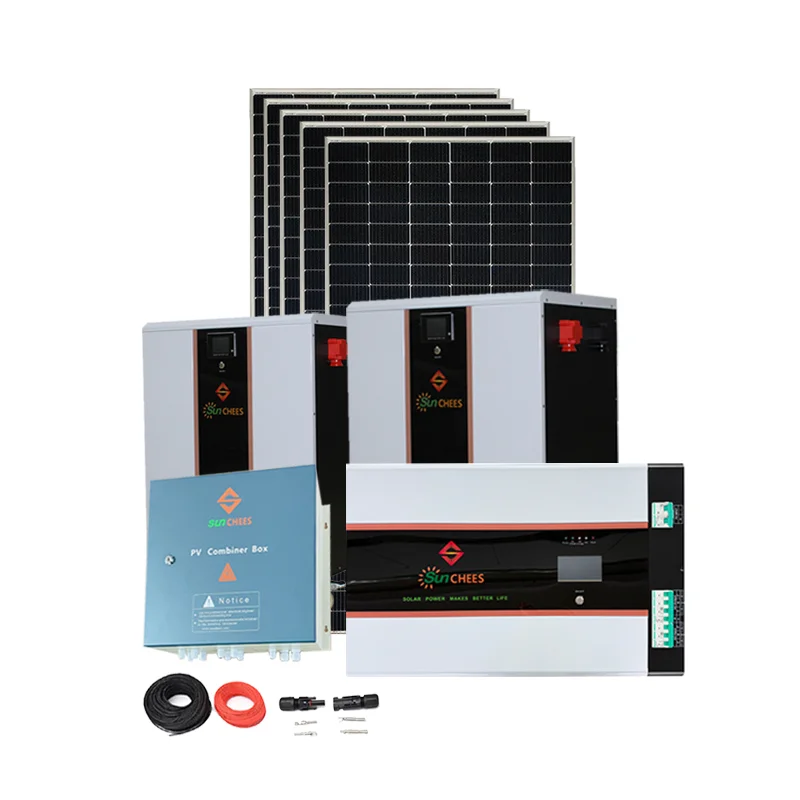
Kingston, Jamaica — Jun 10, 2026. Sunchees completed the installation on a two-storey, four-bedroom, two-bathroom residence. Six 600W double-glass modules were mounted on the flat roof and connected to a 10kW split-phase inverter and one 15kWh lithium battery. The site work took two days.
Why a four-bedroom Kingston home might start with a smaller array
STATIN's 2011 parish data puts Kingston's average household at 3.0 people, but it does not match occupants to bedroom count. A four-bedroom house may accommodate three residents plus an office and guest room, or a larger family. Occupancy changes daily kWh; the number and size of air conditioners running together changes instantaneous kW. Both matter more than the bedroom label alone.
Project photographs show unused flat-roof area around the six-module array. The present 3.6kWp array serves daytime refrigeration, cooling, lighting and other live loads first; remaining production can charge the 15kWh battery. The 10kW inverter provides headroom for simultaneous appliances and compressor demand, but it does not make the 3.6kWp array generate 10kW of solar energy.
This ratio can support a staged plan: establish essential-load backup now, monitor daily PV production and state of charge, then use the recorded data and remaining roof area to decide whether more modules are justified.
Confirmed project configuration
|
|
|
|
|
|
|
|
|
|
|
|
|
|
|
|
What can a 15kWh battery support?
Assuming 80% usable depth of discharge and 90% inverter efficiency, the battery supplies about 15 × 0.80 × 0.90 = 10.8kWh to AC loads. That equates to about 10.8 hours at a 1kW average load or 5.4 hours at 2kW.
For air conditioning, Courts Jamaica currently lists inverter split units in 12,000, 18,000 and 24,000 BTU classes. These are currently offered capacity bands, not proven sales rankings. Regional LG data puts a 12,000 BTU inverter model at roughly 1.08–1.12kW nominal cooling input.
One 12,000 BTU unit at 1.1kW plus an average 0.7kW for the refrigerator, lights and internet produces an estimated 1.8kW load. The 10.8kWh usable allowance would support it for about six hours. Two such units plus the same base load total about 2.9kW, or roughly 3.7 hours. Cycling after rooms reach set temperature can extend runtime; extreme heat, low temperature settings and air leakage shorten it.
Can the 3.6kWp array recharge the battery every day?
Using 5kWh/m²/day and an 80% overall planning factor gives 3.6 × 5 × 0.8 = 14.4kWh/day. If the home consumes 6kWh directly during solar hours, about 8.4kWh remains for charging. That is not enough to replace a near-full 10.8kWh AC discharge every day.
Three operating responses are possible: use less battery energy overnight, allow coordinated grid charging, or increase the array after checking the inverter's maximum PV input, MPPT voltage/current range, string arrangement, protection devices and usable roof area. This calculation is why a proposal should not treat a 10kW inverter label as proof of a 10kWp solar array.
Flat-roof details that affect long-term performance
A sound design should document roof penetrations or ballast, drainage paths, structural wind loading and maintenance corridors. Those drawings determine the waterproofing work, fastening method and safe access after installation. The two-day duration is this project's record; roof repairs, cable routes, switchboard work and approvals can change another home's schedule.
Sunchees prepares a property-specific bill of materials from electricity use, appliance nameplates, backup priorities, flat-roof dimensions, site voltage and expansion goals. Our 10kW split-phase range is a starting reference, not a substitute for load and roof design.
Frequently asked questions
Are six 600W modules a 10kW solar array?
No. Six 600W modules equal 3.6kWp. The 10kW figure is the inverter's rated AC power.
Can the 15kWh battery run air conditioning overnight?
It can support selected cooling, but not an unlimited whole-home load. Under the stated assumptions, one 12,000 BTU inverter unit plus 0.7kW of base load runs for about six hours; two run for about 3.7 hours. The final result needs the actual air-conditioner maximum input and the battery's configured reserve.
Can more panels or batteries be added later?
Only within the inverter's PV-input and MPPT limits, permitted battery parallel count, BMS compatibility, cable capacity, protection ratings and available roof area. Those fields should appear in the quotation rather than being assumed.
Editorial sources
 Installed Mar 10, 2026: 10kW/30kWh Solar System for an Imbabura Home
 You May Also Like



 Tel
Tel
 Email
Email
 Address
6th Floor, Zhonghe Zinan Industrial Park, No. 1 Zinan Changang West Road, Nanzhuang Town, Chancheng District, Foshan City, Guangdong Province. China (Mainland)