


 Whatsapp :
 Home
HomeRooftop Solar for a Home Surrounded by Trees in La Guajira
 Aug 14,2026
 52
52
 sunchees solar system
The panels on this La Guajira home follow a long metal roof beside dense trees. Some trees rise above parts of the roof, and fallen leaves are visible on the surface. That close relationship between the house and its vegetation is one of the clearest features of the installation.
The two storey property has four bedrooms and two bathrooms. Its household appliances include a refrigerator, lights and air conditioning. We supplied eight 600W panels, a 5kW inverter and storage equipment, completing the installation on June 15, 2026, after two days on site.
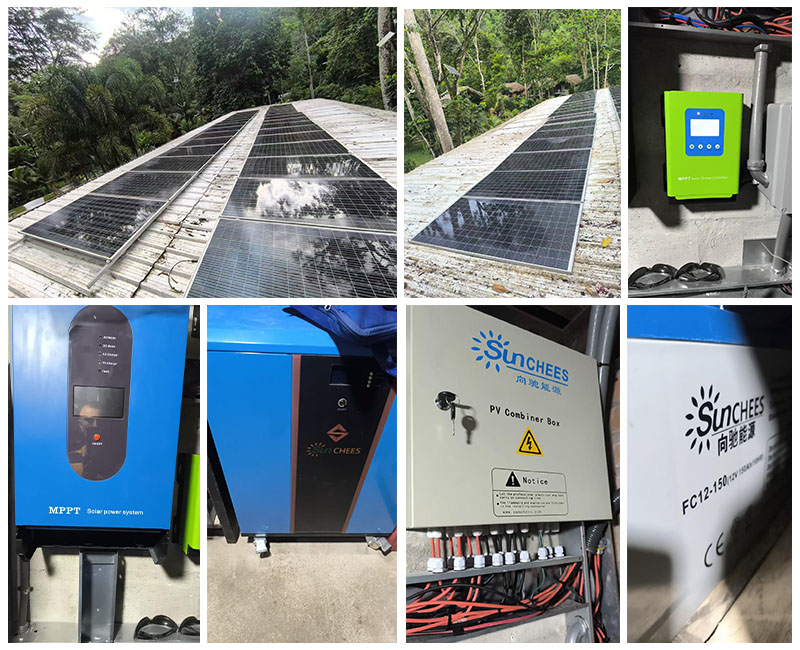
Two rows of panels on a metal roof beside tall trees in La Guajira, with fallen leaves visible on the roof.
Bringing the region's sunlight onto this particular roof
La Guajira has good solar resources, but the conditions around this house matter as much as the regional picture. As the sun moves, nearby trees may change where shadows fall and how long they remain. Leaves collecting on the panels or roof also create a maintenance consideration. The region's solar potential has to be considered alongside panel placement and care of the actual roof.
The eight panels form a 4.8kWp array for daytime household use. Refrigeration runs throughout the day, air conditioning may be used during particular hours, and lighting follows activity around the rooms. Storage keeps some electricity available after the sun has gone down, connecting rooftop generation with the household's different hours of use.
This installation brings solar into an existing home surrounded by greenery. The panels, indoor equipment and household appliances are part of one setting. For a property like this, the trees around the building are as much a part of planning rooftop solar as the roof itself.
Plan Your Solar Project with Sunchees
Founded in 2008 and based in Foshan, Guangdong, China, Sunchees develops its own inverters and lithium batteries and provides customised solar power and solar air conditioning solutions for homes and businesses. We support OEM requirements and your choice of solar panel brand, with remote installation guidance throughout the process, from equipment configuration to on-site installation support.
If you are considering solar for your home or business, share your project location, building photographs and everyday electricity needs with us. We can discuss a system and installation arrangement that suits the site and how you use it.
We are transparent and active. You can find us on Instagram, TikTok, YouTube, and Facebook.
 Installed Jun 5, 2026: 12kW Solar and Battery System for a Five-Bedroom Montego Bay Home
 You May Also Like



 Tel
Tel
 Email
Email
 Address
6th Floor, Zhonghe Zinan Industrial Park, No. 1 Zinan Changang West Road, Nanzhuang Town, Chancheng District, Foshan City, Guangdong Province. China (Mainland)