


 Whatsapp :
 Home
HomeA 15kW Split-Phase Solar and Battery System for a Five-Bedroom Home in Dededo, Guam
 Aug 12,2026
 0
0
 sunchees solar system
Homes in Guam commonly use both 120V and 240V equipment, so the inverter output, main panel and backup circuits need to be planned together. For this three-story, five-bedroom home in Dededo, we supplied a 15kW split-phase inverter, 16 double-glass solar panels and a 102.4V 300Ah lithium battery. The pitched-roof installation and electrical commissioning were completed in three days, with the installation recorded as complete on July 30, 2026.
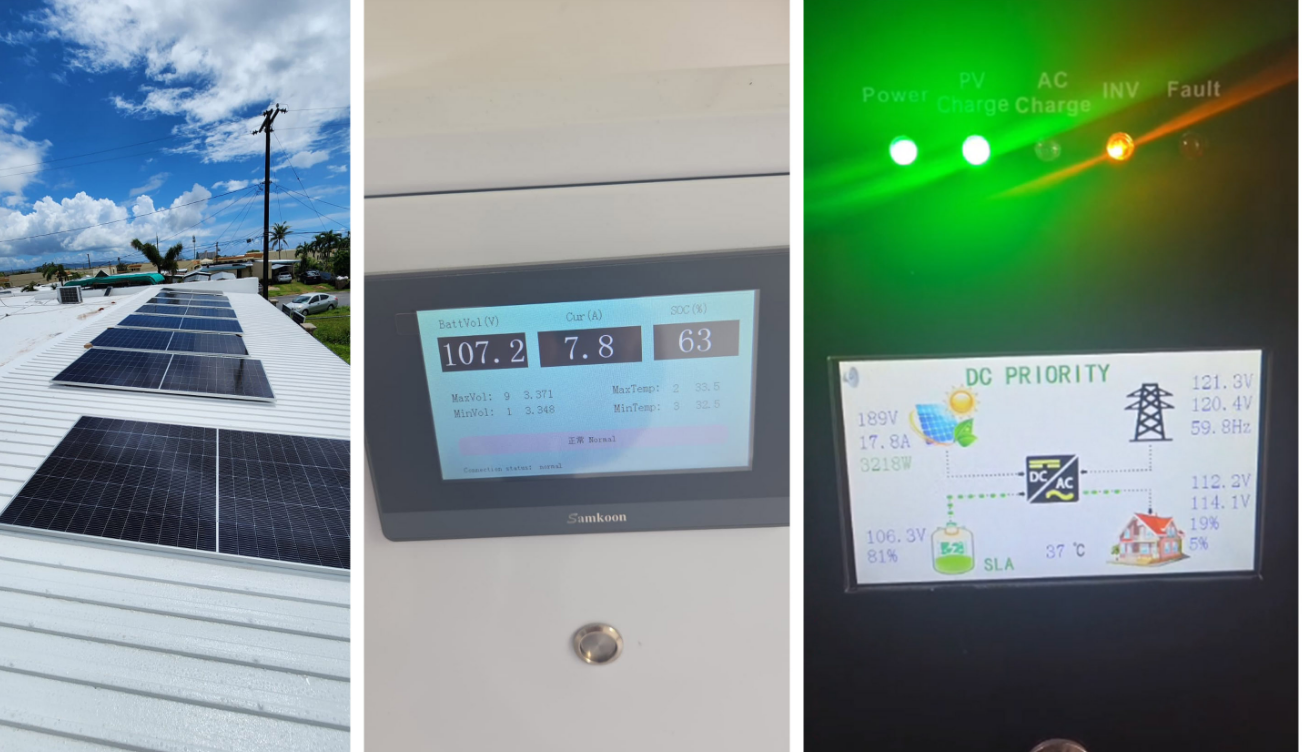
The Dededo project: panels on a pitched metal roof and inverter/battery operating screens. The readings show the system at a moment in time, not its long-term production or outage runtime.
Project at a glance
|
|
|
|
|
|
|
|
|
|
|
|
|
|
|
|
|
|
|
|
|
|
|
|
|
|
|
What the homeowner gets from this setup
This system has two jobs: use solar energy during normal operation and keep selected household loads available during an outage. Each of the headline specifications tells the buyer something different:
- The 15kW split-phase inverter determines how much equipment can operate at the same time and supports a properly planned mix of 120V and 240V loads.
- The 9.6kWp rooftop array determines how much solar energy the home can collect and put toward the daytime load or battery charging.
- The 30.72kWh nominal battery capacity largely determines how long the chosen circuits can keep running when solar or utility power is unavailable.
During an outage, a practical priority list might include the refrigerator, lights, Wi-Fi, fans, a water pump and one selected air conditioner. Several air conditioners, an electric water heater, dryer or range can use the stored energy much faster. The inverter may be able to start a load even when the battery can support it for only a short time. That is the difference between “can it turn on?” and “how long can it stay on?”
15kW, 9.6kWp and 30.72kWh are not the same thing
The 15kW figure is the inverter's power rating. The 16 panels total 9.6kWp under standard test conditions, while the battery stores about 30.72kWh of nominal energy. In plain language:
- inverter kW tells you how much power can be delivered at once;
- panel kWp tells you how much solar capacity is available to harvest energy;
- battery kWh tells you how much energy can be stored for later.
The panels' available solar capacity is 9.6kWp rather than 15kW. If the house is using 12kW while the array is producing 6kW, the remaining 6kW must come from the battery or the GPA supply. The larger inverter allows higher simultaneous loads and may leave room for a later panel expansion; the array size and sunlight still determine the solar energy available.
For a new project, we size the system from the actual bills, appliance labels and usage patterns. The number of bedrooms describes the house; it does not tell us how many air conditioners run at once, how often a pump starts or whether electric water heating must remain on during an outage.
Why split-phase output matters in Guam
Guam homes commonly have 120/240V split-phase service. A suitable split-phase inverter can be planned around both everyday 120V circuits and selected 240V loads. Before equipment is ordered, the field team still needs to confirm the actual service voltage, 60Hz frequency, L1/L2/N arrangement, main-panel rating, grounding, protection and transfer method.
The Sunchees 15kW product page is a multi-market reference and currently displays a generic 50Hz configuration. A Guam order must be specified for the local 60Hz supply. The operating screen in the Dededo project photograph shows about 59.8Hz at the moment it was taken. The signed project configuration should state the required frequency, voltage range, conductor arrangement, protective devices and operating mode rather than relying on a generic web page.
How long could 30.72kWh of battery storage last?
The nominal energy is calculated as 102.4V x 300Ah, or 30.72kWh. Not all of that is normally delivered to household outlets. Reserve settings, permitted depth of discharge, inverter losses, temperature and battery condition reduce the usable amount.
For a conservative planning example, keep 20% in reserve and allow 10% for conversion losses. That leaves about 22.1kWh for the home. With no solar contribution during the period, the result looks like this:
|
|
|
|
|
|
|
|
|
|
|
|
|
|
|
|
|
|
|
|
These are planning examples, not measured runtimes from the Dededo home. Air conditioners in particular need their own calculation because rated power, starting method, thermostat setting and duty cycle all matter. Daytime solar can extend the runtime, while cloud or a partly charged battery can reduce it.
What might a 9.6kWp rooftop array produce in a day?
Using 3.5 to 5 equivalent full-sun hours and an overall output factor of 80%, a 9.6kWp array would produce roughly 27 to 38kWh in a day. This is an indicative design range, not a production guarantee. Season, cloud, roof direction, module temperature, shade, dirt and system losses all affect the result.
The useful question is whether that daily energy is enough for the buyer's plan. If priority loads use about 15kWh per day, a good solar day leaves more room to charge the battery. If the whole home uses 45 to 60kWh per day, this array may not replace all of it, especially through several cloudy days. A quotation should include a month-by-month estimate based on the Dededo roof, shading and GPA bills.
What needs attention on a pitched metal roof in Dededo
The project photographs show the modules installed on a pitched metal roof. The National Weather Service assessment of Super Typhoon Mawar documented roof damage in northern Guam as well as widespread damage to power and communications infrastructure. For a new project, that makes the attachment details, structural load path, waterproofing and post-storm inspection plan essential parts of the design.
We would ask the local project team to record and review:
- roof structure, age, metal-panel condition and the existing fastening method;
- building height, site exposure, roof-edge and corner zones, and the applicable design wind criteria;
- rails, clamps, anchors, screws, seals and waterproofing details;
- module, rack and fastener materials, including corrosion protection;
- maintenance access, drainage, fire and electrical clearances, and safe roof access;
- pre-storm checks and a post-storm procedure for loose parts, damage and electrical isolation.
A module load test or a “typhoon-resistant” product claim is only one piece of evidence. The complete installation still depends on the roof, attachments, structural path, electrical protection and review against current local requirements.
GPA, DPW and the project documents
Guam Power Authority's public forms and planning guidance ask for information such as existing and proposed loads, service voltage, phase, wire arrangement and a one-line diagram. A grid-connected project also needs to follow the current GPA interconnection policy and agreement. DPW, inspection and professional-stamp requirements should be confirmed by the Guam project team for the actual scope.
If a system is fully off-grid and never operates in parallel with GPA, local building and electrical responsibilities still need to be confirmed. Supplier documents should include model-specific data sheets, bill of materials, one-line-diagram inputs, inverter settings, battery communications, protection devices, mounting information, packing lists and commissioning records.
What the three-day installation record does — and does not — include
The rooftop installation and electrical commissioning for this project took three days once the equipment was on site and the work areas were ready. That period does not include shipping, permits, roof repairs, structural preparation, main-panel modifications or inspections.
At handover, the homeowner should keep the final bill of materials, serial numbers, photographs, one-line diagram, device settings, protection-test results, battery settings, backup-circuit list, monitoring access and maintenance instructions. The two screens in the project image give a visual record of commissioning, but monitoring data and regular inspections are needed to judge performance over time.
Planning a reviewable Sunchees system for a Guam home
For a useful proposal, send us 12 months of GPA electricity use, labels for every major appliance, the circuits that must remain on during an outage, photographs of the meter and main panel, roof dimensions and structural information, and the field-confirmed voltage, frequency, phase and wire arrangement. We can then prepare a recommended bill of materials, model-level documents, packing information and installation references for review by the Guam engineering, permitting and construction team.
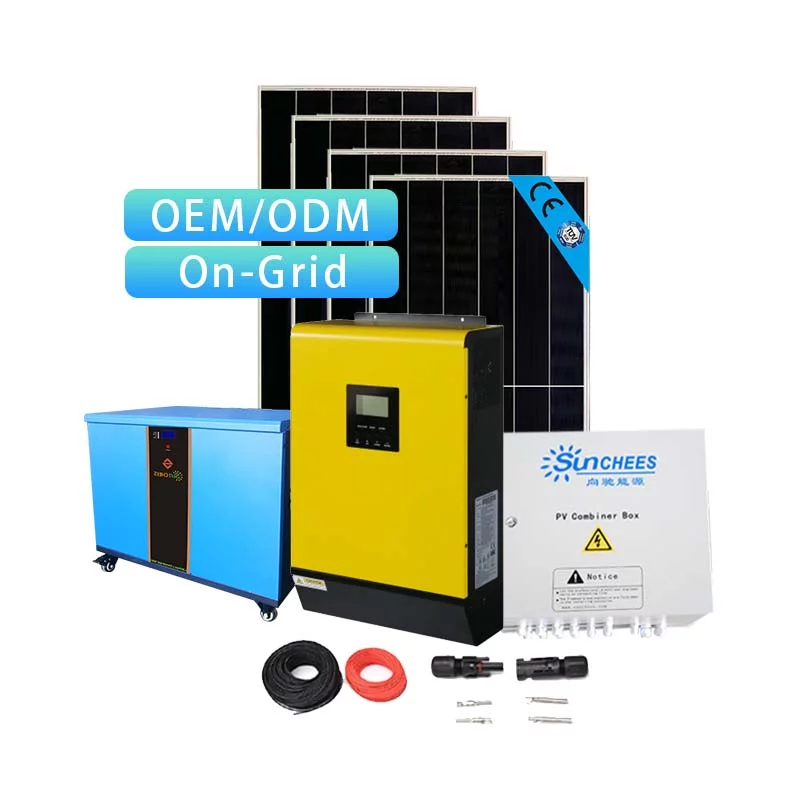
You can also view the Sunchees 15kW split-phase system reference. A Guam order should separately state 60Hz, target output, electrical protection, panel quantity and battery configuration.
Frequently asked questions
Why do 16 x 600W panels equal only 9.6kWp?
Sixteen panels multiplied by 600W equals 9,600Wp, or 9.6kWp. The 15kW figure is the inverter rating.
How much energy is stored in a 102.4V 300Ah battery?
Its theoretical nominal energy is 102.4V x 300Ah, or 30.72kWh. Usable energy depends on reserve settings, depth of discharge, conversion losses, temperature and battery condition.
How long will the battery run a Guam home during an outage?
Divide the usable battery energy by the average outage load for a first estimate. Daytime solar, equipment starting surges and inverter losses also matter. A list of priority circuits produces a much better answer than the home's bedroom count.
Can a 15kW split-phase inverter connect to any Guam home?
Not without checking the site. The service voltage, 60Hz frequency, phase and wire arrangement, main panel, grounding, protection and operating mode must all be confirmed. A grid-connected project then follows the applicable GPA, DPW and local professional-review process.
Will every similar rooftop installation take three days?
No. Three days is the on-site installation and commissioning record for this project. Roof repairs, engineering, permitting, shipping, panel modifications, weather and inspections can change the schedule.
Editorial sources
 Installed Jul 24, 2026: 10kW Solar and Battery System for a Five-Bedroom Kingston Home
 You May Also Like



 Tel
Tel
 Email
Email
 Address
6th Floor, Zhonghe Zinan Industrial Park, No. 1 Zinan Changang West Road, Nanzhuang Town, Chancheng District, Foshan City, Guangdong Province. China (Mainland)