


 Whatsapp :
 Home
HomeSolar Beside Water Tanks and Hot Water Equipment at a Kingston Home
 Sep 08,2026
 0
0
 sunchees solar system
Water storage, solar hot water equipment and new photovoltaic panels share the roof of this Kingston home. The three storey house has seven bedrooms and three bathrooms, so generation needs to fit among facilities already serving the household.
We completed the installation on May 27, 2026, after three days on site. Rooftop panels connect to two large indoor storage units for household loads including refrigeration, lights, television and air conditioning.
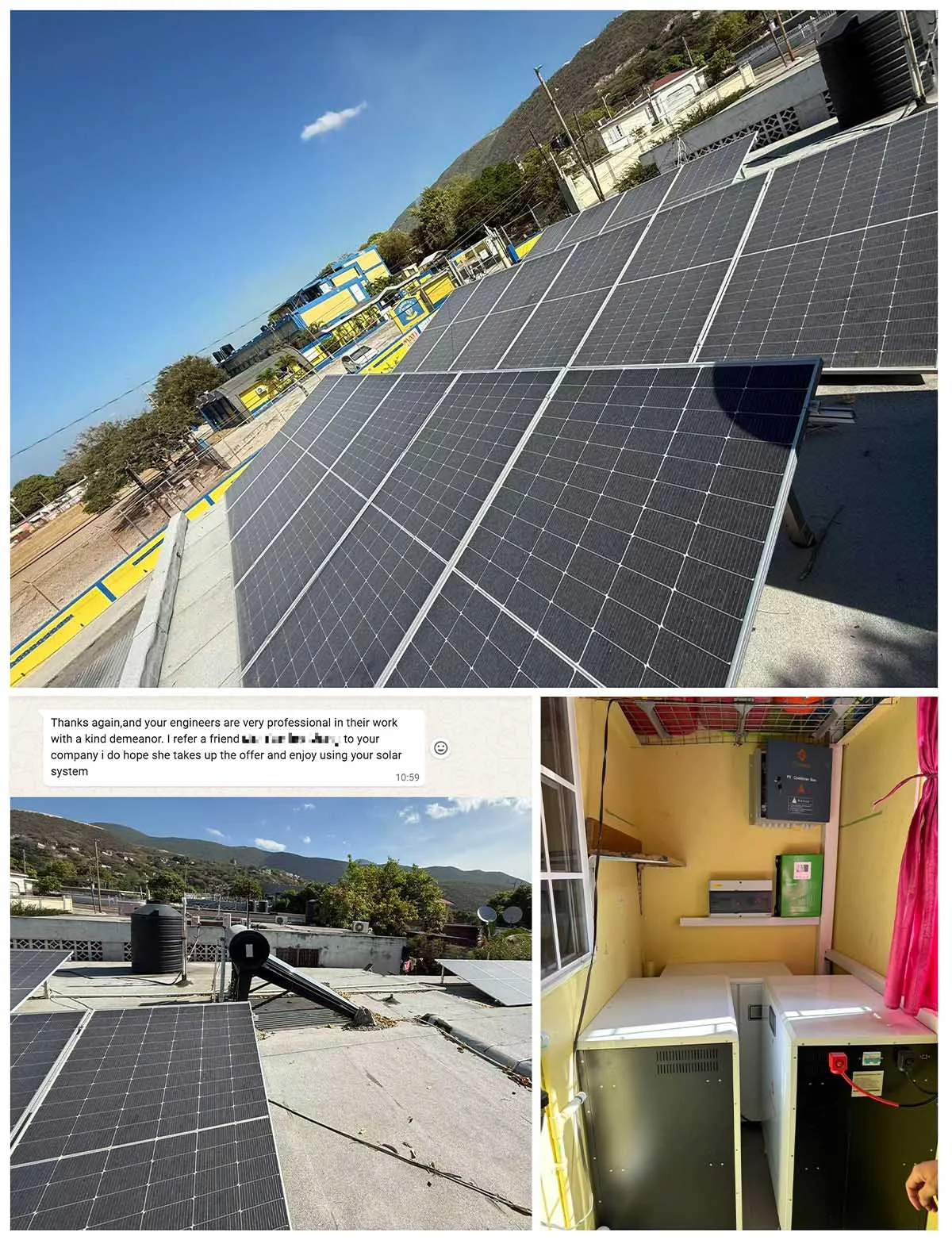
Solar panels share a Kingston roof with water storage and solar hot water equipment; a partial shadow falls across panels, and two large cabinets stand indoors.
An existing roof with several jobs
One photograph shows a partial shadow falling across the panels, with water and hot water equipment on the same roof. Total roof area is not the same as an area receiving sunlight throughout the day. Existing equipment, moving shadows and access routes to the tank and hot water installation all belong in the layout.
The photograph cannot establish the source of the shadow or the energy it costs, but it does show that shading is a real site condition. Indoors, two 40kWh lithium batteries work with a 15kW split phase inverter, providing 80kWh of combined nominal storage. Sixteen 600W panels form a 9.6kWp array for daytime generation and charging.
Household use and daily charging need to meet
A large battery reserve can hold more electricity, but the roof still determines how much solar energy can be collected each day. Air conditioning in several rooms can increase evening consumption, and the following day's generation must serve daytime use as well as recharge the batteries.
Water storage and solar hot water already serve household needs on this roof. Photovoltaics add electricity for refrigeration, lighting and cooling. Shading and usable roof area affect generation, while use of the seven bedrooms affects consumption. Both matter to how the 80kWh reserve is used and replenished; a large battery does not replace access to sunlight.
The customer also praised the engineers as professional and friendly and said they had recommended the company to a friend. The case combines the practical setting of a roof with several existing uses and a direct account of the installation service.
Plan Your Solar Project with Sunchees
Founded in 2008 and based in Foshan, Guangdong, China, Sunchees develops its own inverters and lithium batteries and provides customised solar power and solar air conditioning solutions for homes and businesses. We support OEM requirements and your choice of solar panel brand, with remote installation guidance throughout the process, from equipment configuration to on-site installation support.
If you are considering solar for your home or business, share your project location, building photographs and everyday electricity needs with us. We can discuss a system and installation arrangement that suits the site and how you use it.
We are transparent and active. You can find us on Instagram, TikTok, YouTube, and Facebook.
 Solar for Lighting Cooling and Daily Care at a Montego Bay Kindergarten
 You May Also Like



 Tel
Tel
 Email
Email
 Address
6th Floor, Zhonghe Zinan Industrial Park, No. 1 Zinan Changang West Road, Nanzhuang Town, Chancheng District, Foshan City, Guangdong Province. China (Mainland)