


 Whatsapp :
 Home
HomeSolar Power for Everyday Life at a Montego Bay Kindergarten
 Sep 23,2026
 0
0
 sunchees solar system
At a kindergarten in Montego Bay, Jamaica, we supplied a rooftop solar and battery storage system for lighting, televisions, fans and air conditioning. These everyday appliances help shape a child's day: a bright room for activities, a comfortable place to rest, and the equipment teachers use to bring lessons to life.
The project combines 32 double-glass 600 W solar panels, a 25 kW split-phase inverter and 61 kWh of lithium battery storage. The panels generate electricity from sunlight, while the battery stores energy for later use and backup supply. The recorded installation date is Mar 21, 2026, with an installation period of four days.
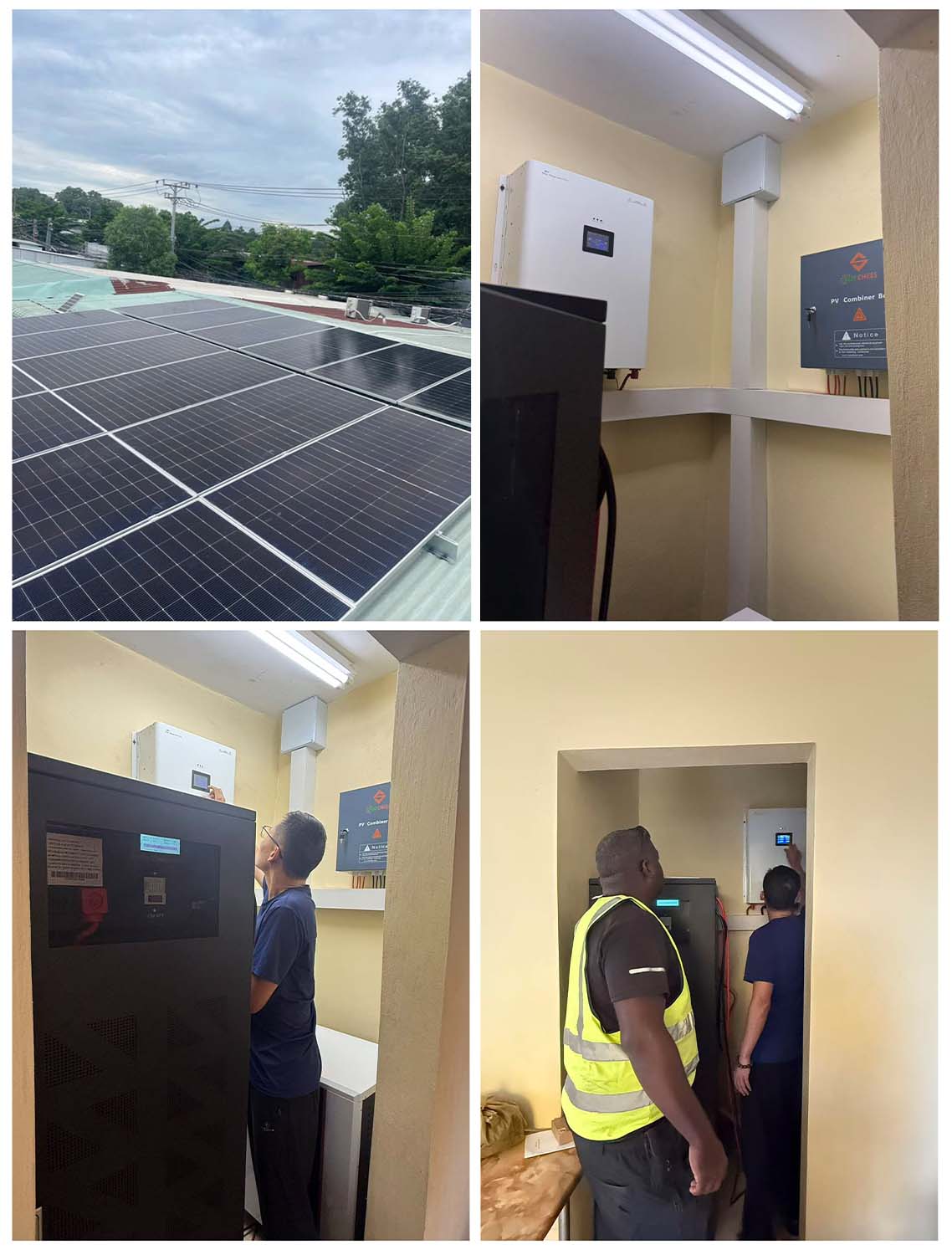
Rooftop solar panels and indoor equipment at the Montego Bay kindergarten project.
Reliable childcare supports the whole family
In Jamaica, storm-related power cuts can affect access to essential community services. In its 2026 account of recovery after Hurricane Melissa, UNICEF described how the loss of electricity and internet access disrupted education, healthcare and contact with loved ones for affected families. Read UNICEF's account of restoring community connections.
At a kindergarten without usable backup power, a grid outage can interrupt lighting, cooling and television use. Teachers may need to change activities or move children to another room. If a centre cannot continue providing care, parents may also need to rearrange collection times and work commitments.
Solar and storage add a source of electricity at the site. Where the building is safe to use and the backup circuits and battery can meet the load, keeping selected lights, fans or cooling equipment running can help reduce disruption caused by a power cut. Children have a better chance of following familiar activity and rest routines, while teachers have more support for continuing their care.
That is the practical community value of rooftop generation and 61 kWh of storage in this setting. Better electricity provision can support more dependable childcare, which in turn helps families plan their day. Decisions about opening during severe weather still depend on the safety of the premises and the kindergarten's emergency arrangements.
What electricity does for children and teachers
Start with what happens inside a classroom. When children listen to stories, draw or make things, good lighting helps them see their materials. It also helps teachers keep track of the children and their surroundings during group activities.
Fans and air conditioning help staff manage indoor comfort as the weather and room use change. Whether children are playing, taking part in a lesson or resting, including cooling equipment in the solar design connects daytime generation with a need that arises during the kindergarten's working day.
A television can also be a teaching tool. A teacher might use it for songs, pictures or short educational videos while lights and fans are running. For system planning, it is useful to consider what will be switched on together during an activity, rather than simply count every appliance on the premises.
These are examples of how the equipment listed for this project can serve kindergarten life. Each centre's timetable and teaching approach will shape its own electricity needs.
Backup power gives staff a clearer plan
When the power goes out, practical questions come first. Can the room where the children are gathered stay lit? Can the fans keep running? Which activities can continue?
Planning backup supply for those needs gives staff a clearer response and can reduce hurried changes to activities or room arrangements. For managers and parents, reassurance comes from knowing which equipment has priority and how long the available energy is likely to last. Battery storage can support that plan.
The equipment that can operate, and for how long, depends on the connected circuits, remaining battery charge and power demand. If air conditioning is needed during an outage, its consumption must be included when deciding which rooms and appliances to keep in use.
The system installed at this kindergarten
The 32 panels provide 19.2 kWp of total rated solar capacity, paired with a 25 kW inverter and 61 kWh lithium battery. The panels were installed at an angle on the roof, with power equipment indoors.
These ratings describe different jobs. The solar array determines the scale of generation, the inverter must support the equipment running at the same time, and battery capacity helps determine how long stored energy can supply that equipment.
For a planning illustration, assume the battery starts full, 20% of its energy is held in reserve, overall battery-to-appliance efficiency is 90%, and no solar energy is added during the period. That leaves approximately 43.9 kWh for the appliances: 61 × 0.8 × 0.9. At an average combined load of 5 kW, the estimate is about 8.8 hours; at 10 kW, it is about 4.4 hours.
This is a sizing example, not measured runtime at this kindergarten. Actual performance depends on battery condition, settings and equipment power limits. It shows why keeping selected lights and fans running calls for a different backup plan from operating more air conditioners at the same time.
Plan around a child's day
If you are considering solar for your kindergarten, walk through a normal day from arrival to collection. Which rooms are occupied, when do lights, televisions and cooling run together, and which activities or spaces would you want to retain during a power cut?
Explore our solar solutions for schools and kindergartens, or send Sunchees your timetable, equipment list and electricity bills. We can use those details to discuss panel and battery capacity around the environment your teachers and children use every day.
 Solar and Battery Storage for a Three-Storey Home in Kingston
 You May Also Like



 Tel
Tel
 Email
Email
 Address
6th Floor, Zhonghe Zinan Industrial Park, No. 1 Zinan Changang West Road, Nanzhuang Town, Chancheng District, Foshan City, Guangdong Province. China (Mainland)