


 Whatsapp :
 Home
HomeSolar Power for Classrooms and Campus Services in Montego Bay
 Sep 23,2026
 52
52
 sunchees solar system
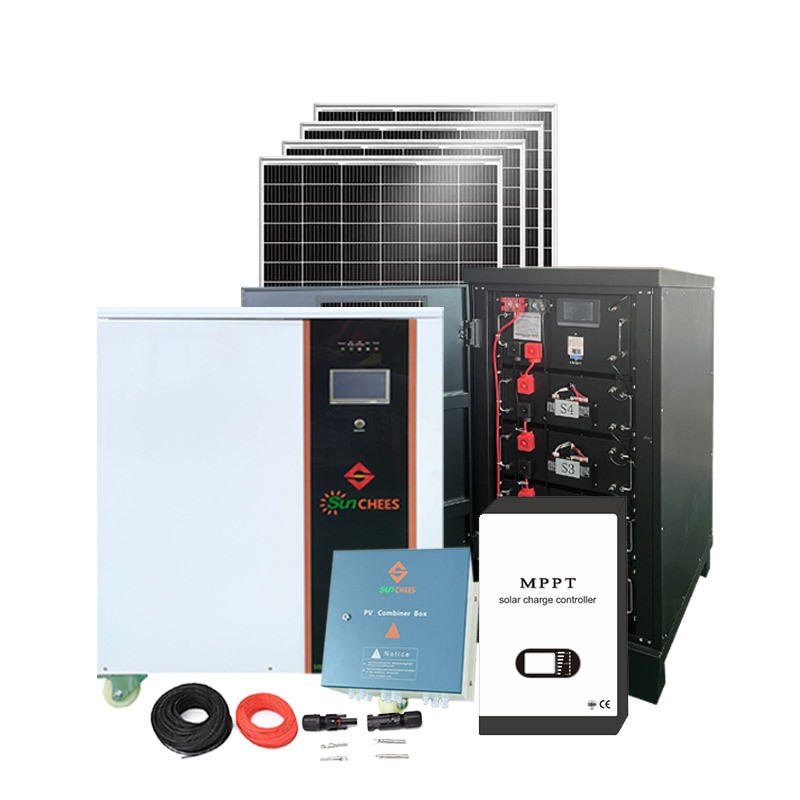
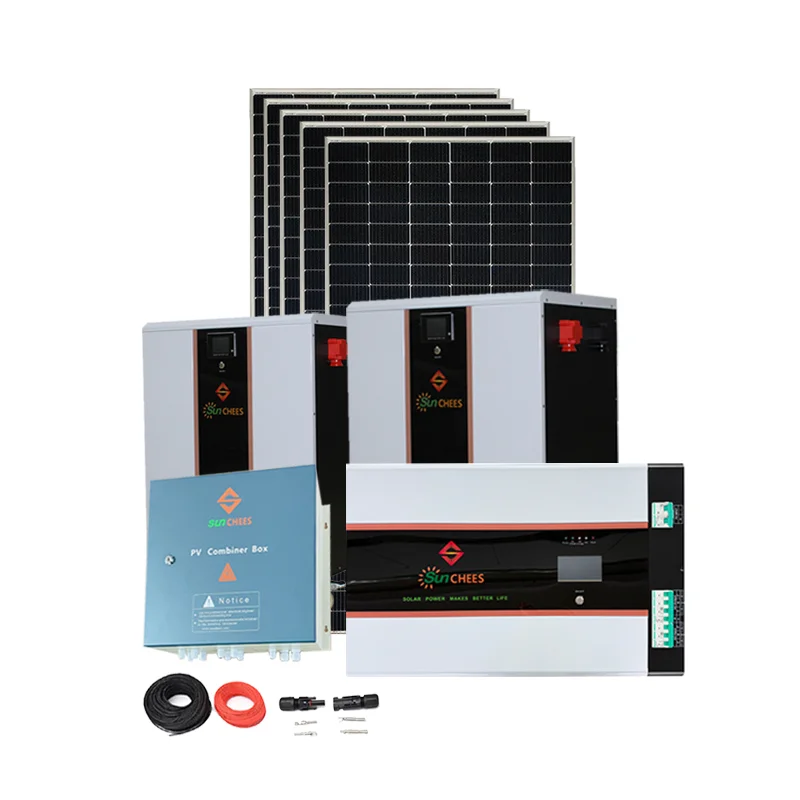
Classroom lights, teaching computers, televisions, network equipment and security cameras all depend on electricity. At a school in Montego Bay, Jamaica, we supplied rooftop solar with 118 kWh of lithium battery storage for campus electricity needs, including those appliances. Backup supply during hurricane-season outages was also part of the project's scope.
The system uses 56 double-glass 600 W solar panels and two 20 kW inverters at a concrete building with a flat roof. The recorded installation date is Feb 14, 2026, with an installation period of seven days. Other equipment served by the project includes fans, air conditioning and emergency lighting.
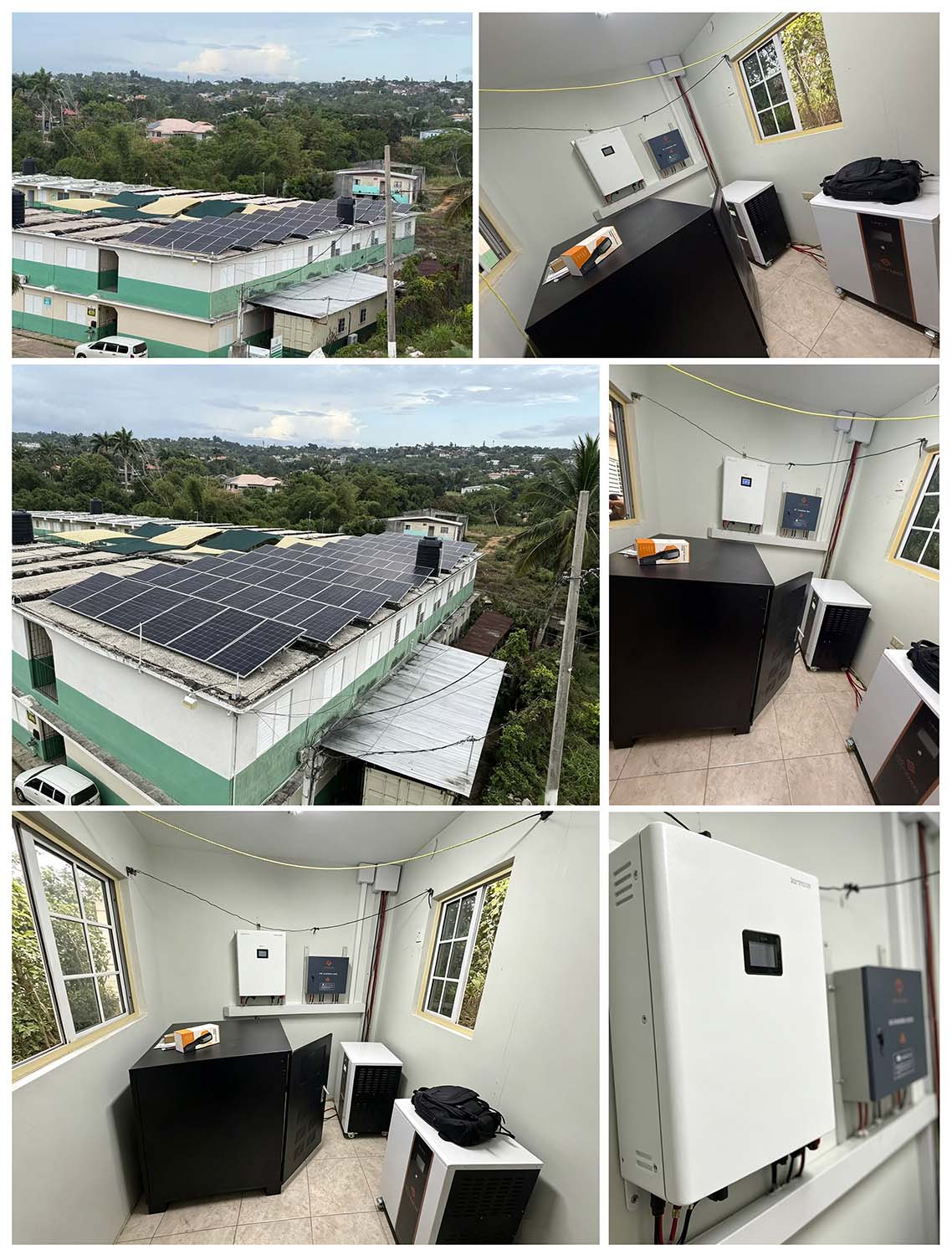
The school's rooftop solar array and indoor power equipment in Montego Bay.
Better electricity provision helps learning continue
Jamaica's schools have experienced serious disruption from disasters. In December 2025, UNICEF reported that more than 650 schools serving approximately 150,000 students were experiencing significant disruption following Hurricane Melissa. Recovery involved learning spaces, teaching materials and sanitation, illustrating how several basic conditions must be restored together. Electricity is one part of that work, alongside safe buildings and water services. Read UNICEF's education recovery report.
Even when a building remains safe to use, a school without usable backup power can lose access to lights, computers, teaching televisions and network equipment during a grid outage. Teachers may need to change how they deliver a lesson, and students have fewer tools available. Access to working equipment is particularly valuable for students who rely on school to use computers and digital learning resources.
With storage, a school can plan backup supply for selected teaching and administrative equipment according to the energy available. Where capacity meets demand, this can help retain some classroom activities, lesson preparation and office work. The computers, televisions, lighting, networking and monitoring equipment listed for this project relate directly to those uses. External internet availability still needs to be considered separately.
The value extends beyond the school gates. More consistent access to learning helps students maintain their routines, gives teachers a better basis for planning, and helps families organise school collection and work. Keeping essential equipment powered is one practical contribution to that stability.
Start with the equipment used during a lesson
A lesson using a computer or television may need several appliances at once. Lights help students read books and classroom materials, a television displays teaching content, and a computer runs the presentation. Fans or air conditioning may also be needed for comfort.
Much of a school's activity takes place during daylight hours, allowing some electricity use to coincide with solar generation. Electricity from the roof can serve equipment operating at that time; surplus energy can be stored when the battery has capacity to accept it. The amount of outside electricity replaced depends on the school's timetable, appliance use and actual solar production.
Computers and networking also support work beyond the classroom. Teachers may use them to prepare lessons and organise materials, while administrative staff handle daily school business. Classrooms and offices can therefore have different priorities within the same solar and storage plan.
Prepare for the work that matters during an outage
A school's outage plan involves teaching, administration and campus management. Which spaces need lighting? Which computers must remain available? How should security cameras and emergency lighting be supplied? Answering these questions in advance gives staff a plan they can follow.
This project's equipment includes monitoring, networking and emergency lighting. For a school considering a similar system, these provide a useful starting point for choosing backup priorities, followed by selected teaching computers, classroom lighting and cooling.
For example, after allowing for essential lighting and campus management, a school could prioritise classrooms that are still occupied. That helps direct limited stored energy towards the spaces that need it. The actual circuits must be designed around the individual school's requirements.
Storage provides another source of electricity, but the length of supply depends on the battery charge, equipment use and opportunities to recharge. Network equipment can remain powered while an outside connection is unavailable, so communications planning should account for the operator's lines as well.
For school managers, confidence comes from knowing which spaces and appliances receive priority, how long the available charge may last, and when consumption needs to be reduced.
What 118 kWh of storage means in practice
The rooftop array has a total rated capacity of 33.6 kWp. The two inverters have a combined nameplate rating of 40 kW, in a split-phase system configuration, while the lithium battery has 118 kWh of nominal storage. Panels are mounted at an angle on the flat roof, with power equipment indoors.
A planning example helps relate storage to school use. Assume a full battery, a 20% energy reserve, 90% overall supply efficiency and no solar replenishment. Approximately 85.0 kWh would be available to the appliances: 118 × 0.8 × 0.9. At a selected average load of 10 kW, that is about 8.5 hours; at 5 kW, about 17 hours.
These are estimates under stated assumptions, not runtime tests at this school. The actual load must also remain within battery and inverter power limits. The example explains a useful choice for a school: support fewer important appliances for longer, or operate more classrooms and cooling equipment for a shorter period.
Match the system to school life
Two schools of similar size can have different cooling needs, computer use and after-school activities. Separate the equipment used during lessons, equipment that stays on after students leave, and equipment that must remain available during an outage. That gives the solar and storage design a clear purpose.
Explore our school solar solutions, or tell Sunchees about your electricity use, school timetable and backup needs. We can discuss a configuration around the work of the classrooms, teachers and campus staff.
 Solar Power for Everyday Life at a Montego Bay Kindergarten
 You May Also Like




 Tel
Tel
 Email
Email
 Address
6th Floor, Zhonghe Zinan Industrial Park, No. 1 Zinan Changang West Road, Nanzhuang Town, Chancheng District, Foshan City, Guangdong Province. China (Mainland)