


 Whatsapp :
 Home
HomeHow to Buy a 15kW Solar System from China: Complete Process and Guam Shipping Example
 Jul 12,2026
 0
0
 sunchees solar system
Buying a 15kW solar system from China can reduce equipment costs and make it easier to source a complete, technically compatible system. However, overseas buyers usually have several practical concerns:
- Is the equipment reliable?
- What exactly is included in a 15kW system?
- Will the voltage and frequency work in my country?
- How much will shipping and customs clearance cost?
- Who unloads the equipment when it arrives?
- Can the system be installed without a local solar contractor?
- How can the buyer reduce payment and delivery risks?
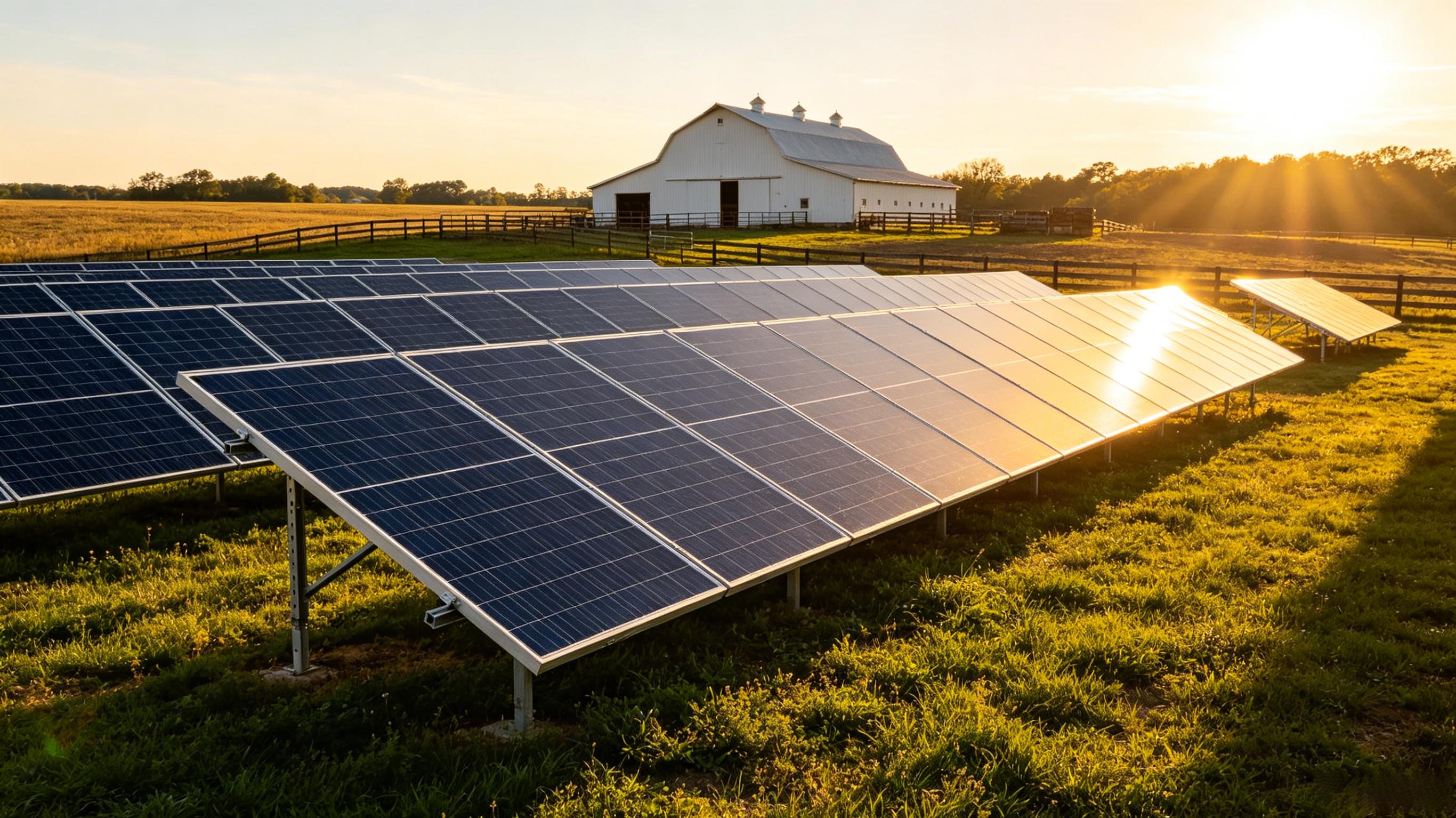
This guide explains the complete purchasing process, from load analysis and system configuration to manufacturing, sea freight, customs clearance, unloading, installation, and commissioning.
It also includes a real 15kW solar system shipping to Guam example. The shipment occupied approximately 3.65 CBM, had an estimated logistics cost of USD 2,205 excluding unloading, and was expected to arrive in approximately 8–15 days.
Important: Freight rates, port charges, customs requirements, taxes, and vessel schedules change regularly. The Guam figures below are an example from a specific shipment, not a guaranteed quotation for future orders.
What Should You Confirm Before Buying a 15kW Solar System from China?
The term “15kW solar system” does not automatically define the entire system.
It may refer to:
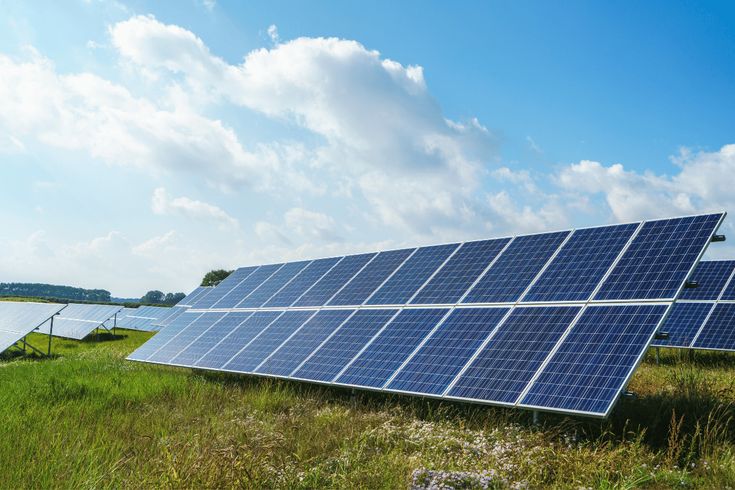
- 15kW of installed solar panel capacity
- A 15kW inverter
- A 15kW hybrid or off-grid power system
- A complete system with an unspecified battery capacity
Before requesting a quotation, buyers should confirm the following technical information.
|
|
|
|
|
|
|
|
|
|
|
|
|
|
|
|
|
|
|
|
|
|
|
|
|
|
|
|
|
|
|
|
|
|
|
|
For example, a buyer in Guam may require a 120V/240V, 60Hz configuration. A buyer in another market may need 230V, 50Hz or a three-phase commercial configuration.
The voltage, phase, and frequency must be confirmed before production begins.
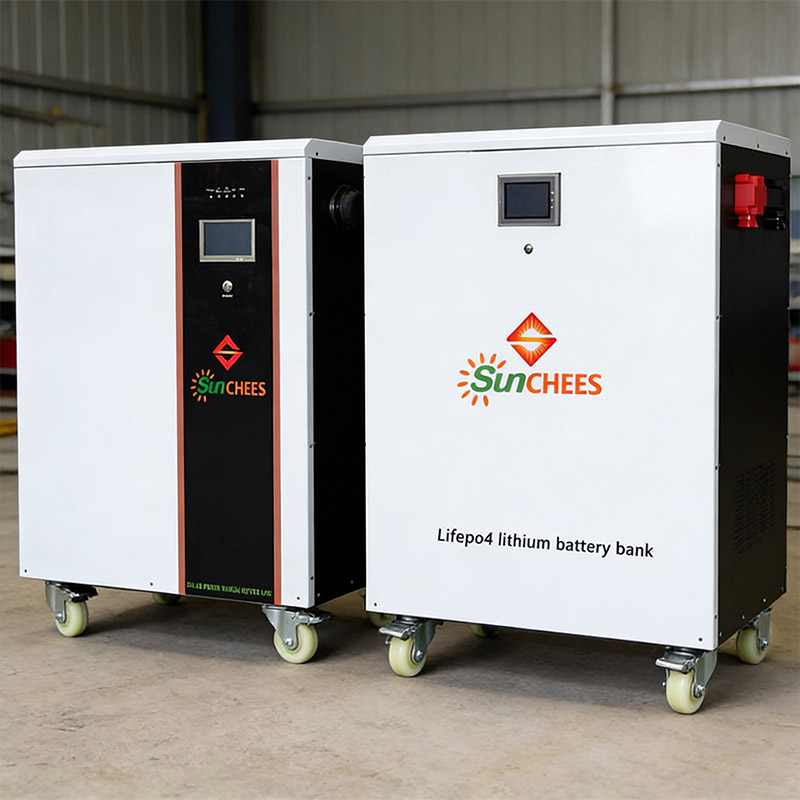
15kW Does Not Mean 15kWh of Battery Storage
Power and energy are different:
- kW measures instantaneous power.
- kWh measures stored or consumed energy.
A 15kW inverter can supply up to approximately 15kW of continuous load, subject to its technical specifications. Battery capacity determines how long those loads can operate without solar or grid power.
For example, a household using 30kWh per day will need a different battery configuration from a property using 80kWh per day, even when both use a 15kW inverter.
A reliable quotation should therefore show the solar panel capacity, inverter rating, battery capacity, usable battery energy, and estimated operating time separately.
Why Buy a 15kW Solar System from China?
Many overseas buyers choose to buy solar system from China because Chinese manufacturers can provide complete systems, customized electrical configurations, and factory-direct pricing.
Complete System Integration
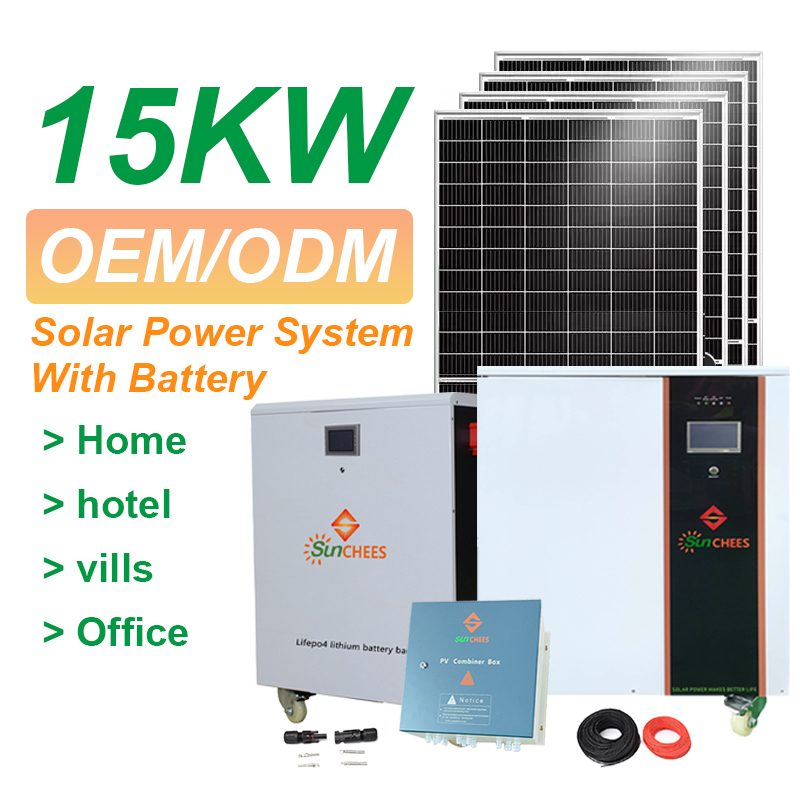
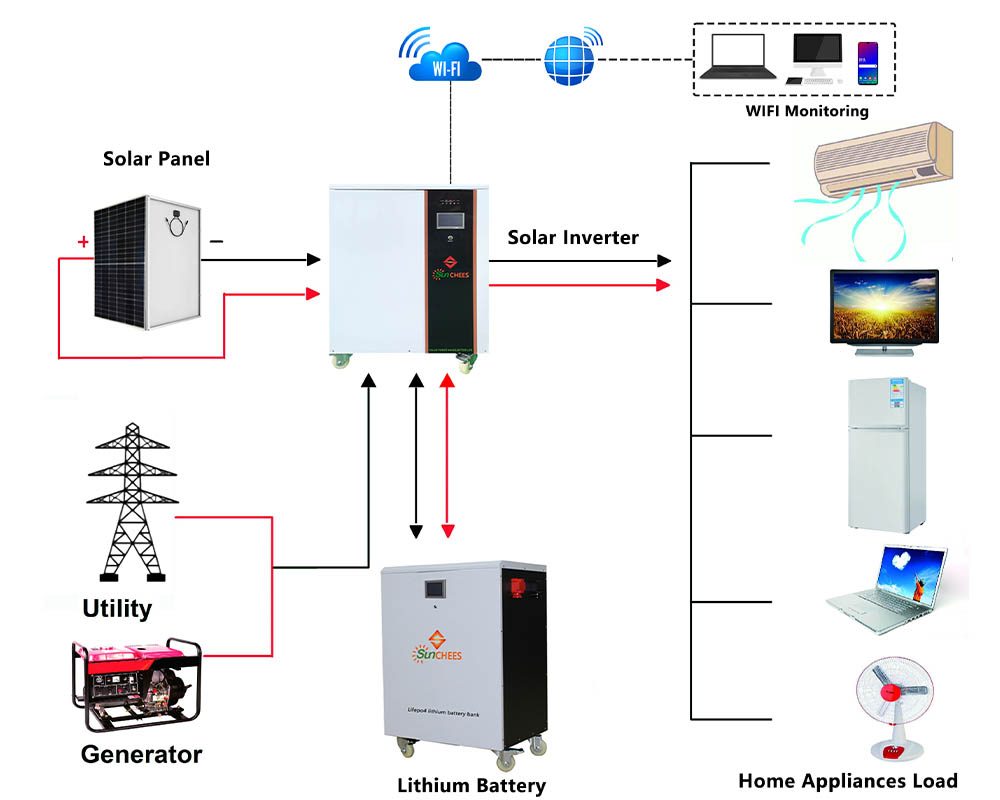
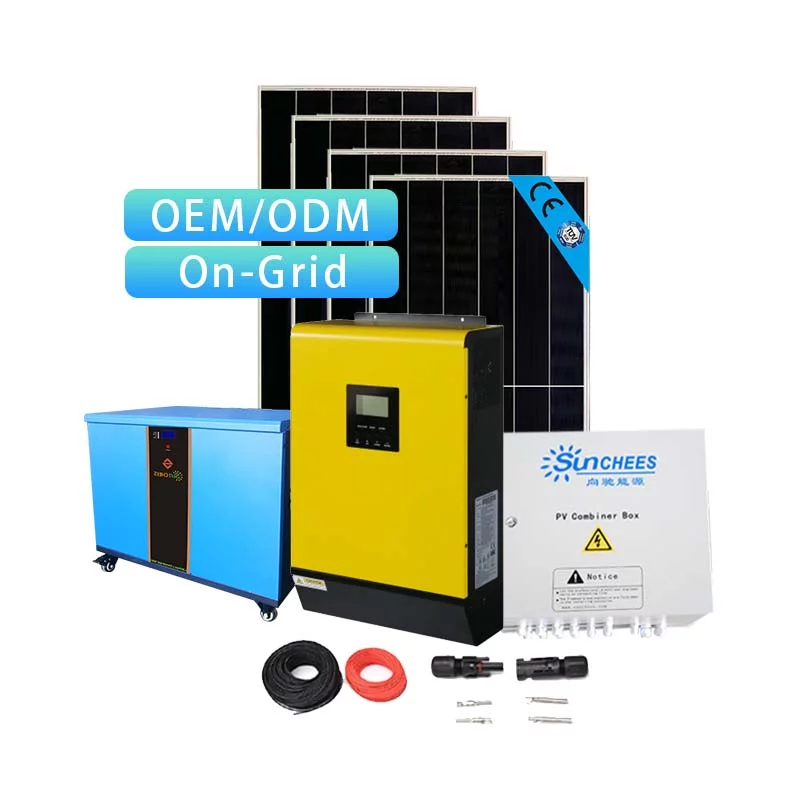
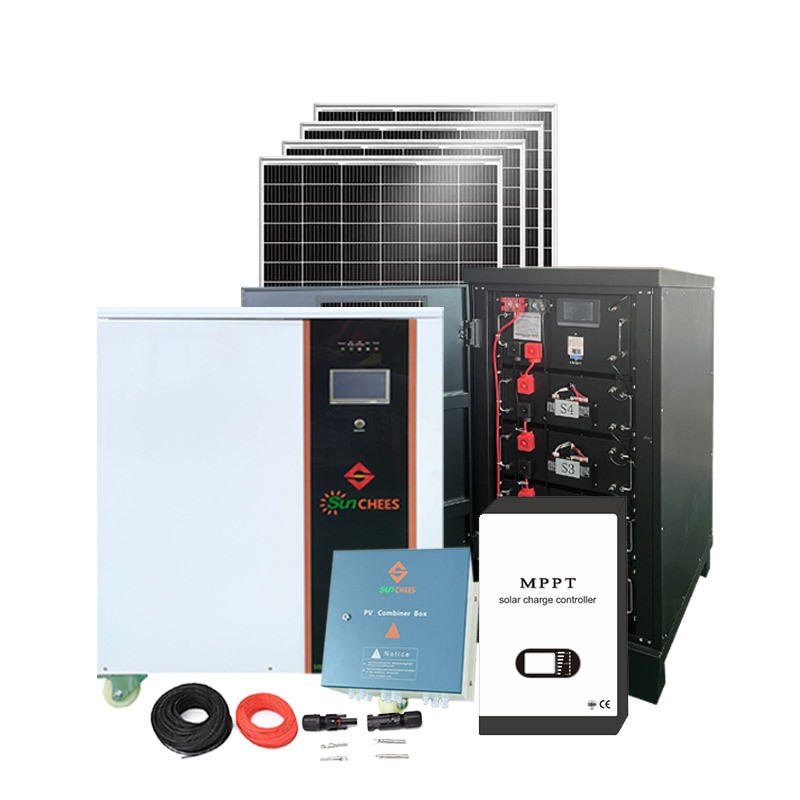
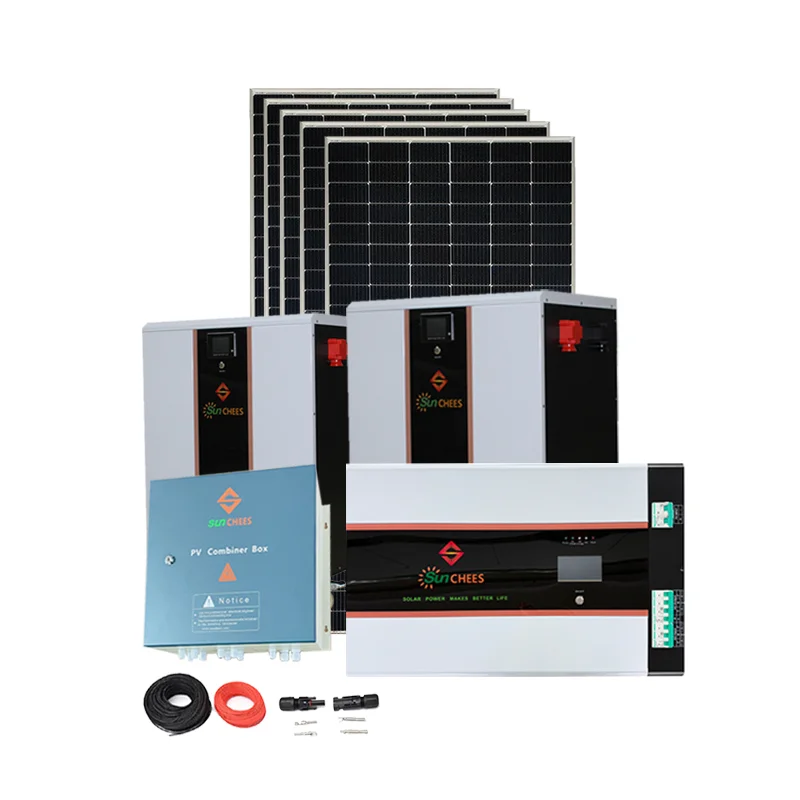
A complete 15kW package can include:
- Solar panels
- Hybrid or off-grid inverter
- Lithium battery bank
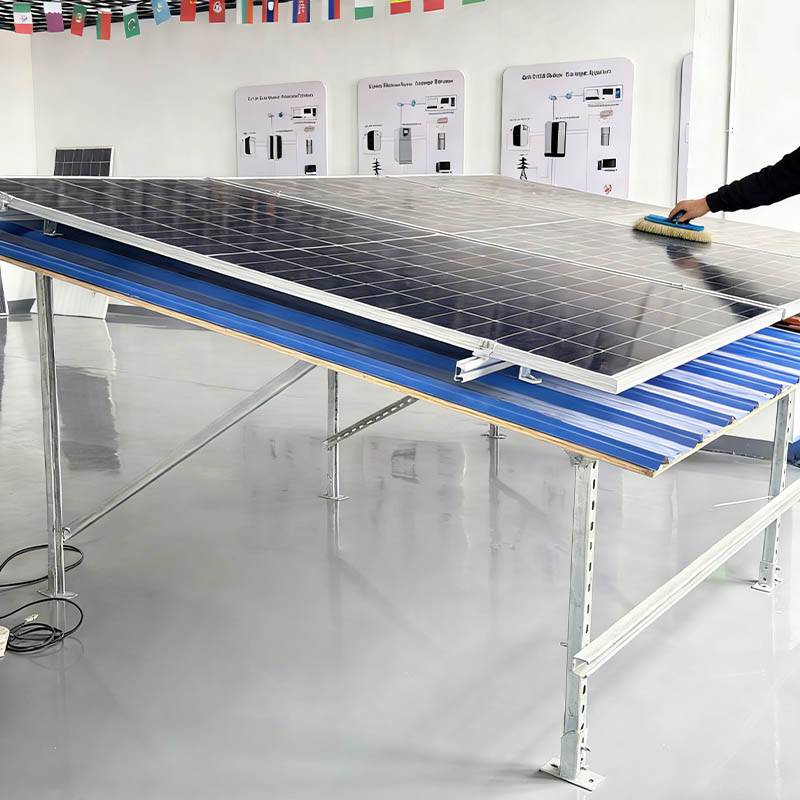
- Solar mounting structure
- PV combiner box
- DC and AC protection devices
- Solar cables
- Battery cables
- MC4-compatible connectors
- Monitoring equipment
- Installation accessories
Purchasing these components as one matched system reduces the risk of combining incompatible equipment from several suppliers.
More Competitive Factory-Direct Pricing
Direct purchasing may reduce distributor and local retail markups. However, buyers should compare the total landed cost rather than equipment price alone.
The final cost may include:
- Equipment
- Export packaging
- Inland transportation in China
- Sea freight
- Documentation fees
- Dangerous-goods handling for batteries, where applicable
- Destination port charges
- Customs clearance
- Import duty and tax
- Final delivery
- Forklift or crane unloading
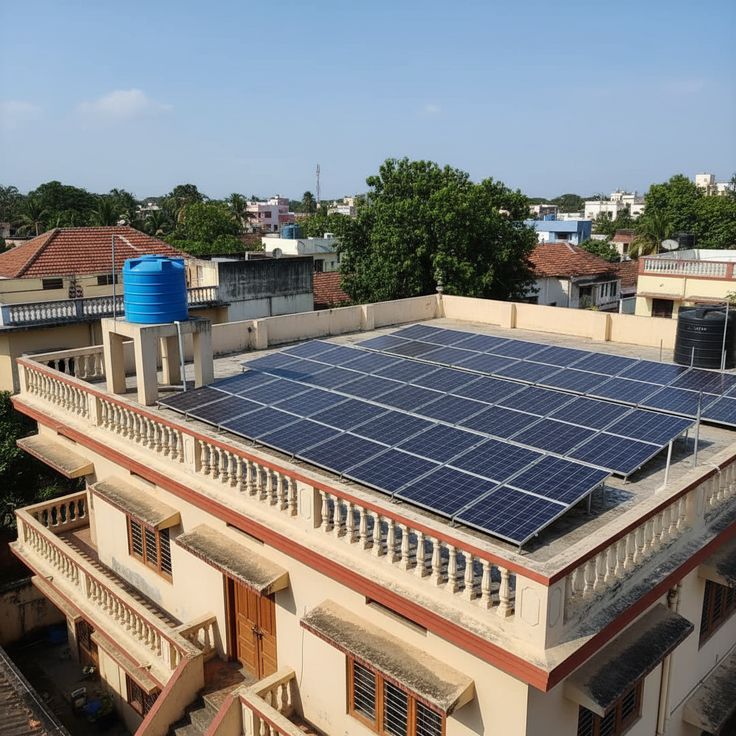
- Local installation
A lower factory quotation is not necessarily the lowest landed cost if logistics responsibilities are unclear.
Configuration Based on Actual Loads
A qualified solar system supplier in China should not recommend a system based only on property size.
The design should consider:
- Daily energy consumption
- Daytime and nighttime consumption
- Peak simultaneous load
- Starting power of pumps, air conditioners, and motors
- Required backup duration
- Available roof or ground area
- Local solar conditions
- Future expansion plans
Sunchees designs systems based on the buyer’s load information, budget, site conditions, and local electrical standard rather than supplying one fixed package to every customer.
Which Type of 15kW Solar System from China Should You Choose?
The correct system type depends on grid access, power reliability, and backup requirements.
|
|
|
|
|
|
|
|
|
|
|
|
|
|
|
|
|
|
|
|
|
|
|
|
|
A 15kW off-grid solar system requires particularly careful load analysis. It must be designed for periods of low solar production, nighttime consumption, motor starting loads, and the required number of backup hours.
Oversizing only the solar panels does not solve an undersized battery or inverter problem. All major components must be designed as one system.
What Is Included in the 15kW Solar System from China Purchasing Process?
From the initial inquiry to local installation, the process can be divided into eight stages.
Step 1: Load Analysis and Initial Inquiry
The buyer provides:
- Daily electricity consumption
- Electricity bills, where available
- Appliance and equipment list
- Maximum simultaneous load
- Local voltage and frequency
- Grid conditions
- Required backup hours
- Installation address
- Roof or ground-installation information
Sunchees uses this information to recommend a suitable configuration.
Step 2: Configuration and Quotation Confirmation
The buyer should review each major component rather than approving only a total price.
|
|
|
|
|
|
|
|
|
|
|
|
|
|
|
|
|
|
|
|
|
|
|
|
|
|
|
|
|
|
|
|
|
The quotation should clearly state what is included and excluded.
Step 3: Order and Payment
A common payment structure is:
- 30% deposit by bank transfer
- 70% balance before shipment
Buyers should transfer funds only to the verified company bank account shown in the contract or pro forma invoice.
Before paying the balance, request:
- Production photographs
- Equipment nameplate photographs
- Test records where available
- Packing photographs
- Final packing list
- Commercial invoice
- Shipping marks
- Warranty documents
A third-party inspection can also be arranged for larger orders.
Step 4: Production and Quality Inspection
Solar panels, inverters, batteries, controllers, and electrical protection equipment should be tested before packing.
Sunchees states that its inverter and lithium battery technology is developed in-house. This allows the principal components to be configured as an integrated system rather than assembled from unrelated products without compatibility testing.
A complete pre-shipment inspection should confirm:
- Product model and quantity
- Input and output voltage
- Inverter operation
- Battery communication
- Monitoring operation
- Cable and accessory quantities
- Exterior condition
- Packaging condition
Step 5: Export Packaging
The equipment is packed according to its size, weight, and sensitivity.
|
|
|
|
|
|
|
|
|
|
|
|
|
|
|
|
|
|
|
|
|
A complete 15kW system in the Guam example occupied approximately 3.65 CBM.
Actual volume depends on the number of panels, battery capacity, cabinet design, mounting structure, and packaging requirements.
Step 6: Sea Freight
The goods are transported from the factory to a port in Guangdong and then shipped to the destination port.
Lithium battery shipments may require additional documentation or carrier approval. Depending on the battery model and shipping route, buyers may need documents such as:
- Material Safety Data Sheet
- UN38.3 test documentation
- Battery transport declaration
- Dangerous-goods paperwork
- Product packing certificate
The freight forwarder should confirm these requirements before the cargo is delivered to the port.
Step 7: Customs Clearance and Local Delivery
When the cargo reaches the destination, the local agent arranges customs clearance and delivery according to the agreed shipping service.
Buyers should confirm whether the local quotation includes:
- Customs brokerage service
- Destination handling charges
- Port storage
- Import duty
- Sales tax or other local taxes
- Residential or commercial delivery
- Tail-lift delivery
- Forklift unloading
“Customs clearance included” often means that the brokerage service is included. It does not always mean that import duty and tax are included.
Step 8: Unloading, Installation, and Commissioning
After delivery, the buyer should inspect the packaging and compare the received goods with the packing list.
Installation includes:
- Mounting the solar panels
- Installing the inverter and battery equipment
- Connecting PV strings
- Installing DC and AC protection
- Connecting the battery communication system
- Configuring inverter settings
- Testing charging and discharging
- Testing backup operation
- Connecting remote monitoring
- Final commissioning
Where a Sunchees cooperating local installer is available and the site is ready, a standard system can generally be installed and commissioned in approximately five days. The actual schedule depends on the roof or ground structure, cable route, local inspection requirements, weather, and site accessibility.
Buyers should provide their exact location before ordering so installer availability can be checked.
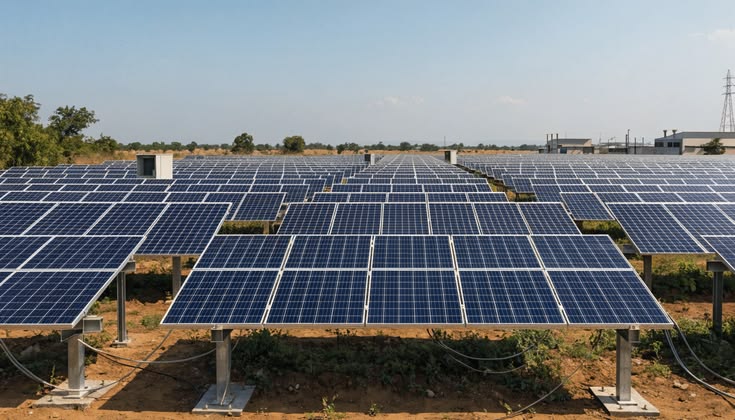
How Much Does Shipping a 15kW Solar System from China to Guam Cost?
The following 15kW solar system shipping to Guam example shows the approximate logistics cost for a 3.65 CBM shipment.
|
|
|
|
|
|
|
|
|
|
|
|
|
|
|
|
|
|
|
|
|
|
|
Guam Shipment Summary
|
|
|
|
|
|
|
|
|
|
|
|
|
|
|
|
|
|
|
|
|
|
|
|
|
|
|
|
|
|
|
|
|
The calculation is:
3.65 CBM × USD 300 = USD 1,095
USD 1,095 + USD 40 + USD 200 + USD 870 = USD 2,205
This figure should be used only as a reference. The final solar system shipping cost may change because of:
- Vessel availability
- Shipping season
- Fuel surcharges
- Battery transport requirements
- Port congestion
- Destination handling charges
- Delivery distance
- Import regulations
- Storage or inspection fees
A new freight quotation should be requested before each order.
What Must You Prepare Before Receiving a 15kW Solar System from China?
Arrange a Forklift Before Delivery
This is one of the most commonly overlooked responsibilities.
In the Guam example, delivery to the address did not include unloading. The truck could transport the cargo to the site, but it did not provide a forklift for unloading the solar-panel pallets, batteries, or inverter cases.
The buyer should therefore:
- Confirm the estimated delivery date.
- Arrange a suitable forklift or other unloading equipment.
- Make sure the unloading area is accessible to the delivery truck.
- Confirm that the forklift capacity is sufficient for the heaviest package.
- Prepare a dry and secure temporary storage area.
Sunchees can request that the freight forwarder notify the buyer as soon as the cargo reaches the destination port, allowing time to arrange unloading.
Confirm Access for the Delivery Truck
Before delivery, check:
- Road width
- Height restrictions
- Turning space
- Gate dimensions
- Ground condition
- Loading-zone availability
- Residential delivery restrictions
A standard freight truck may not be able to access a narrow residential road or an unfinished site.
Inspect the Cargo Before Signing
When receiving the goods:
- Check the number of packages.
- Inspect pallets and wooden cases.
- Photograph any visible damage.
- Check whether the cargo is wet or crushed.
- Record damage on the delivery receipt.
- Notify the supplier and freight forwarder immediately.
Do not discard damaged packaging until the claim has been reviewed.
Can the Equipment in a 15kW Solar System from China Be Moved or Wall-Mounted?
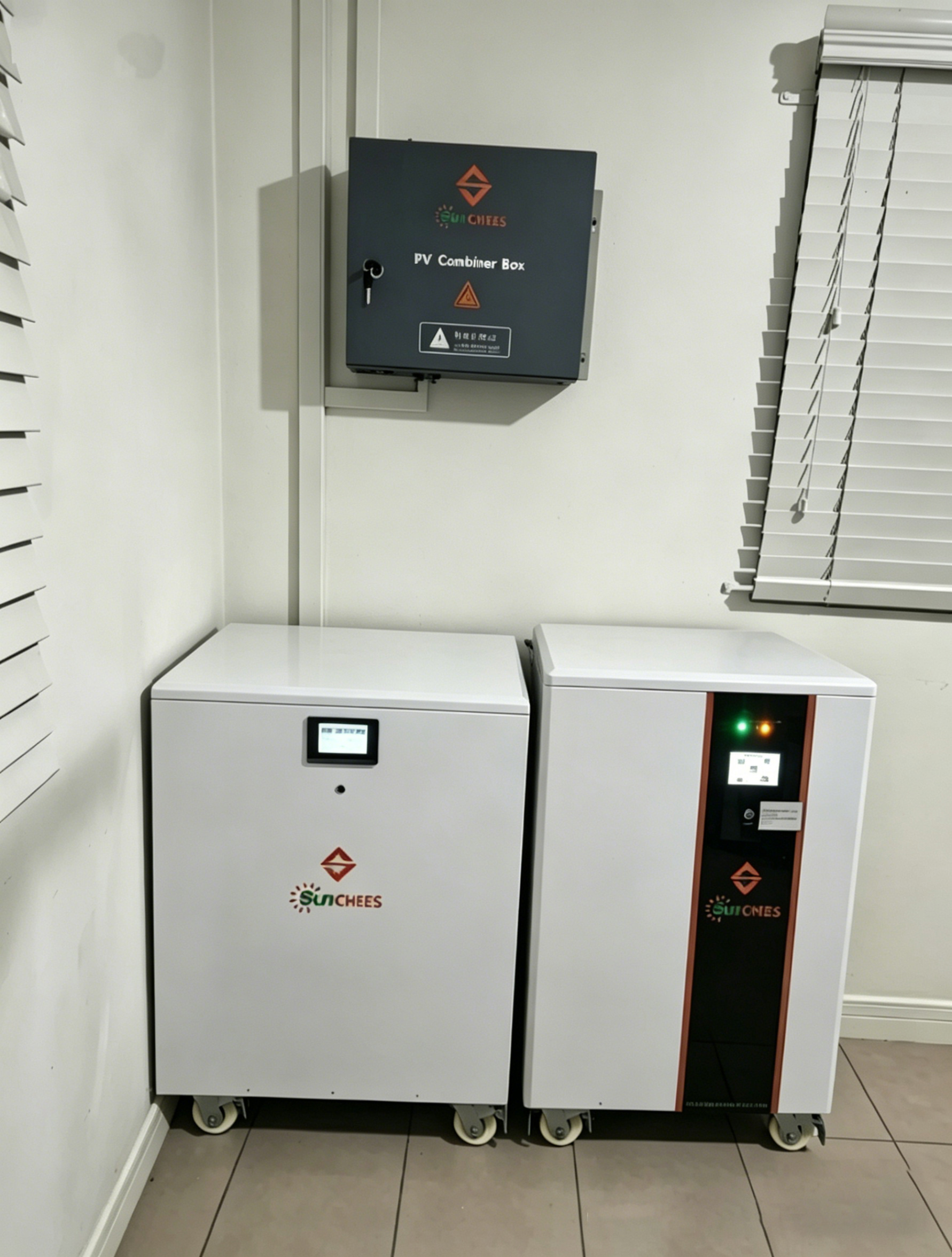
In selected Sunchees configurations, the inverter, battery, and control equipment can be integrated into mobile cabinets with wheels. The solar panels and their mounting structures remain fixed.
A mobile equipment cabinet can be useful when:
- Equipment needs to be repositioned for maintenance
- The installation is temporary
- The site layout may change
- The battery and inverter are installed in a protected indoor area
However, equipment designed as a floor-standing mobile cabinet should not be attached directly to a wall.
What About Flood-Prone Areas?
Electrical equipment should be installed above the expected flood level whenever practical. However, simply mounting a heavy battery cabinet high on a wall may create structural and safety risks.
Safer options may include:
- A purpose-designed elevated concrete platform
- A structurally rated steel equipment stand
- A certified wall-mounted battery and inverter system
- A raised indoor equipment room
- Flood barriers and drainage improvements
Sunchees can provide a wall-mounted configuration for suitable projects, but the wall structure, equipment weight, ventilation, service clearance, and local electrical requirements must be assessed first.
A heavy floor-standing battery cabinet should never be improvised into a wall-mounted system.
What Is the Free Panel Upgrade for a 15kW Solar System from China?
Sunchees currently offers an optional free upgrade to double-glass bifacial solar panels for qualifying system orders.
Compared with a conventional single-glass monofacial module, a double-glass bifacial module may provide:
- Front- and rear-side power generation
- Improved resistance to moisture and corrosion
- Better mechanical durability
- Reduced risk of backsheet degradation
- Potentially higher total energy yield
- Better suitability for reflective ground surfaces
- Improved performance in some high-temperature and high-humidity environments
Sunchees states that the upgraded module option can provide an efficiency improvement of more than 1.5% compared with its standard option. The exact improvement should be confirmed from the datasheets of the two specific module models being compared.
Actual rear-side generation depends on:
- Mounting height
- Row spacing
- Surface reflectivity
- Roof or ground color
- Shading
- Module orientation
- Rear-side obstruction
Double-glass construction can improve durability and reduce certain causes of module degradation, but it does not completely eliminate hot spots. Correct string design, installation, ventilation, cleaning, and monitoring remain necessary.
How Long Does a 15kW Solar System from China Take to Produce and Install?
Estimated production periods provided by Sunchees are:
|
|
|
|
|
|
|
|
|
Production time begins after the configuration, technical drawings, payment, and customization details have been confirmed.
Shipping time is separate from production time.
For the Guam example:
- Production: based on confirmed order schedule
- Sea transit: approximately 8–15 days
- Customs and delivery: dependent on local processing
- Installation and commissioning: approximately five days when the site is ready and a cooperating local installer is available
Customized systems, OEM orders, specified third-party panel brands, large battery banks, or special mounting structures may require additional time.
Sunchees assigns personnel to provide production progress updates. Where a delivery-delay compensation clause is included in the signed contract, delayed delivery may be subject to compensation equal to 5% of the contract value, according to the agreed contractual terms.
What Support Is Available After Buying a 15kW Solar System from China?
Sunchees provides support throughout the project lifecycle.
System Design
The engineering team reviews the buyer’s load, voltage, frequency, installation environment, and backup requirements before recommending the system.
Logistics Coordination
Sunchees coordinates with the freight forwarder, provides shipment updates, and requests prompt notification when the cargo arrives at the destination port.
Customs and Delivery Arrangements
Where destination services are available, a local agent can arrange customs-clearance procedures and delivery to the buyer’s address.
Installation Support
Support options include:
- Illustrated installation manuals
- Installation videos
- Wiring diagrams
- Remote technical guidance
- System configuration support
- Commissioning assistance
- Local cooperating installers in selected markets
For a single system above 50kW, Sunchees may provide an engineer for on-site installation, subject to the project location and agreed commercial terms.
OEM and Brand Integration
Buyers may request:
- OEM branding
- Customized system cabinets
- Specified solar-panel brands
- Customized battery capacity
- Customized inverter configuration
- Solar air-conditioning integration
- Residential, commercial, or industrial designs
Production and Customer Follow-Up
Sunchees provides production-progress updates and conducts customer-satisfaction follow-ups after contract execution.
The company also maintains public profiles on Instagram, TikTok, YouTube, and Facebook, allowing buyers to review product demonstrations, project examples, company activity, and installation information.
Why Consider Sunchees as a 15kW Solar System from China Supplier?
Sunchees was established in 2008 and is headquartered in Foshan, Guangdong, China.
According to the company’s product and service information, its main capabilities include:
|
|
|
|
|
|
|
|
|
|
|
|
|
|
|
|
|
|
|
|
|
|
|
|
|
|
|
|
|
|
|
|
|
|
|
|
|
|
|
|
|
|
|
|
|
Sunchees reports supplying customers across more than 200 countries and regions, including Jamaica, Costa Rica, Guyana, the Dominican Republic, Ecuador, Trinidad and Tobago, Guam, and Saipan.
Buyers should still evaluate the final quotation, product datasheets, certificates, warranty terms, shipping documents, and project references before placing an order.
What Warranty Applies to a 15kW Solar System from China?
Sunchees provides different warranty periods for different components.
Warranty coverage should be confirmed in the sales contract because exclusions may apply to:
- Incorrect installation
- Water ingress caused by unsuitable installation
- Lightning or external surge damage
- Unauthorized modification
- Incorrect voltage or wiring
- Physical damage during local handling
- Operation outside specified temperature limits
- Failure to follow maintenance requirements
- Normal capacity degradation
The system may have an expected service life of up to 25 years, but not every component has a 25-year product warranty. Batteries, inverters, protection devices, fans, and other electronic components may require replacement during the operating life of the solar array.
What Documents Should Accompany a 15kW Solar System from China?
Before shipment, request a complete document package.
|
|
|
|
|
|
|
|
|
|
|
|
|
|
|
|
|
|
|
|
|
|
|
|
|
|
|
|
|
|
|
|
|
|
|
|
|
|
|
Certification requirements vary by country. A CE or TÜV certificate does not automatically prove that a system complies with every local electrical, utility, building, or interconnection rule.
FAQ About Buying a 15kW Solar System from China
Is a 15kW solar system from China reliable?
It can be reliable when the system uses verified components, appropriate electrical specifications, matched battery and inverter communication, proper protection devices, and documented factory testing.
Buyers should review datasheets, certificates, test information, warranty terms, packing details, and references rather than judging the system only by price.
How much does 15kW solar system shipping to Guam cost?
In the example covered in this guide, a 3.65 CBM shipment had an estimated logistics cost of approximately USD 2,205.
This included sea freight, documentation, customs-clearance service, and delivery to the address. It did not include on-site forklift unloading. Import duties and taxes should be confirmed separately in the final quotation.
How long does a 15kW solar system from China take to reach Guam?
The example sea-freight transit time was approximately 8–15 days. This does not necessarily include production, customs processing, port storage, local inspection, or final-delivery delays.
Does delivery include unloading?
Not necessarily.
In the Guam example, the local agent delivered the cargo to the address but did not provide a forklift. The buyer was responsible for arranging suitable unloading equipment.
Can I install a 15kW off-grid solar system without a local installer?
Sunchees provides illustrated instructions, installation videos, wiring diagrams, and remote technical guidance.
However, solar, battery, and AC electrical work involves high DC voltage, high fault current, heavy equipment, and local code requirements. Mechanical assembly may be completed by an experienced owner or contractor, but final electrical connection, testing, and commissioning should be performed or inspected by qualified personnel.
Can Sunchees arrange a local installer?
Sunchees works with local installers in selected regions. Where an installer is available and the site is fully prepared, installation and commissioning may take approximately five days.
The exact project location must be provided so availability and cost can be confirmed.
Can the inverter and batteries be moved?
Selected integrated configurations can be installed in wheeled mobile cabinets. Solar panels remain fixed.
Mobile cabinets should remain on a stable floor and should not be improvised as wall-mounted equipment.
Can the equipment be installed higher in a flood-prone area?
Yes, but it should be placed on a properly engineered elevated platform, equipment stand, or certified wall-mounted system.
Mounting a heavy floor-standing battery cabinet directly onto a wall without structural design is unsafe.
Is the double-glass bifacial panel upgrade free?
Sunchees currently offers a free upgrade to double-glass bifacial modules for qualifying orders. Availability and the exact module specification should be confirmed in the final quotation.
What payment terms are normally used?
A typical arrangement is 30% deposit and 70% balance before shipment.
The contract should identify the receiving company account, equipment specification, production period, warranty, shipping responsibilities, and required pre-shipment documents.
Can I specify another solar-panel brand?
Yes. Sunchees supports OEM services and can source and integrate specified solar-panel brands where available.
What information is needed for an accurate quotation?
Provide:
- Exact installation location
- Daily electricity use
- Appliance and equipment list
- Maximum load
- Local voltage and frequency
- Single-phase or three-phase requirement
- Required backup time
- Roof or ground-installation details
- Grid availability
- Preferred panel or battery brand
- Delivery address or destination port
The more complete the information, the more accurate the system design and landed-cost estimate will be.
How to Request a Quotation for a 15kW Solar System from China
A useful quotation request can follow this format:
I need a 15kW solar system for a property in [city and country].
Local electrical supply: [voltage], [frequency], [single-phase or three-phase].
Average daily electricity consumption: [kWh].
Maximum simultaneous load: [kW].
Main equipment: [air conditioners, pumps, refrigerators, machinery, and other loads].
Required backup time: [hours].
Installation type: [roof or ground].
System type: [off-grid, hybrid, or grid-tied].
Delivery location: [full city, island, or destination port].
Please provide the complete equipment list, battery capacity, panel quantity, inverter specification, packaging dimensions, estimated production time, shipping cost, warranty, and installation-support options.
This information allows the supplier to prepare a technically relevant quotation instead of offering a generic system that may not match the property.
Is Buying a 15kW Solar System from China the Right Choice?
A 15kW solar system from China can be a practical option for residential, agricultural, commercial, and remote-power projects when the equipment, logistics, installation responsibilities, and after-sales terms are clearly defined.
The most important steps are:
- Design the system around actual energy consumption and peak loads.
- Confirm voltage, frequency, and phase before production.
- Review the complete bill of materials.
- Calculate the total landed cost, not only the equipment price.
- Confirm whether taxes, unloading, and installation are included.
- Arrange forklift unloading before delivery.
- Prepare the installation site before the shipment arrives.
- Obtain technical documents and inspection evidence before paying the balance.
- Use qualified personnel for electrical connection and commissioning.
- Keep the contract, warranty, test information, and shipping documents.
Sunchees provides system design, manufacturing, export packaging, freight coordination, customs and delivery support where available, remote installation guidance, and long-term technical assistance.
For an accurate quotation, provide your exact location, daily electricity consumption, equipment list, local voltage and frequency, installation type, and required backup time. Sunchees can then prepare a customized system configuration and updated freight estimate for Guam or another destination.
 Solar System to Sint Maarten: 12kW Cost, Shipping and Installation Guide
 You May Also Like



 Tel
Tel
 Email
Email
 Address
6th Floor, Zhonghe Zinan Industrial Park, No. 1 Zinan Changang West Road, Nanzhuang Town, Chancheng District, Foshan City, Guangdong Province. China (Mainland)