


 Whatsapp :
 Home
HomeWhere to Install Off-Grid Solar Batteries in a French Home
 Sep 07,2026
 0
0
 sunchees solar system
If your home has a garage, it is a sensible place to start looking. The lithium batteries and inverter that supply your house can be located there, while the solar panels sit on the roof, a carport roof or a suitable ground-mounted structure. This keeps the equipment out of your living rooms and can make it easier to move equipment in and reach it for maintenance.
An empty wall does not tell the whole story, though. Once the car is parked, can you still open its doors? Can someone stand in front of the battery cabinet to work on it? When the garage door stays shut in summer, where will the equipment's heat go? These questions determine whether the space will work in everyday use.
For a home in France, winter charging matters too. Météo-France records two nationwide heatwaves in 2025, and its cold-weather information describes frost in eastern France. A garage can retain heat in summer and become cold enough to affect battery charging in winter. When choosing a Sunchees off-grid system, planning for both helps address two practical needs: maintaining supply on hot afternoons and replenishing the battery on cold mornings. Météo-France summer briefing; cold-weather information.
Garage, storage room, balcony or carport?
A garage deserves a closer look if you can reserve a permanent equipment area and remove heat with the door closed. A storage room may work after clearing space. A balcony or carport adds exposure to wind-driven rain, sunshine and winter temperatures.
|
|
|
|
|
|
|
|
|
|
|
|
|
|
|
|
|
|
|
|
|
|
|
|
|
|
|
|
When turning this shortlist into a layout, include equipment depth, cabinet-door movement and maintenance clearances as well as width. A wall may fit a battery cabinet, for example, while shelves on either side leave too little room for cooling or servicing.
Can the garage door stay closed?
Yes, provided the heat-removal arrangements suit the way you normally use the garage. If opening the main door is the only way to keep the room within the equipment's temperature limits, resolve the cooling problem or choose another location. Daily operation should work without someone remembering to open the door.
An inverter produces heat as it converts battery energy into household AC electricity. For an illustrative calculation, suppose it supplies a 5 kW household load at 95% efficiency. Its conversion loss would be approximately:
5,000 ÷ 0.95 − 5,000 ≈ 263 W.
Under those assumed conditions, the inverter adds roughly 263 W of heat to the garage continuously. The battery and charge controller add their own losses. The 95% figure is an assumption for this example; an actual design uses the selected equipment's data. How warm the garage becomes also depends on heat transfer through the building and air exchange with outdoors.
Look for an air inlet and outlet connected to outdoors, and check whether shelving blocks them. A fan recirculating air inside the garage mainly moves that air around; it may not remove the heat from the room. An extractor can help exchange air, but if the outdoor air is already very hot, ventilation alone may not achieve the temperature the equipment requires.
Before installation, record temperatures with the door in its normal closed position. After installation, ask the installer to examine equipment temperatures and operating records during periods of substantial daytime charging and higher household demand. Temperature alerts, reduced charging power or shutdowns warrant investigation alongside the load and equipment records. Successful operation on a cool day does not establish adequate cooling for midsummer.

Will a battery charge in an unheated garage in winter?
It can charge when the battery temperature is within the selected model's permitted charging range. On a cold morning, a battery may still supply the refrigerator and lights while temporarily being unable to accept solar charging. Charging may resume once the required temperature and other operating conditions are met.
Check the charging and discharging temperature ranges separately in the battery documentation. They may differ. Also establish what triggers low-temperature protection, what allows charging to resume, and how the battery management system, or BMS, communicates those limits to the charging equipment. These details affect whether morning sunshine can promptly replenish the battery.
If the proposed location frequently falls below the battery's charging limit, compare a milder indoor equipment space with a heating or temperature-control solution approved for that battery. Battery heating consumes electricity. Its start conditions, consumption and charging-resumption conditions belong in the winter operating plan.
A temperature logger near the proposed battery position helps show how that area changes through the day. Once the system is installed, compare these readings with its internal battery-temperature information. The weather forecast, garage air temperature and internal battery temperature can differ; protective actions follow the model's sensors and control settings.
Can a storage room become a battery room?
It is worth considering if the cleared space will stay available for the equipment. Moving boxes out for installation and stacking them in front of the cabinet a few months later can obstruct servicing, isolation switches and cooling.
Allow for the equipment in use: someone should be able to stand in front of an open cabinet, reach the switches and service points, and carry a replacement battery module out of the room. Fitting the cabinet through the door and providing a maintainable installation are different space requirements.
Keep bedding, cardboard boxes and cleaning products separate from the equipment area, with the clearances required by the installation design. Check the direction of cooling airflow too, so that one unit's hot exhaust does not feed directly into another unit's air intake. In a hotel, linen stocks may increase with occupancy; separating storage from equipment helps keep the route clear over time.
Is a roof enough protection on a balcony or carport?
A roof shelters equipment from some sun and rain, but exposure from the sides and water at ground level still matter. A carport shaded in the morning may receive direct afternoon sun. On a balcony, wind can drive rain onto walls and connections even beneath an overhang.
Confirm outdoor suitability separately for the battery, inverter, protective enclosures and connections. If the battery permits outdoor installation but the inverter requires a dry indoor environment, the inverter needs another location or the equipment combination needs to change. An IP rating describes enclosure protection against solid objects and water ingress; temperature, sunlight and condensation requirements are separate checks in the installation instructions.
Look closely at where rain goes: could runoff from the roof splash the equipment base, or water track down the wall to a connection? Which side of the cabinet receives afternoon sun? These observations help define the direction and extent of shelter and rule out locations prone to water ingress.
For a balcony, account for the combined weight of batteries, cabinet and supports, and where that load is concentrated. A structural professional should check the floor and fixings, especially for multiple modules or future expansion. Equipment placement must also preserve the required use of doors, windows and escape routes.
In a carport, leave room for reversing, opening car doors and walking around vehicles. Where impact is possible, include protective barriers in the layout and foundation design. If an indoor battery is proposed inside an outdoor cabinet, the enclosure needs to address water ingress, condensation and heat removal together. A basic metal cabinet does not resolve those conditions by itself.

How would this work in a five-room home with a garage?
Start measuring after the car is parked. That gives a more useful picture of daily space than a photograph of an empty garage. A side wall can be a starting point, clear of the garage door's movement and with a route to the exit when the battery cabinet is open.
Mark the parked car, open car doors and pedestrian exits on a floor plan, then add the battery cabinet, inverter and protective equipment. Allow the specified cooling and service clearances around each. If a bedroom is on the other side of the wall, consider inverter fan noise at night as well; a daytime test alone may not tell you how noticeable it will be when the house is quiet.
Keeping the battery and inverter reasonably close can help, while retaining their required clearances. A low-voltage battery system can carry substantial current at higher output, and a longer cable route can increase voltage loss. Measure the actual route around doorways and wall corners, which may be much longer than the straight-line distance. The installer uses that route to determine cable sizing and protection.
The system size comes from appliances and operating hours. Running only refrigeration, lights and internet equipment overnight is different from also supplying electric heating and hot water. Inverter power affects what can run simultaneously; usable battery energy affects duration; the array and local sunlight determine how much energy can be replenished. The resulting battery count then determines how much garage space to reserve.
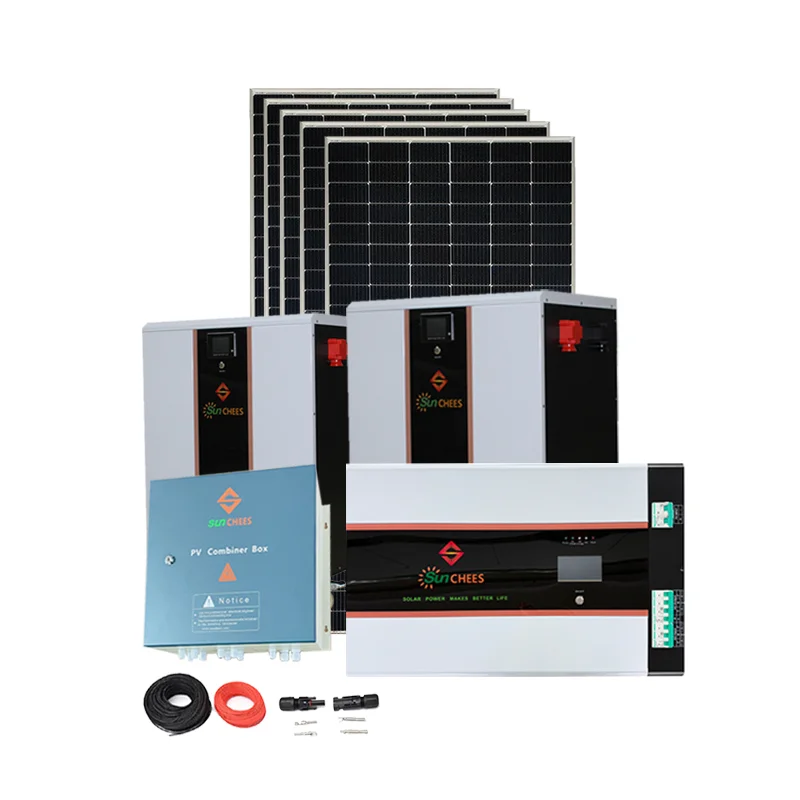
We offer residential solar systems and off-grid solar systems. When discussing a configuration, bring together the overnight appliance list and garage dimensions to compare options that address your electricity needs while leaving enough installation and service space.
In France, explain whether the property will keep its grid connection
Tell the installer whether the house will be completely off-grid or retain a grid connection with battery backup. Both may have solar panels and lithium batteries, but their connection, switching and protection arrangements differ, as do the relevant reference scopes.
AFNOR's UTE C 15-712-2 addresses battery-equipped standalone PV installations not intended to connect to the public distribution network. XP C 15-712-3 concerns grid-connected installations with storage. Ask the installer to identify the system's grid relationship and the applicable reference versions in the proposal before finalising wiring, protective equipment and locations. AFNOR standalone-system scope; CONSUEL grid-connected storage inspection document.
For a new or altered installation, establish the applicable NF C 15-100 version too. CONSUEL's guidance on the newer series uses Sept 1, 2025 as a project reference-date boundary; the installer remains responsible for the applicable version and conformity. Providing the project dates and scope helps avoid applying an older installation's approach without checking whether it fits yours. CONSUEL guidance on reference versions.
For a hotel, allow for the staff's daily work
Start with an equipment room that maintenance staff can reach and that allows access to be restricted. If housekeeping staff push linen trolleys past the equipment every day, or supplies have to be carried across the front of the battery cabinet, the location can conflict with routine work. Plan the door, service space and delivery route before buying equipment.
Guest rooms and evacuation also affect the choice. Could an open equipment-room door obstruct a corridor? Is the equipment close to guest-room windows or doors? Can maintenance personnel reach it? A local designer should consider these questions in the building layout. In France, hotels fall within the rules for establishments open to the public, known as ERP. Fire-safety requirements depend on classification and sleeping accommodation, and cover matters including evacuation, alarms and safety management. French government ERP fire-safety guidance.
Frequently asked questions
Is one successful day with the garage door closed enough?
One day's record establishes performance under that day's weather and load. If the test took place in cool weather with little demand, the design still needs to address hotter conditions and heavier charging or use. Retain the room-temperature, load and alert records from commissioning so that any later reduction in power is easier to investigate.
Must the battery and inverter be in the same room?
Separate locations can be assessed. For example, a battery could be proposed in an equipment room and the inverter in an adjoining garage, subject to permitted cable lengths, communication connections and environmental requirements. The cable route through the wall, service access and isolation arrangements all need to work with that layout.
How can I leave room for more batteries later?
Give the installer the dimensions and weight of the potential additional modules, then reserve the installation, opening and handling space. Expansion also requires a fresh check of compatibility, total stored energy, structural loading and electrical protection. An empty floor space addresses only the physical-space part of that decision.
Can a backup fuel generator run in the garage too?
A portable fuel-powered generator belongs outdoors when operating. France's Grand Est regional health authority states that combustion-engine generators must operate outside; any shelter must be fully ventilated and separate from living accommodation. Exhaust presents a carbon-monoxide hazard, so plan its operating position separately from the battery equipment room. Grand Est health authority carbon-monoxide guidance.
Send us garage photos and your overnight electricity needs
For a Sunchees enquiry, take photos with the car parked, including the available wall space, ventilation openings, garage door and doorway into the house. Add the garage dimensions, your location in France and any recorded summer and winter temperatures. The photos show where equipment might go; the measurements help compare cabinet sizes and service space.
Describe overnight use in everyday terms: the refrigerator runs all night, lights and television stay on until 11 pm, and perhaps the water heater or electric heating also needs power. Include appliance ratings and operating hours to help discuss battery capacity and inverter power.
We provide system configuration to suit requirements and installation guidance. Use the Sunchees contact page to discuss battery quantity, inverter power and equipment dimensions. Before ordering, have your local installer in France confirm that the proposed garage layout preserves the required cooling, cabinet-opening and maintenance space.
 Sol-Ark 15K vs Sunchees 15kW: Which Fits Your Home or Farm?
 You May Also Like



 Tel
Tel
 Email
Email
 Address
6th Floor, Zhonghe Zinan Industrial Park, No. 1 Zinan Changang West Road, Nanzhuang Town, Chancheng District, Foshan City, Guangdong Province. China (Mainland)