


 Whatsapp :
 Home
HomeSol-Ark 15K vs Sunchees 15kW: Which Fits Your Home or Farm?
 Sep 14,2026
 0
0
 sunchees solar system
When the power goes out, you want the refrigerator and lights to stay on. You may also want to run the air conditioner or water pump. If you are comparing a Sol-Ark 15kW inverter with a Sunchees 15kW system, start with two questions: what equipment do you already have, and does your budget need to cover an inverter or a complete solar system?
The inverter determines how much equipment you can run at once. The battery determines how long that equipment can keep running. Consider those separately, alongside your home's voltage and installation requirements, and the choice becomes clearer.
What does each brand offer?
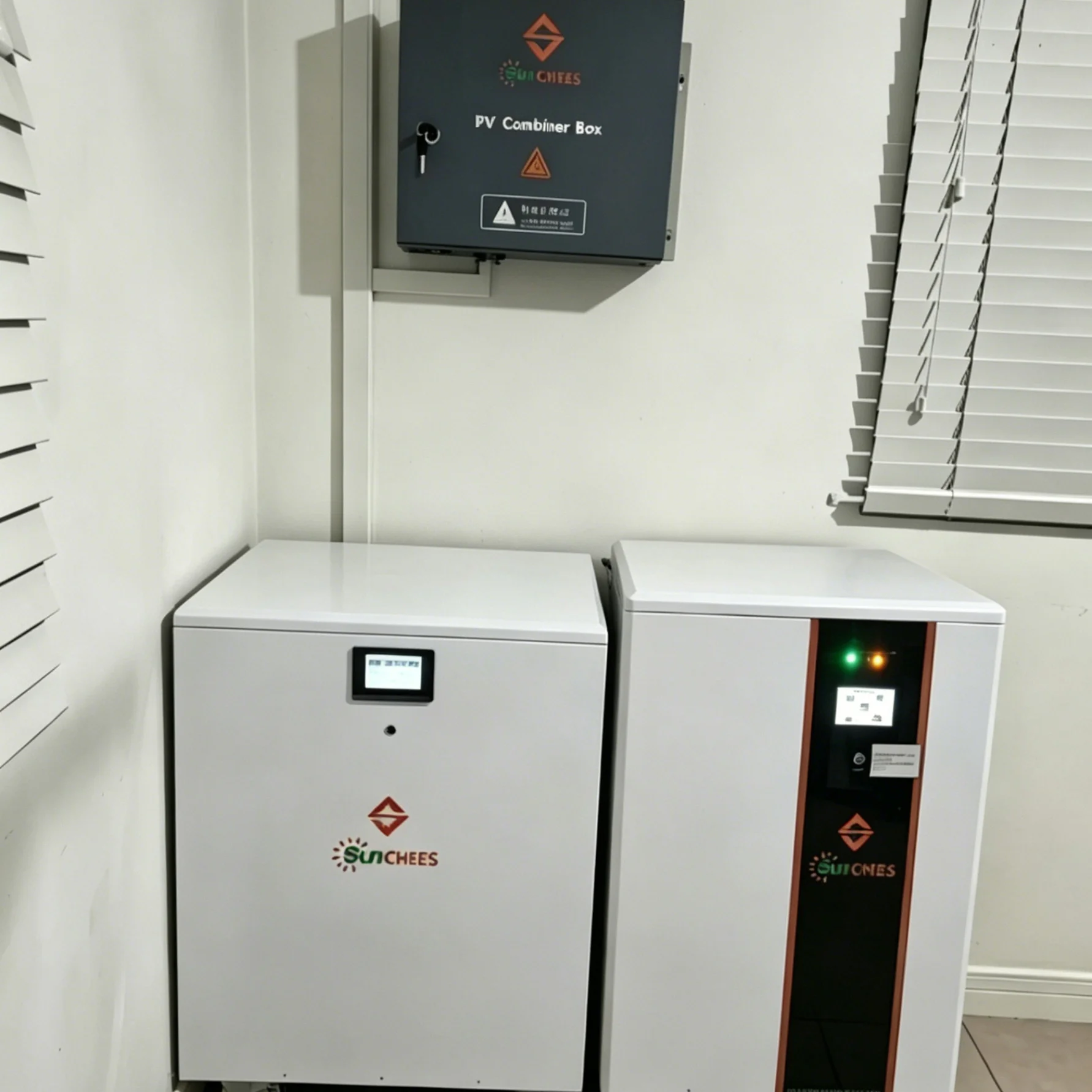
The Sol-Ark 15K is built around whole-home backup for North American households. It brings several solar, battery, grid and generator controls into one unit. Those features can be useful if you already have solar and want to add batteries, or want a generator to help keep your home powered during an outage. Panels, batteries and installation must still be arranged separately. Sol-Ark 15K product overview
At Sunchees, you can choose the panels, inverter, battery, mounting hardware and related materials together. We supply complete equipment packages for homes, farms and small businesses overseas, with wiring diagrams, installation videos and online guidance. If you are installing solar for the first time, this makes it easier to see what you need to buy and plan the equipment budget. Explore our complete solar system
Each approach serves a different starting point. The Sol-Ark 15K's controls and connection options are useful when several existing power sources need to work together. With Sunchees, you can discuss the equipment for a new system together and adjust the package around your budget. The specific model must still suit your electrical supply, appliances and installation requirements.
Which voltage does your home use?
A 15kW rating tells you about power. Output voltage determines whether an inverter suits your electrical system. For example, a 120/240V split-phase supply serves the corresponding 120V and 240V circuits. A 220–240V single-phase inverter has different wiring and appliance requirements.
The Sol-Ark 15K includes a 120/240V option. Our 15kW single-phase inverter lists a 220–240V output, while our 15kW split-phase inverter lists 110/220V. Both Sunchees models discussed here have a nominal 96V battery input.
For a 120/240V home, ask your installer to check appliance voltage tolerances and the inverter's available settings before choosing equipment labeled 110/220V. A farm with three-phase pumps or machinery needs a suitable three-phase solution. Clear photos of your electrical panel and appliance nameplates, together with the installation country, help us identify the appropriate model.
How do the configurations compare?
The table below compares the Sol-Ark 15K-2P-LV with the Sunchees 15kW single-phase inverter and its complete system package. The separate Sunchees split-phase option is identified where relevant.
|
|
|
|
|
|
|
|
|
|
|
|
|
|
|
|
|
|
|
|
|
|
|
|
|
|
|
|
Sol-Ark figures follow its July 2026 Rev.7 datasheet. Sunchees figures refer to the linked inverter and system package. If you want to keep existing equipment, include its inverter and battery model numbers when requesting a quote.
Can the air conditioner and water pump run together during an outage?
Start by adding their running power. As an example, suppose the air conditioner draws 3kW, the pump draws 1.5kW, and the refrigerator, lights and other appliances add another 1kW. Together, they draw 5.5kW. The pump and air conditioner may need more power as they start, so their nameplate starting current or manufacturer startup data matters too.
At 240V, the Sol-Ark Rev.7 datasheet lists 12kW of continuous backup power, 13kW for 30 minutes and 24kW for 10 seconds. Its 200A grid pass-through rating describes power passing from the grid to household loads while grid power is available. During an outage, the backup output limits still govern which appliances can run. Sol-Ark datasheet
The battery must also supply enough current. Using the same hypothetical 5.5kW load, a 96V battery and an assumed inverter efficiency of 90% would require about 64A continuously from the battery. That estimate helps check the battery, wiring and inverter together. Motor-starting demand must be considered separately.
Will a 30kWh battery last through the night?
Our selected 15kW kit includes approximately 30kWh of battery storage and 16 panels rated at 600W each. The panels total 9.6kWp, their combined rated power under standard test conditions. The 15kW in the kit name refers to the inverter. Panels and sunshine determine how much energy can be replenished during the day; the battery and appliances determine how long it lasts at night. See the kit configuration
For a planning example, start with a fully charged 30kWh battery, leave 10% in reserve, and assume 85% of the remaining energy reaches the appliances after conversion and other losses. That gives about 23kWh. If the refrigerator, lights, television and air conditioning average 3kW together overnight, the estimated runtime is about 7.7 hours.
The calculation is 30 × 90% × 85% ÷ 3 ≈ 7.7 hours. The reserve and 85% allowance are assumptions for this example. Starting with a partially charged battery, running the air conditioner longer or using an older battery can change the result.
If overnight air conditioning is the goal, recording your evening energy use is particularly helpful. A fully off-grid home also needs a charging or backup plan for consecutive cloudy days, covering daytime use as well as the following night.
How can you judge reliability once the system is installed?
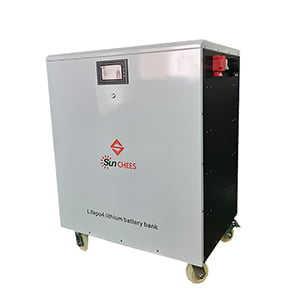
You want to know whether the pump can start without cutting the power, whether the air conditioner can run alongside other appliances, and whether the system transfers successfully when the grid fails. During commissioning, ask the installer to test the appliance combinations you expect to use and record motor starts, outage transfers and the return of grid power. These checks show how the system behaves in your home.
The installation location matters as well. For example, Sol-Ark's current datasheet specifies reduced output above an ambient temperature of 45°C. In a hot equipment room, consider how much power remains available at that temperature. Sol-Ark also offers optional EMP, or electromagnetic pulse, protection for projects with that specific requirement. Datasheet, product overview
If a stopped cold room or pump would interrupt your business, plan how it will be powered during repairs. A local technician, suitable spare parts and an agreed backup connection all affect how quickly normal operation can resume.
What happens if you need Sunchees support?
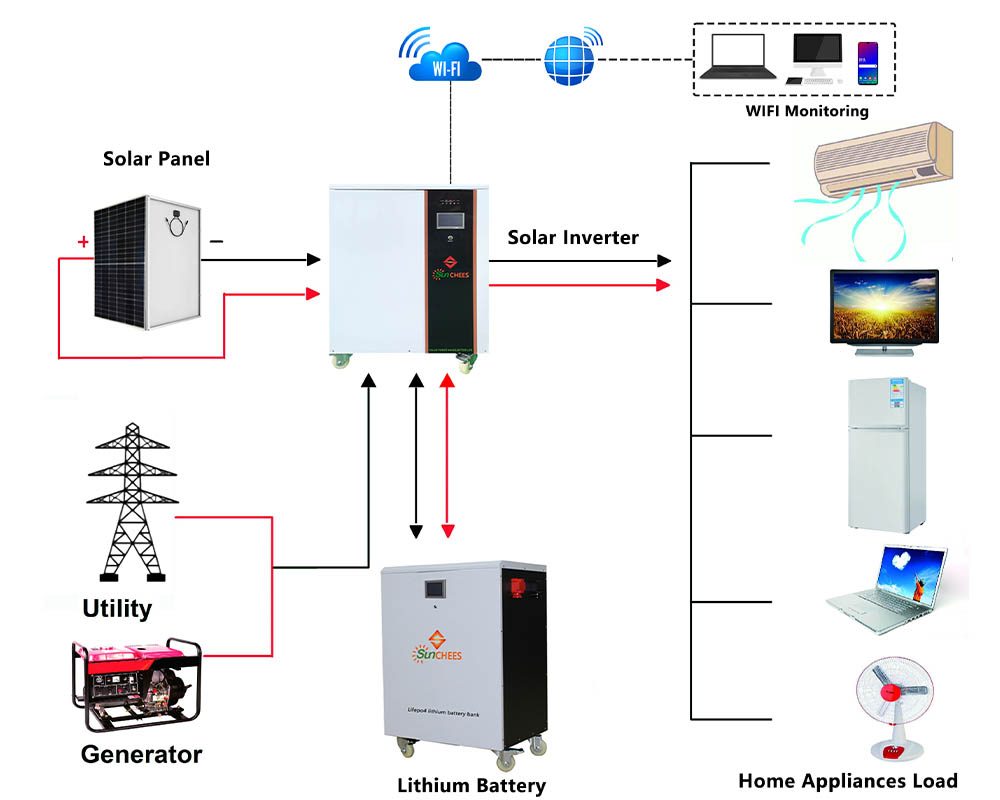
We provide wiring diagrams, installation videos and online technical guidance. For cases covered by the warranty terms, replacement parts or circuit boards can be sent by courier for a local technician to fit. Before purchasing, arrange a qualified local installer or service technician who can communicate with us and carry out work on site. Installation support, warranty policy
When ordering, confirm the warranty period and start date for each major component, and whether a covered problem is handled with replacement parts or a complete unit. Include responsibility for freight, customs clearance and local labor in the order documents so the arrangements are clear when needed.
When contacting support, have the order number, model, serial number and fault code ready, and explain which appliances were running when the problem occurred. Opening the inverter or replacing internal components should be left to appropriately authorized, qualified technicians.
Read the specific terms when comparing Sol-Ark as well. Its 15K-2P-N limited warranty document lists 10-year coverage, with five years for fans and the LCD, and exclusions affecting removal, installation and shipping costs. For another model version, use the warranty supplied with that model and confirm what the local installer covers. Sol-Ark limited warranty
Where does Sunchees offer value for money?
If this is your first solar installation, the budget has to stretch beyond the inverter. Panels, batteries, mounting hardware, cables and installation all cost money. Sunchees is worth considering because you can choose the equipment together and discuss how much solar and battery storage you need for your daytime and nighttime use.
Look at what the price includes
As of Sep 13, 2026, our 15kW 96V single-phase inverter has a listed price of US$1,570–1,660. The selected 15kW complete system lists US$8,100–8,288, with panels, approximately 30kWh of battery storage, an inverter and related materials in its equipment list. The order quotation determines the exact configuration and whether freight, taxes and local installation are included.
If you already have compatible panels and batteries, an inverter-only purchase may suit you. Starting from scratch makes the complete equipment quote more relevant. Either way, you can see what remains to be purchased and how much to set aside for installation.
Spend less time checking equipment with separate suppliers
Buying components separately means checking panel strings, battery voltage and discharge current, then giving the installer the wiring information from each supplier. When buying a complete system from us, you can discuss those questions together. The installer can also use our wiring diagrams, videos and online guidance.
For an overseas order, listing mounting hardware, cables and protection devices in advance helps identify missing materials before shipment. This is particularly useful for homes and farms that already have a local electrician and want one supplier to coordinate the equipment.
Size the battery for the evening you want
Suppose you want to use an average of 3kW for eight hours overnight. Your appliances would consume about 24kWh, with battery reserve and losses to allow for on top. Enough storage directly affects whether power lasts until morning. A farm that mainly pumps water during daylight and only runs lights at night will need a different balance of panels and batteries.
Tell us which appliances run during the day, which run at night, and for how long, alongside your budget. For a new off-grid system that does not need to connect to existing solar equipment or manage complex grid functions, you can focus on the functions you will use and make room in the budget for the required battery, panels and installation materials.
Add delivery and installation before deciding
To judge whether Sunchees is better value for your project, compare two systems that both meet your electricity needs, delivered and installed at the same site. Ask both quotes to specify:
- Inverter model, usable battery capacity, panel quantity and panel power.
- Mounting hardware, protection devices, cables and changes to the existing electrical panel.
- Freight, taxes, installation and commissioning.
- Local service labor, spare parts and temporary power during repairs.
An inverter-only quote needs panels and batteries added before it can be compared with a complete system. Retaining existing equipment may involve rewiring costs. For a grid-connected project, have the installer confirm that the model meets the local utility's requirements. With those items included, you can see which complete option fits your budget.
Frequently asked questions
Are Sol-Ark and Sunchees the same brand?
They are separate brands. The Sol-Ark 15K is a Sol-Ark inverter. At Sunchees, we supply solar equipment and complete systems. The brand, full model number and support arrangements should be specified in your order.
Can I keep my existing 48V battery?
The two Sunchees inverter models linked above have a nominal 96V battery input, so a 48V battery cannot be connected directly for use. If you want to keep an existing battery, provide its model number so voltage and communication compatibility can be checked. Do not connect battery packs with independent battery management systems in series without explicit manufacturer approval.
Does a complete kit include installation?
A complete equipment kit can include panels, batteries, an inverter, mounting hardware and cables. Local construction, electrical modifications and commissioning are included only when specified in the quotation. Overseas buyers can obtain equipment and local installation quotes together to calculate the total cost.
Does a 15kW inverter generate 15kWh every day?
The 15kW figure is an inverter power rating. Daily generation depends on the solar panels, local sunshine and installation conditions; energy accumulated over the day is measured in kWh. Your installation city and daily electricity use help determine the panel capacity to consider.
Let's size a system around your electricity use
Use the Sunchees contact page to tell us your installation country and city, supply voltage and phase, daily electricity use, and which appliances you want to keep running during an outage. For overnight air conditioning, include each unit's input power, the number of units and the hours you plan to use them.
Add your budget, delivery location and local installation arrangements. We can then discuss panel quantity, battery capacity and equipment pricing around the way you intend to use the system.
Sources
 Where to Install Off-Grid Solar Batteries in a French Home
 You May Also Like



 Tel
Tel
 Email
Email
 Address
6th Floor, Zhonghe Zinan Industrial Park, No. 1 Zinan Changang West Road, Nanzhuang Town, Chancheng District, Foshan City, Guangdong Province. China (Mainland)