


 Whatsapp :
 Home
Home10kW Home Solar Power System for Trinidad and Tobago: A Practical Caribbean Guide for Homes, Offices, and Hurricane-Season Backup
 Jun 29,2026
 0
0
 sunchees solar system
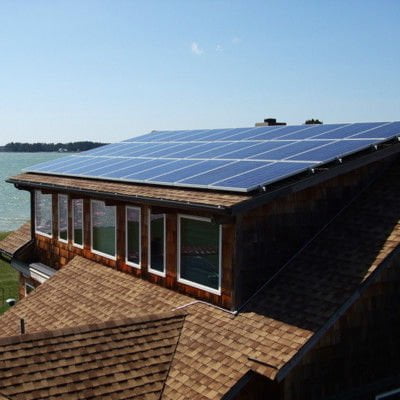
A 10kW home solar power system is not only a way to reduce electricity bills. In Trinidad and Tobago, especially in areas such as Port of Spain, San Fernando, the East-West Corridor, hillside suburbs, coastal communities, and dense residential districts, a well-designed solar system can also become a private backup power source during blackouts, storms, grid faults, and hurricane-season disruptions.
For many Caribbean homeowners, the real question is not simply “How much solar power can I generate?” The more useful questions are:
- Can a 10kW system keep my refrigerator, lights, WiFi, fans, TV, and selected air conditioning running?
- Will it work on a concrete flat roof or a traditional galvanize roof?
- How many batteries do I need for night-time and storm backup?
- Is a split-phase system suitable, or should the inverter be configured for local Trinidad and Tobago electrical standards?
- How long does installation take?
- Is this system better for a 3-bedroom home, a 4-bedroom home, or a small office?
This guide answers those questions using practical Caribbean scenarios, including traditional concrete block houses, flat concrete rooftops, galvanize roofing, residential homes in Port of Spain and San Fernando, and small office buildings that need business continuity during power outages.
Sunchees designs off-grid and hybrid solar systems for residential, commercial, agricultural, and industrial applications, with a focus on Caribbean and Latin American markets. The goal of this article is to help homeowners and business owners understand what a 10kW home solar power system can realistically do in Trinidad and Tobago.
Why a 10kW Home Solar Power System Makes Sense in Trinidad and Tobago
Trinidad and Tobago has a unique energy profile. It is an oil and natural gas country, but it is also part of the wider Caribbean region where climate resilience, backup power, and renewable energy adoption are becoming increasingly important.
In recent years, renewable energy projects supported by government initiatives and international organizations have helped introduce small-scale rooftop solar PV systems to public facilities, community buildings, schools, environmental sites, and other local facilities. This matters because solar power is no longer only a private luxury product. It is becoming part of the country’s wider discussion around energy security, disaster resilience, and future-proof infrastructure.
For individual homeowners and small businesses, the practical value is even more direct.
A properly designed 10kW home solar power system can help with:
|
|
|
|
|
|
|
|
|
|
|
|
|
|
|
|
|
|
|
|
|
|
|
|
|
|
|
|
A 10kW home solar power system is especially suitable for families who want more than bill savings. It is for people who want stable electricity, refrigeration, lighting, cooling, internet access, and daily comfort even when the public grid is unstable.
Local Building Context: Concrete Block Houses, Galvanize Roofs, and Flat Concrete Rooftops
To design a solar system properly for Trinidad and Tobago, the roof type matters.
Many homes in Trinidad and Tobago and across the Caribbean use corrugated metal roofing, often locally called galvanize or zinc roofing. A typical local house may be described as a concrete block house with galvanize roof. This combination is practical in the tropics because the concrete block structure provides durability, while the galvanize roof is lightweight, drains rain quickly, and is relatively affordable.
Common Roof Types for Solar in Trinidad and Tobago
|
|
|
|
|
|
|
|
|
|
|
|
|
|
|
|
|
|
|
|
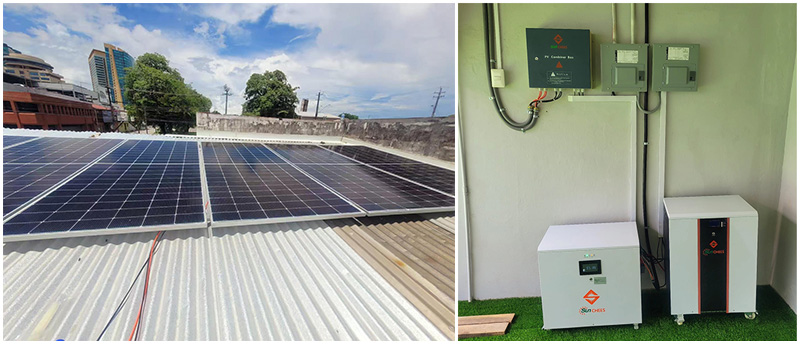
The user-provided cases in this guide focus on flat concrete rooftops with hurricane resistant solar mounting using reinforced aluminum brackets. This is a strong choice for many Caribbean homes because it allows secure anchoring, stable panel angles, and easier inspection after heavy rain or strong wind.
In dense suburban areas around Port of Spain, hillside communities, valley settlements, and the East-West Corridor, homes are often close together and may sit on uneven terrain. In these environments, solar design should consider:
- roof strength
- wind exposure
- shading from nearby buildings
- hillside orientation
- drainage during tropical downpours
- corrosion risk near coastal zones
- safe cable routing
- inverter and battery placement away from flood-prone areas
A good Caribbean solar system is not just a collection of panels and batteries. It is a site-specific power design.
What Is Included in This 10kW Home Solar Power System?
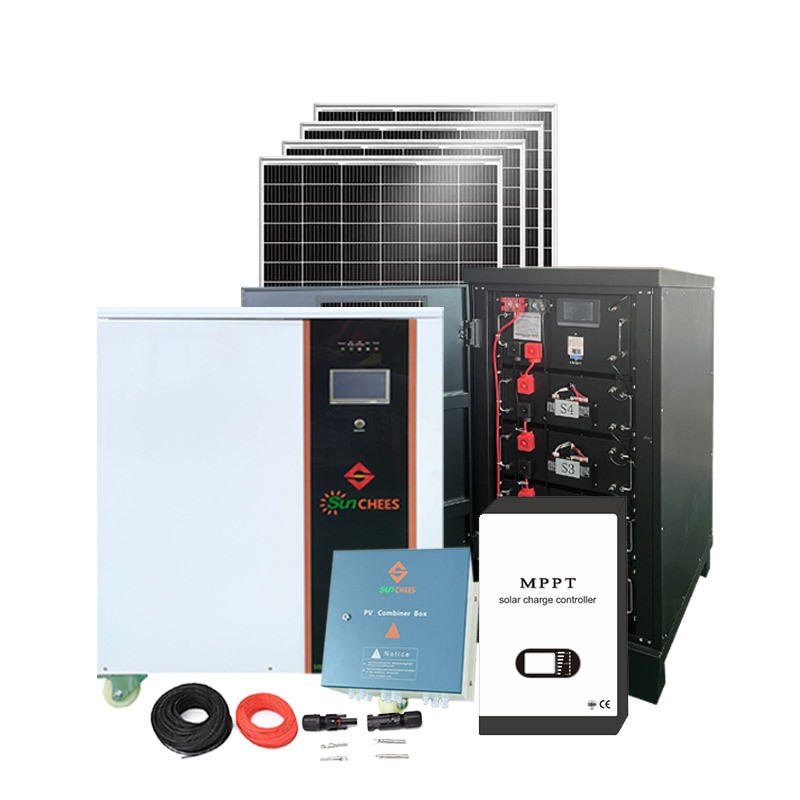
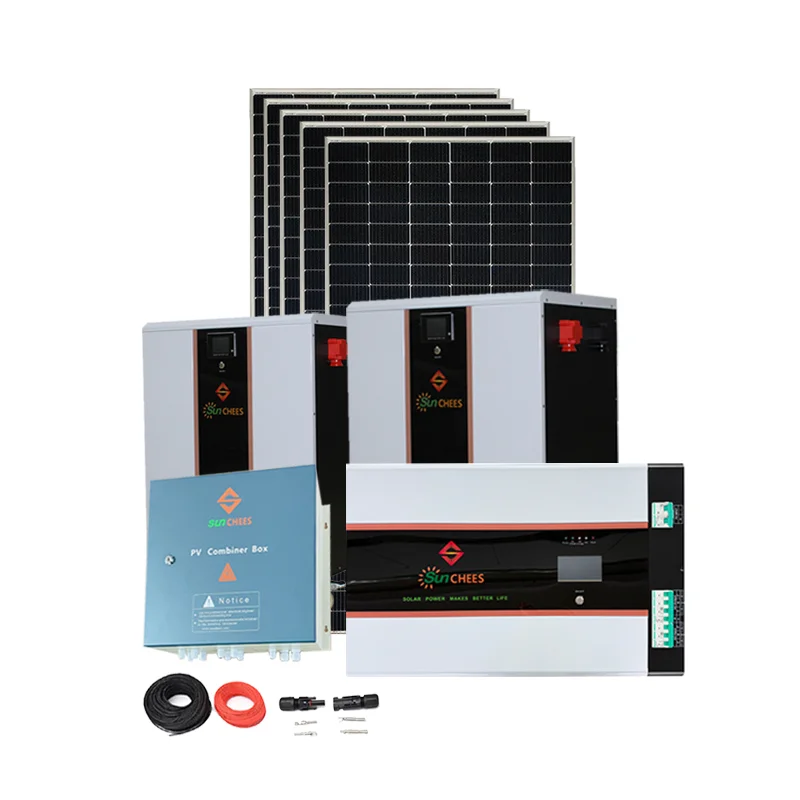
The Sunchees system referenced here is a 10kW solar PV and battery storage system designed for home, office, commercial, and off-grid use in Caribbean environments.
A typical configuration includes:
|
|
|
|
|
|
|
|
|
|
|
|
|
|
|
|
|
|
|
|
|
|
|
|
|
|
|
|
|
|
|
|
|
|
|
|
|
|
|
The exact configuration should always be adjusted based on the user’s location, electrical standard, roof type, daily load, air-conditioning habits, and backup requirement.
Why 12 Pieces of 600W Double Glass Solar Panels Matter
A 10kW class system does not always mean the rooftop panel array itself is exactly 10kW. In this case, the system uses 12 pieces of 600W double glass solar panels, giving a total solar panel capacity of about 7.2kW.
That 7.2kW PV array can be very useful in the Caribbean because daytime solar conditions are strong, especially around late morning and early afternoon. During sunny periods, the panels can power home appliances directly while also charging the battery bank for night-time use.
Why double glass panels are useful in tropical environments
|
|
|
|
|
|
|
|
|
|
|
|
|
|
|
|
|
|
Sunchees currently offers a free upgrade option to double-glass bifacial modules for eligible systems. This can improve energy yield by using both the front and rear sides of the panel, depending on installation angle, surface reflectivity, spacing, and roof conditions.
For Caribbean roofs, this matters because solar panels face intense heat, humidity, salt air in coastal zones, and sudden heavy rain. A stronger module structure is not only about generation. It is about long-term reliability.
Important Electrical Note: Split Phase vs Trinidad and Tobago Local Standards
The product category may be described as a 10kW split phase off grid solar system, and this keyword is important for users searching for Caribbean and North American-style solar solutions.
However, electrical standards vary by country and even by site. Trinidad and Tobago commonly uses 115/230V and 230/400V 60Hz electrical standards. Some Caribbean markets require split-phase output, while some Trinidad and Tobago installations may need inverter configuration based on the local single-phase or three-phase supply.
This is why the safest recommendation is:
Before shipment, confirm the property’s actual voltage, phase type, and load requirements.
A professional supplier should confirm:
- whether the home requires split-phase output
- whether the site needs 230V single-phase configuration
- whether any 115V circuits need support
- whether large appliances such as air conditioners, pumps, or commercial equipment require special handling
- whether the system is off-grid, hybrid, or grid-support backup
- whether the local installer needs wiring diagrams, remote commissioning support, or engineer guidance
This is also one of the reasons Sunchees emphasizes customized system design instead of forcing one fixed configuration on every country.
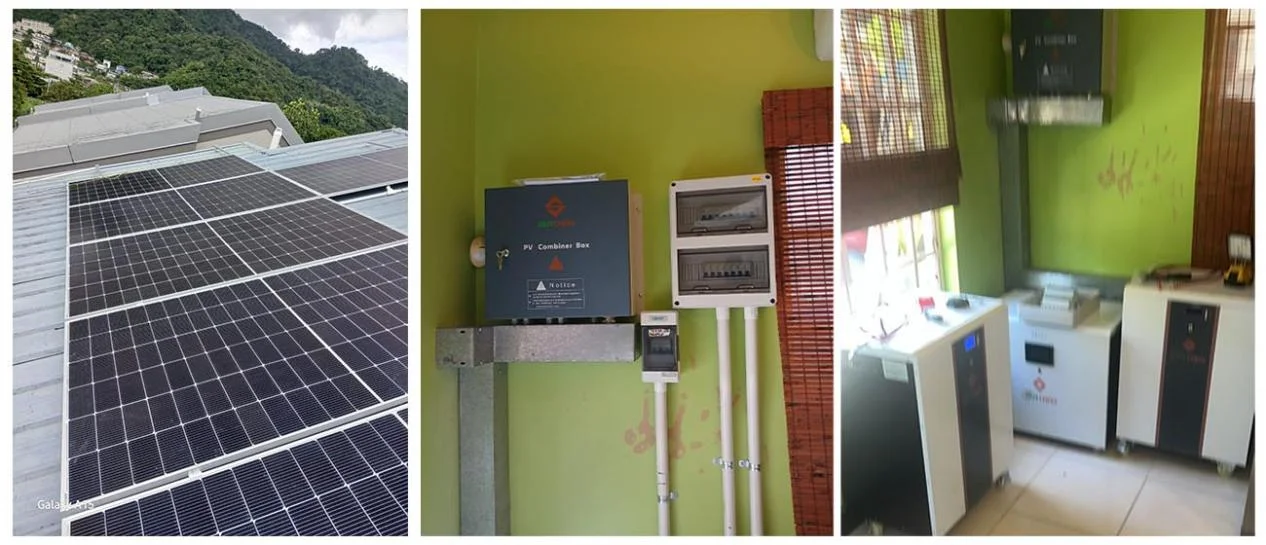
Real Case 1: 10kW Home Solar Power System for a Two-Story Home in Port of Spain
The first case is 10kW Home Solar Power System a traditional residential home in Port of Spain, Trinidad and Tobago.
Project Summary
|
|
|
|
|
|
|
|
|
|
|
|
|
|
|
|
|
|
|
|
|
|
|
|
|
|
|
|
|
|
|
|
|
For a 3-bedroom, 2-bathroom home, this system is not only about saving electricity. Its core value is household continuity.
In many Caribbean homes, a blackout is not a small inconvenience. It can mean spoiled food, no fans, no internet, no security lighting, no phone charging, and uncomfortable nights in humid heat. With a properly configured 10kW home solar power system, the home gains a private energy layer independent from the public grid.
Daytime Use: Comfortable Normal Living
During sunny daytime hours, the 12 solar panels can produce substantial real-time power. In practical household terms, the system can support the core appliances that define daily comfort.
|
|
|
|
|
|
|
|
|
|
|
|
|
|
|
|
|
|
|
|
|
|
|
|
|
|
|
|
|
|
|
|
|
|
|
|
|
|
|
|
In a sunny daytime scenario, this home can feel very close to grid-powered living. The refrigerator stays on, the WiFi works, lights remain available, and one or two efficient air conditioners may be used depending on battery state, solar production, and load management.
Night or Storm Backup: The Real Value of Battery Storage
At night or during heavy storm conditions, the solar panels are no longer generating meaningful power. This is where solar battery storage for home becomes critical.
With 2 sets of 260Ah batteries, the system can prioritize essential loads:
- one large refrigerator
- basic LED lighting
- WiFi router
- phone charging
- fans
- selected TV or laptop use
- limited air-conditioning in economy or timer mode
A practical storm-night load may look like this:
|
|
|
|
|
|
|
|
|
|
|
|
|
|
|
|
|
|
|
|
|
This means the battery bank is not only a technical accessory. It is the part of the system that turns solar panels into a usable blackout solution.
For a Port of Spain family, the practical result is simple: during a grid outage, the home is not forced into darkness, heat, food loss, and communication failure.
Real Case 2: 10kW Home Solar Power System for a Three-Story Home in San Fernando
The second case is 10kW Home Solar Power System a larger traditional residential home in San Fernando, Trinidad and Tobago.
Project Summary
|
|
|
|
|
|
|
|
|
|
|
|
|
|
|
|
|
|
|
|
|
|
|
|
|
|
|
|
|
|
|
|
|
This system uses the same core configuration as the Port of Spain home: a 10kW solar system with battery backup, 12 pieces of 600W panels, and 2 sets of 260Ah batteries.
The difference is the building itself.
A three-story, 4-bedroom home has more rooms, more lighting zones, more fans, more WiFi coverage needs, and more heat accumulation on the upper floor. In tropical climates, the top floor can become especially hot during the afternoon because it receives direct roof heat.
Daytime Use for a Larger Multi-Story Home
|
|
|
|
|
|
|
|
|
|
|
|
|
|
|
|
|
|
|
|
|
|
|
|
For this type of home, the system’s value is not that every device can run at maximum power at the same time without planning. The value is that a family can manage normal daily living with a much higher level of energy independence.
A practical strategy is:
- use heavy loads during sunny daytime hours
- keep refrigerators and core appliances running continuously
- use air conditioning selectively
- charge the battery during the day
- reserve battery capacity for night-time essentials
Night Backup for Four Bedrooms
A three-story home becomes inconvenient and potentially unsafe when the power goes out at night. Stairs, hallways, bathrooms, and bedroom areas all need lighting. Without fans, heat and mosquitoes can make sleep difficult.
With two 260Ah battery modules, the system can support a night-time priority plan:
|
|
|
|
|
|
|
|
|
|
|
|
|
|
|
|
|
|
|
|
|
For this San Fernando home, the 10kW home solar power system solves a different problem from a smaller house. It protects a multi-story family living environment where blackout safety, stairs, lighting, room cooling, and family comfort are more demanding.
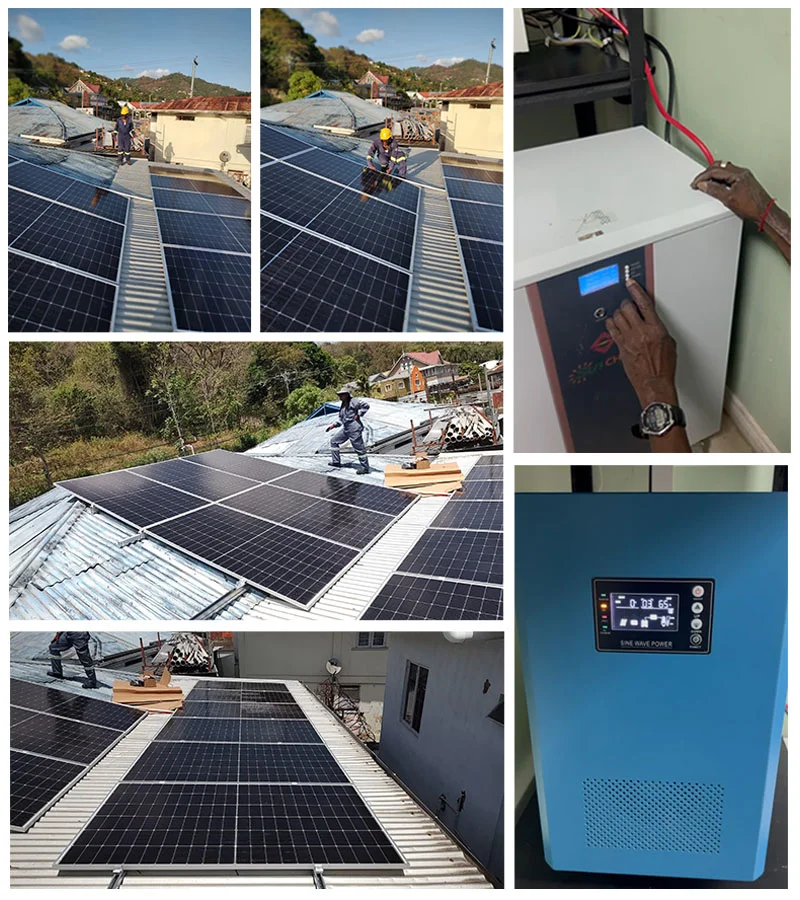
Real Case 3: 10kW Solar Power System for Office Use in San Fernando
Not every 10kW Solar system is installed for a home. The third case is a single-story office building in San Fernando.
Project Summary
|
|
|
|
|
|
|
|
|
|
|
|
|
|
|
|
|
|
|
|
|
|
|
|
|
|
|
|
|
|
|
|
|
A solar power system for office has a different usage pattern from a home. A family uses electricity in the morning, evening, and night. An office often uses most of its energy between 8:00 a.m. and 5:00 p.m., which overlaps very well with solar production.
This is why the office case uses 1 set of 260Ah battery, not 2 sets. The system is designed mainly to support daytime operations and provide backup during interruptions, rather than to run a full household overnight.
Office Load Example
|
|
|
|
|
|
|
|
|
|
|
|
|
|
|
|
|
|
|
|
|
|
|
|
|
|
|
|
|
|
|
|
|
|
|
For small offices, the financial logic can be strong because the solar generation curve matches the working day. Solar electricity produced during the day is used immediately by computers, lights, air conditioning, printers, and routers.
The business value is not only lower electricity cost. It is also protection against:
- lost work from sudden shutdowns
- interrupted customer communication
- delayed printing and paperwork
- staff downtime
- uncomfortable working conditions
- poor reliability during local power cuts
For a professional office in San Fernando, a solar system can become a business continuity tool.
What Can a 10kW Home Solar Power System Run?
A common mistake is to ask whether a 10kW system can run “the whole house” without defining the loads.
A better question is:
Which loads should the system support during the day, and which loads must survive through the night or a blackout?
Practical Load Planning Table
|
|
|
|
|
|
|
|
|
|
|
|
|
|
|
|
|
|
|
|
|
|
|
|
|
|
|
|
|
|
|
|
|
|
|
|
|
|
|
|
|
|
|
|
Good Load Strategy for Caribbean Homes
|
|
|
|
|
|
|
|
|
|
|
|
|
|
|
|
|
|
|
|
|
A 10kW home solar power system performs best when the user understands that electricity independence is partly about hardware and partly about load discipline.
Battery Sizing: Why Some Homes Need 2 Sets of 260Ah Batteries and Offices May Need 1 Set
Battery sizing should follow the usage pattern.
A home needs electricity after sunset. A business office usually uses most electricity during the day. This is why two residential cases use 2 sets of 260Ah batteries, while the office case uses 1 set of 260Ah battery.
Battery Requirement by Scenario
|
|
|
|
|
|
|
|
|
|
|
|
|
|
|
|
|
|
|
|
|
|
|
|
For users searching for off grid solar battery storage for Caribbean Islands, this is one of the most important lessons: battery capacity should not be chosen only by system size. It should be chosen by outage duration, night-time load, family size, and risk tolerance.
Installation: How Long Does a 10kW System Take?
In the cases provided, installation and commissioning took 2–3 days. For larger or more complex projects, local installation partners may complete full installation and commissioning within about 5 days, depending on roof condition, wiring complexity, transport, weather, and inspection requirements.
Installation Workflow
|
|
|
|
|
|
|
|
|
|
|
|
|
|
|
|
|
|
|
|
|
|
|
|
Sunchees can provide remote installation guidance, wiring diagrams, online support, and video guidance. For larger systems above 50kW, engineer dispatch may be available depending on project terms.
Equipment Placement: Mobile Units, Flood Risk, and Wall-Mounted Options
Some Sunchees solar system equipment can be designed with wheels, making it movable except for the solar panels. This is useful when users want easier access for maintenance, cleaning, or repositioning within a safe indoor technical area.
However, movable equipment is not the same as wall-mounted equipment.
In flood-prone areas, many customers naturally want to install batteries and inverters higher above the floor. That concern is reasonable, but safety must come first. Heavy battery systems should not be mounted casually on a wall unless the equipment is specifically designed and certified for wall-mounted installation.
Equipment Placement Recommendations
|
|
|
|
|
|
|
|
|
|
|
|
|
|
|
|
|
|
|
|
|
For Caribbean users, equipment placement should consider heat, humidity, flood risk, salt air, ventilation, maintenance access, and electrical safety.
Roof Mounting for Tropical Rain and Strong Wind
A solar system in Trinidad and Tobago must be designed for tropical weather. Sudden heavy rain, high humidity, roof heat, corrosion, and wind exposure can all affect long-term performance.
A strong hurricane resistant solar mounting design should consider:
- proper roof anchoring
- aluminum bracket strength
- anti-corrosion treatment
- correct tilt and spacing
- safe cable fixing
- waterproof roof penetrations
- wind uplift resistance
- easy inspection after storms
- roof drainage paths
For galvanize roofs, waterproofing and fastener quality are especially important. For flat concrete rooftops, structural anchoring and water drainage must be handled carefully.
The best mounting system is not always the cheapest one. In Caribbean conditions, long-term roof safety matters as much as panel wattage.
Residential vs Office: Which 10kW Solar Design Is Better?
The same 10kW system can serve different users, but the battery and load strategy should change.
|
|
|
|
|
|
|
|
|
|
|
|
|
|
|
|
|
|
|
|
|
|
|
|
|
|
|
|
|
|
A 10kW home solar power system is usually most valuable when the user needs both solar generation and battery-backed independence. A solar power system for office may achieve a shorter payback if most electricity is consumed during the day.
How Sunchees Fits Into the Decision
The most useful solar supplier is not simply the one that sells panels. For Caribbean projects, the supplier must understand system matching, battery storage, inverter configuration, mounting, shipping, packaging, installation support, and after-sales service.
Sunchees positions itself as a complete solar system manufacturer and solution provider.
Sunchees Brand and Service Profile
|
|
|
|
|
|
|
|
|
|
|
|
|
|
|
|
|
|
|
|
|
|
|
|
|
|
|
|
|
|
|
|
|
|
|
|
|
|
|
|
|
|
|
|
|
|
|
|
This matters because a Caribbean solar buyer often needs more than a product list. The buyer needs a system that matches the roof, voltage, battery expectation, climate, and local installation reality.
Packaging, Delivery, and Warranty Considerations
Solar systems involve multiple heavy and fragile components, so packaging affects project safety.
Packaging Method
|
|
|
|
|
|
|
|
|
|
|
|
|
|
|
Warranty Policy
|
|
|
|
|
|
|
|
|
|
|
|
For users importing a Caribbean home solar system, packaging and after-sales clarity should be checked before payment. A lower system price is not always better if the battery, inverter, mounting structure, or warranty process is unclear.
How to Decide Whether a 10kW Home Solar Power System Is Right for You
A 10kW system is a strong choice for many Caribbean homes, but it is not automatically right for everyone.
Use this checklist before buying.
Buyer Checklist
|
|
|
|
|
|
|
|
|
|
|
|
|
|
|
|
|
|
|
|
|
|
|
|
|
|
|
|
|
|
|
|
|
A 10kW solar system with battery backup is usually a good fit if the user wants reliable power for core household loads, selected cooling, and blackout protection. For larger homes, more air conditioning, or multiple days of backup, the battery bank may need expansion.
Practical Recommendation by User Type
|
|
|
|
|
|
|
|
|
|
|
|
|
|
|
|
|
|
|
|
|
|
|
|
|
|
|
Final Takeaway: The Real Value Is Energy Resilience
For a family in Port of Spain, a 10kW home solar power system can turn a traditional two-story house into a more resilient modern home.
For a family in San Fernando, it can help a larger three-story, 4-bedroom home maintain lights, cooling, refrigeration, WiFi, and night-time safety during outages.
For a small office, it can prevent productivity loss by keeping computers, internet, lighting, printing, and selected air conditioning running during the working day.
The strongest value is not only “free electricity.” The stronger value is control.
A well-designed Sunchees system can help Caribbean users move from dependence on an unstable grid to a more independent power structure: solar generation in the day, battery support at night, and backup resilience during storms and outages.
For Trinidad and Tobago homeowners and business owners, the best next step is to confirm the site location, roof type, voltage standard, daily load list, battery expectation, and installation conditions. With those details, a 10kW system can be configured more accurately for the building instead of being sold as a generic solar kit.
Q&A
Q1: Is a 10kW home solar power system enough for a house in Trinidad and Tobago?
Yes, a 10kW home solar power system can be enough for many 3-bedroom and 4-bedroom homes in Trinidad and Tobago if the system is designed around practical load priorities. It can usually support a refrigerator, LED lights, WiFi, TV, fans, washing machine use during the day, and selected inverter air conditioning. If the home needs multiple air conditioners running through the night, the battery bank should be expanded.
Q2: What can a 10kW home solar power system run during a blackout?
During a blackout, a 10kW home solar power system with battery storage can prioritize essential loads such as a refrigerator, LED lighting, WiFi router, phone charging, fans, laptops, and limited air-conditioning use. The exact backup time depends on the number of batteries, battery state of charge, appliance efficiency, and whether heavy loads are used at night.
Q3: Is a 10kW split phase off grid solar system suitable for Trinidad and Tobago?
A 10kW split phase off grid solar system may be suitable for some Caribbean electrical environments, but Trinidad and Tobago projects should confirm the property’s actual voltage and phase requirements before shipment. Some sites may require local 115/230V or 230V configuration rather than a standard North American-style setup. The inverter should be factory-configured or commissioned according to the local electrical standard.
Q4: How many solar panels are used in this 10kW home solar power system?
This Sunchees system uses 12 pieces of 600W double glass solar panels, giving about 7.2kW of installed solar panel capacity. The system is paired with inverter, battery, controller, mounting, cable, and protection components to create a complete 10kW home solar power system for residential or office backup use.
Q5: How many batteries does a 10kW solar system with battery backup need?
A 10kW solar system with battery backup can use different battery quantities depending on the application. For a 3-bedroom or 4-bedroom home, 2 sets of 260Ah batteries provide stronger night-time and storm backup. For a small office that uses most electricity during the day, 1 set of 260Ah battery may be enough for backup and business continuity.
Q6: Can a 10kW home solar power system run air conditioning?
Yes, a 10kW home solar power system can run selected inverter air conditioners, especially during sunny daytime hours. For night-time use, air conditioning should be managed carefully because it consumes much more energy than lights, WiFi, fans, and refrigeration. Timer mode, economy mode, and room-by-room cooling help extend battery backup time.
Q7: Is off grid solar battery storage for Caribbean Islands useful during hurricane season?
Yes, off grid solar battery storage for Caribbean Islands is useful because storms and grid faults can interrupt public electricity. Battery storage keeps essential loads running when the grid is down and solar panels are not producing power at night. For homes, the main value is food safety, lighting, communication, ventilation, and selected cooling.
Q8: Can a 10kW solar system be installed on a galvanize roof?
Yes, a 10kW system can be installed on a galvanize roof if the roof structure, fasteners, waterproofing, and mounting design are suitable. Many Trinidad and Tobago homes use galvanize roofing, but each roof should be inspected before installation. For flat concrete rooftops, reinforced aluminum mounting is often easier to secure and inspect.
Q9: How long does installation take for a 10kW home solar power system?
A 10kW home solar power system can often be installed in 2–3 days when the site is prepared and the design is straightforward. Some local installation partners may complete installation and commissioning within about 5 days depending on roof condition, wiring complexity, weather, and local requirements.
Q10: Is a 10kW solar power system better for a home or an office?
A 10kW system can work well for both. For homes, the main value is night-time backup, food protection, cooling, lighting, and outage resilience. For offices, the main value is business continuity because computers, lights, routers, printers, and air conditioning are mostly used during daylight hours when solar production is strongest.
Q11: Why choose 600W double glass solar panels for a Caribbean home solar system?
600W double glass solar panels are useful for a Caribbean home solar system because they offer strong output in limited roof space and improved durability for hot, humid, high-rainfall environments. Double glass construction can also help reduce long-term degradation risks compared with lower-quality panel structures.
Q12: What information should I provide before buying a 10kW home solar power system?
Before buying a 10kW home solar power system, provide your location, roof type, photos of the roof, number of bedrooms, daily appliances, air-conditioning habits, blackout frequency, desired backup hours, voltage and phase information, and whether the system is for home, office, farm, or commercial use. This allows the supplier to size the solar panels, inverter, batteries, mounting, and protection devices correctly.
 Solar Inverter Rated Power: How to Know the True Continuous Output Before You Buy
 You May Also Like



 Tel
Tel
 Email
Email
 Address
6th Floor, Zhonghe Zinan Industrial Park, No. 1 Zinan Changang West Road, Nanzhuang Town, Chancheng District, Foshan City, Guangdong Province. China (Mainland)