


 Whatsapp :
 Home
HomeSolar Panels Jamaica: 5 Real Off-Grid Solar Storage Cases for Homes and Hotels
 Jun 25,2026
 0
0
 sunchees solar system
This guide explains how to read a real solar storage specification, how to plan backup power during an outage, and how different system sizes fit different buildings in Jamaica.
The goal is simple: help homeowners, hotel owners, and commercial property managers compare solar systems more clearly. Instead of looking only at the number of panels or the headline system size, customers should understand inverter power, PV capacity, battery storage, split-phase output, and backup load planning.
All project numbers below are written as reference estimates. Final system configuration, generation, backup runtime, price, shipping, installation, customs clearance, and after-sales terms should follow the formal proposal, project BOM, and quotation.
Why solar panels jamaica Buyers Should Focus on Power Continuity First
In Jamaica and the wider Caribbean, the value of a solar storage system is not only lower electricity bills. It is also power continuity during grid instability, storm-related outages, and hurricane season.
For homes, this means the refrigerator stays on, there is light at night, the internet works, security devices remain powered, and selected air conditioning can run on a time-shared schedule depending on battery capacity.
For hotels, this means the front desk, corridor lighting, CCTV, network equipment, refrigeration, water pumps, and selected guest-room loads can continue operating during an outage. A blackout affects more than electricity usage; it affects guest comfort, safety, food storage, room service, and business reputation.
For customers facing frequent grid fluctuations, the real benefit is combining daytime generation with night-time and outage backup. Installing panels alone may reduce daytime grid use, but it cannot provide night backup without batteries. Installing batteries alone provides backup, but without solar charging the system depends on grid power or a generator. A complete off-grid or hybrid storage system solves both problems together.
This is also why solar panels for home use in Jamaica often requires more than a basic grid-tie package. A practical home system usually combines solar panels, a lithium battery bank, protection devices, and a split-phase inverter that supports both 110V and 220V loads.
How to Read a solar panels jamaica System Spec: kW vs kWp vs kWh
Most confusion when comparing solar panels jamaica quotes comes from mixing three different numbers: inverter kW, PV kWp, and battery kWh. They are related, but they do not mean the same thing.
|
|
|
|
|
|
|
|
|
|
|
|
|
|
|
|
|
|
|
|
Two more values should always be treated as estimates, not fixed promises.
Daily generation depends on sunlight, rain, cloud cover, shading, panel temperature, mounting angle, cable losses, inverter efficiency, and how the customer uses electricity during the day.
Backup runtime depends on how many appliances are switched on and for how long. A battery lasts much longer when supporting refrigerators, lights, routers, fans, and security devices than when running multiple air conditioners, water heaters, dryers, ovens, or large pumps at the same time.
A useful rule: a 15kW inverter with a 9.6kWp solar array is not a 15kWp solar system. It is a 15kW inverter system with reserved AC output, paired with a 9.6kWp PV array. This matters because large homes and commercial buildings often need inverter headroom for motor startup, compressor surges, water pumps, and several appliances running at once.
Backup Load Planning During Outages
During a long outage, the system should not be used as if the grid is fully available. To extend backup time, customers should separate essential loads from high-power comfort loads.
Core loads usually include:
- Refrigerator and freezer
- Lighting
- Internet router
- Security cameras
- Water pump
- Fans
- Phone and laptop charging
- Selected outlets
- Essential communication or medical devices
High-power loads should be managed carefully:
- Air conditioners
- Electric water heaters
- Clothes dryers
- Washing machines with heating function
- Electric ovens
- Large pumps
- Multiple compressors running together
During hurricane season or extended blackouts, the best strategy is to keep the essential loads powered first. Air conditioners, water heaters, and other high-draw appliances can be used in stages according to battery level and weather conditions.
solar panels jamaica Project Comparison: 5 Real Off-Grid Cases
The following table compares five Sunchees project configurations used for Jamaican homes and commercial buildings. These examples show how inverter size, solar panel capacity, battery storage, mounting method, and property type work together.
|
|
|
|
|
|
|
|
|
|
|
|
|
|
|
|
|
|
|
|
|
|
|
|
|
|
|
|
|
|
|
|
|
|
|
|
|
|
|
|
|
|
|
|
|
|
|
|
|
|
|
|
|
|
|
|
|
|
|
|
Note: All generation figures are clear-weather reference estimates. Continuous rain, shading, poor mounting angle, long air-conditioner runtime, or heavy night-time loads will change both actual generation and battery runtime.
Case-by-Case Breakdown of Each solar panels jamaica Installation
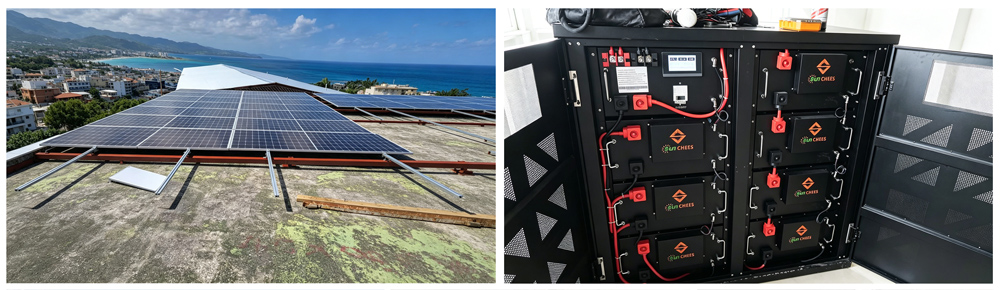
Case 1 — 50kW Commercial-Grade Hotel System | Montego Bay
System role: A 50kW split-phase off-grid/storage system for hotels, guesthouses, boutique villas, and villa clusters with high continuous loads.
Design envelope: Suitable daily consumption up to about 350kWh, maximum load 50kW, storage about 108–118kWh depending on final project BOM.
Location: Montego Bay, Jamaica
Building: 5-story hotel
Mounting: Roof rack
Property size: 20 bedrooms / 15 bathrooms
Main loads: Refrigerators, lighting, TVs, multiple air conditioners, water heaters, CCTV, network equipment, and hotel service loads.
Specification
- 50.4kWp PV array — 84 × 600W dual-glass solar panels
- 2 × 25kW split-phase inverters in parallel
- 50kW total AC output capability
- ~108–118kWh lithium battery bank for night and outage backup
- Roof racking, combiner protection, cabling, distribution protection, and system monitoring
- Install time: 5 days
Why it works for hotels
1. The real value is supply continuity, not just savings.
A hotel outage affects the front desk, room lighting, air conditioning, hot water, refrigeration, CCTV, Wi-Fi, and guest comfort at the same time. A residential backup strategy is not enough for this type of building. The 50kW output is better suited to a property with many rooms, multiple air conditioners, several refrigerators, water heaters, and service loads operating together.
2. Two 25kW inverters in parallel improve commercial load management.
Compared with a single large inverter, two parallel inverters can be more flexible for installation, maintenance, and load zoning. Critical loads such as the front desk, corridor lighting, CCTV, network equipment, refrigerators, and basic room power can be prioritized first. Comfort loads such as selected air conditioners or water heaters can then be scheduled according to battery state and outage duration.
3. 50.4kWp PV is not the same as 50kW of load.
The DC-side PV array and AC-side inverter output are different. The 50.4kWp solar array is designed to support a large share of daytime hotel consumption under good sunlight while helping recharge the battery bank. The 50kW inverter capacity handles AC output to the building. Together, they raise the solar share during high-demand daytime hours, but actual output still depends on weather, shading, temperature, and real-time load behavior.
4. Large storage adds resilience for hurricane season and grid swings.
The ~108–118kWh battery bank helps protect CCTV, lighting, network equipment, refrigerators, pumps, and selected air conditioners during outages. If many air conditioners and water heaters run at the same time, the battery will drain faster. For hotel projects, a load-priority plan is recommended.
Best for: Hotels, guesthouses, Airbnb clusters, small resorts, seaside commercial properties, and commercial buildings in outage-prone areas.
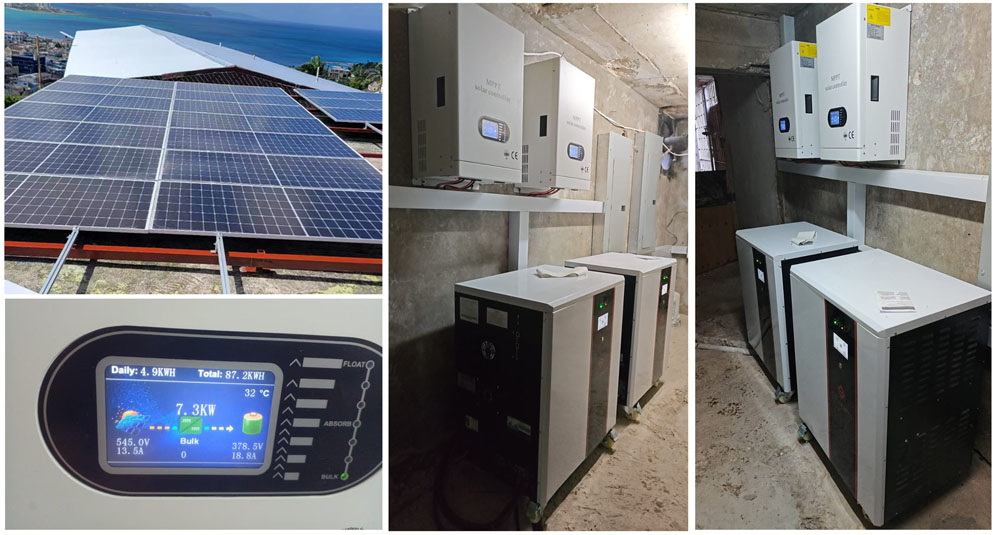
Case 2 — 15kW High-End Residential Split-Phase System | Kingston
System role: A 15kW split-phase inverter system with 9.6kWp of solar panels and about 30.6–30.7kWh storage.
Location: Kingston, Jamaica
Building: 3-story high-end home
Mounting: Roof rack
Property size: 4 bedrooms / 5 bathrooms
Main loads: Refrigeration, lighting, TVs, multiple air conditioners, laundry equipment, kitchen appliances, network gear, and security devices.
Specification
- 9.6kWp PV array — 16 × 600W dual-glass solar panels
- 1 × 15kW split-phase inverter with 110V/220V output
- 102V / 300Ah lithium battery bank, about 30.6–30.7kWh
- Roof racking, cabling, protection devices, and system monitoring
- Install time: 2 days
Why it works for high-end homes
1. Split-phase output matches Jamaican appliance wiring.
Jamaican homes commonly mix 110V and 220V loads. Lighting, TVs, small appliances, and some outlets may use 110V. Air conditioners, pumps, dryers, and other heavy loads may use 220V. A 15kW split-phase inverter supports both at once, reducing the need for extra transformers and making the design more suitable for solar panels for home use in Jamaica.
2. 15kW inverter + 9.6kWp PV is an output-reserve design.
This is not a 15kWp solar panel system. It is a 15kW inverter system paired with a 9.6kWp PV array. The reserved AC output helps support multiple air conditioners, refrigerators, lighting, and appliances running together. In a three-story home, surge loads and compressor startup can matter as much as average daily consumption.
3. The battery is sized for premium night-time backup.
A ~30.7kWh battery bank can support refrigerators, lighting, Wi-Fi, security, TVs, selected outlets, and selected inverter air conditioners on a time-shared basis. It is better suited to customers who want comfort and longer runtime than a small backup-only system.
4. Expansion is possible, but it should be engineered.
Adding more panels later is not simply “bolt on a few more modules.” MPPT input voltage and current, maximum PV input power, roof space, cable rating, combiner capacity, and battery charge capability must be checked before expansion.
Best for: High-end homes, villas, large households, multi-AC homes, and owners balancing daily use, night comfort, and hurricane-season backup.
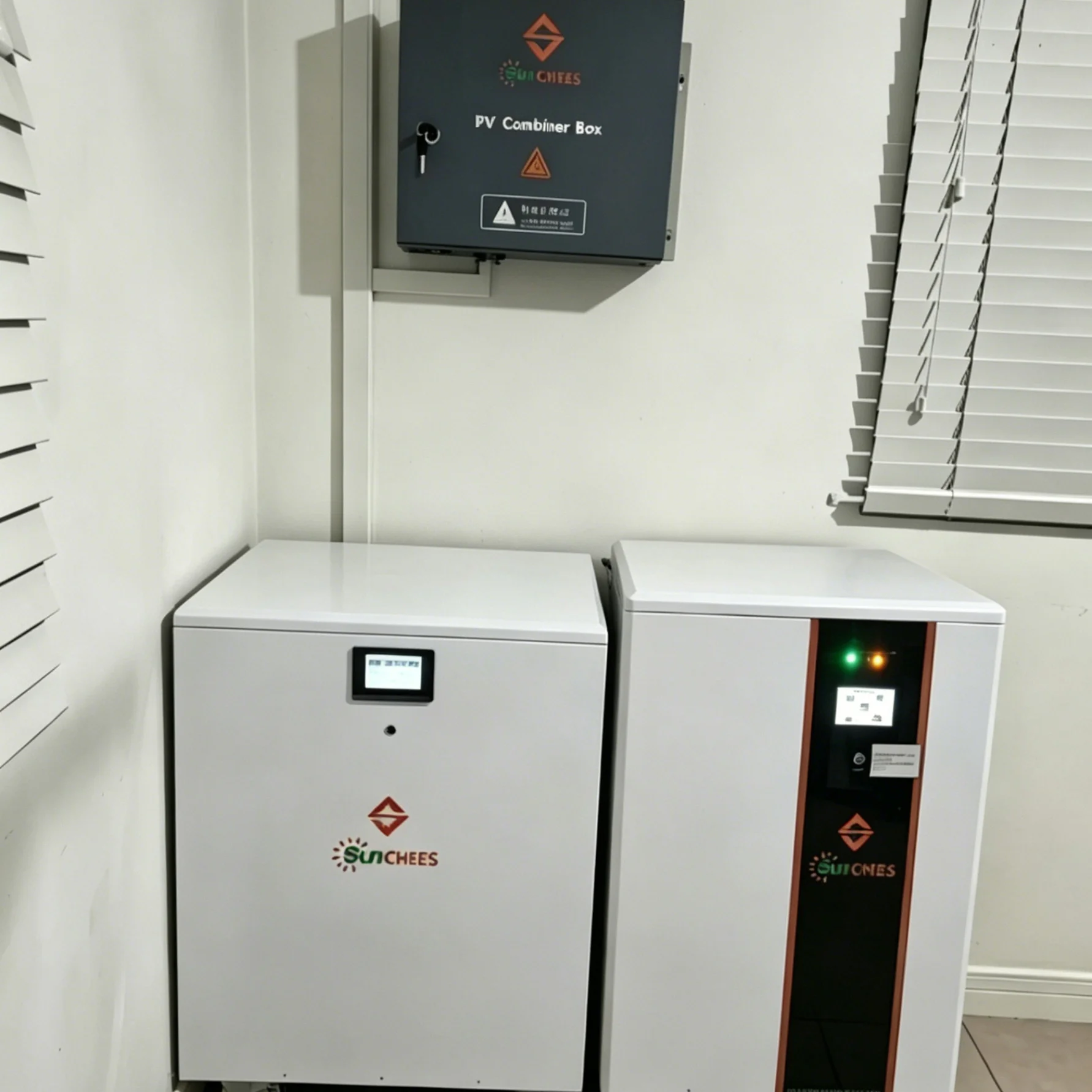
Case 3 — 10kW Economy Residential System | Montego Bay, Ground Mount
System role: A 10kW split-phase system with 7.2kWp of solar panels and about 15.36kWh storage.
Location: Montego Bay, Jamaica
Building: Single-story or double-story home
Mounting: Ground rack
Property size: 3 bedrooms / 1 bathroom
Main loads: Refrigerator, lighting, fans, TV, network gear, basic air conditioning, and selected outlets.
Specification
- 7.2kWp PV array — 12 × 600W dual-glass solar panels
- 1 × 10kW split-phase inverter
- 51.2V / 300Ah lithium battery in this project, about 15.36kWh; final BOM may vary
- Ground racking, cabling, protective switches, and system monitoring
- Install time: 2 days
Why it works
1. Ground mounting is the differentiator.
Ground mounting suits homes with limited roof area, poor roof orientation, roof shading, roof structures not built for extra weight, or owners who want easier maintenance. Cleaning, inspection, angle adjustment, and ventilation are all easier than roof-hugging installations.
2. Ground racks still need site protection.
The system must account for footprint, drainage, theft prevention, impact protection, cable routing, grounding, foundation anchoring, and wind resistance. In Caribbean conditions, grounding and cable protection are not optional details.
3. 15.36kWh storage protects core household loads.
This system is not designed to run every large appliance without limits. Its main purpose is to keep the refrigerator powered, lights on at night, internet available, fans running, and selected air conditioning available when used carefully.
4. A 10kW inverter gives startup headroom.
Refrigerators, air conditioners, and pumps can require more power when starting than when running normally. A 10kW-class inverter handles those surges better than a small inverter sized only for average power.
Best for: Small homes, properties with poor roof conditions, households with yard space, and owners who want simple maintenance and reliable core-load backup.
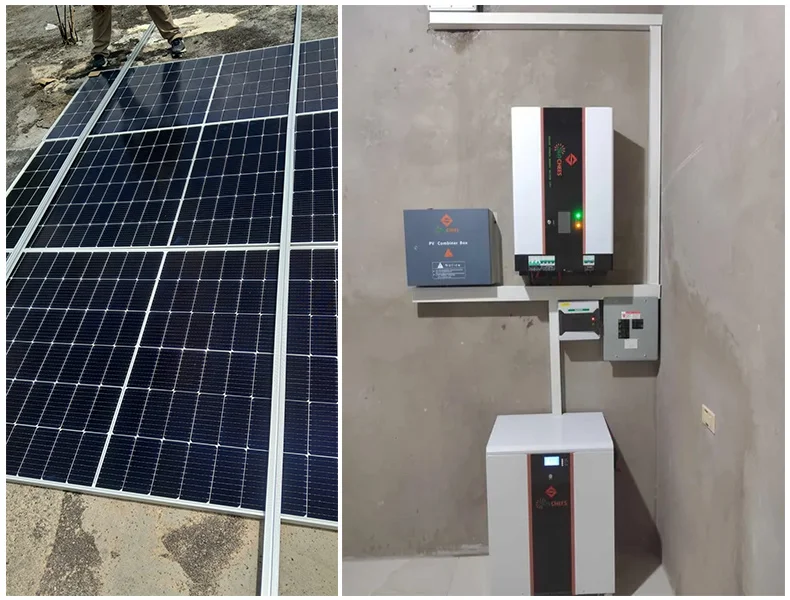
Case 4 — 12kW Storage-Upgraded Residential System | Kingston
System role: A storage-enhanced solution for large homes, using a 12kW inverter and dual batteries.
Location: Kingston, Jamaica
Building: 3-story Caribbean-style home
Mounting: Roof rack
Property size: 5 bedrooms / 3 bathrooms
Main loads: Refrigerators, lighting, TVs, multiple air conditioners, water pump, network gear, and other household loads.
Specification
- 7.2kWp PV array — 12 × 600W dual-glass solar panels in this project, per BOM
- 1 × 12kW split-phase inverter
- 2 × 51.2V / 300Ah lithium batteries, about 30.7kWh total in this project, per BOM
- Roof racking, cabling, protection devices, and system monitoring
- Install time: 4 days
Project configuration note: The standard 12kW product kit may use a different PV and battery configuration. This case reflects a project-specific BOM, so final system details should always follow the formal quotation and project BOM.
Why it works
1. This is a storage-enhanced build, not a standard 10kW home system.
Battery capacity is doubled and inverter output is increased to 12kW. This suits homes with more rooms, higher night-time use, and more critical loads to keep during outages.
2. Dual batteries extend night-time backup.
About 30.7kWh of storage can support refrigerators, lighting, network devices, CCTV, water pump, and selected air conditioning on a time-shared basis. Dual batteries do not mean unlimited use of every large appliance. The value is longer runtime and more flexible load selection.
3. 12kW inverter output suits larger-home surge loads.
A 5BR/3BA home may have more air conditioners, outlets, pumps, and appliances. The higher inverter rating helps support simultaneous operation and startup surges across multiple floors.
4. The 4-day timeline reflects real installation complexity.
Three-story roof work, battery paralleling, protection-device installation, wiring, commissioning, and load testing all take time. A complete installation should be judged by safety, wiring quality, mounting strength, and testing, not only by speed.
Best for: 5+ bedroom large homes, three-story houses, heavy night-time users, and owners wanting longer hurricane-season backup.
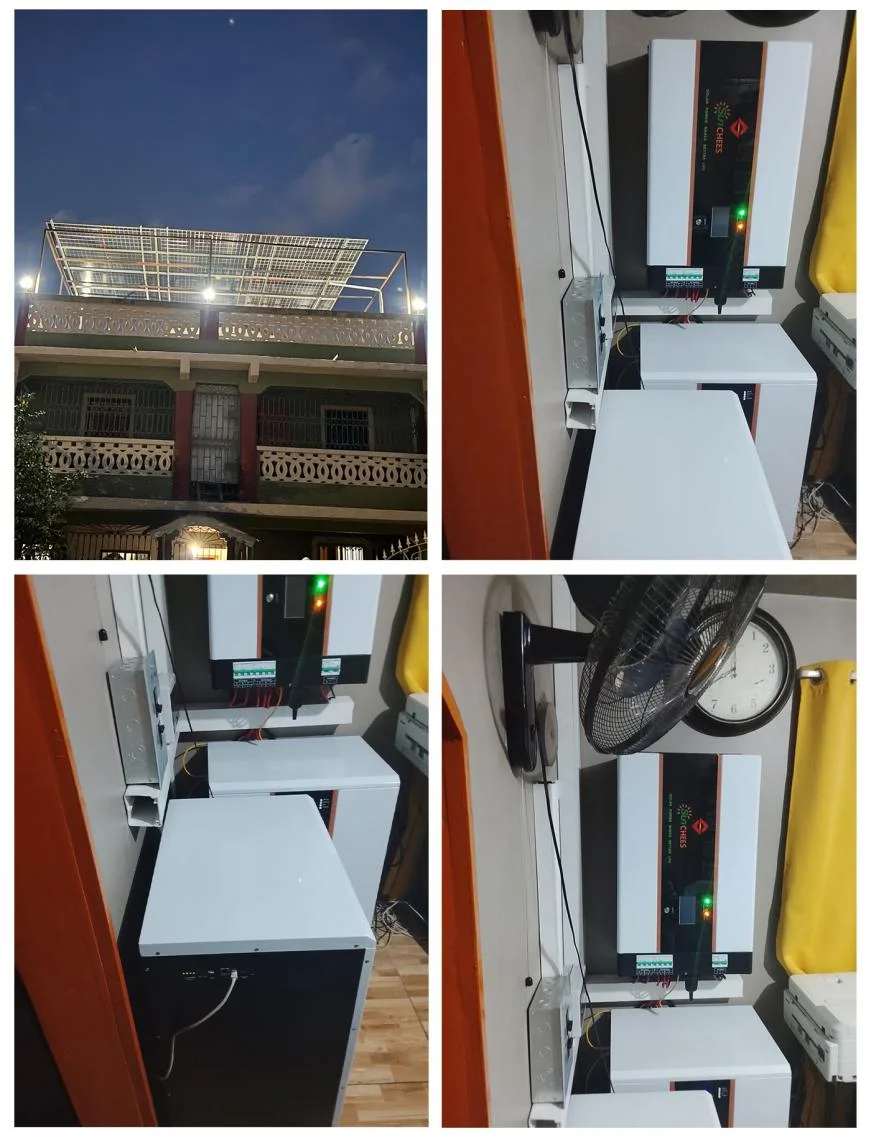
Case 5 — 10kW Standard Residential System | Montego Bay
System role: A common 10kW-class split-phase storage system for Caribbean island homes.
Location: Montego Bay, Jamaica
Building: 2-story Caribbean-style home
Mounting: Roof rack
Property size: 4 bedrooms / 2 bathrooms
Main loads: Refrigerator, lighting, TVs, air conditioning, network gear, and everyday appliances.
Specification
- 7.2kWp PV array — 12 × 600W dual-glass solar panels
- 1 × 10kW split-phase inverter
- 1 × 51.2V / 300Ah lithium battery in this project, about 15.36kWh; final BOM may vary
- Roof racking, cabling, protection devices, and system monitoring
- Install time: 2 days
Why it works
1. A common, balanced configuration for two-story Caribbean homes.
The 4BR/2BA two-story house is common in Jamaica. A 10kW split-phase system can cover many basic-to-medium household loads, while the 7.2kWp solar array supports daytime use and recharges the battery.
2. The value is balance, not maximum specification.
This system does not chase oversized storage or commercial-grade output. It reduces grid reliance by day, provides basic backup at night, and protects critical equipment during outages.
3. There is long-term savings potential in a high-tariff market.
Because electricity prices in Jamaica are relatively high, a well-sized solar storage system can reduce daytime grid dependence. Actual savings depend on the customer’s bill, daytime usage share, sunlight, system cost, installation cost, and local utility conditions. A fixed payback period should not be promised without reviewing the customer’s real electricity data.
4. A 2-day timeline fits standard homes.
With a moderate panel count and clear system structure, this is a practical all-round option for daily supplement plus hurricane-season backup.
Best for: 4BR/2BA standard villas, two-story homes, island residences, and households wanting less grid reliance plus basic backup.
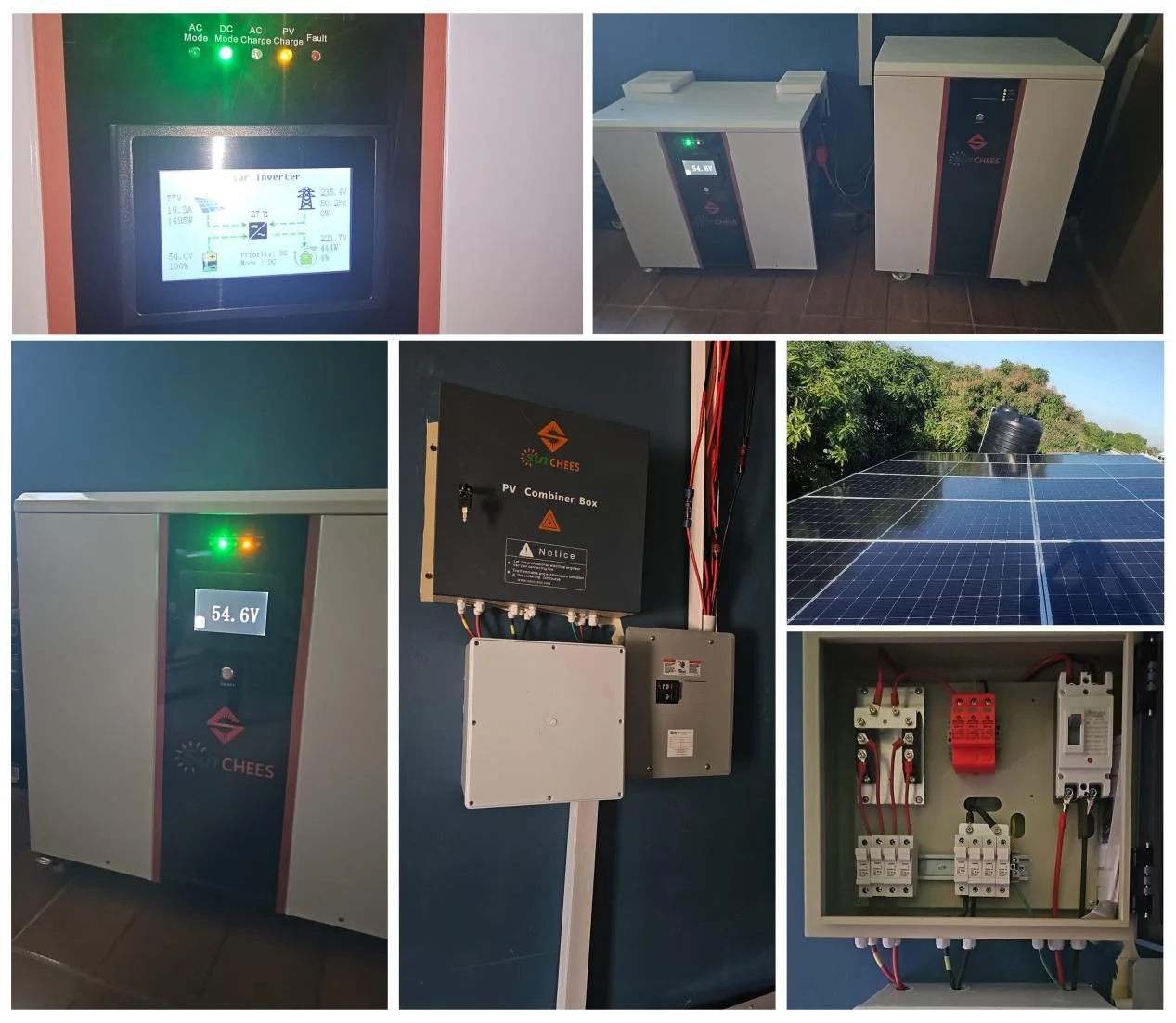
solar panels jamaica System Value Summary
|
|
|
|
|
|
|
|
|
|
|
|
|
|
|
|
|
|
|
|
|
|
|
|
|
|
|
|
|
|
What solar panels jamaica Systems Mean for Caribbean Homes and Hotels
Across these projects, one theme repeats: a solar panels jamaica storage system earns its value by combining daytime generation with night-time and outage backup.
For residential owners, the practical wins are an uninterrupted refrigerator, lights at night, working internet, security equipment, and selected air conditioning based on battery capacity.
For hotels, the practical wins are front desk operation, lighting, CCTV, network, refrigeration, water pumps, and selected guest-room loads during a blackout. That protects both operations and customer experience.
For larger buildings, the key is not only installing more panels. It is matching PV capacity, inverter output, battery storage, load priority, and voltage requirements.
How to Choose solar panels for home in Jamaica
When evaluating solar panels for home, start with actual electricity usage, not the advertised system size. The best design depends on monthly kWh consumption, number of air conditioners, water pump usage, roof space, shading, voltage type, and backup expectations.
A good residential solar assessment should answer these questions:
- What is the home’s monthly kWh consumption?
- Which appliances must run during an outage?
- How many air conditioners need backup power?
- Are the appliances 110V, 220V, or both?
- Is the roof suitable for mounting panels?
- Is there a safe ground-mounting area?
- How many hours of backup power are required at night?
- Should the battery bank be expandable later?
For Jamaican homes, split-phase output and battery sizing are often just as important as the number of panels.
Choosing Among solar companies in jamaica and solar system suppliers
When comparing solar companies in jamaica, the deciding factor should not be the lowest price alone. A cheaper quote may leave out battery capacity, protection devices, suitable cable sizing, monitoring, installation scope, after-sales support, or the correct split-phase output.
Use this checklist to evaluate any quote on equal terms.
|
|
|
|
|
|
|
|
|
|
|
|
|
|
|
|
|
|
|
|
|
|
|
|
|
|
|
|
|
|
|
|
|
|
|
|
|
|
|
Among solar system suppliers, the most useful differentiator is whether the supplier can provide a matched system rather than unrelated parts. Inverter, battery, controller or MPPT settings, protection devices, cables, and monitoring should work together. Poor component matching can cause charging faults, communication issues, reduced efficiency, or more difficult troubleshooting.
For larger commercial projects, engineering support becomes even more important because load distribution, protection design, battery placement, and commissioning are more complex.
About Sunchees
Sunchees provides off-grid and hybrid solar power system solutions for residential, commercial, and industrial applications. The company was founded in 2008 and is headquartered in Foshan, Guangdong, China.
For Jamaica and Caribbean projects, the main value is integrated system planning. A complete Sunchees solution can include solar panels, split-phase inverters, lithium batteries, mounting structures, cables, protection components, monitoring, and technical guidance.
Relevant System Features
Split-phase 110V/220V output
Many Jamaican homes and hotels use both 110V and 220V appliances. Split-phase inverter options help support lighting, small appliances, outlets, air conditioners, water pumps, and other mixed-voltage loads.
Lithium battery storage
Battery storage allows daytime solar energy to be used at night or during outages. Battery capacity should be selected according to backup loads, not only according to inverter size.
Roof or ground mounting options
Some customers have suitable roof space, while others may have roof shading, limited roof area, or structural concerns. Ground mounting can be considered when site conditions allow it and when easier maintenance is important.
Dual-glass bifacial panel options
Dual-glass bifacial modules can improve energy yield under suitable installation conditions by capturing reflected rear-side light. Actual gain depends on ground or roof reflectivity, mounting height, tilt angle, shading, and site conditions.
Expandable system planning
Some systems can be expanded later, but expansion should always be checked by an engineer. MPPT input voltage, current limits, cable size, combiner capacity, battery charging limits, and available installation space must all be reviewed before adding more panels or batteries.
Technical guidance and project support
For off-grid systems, correct installation and commissioning are essential. Wiring, grounding, protection devices, battery settings, load testing, and inverter configuration all affect system reliability.
Lead time, warranty coverage, delivery terms, local installation scope, and any special service commitments should be confirmed in the final quotation or project contract.
Important Notes About Solar Savings and ROI
A solar storage system can reduce grid dependence, especially when the property uses electricity during daylight hours. However, exact savings depend on electricity tariffs, daily load profile, system cost, installation cost, sunlight conditions, battery usage, and whether the system is fully off-grid or hybrid.
Customers should avoid relying on a fixed payback claim without reviewing actual electricity bills. A proper ROI estimate should be based on:
- Monthly kWh consumption
- Daytime vs night-time usage
- Air-conditioning load
- Battery capacity
- System price
- Installation cost
- Shipping, customs, and local service costs
- Local utility policies
- Whether a generator is also used
This guide does not provide a fixed payback promise. It provides a framework for understanding which solar configuration may fit a specific property type.
solar panels jamaica FAQ
Q: What size of solar panels jamaica system do I need for my home?
It depends on your monthly bill, daily kWh use, major appliance wattage, air-conditioner use, pump use, roof area, voltage requirements, and how long you want backup power to last. As a reference, a 4BR/2BA two-story home may fit a 10kW split-phase system with about 7.2kWp of panels and project-specific battery storage, while a larger multi-AC or 5+ bedroom home may require 12–15kW with a larger battery bank.
Q: Are these systems only for solar panels for home use, or also for hotels and businesses?
Both. The same split-phase, storage-based approach can scale from solar panels for home setups to commercial hotel systems. A home system may focus on refrigerator, lights, internet, and selected air conditioning, while a hotel system may focus on front desk, lighting, CCTV, refrigeration, water pumps, and selected guest-room loads.
Q: How do I compare solar companies in jamaica fairly?
Compare every quote on the same terms: inverter kW, PV kWp, and battery kWh listed separately. Then check split-phase 110V/220V support, component matching, protection devices, cable sizing, warranty terms, installation scope, and after-sales support. Mixing these three capacity numbers is one of the most common reasons solar quotes become confusing.
Q: What should I expect from solar system suppliers?
Good solar system suppliers should provide clear system specifications, compatible components, written warranty terms, technical drawings, installation guidance, and after-sales support. The supplier should explain what the system can power, what it cannot power, and what assumptions are used for battery backup estimates.
Q: How long does a solar panels jamaica installation take?
Installation time depends on system size, roof complexity, mounting type, battery capacity, wiring distance, and commissioning requirements. In these example projects, standard homes took about 2 days, a storage-upgraded three-story home took about 4 days, and the 50kW hotel system took about 5 days. Final timelines should be confirmed after site review.
Q: How long will the battery last during a blackout?
Backup runtime depends on which appliances you switch on and for how long. Refrigerator, lights, internet, CCTV, fans, and selected outlets use much less energy than air conditioners, water heaters, dryers, ovens, and large pumps. To extend runtime, prioritize essential loads and run high-draw appliances in stages.
Q: Can I add more panels later?
Often yes, but it is not simply “add more panels.” An engineer must re-check MPPT input voltage and current, maximum PV input power, roof space, cable rating, combiner capacity, battery charge capability, and system protection before expansion.
Q: Are more solar panels always better?
Not always. More panels can increase daytime generation, but the inverter, battery, cables, protection devices, and charge limits must match. A balanced system is more useful than a large PV array that does not match the rest of the equipment.
Pre-Design Checklist for solar panels jamaica Projects
A solar panels jamaica system performs according to the building’s consumption, number of air conditioners, mounting conditions, sunlight, battery capacity, and usage habits. Before designing a system, confirm:
- Monthly electricity bill and average daily kWh
- Wattage of major appliances
- Number and size of air conditioners
- Whether pumps, water heaters, or dryers must run during outages
- Roof area, orientation, shading, and load-bearing capacity
- Whether ground-mount space is available
- Required backup duration at night
- 110V and 220V load distribution
- Whether future expansion is required
- Shipping, customs, installation, and after-sales responsibilities
During outages, prioritize essential loads: refrigerator, lighting, internet, CCTV, water pump, fans, and selected outlets. Run high-draw loads such as air conditioners, water heaters, washers, and dryers on a time-shared basis according to battery state and weather conditions.
Conclusion: How to Plan the Right solar panels jamaica System
The best solar panels jamaica solution is not simply the system with the most panels or the lowest price. It is the system that matches the property’s real electricity demand, voltage requirements, backup expectations, installation conditions, and long-term maintenance needs.
For homes, the priority is usually daily grid reduction plus reliable backup for refrigerators, lighting, internet, fans, and selected air conditioners. For hotels and commercial properties, the priority is business continuity, guest comfort, refrigeration, security, and essential operations during outages.
By separating inverter power, PV capacity, and battery storage, customers can compare proposals more clearly and choose a system that is practical, expandable, and suitable for Jamaica’s local energy conditions.
Contact Sunchees with your location, electricity bill, appliance list, roof or ground-mount conditions, and backup expectations to receive a project-specific design.
 10kW Home Solar Power System for Trinidad and Tobago: A Practical Caribbean Guide for Homes, Offices, and Hurricane-Season Backup
 You May Also Like



 Tel
Tel
 Email
Email
 Address
6th Floor, Zhonghe Zinan Industrial Park, No. 1 Zinan Changang West Road, Nanzhuang Town, Chancheng District, Foshan City, Guangdong Province. China (Mainland)