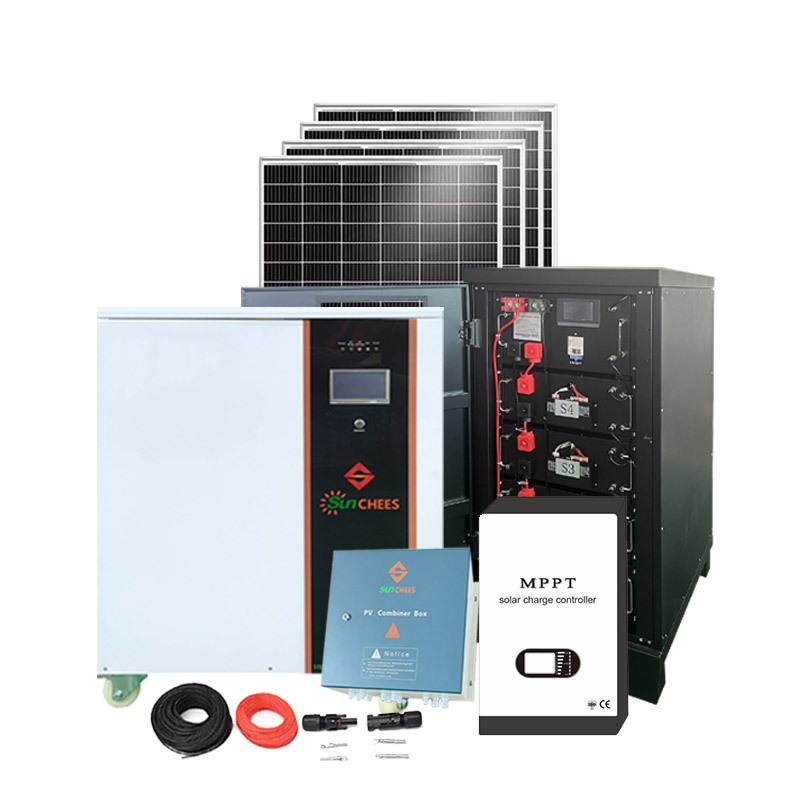
Our 25kW solar system with batteries includes 32 × 600W solar panels, a 25kW split-phase inverter and a 62kWh lithium battery bank. The complete equipment package costs US$18,000, excluding shipping, import taxes and local installation. It provides solar and battery power for homes, guesthouses and businesses. To choose the right system, consider the appliances you want to run together, their overnight energy use and the solar energy available to recharge the battery.
What Is a 25kW Solar System with Batteries?
In this package, 25kW is the inverter’s rated output power. The 32 solar panels provide a total array capacity of 19.2kWp, while the battery has a nominal storage capacity of 62kWh. These figures describe three different things: inverter output, solar generation capacity and stored energy. Comparing them separately helps you understand what each supplier’s “25kW package” actually includes.
During the day, solar energy powers connected appliances and charges the battery. At night, or when solar generation is insufficient, the battery supplies connected loads. The appliances you want to run simultaneously determine the power requirement; how long they run and how much energy they consume determine the battery capacity you need.
What Is Included in the System?
Component
Quantity and specification
Monocrystalline solar panels
32 × SP600W panels, 600W each; 19.2kWp total
Split-phase inverter
1 × 25kW inverter; 110/220V output, pure sine wave and WiFi monitoring
Lithium battery bank
1 × LPBS204.80VDC300; 300Ah, 62kWh, with BMS and connection cables
MPPT charge controller
1
PV combiner box
1
Mounting structure
1 set for roof or ground installation
PV cables
Supplied with the system
The package includes a charge controller, combiner box, mounting structure and PV cables. The mounting arrangement is selected for roof or ground installation. Your order’s equipment list should specify the component models, quantities and cable lengths.
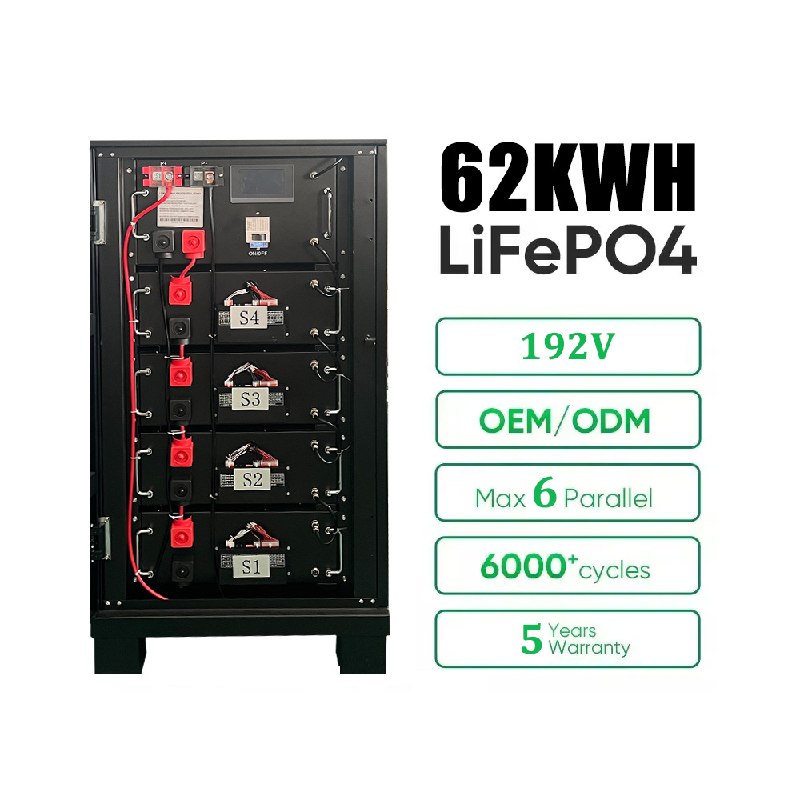
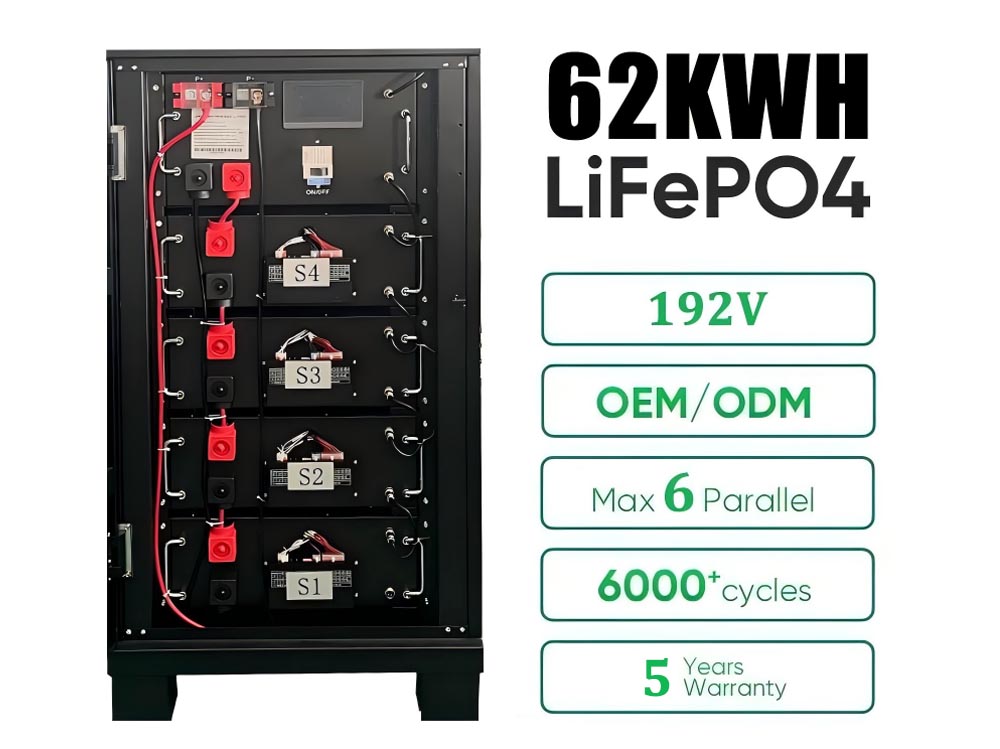
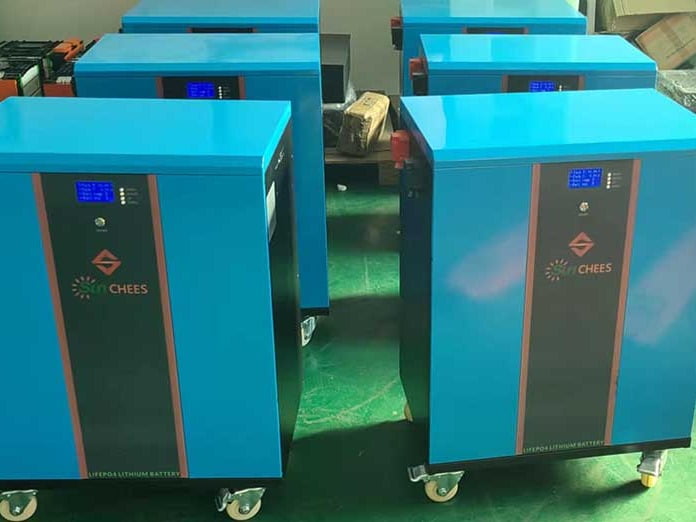
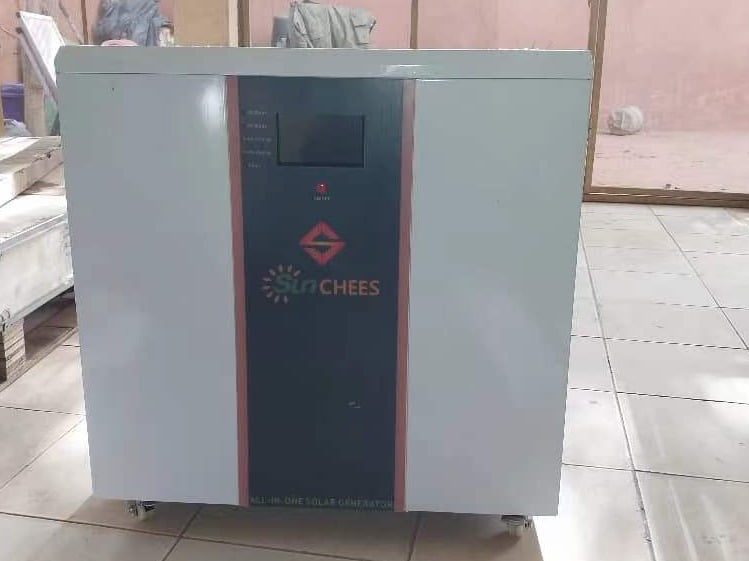
The 62kWh battery stores energy for nighttime use and power outages. It includes a battery management system (BMS) and an integrated circuit breaker. The BMS monitors the battery and provides protection, while CAN and RS485 interfaces support communication with compatible equipment.
Battery parameter
Specification
Model
LPBS204.80VDC300
Capacity
300Ah / 62kWh
Maximum charge and discharge current
120A
Depth of discharge (DOD)
96%
Ingress protection
IP21
Dimensions
1,630 × 840 × 675mm
Net / gross weight
490kg / 530kg
The 62kWh capacity affects backup duration, while the 120A maximum discharge current limits the power the battery can supply. Appliances must stay within the permitted discharge power even when energy remains in the battery.
Can It Run Air Conditioners, Refrigerators and Laundry Equipment?
Air conditioners, refrigerators, lighting, televisions and laundry equipment can all be considered for this type of system. These appliances appear in the load list for our St. Thomas guesthouse project, which uses a 25kW split-phase inverter. For your installation, we first check appliance voltage, frequency, running power and startup requirements, then determine how many can operate together.View the St. Thomas guesthouse project
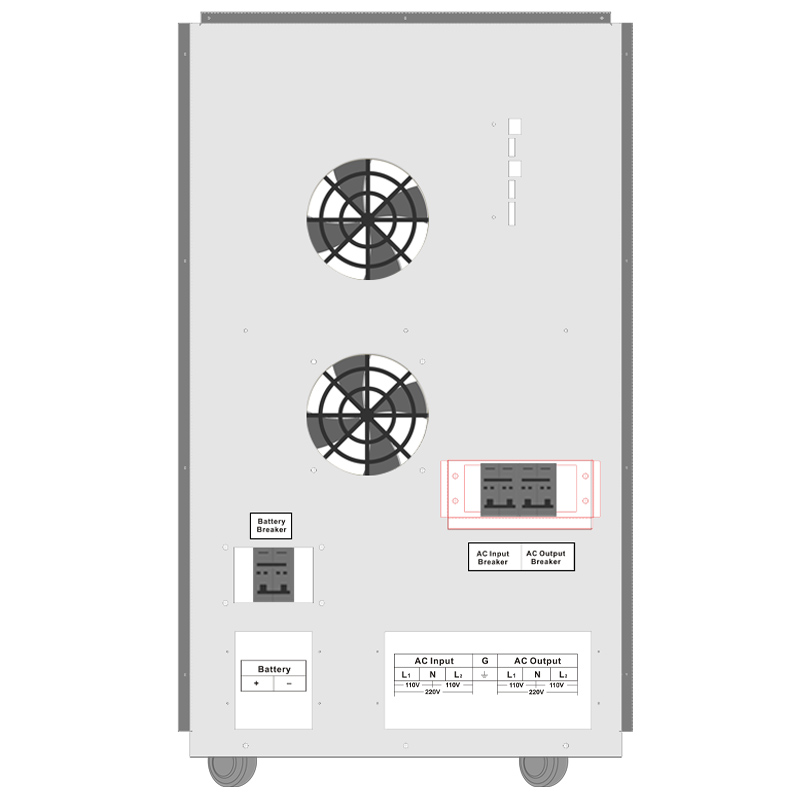
The inverter is specified for 110/220V split-phase output and 50/60Hz operation. An air conditioner’s BTU/h rating describes cooling capacity, not electrical consumption. Use its electrical input rating to calculate the load. Pumps, refrigerators and air conditioners also need allowance for motor or compressor startup.
Appliance
Effect on power requirements and backup time
Lighting, televisions, networking and electronics
Include actual input power in the simultaneous load, and match supply voltage and frequency
Refrigerators, freezers and air conditioners
Running power determines the normal load; compressor startup requires additional power, and operating time affects overnight energy use
Washing machines and dryers
Programs using electric heating increase the load; calculate consumption for the program you intend to use
Water pumps
Single-phase pumps with matching voltage and frequency can be considered; three-phase pumps cannot connect directly to this split-phase output
Electric water heaters and ovens
Heating draws sustained power; running several together uses more output capacity and shortens battery backup time
Separate your appliance list into simultaneous power demand and total overnight energy use. The first determines the output required; the second determines the battery capacity. Your installer must also distribute 110V loads between the two legs of the split-phase supply and check each leg’s load. A combined appliance rating below 25kW alone does not confirm that startup demand and circuit loading are suitable.
Can the Battery Sustain a Full 25kW Load Throughout the Night?
Do not size this single battery bank to deliver 25kW continuously from full charge to low charge. Its specified maximum discharge current is 120A. At 204.8V, that corresponds to about 24.6kW at the battery terminals; at the lower discharge voltage of 174V, it corresponds to about 20.9kW. The power reaching appliances is lower after inverter conversion losses. The inverter’s 25kW rating therefore does not guarantee continuous 25kW output from this battery bank alone.Battery specifications
Stored energy also limits how long a full load could run. Dividing nominal capacity by load gives 62 ÷ 25 = 2.48 hours, before discharge limits and system losses. Plan nighttime use around your actual appliance load and the available stored energy, rather than treating 25kW as power available throughout the night.
How Long Will the 62kWh Battery Last?
From a full charge, 62kWh of nominal capacity at 96% depth of discharge gives approximately 59.5kWh at the battery terminals. Appliances receive less than this because inverter conversion and system operation also consume energy.62kWh battery specifications
Compare your backup circuits’ overnight consumption with 59.5kWh. If it exceeds that figure, this battery bank alone cannot cover the night. If it is lower, you still need to allow for system losses and any configured energy reserve. The battery’s charge level at the start of the night also affects the available backup time.
To estimate the number of hours, use the actual average power consumed by your backup appliances:
Backup time = energy available to appliances ÷ their combined average power consumption.
For example, starting with a full battery and no solar or grid charging during discharge, the 59.5kWh figure gives the following initial calculations:
Combined average appliance load
Calculation
Reference duration before system losses
3kW
59.5 ÷ 3
About 19.8 hours
5kW
59.5 ÷ 5
About 11.9 hours
10kW
59.5 ÷ 10
About 6 hours
These are calculation examples, not measured backup times for specific appliance combinations. Actual runtime will be shorter after inverter and system consumption. An “average 5kW load” means the combined average consumption of all operating appliances, not 5kW per appliance.
For eight hours of nighttime use, a 5kW average load consumes 5 × 8 = 40kWh. That is below the calculated 59.5kWh available at the battery terminals, although system losses and reserve settings still need to be accounted for. A 10kW average load consumes 10 × 8 = 80kWh, which this battery bank alone cannot supply.
Use overnight consumption records to establish the average load. Refrigerators and air conditioners cycle or adjust their output, while washing machines draw different amounts of power during different stages. Adding all nameplate ratings together would incorrectly assume every appliance runs continuously at full power.
How Can You Estimate the Backup Time Remaining After Installation?
Check the battery’s remaining charge percentage and how quickly it is falling under your current load. With no solar, grid or generator charging, record the charge decrease over a period of time and account for the reserve level at which discharge stops:
Estimated hours remaining = (current charge percentage − discharge cutoff percentage) ÷ charge decrease in percentage points per hour.
SOC on the display means state of charge: the battery’s remaining charge percentage. This estimate is useful while the appliance load stays similar. Recalculate if you switch on additional air conditioners, a water heater or a pump.
We do not yet have measured runtime results for specific appliance combinations using this 62kWh configuration. We therefore cannot promise a fixed number of air conditioners or a universal overnight runtime. Share your nighttime consumption records and appliance models so we can calculate backup time for your intended load.
Why Do 25kW Solar Packages Have Different Configurations and Prices?
A “25kW” label may describe inverter power or solar panel capacity. First establish which figure the supplier means, then compare the solar array and battery separately.
DAWN’s 25kW package lists 45 × 550W panels, totaling 24.75kWp, with a 25kW inverter and 30kWh battery.One Solarscouts package lists 29.25kWp of panels, a 25kW Deye inverter and a 24kWh battery. Our Sunchees package combines 19.2kWp of panels, a 25kW inverter and 62kWh of battery storage.
Our package has more battery storage; the two examples above have larger solar arrays. More storage increases the energy you can retain for later use, while a larger array increases nominal generation capacity. The right balance depends on your overnight energy needs and whether daytime generation can power your appliances and recharge the battery. The “25kW” label or total price alone does not make these equivalent packages.
What Similar Solar and Battery Options Are Available in the Caribbean?
The following local packages and installation examples offer useful points of comparison. The 20kW and 24kW options are neighboring power sizes, and an installation case is not necessarily a currently offered package. Compare confirmed equipment specifications and installation scope; clarify ambiguous capacity units or incomplete configurations before treating options as equivalent.
US$18,000 equipment price; shipping, taxes and local installation are additional
Among these nearby power sizes, the specified battery capacities range from 20kWh to 50kWh. Some local packages already include installation, electrical work and training, which should be included in the value comparison. These configurations come from the suppliers’ own pages; confirm current equipment and supply terms in their quotations.
Is Buying This Sunchees System from China Worth the Shipping Cost and Wait?
The value of buying from China depends on the configuration you need and the total installed cost. If you want 62kWh of storage, can plan ahead and have a local installation team, our US$18,000 equipment package is worth comparing with local offers. It combines substantial battery storage with direct purchasing from the manufacturer. Whether it costs less overall depends on shipping, arrival charges and installation.
Compare the 62kWh Storage Capacity
The package’s nominal 62kWh storage is approximately twice the capacity of Greenology’s 28.6kWh package or the GSL 30kWh installation. For projects with higher overnight energy demand, that is a meaningful capacity difference. Actual backup time also depends on usable energy, appliance load and conversion losses, so twice the nominal capacity does not automatically guarantee twice the runtime.
A larger battery also needs sufficient daytime charging. The 32 panels total 19.2kWp and must supply daytime appliances as well as charge the battery. The ideal calculation 62 ÷ 19.2 gives about 3.23 hours of generation at the array’s full rated power to produce 62kWh, before daytime consumption and losses. This is not an actual charging time. Panels do not maintain rated output throughout the day, and clouds, shading and changing sunlight reduce generation. For sustained daily use, solar generation must also cover the energy consumed each day.
Purchase Directly from the Manufacturer
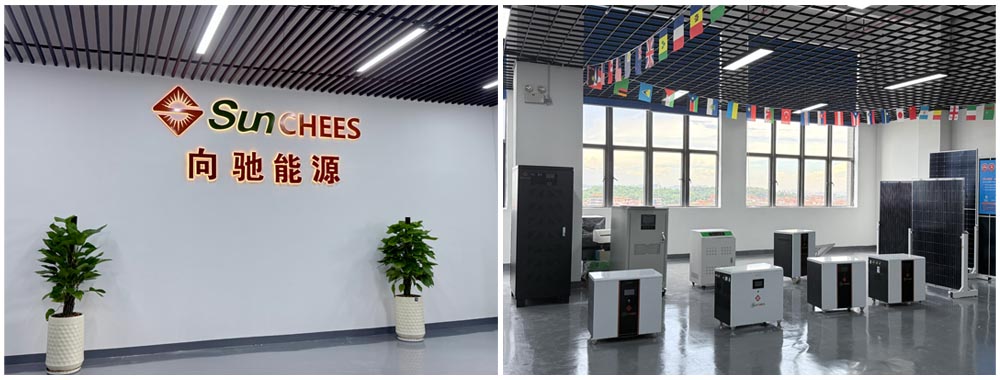
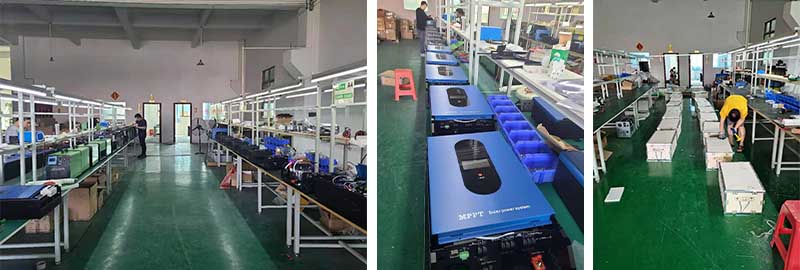
We manufacture and supply solar systems, inverters and batteries from Foshan, China. You can work directly with us to confirm capacities, electrical requirements, controllers, protection devices, cables and installation documents. We coordinate the equipment list and export arrangements. If you already have a local contractor, this approach lets you choose the equipment supplier and installation team separately.About the Sunchees factory
We can coordinate export packaging, container loading, shipping documents, spare-parts planning and remote installation guidance. Your local team handles site work, while we support equipment wiring, settings and commissioning. Permits, structural checks and local inspections remain the responsibility of qualified professionals at the project location. Your quotation should state the equipment and support included.Caribbean supply and installation support
How Do You Compare Costs After Adding Shipping?
The US$18,000 price covers 32 × 600W panels, the 25kW split-phase inverter, the 62kWh battery and supporting equipment. Compare local quotations against the full cost of getting the system installed and operating:
Cost or delivery item
What to include when purchasing from Sunchees
Complete equipment package
US$18,000 for the 32 × 600W panels, 25kW inverter, 62kWh battery and supporting equipment
International shipping
Export and freight charges, insurance and any buyer-paid costs under the quoted delivery terms
Local arrival
Applicable taxes, customs clearance, port charges, inland delivery and unloading
Installation
Mounting and electrical work, required approvals, commissioning and inspection
Ongoing maintenance
Warranty scope, local repair labor, replacement parts and their shipping arrangements
Total installed cost = US$18,000 + shipping and insurance + import and arrival charges + local installation, approvals and commissioning. Compare this total with a local system that meets the same load and backup requirements to determine any actual saving.
What Shipping and Import Costs Should You Budget Beyond US$18,000?
We have published two Caribbean shipping references for 10kW systems, covering a direct destination and a route through another island. They show the types of expense beyond the equipment price, but they are not freight quotations for this 25kW configuration:
These totals cover only the listed freight and clearance or port charges. They do not cover every transport cost, import tax or installation expense. The Trinidad example also requires allowances for insurance, inland delivery, applicable taxes and installation. For Montserrat, confirm whether the quoted handling charges include onward transport from St. Maarten.
This package contains 32 panels and a 62kWh battery bank. Freight must be quoted for its packed volume, weight and destination. The 10kW references cannot be used as its shipping budget or scaled in proportion to inverter power.
If a local offer includes installation, approvals or on-site after-sales support, include those services in the comparison. We coordinate the equipment shipping quotation, and the local team calculates import and installation costs. Together, these provide a complete purchasing budget.
How Should You Plan Delivery and After-Sales Support?
Allow for shipping measured in months. The existing 10kW references give about 45–55 days for ocean transport to Trinidad and Tobago and about 50–70 days for the Montserrat route. Your schedule must also include equipment preparation, clearance, inland delivery and installation. These route references are not delivery commitments for this package.
On-site diagnosis and repairs require local personnel. Key spare parts can be planned with the original order. We provide equipment-side technical support and handle eligible replacement parts under the warranty policy. Warranty coverage does not itself provide local on-site service, so arrange local labor and response support before purchasing.Warranty and after-sales policy
This package suits customers who can plan ahead, need substantial storage and can arrange local installation and maintenance. If you need power restored urgently or want one supplier to provide local on-site repairs, compare local stock, installation dates and service commitments carefully.
Power Modes and Everyday Monitoring
The inverter supports grid-priority and battery-priority modes. Grid-priority mode uses grid power first; battery-priority mode gives priority to battery supply. Your installer sets charging current and charge or discharge cutoff voltages for the supplied battery.
The display shows solar generation, appliance load, battery charging and discharging power, state of charge and fault alerts. WiFi monitoring lets you check system status remotely, including battery charge and current load.
When grid power fails, the battery can continue supplying appliances connected to the backup circuits. The inverter’s published typical load transfer time is under 10 milliseconds. Equipment requiring uninterrupted power should have a UPS that meets its specific requirements.
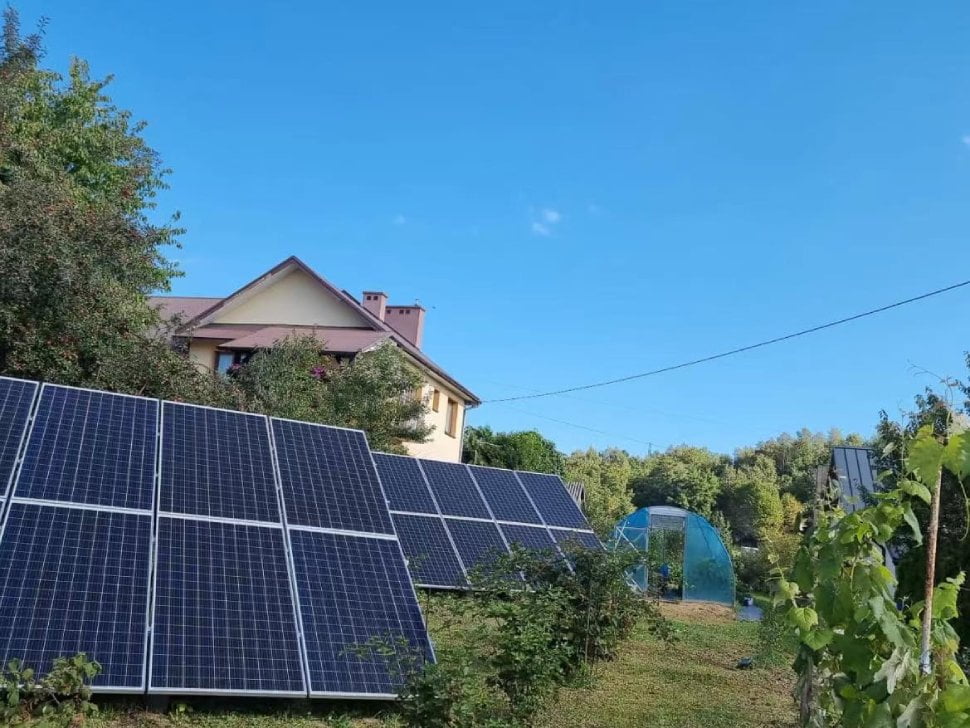
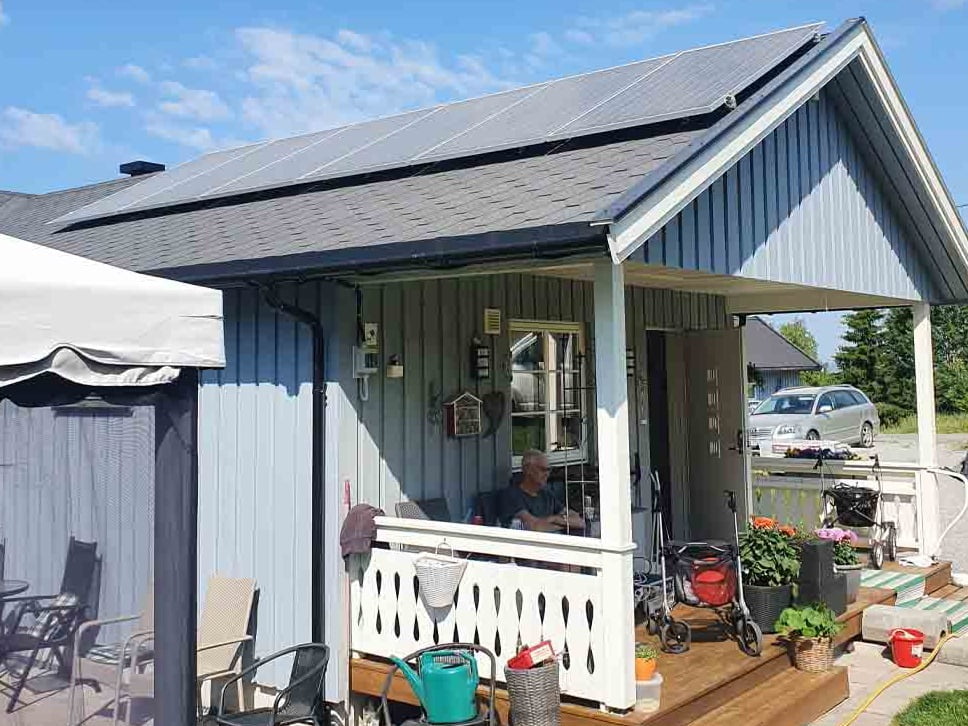
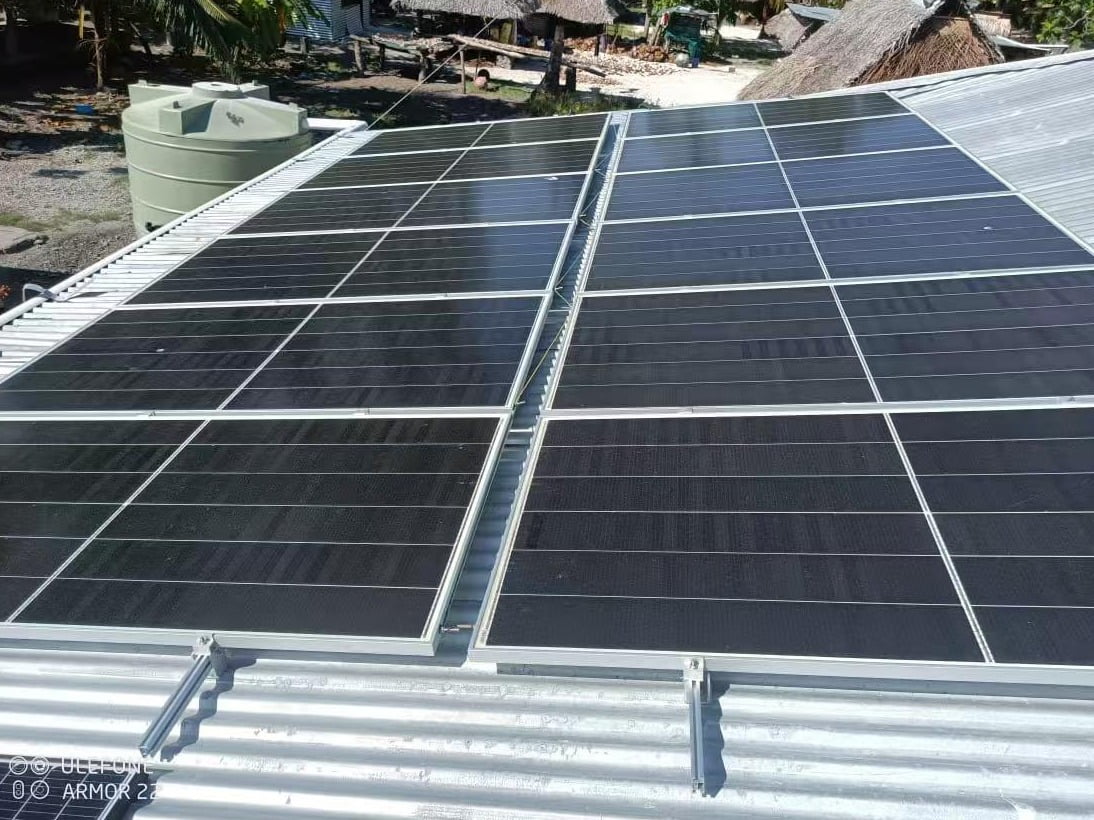
The panels can be mounted on a roof or on the ground. The battery needs a dry, sheltered location. Your installer determines the layout of the 32 panels based on available space, shading and maintenance access.
The battery cabinet is rated IP21 and must be protected from rain. It weighs 490kg net and measures 1,630 × 840 × 675mm. Provide a suitable load-bearing installation area, access for moving the cabinet and an unloading plan. Check both equipment and shipping-package dimensions against the available access route.
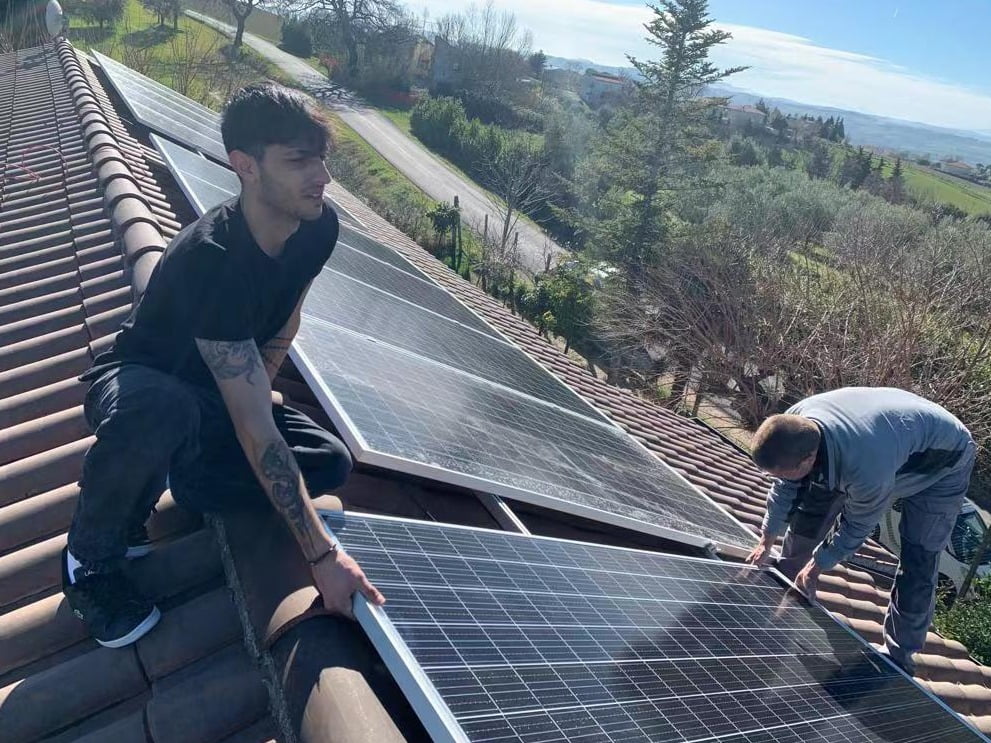
Qualified local professionals carry out the installation, and we provide remote technical guidance. We assist with equipment wiring, settings and commissioning. Site labor, permits and inspections are arranged by the local project team.
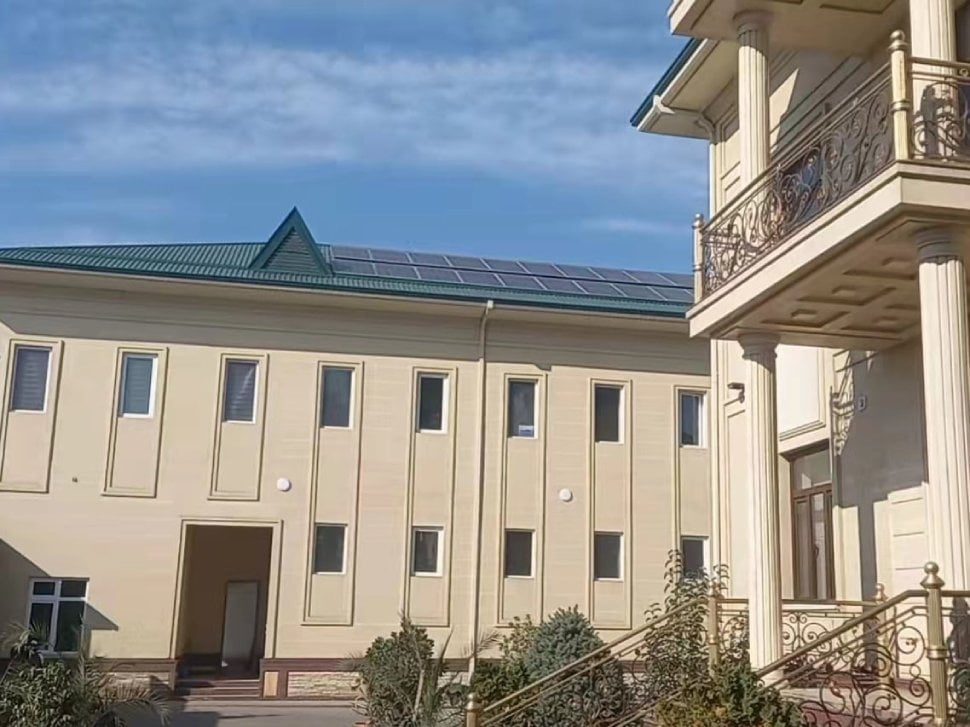
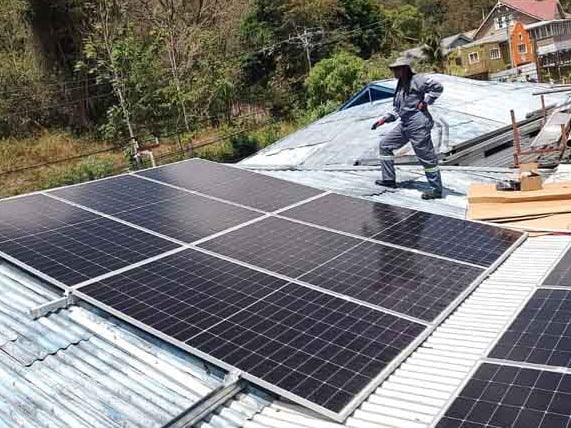
The St. Thomas guesthouse uses a 25kW split-phase inverter, 14.4kWp of solar panels and a 40kWh battery. The local team completed the main installation in four days and commissioned the system on the fifth, with our remote technical support. This illustrates installation by a local team following cross-border equipment supply. The installation schedule for this 62kWh package will depend on your site.
The lithium battery carries a five-year warranty. Equipment is supplied with warranty documentation, quality documents and user manuals.
Eligible inverter or controller hardware faults can receive replacement circuit boards or other supported parts, with shipping covered as specified in our warranty policy. Keep your order details, equipment serial numbers and fault records. Contact our support team to confirm the repair plan before a qualified professional replaces parts. Damage caused by improper installation is excluded from warranty coverage.
Request a Configuration and Quote for Your Project
Send us your installation city, supply voltage, electricity bills or appliance list, and the outage duration you want to cover. We will use this information to assess whether the 32-panel package matches your requirements and discuss configuration and shipping arrangements.
We itemize equipment supply, shipping services and local installation scope separately so you can compare the complete budget with local options.
Sunchees Customer Installation Feedback and Comments
What’s Included in the 25KW Split Phase Off-Grid Solar Kit (25000 Watt Solar System)
61kwh (300Ah/204.8V) with Battery Management System (BMS) & Cables
1 set
25KW Inverter
110V&220V Pure Sine Wave IGBT Module solar Inverter with WIFI
1 unit
Mounting Structure
Ground or Roof Mounting Support Kit
1 set
PV Cable
4mm² Solar-Grade Cable
1200 meters
Stable And Reliable Self-generation Can Resist Electricity Price Fluctuations And Ensure Energy Security!SUNCHEES 25kw Solar power system Suitable for homes, farms, villas and other places
Sunchees was founded in 2008, head office and factory is located in Foshan, Guangdong. China,but its sales network has spread to more than 100 countries and regions around the world.
Sunchees products are widely used in home, agriculture, industry, finance, electric power, transportation, security, new energy. Its stable and excellent performance have been widely recognized.
FAQ
Q: What can be included for this system from Sunchees?
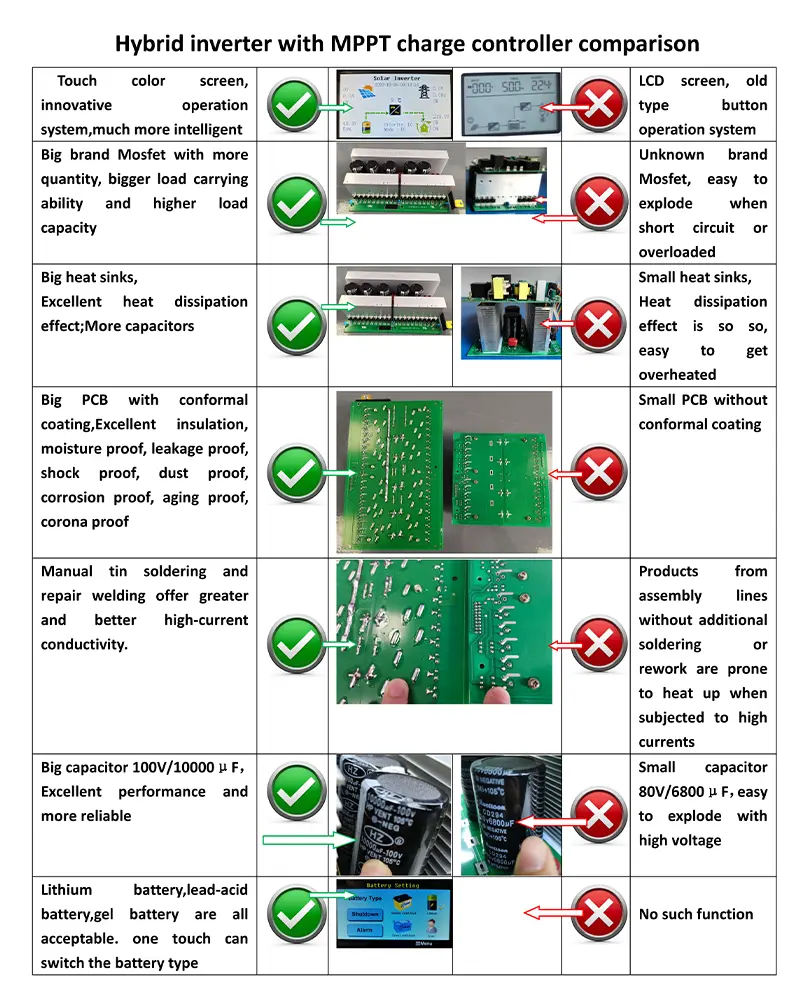
A: This system includes: solar panel, PV array combiner, Hybrid solar inverter with built-in MPPT controller, Maintenance-free Gel battery, Mounting structure, cables etc.
Q: Is the solution for complete set? If not, what else are needed?
A: Yes, we can provide complete set solution. If you don't need complete set, basic parts are available too.
Q: Is the system solution always the same? Can I customize one?
A: No. We have professional teams make solutions for our clients. Solutions are mainly customized based on different sunshine time and power consumption. Same power system may be with different configuration.
Q: Who will arrange the shipment?
A: We are doing FOB trade term. If you need, we could help you to arrange the shipment, we have long-term cooperation with good service forwarders.
Parameter Name
Parameter Value
Solar Panel - Max power
600W
Solar Panel - Solar Cell
Monocrystalline
Solar Panel - Maximum Power Current (IMP)
13.90A
Solar Panel - Output Tolerance
±3%
Solar Panel - MaximumPowerVoltage(VMP)
39.18V
Solar Panel - Open Circuit Voltage(VOC)
47.40V
Solar Panel - Short Circuit Current(ISC)
14.01A
Solar Panel - Temperate coefficient of Isc
0.05%/℃
Solar Panel - Frame
Aluminum alloy frame
Solar Panel - Temperature range
-40℃~ +85℃
Solar Panel - Product Dimension
2115 * 1052 *40 mm
Solar Panel - Weight
20.5 kg
Solar Panel - Certificates
TUV、IEC,CE
Solar Panel - Warranty
25Years
Solar Inverter - Output power wave
Pure sine wave
Solar Inverter - Max Input Power
25000W
Solar Inverter - AC input Voltage Range
170-275VAC
Solar Inverter - Output Voltage Rated
110VAC/220VAC
Solar Inverter - Battery Rated Voltage
192/240/360VDC
Solar Inverter - Output Power
25000W
Solar Inverter - Rated Input
170VAC-275VAC 50Hz/60Hz
Solar Inverter - Battery AC Charge Current
30A MAX
Solar Inverter - Product size
733*520*1000mm
LiFePO4 Lithium Battery - Battery Capacity
300Ah
LiFePO4 Lithium Battery - Battery Power
204.8V 61000WH
LiFePO4 Lithium Battery - Rated Voltage
192V
LiFePO4 Lithium Battery - Maximum Charging Current
150A
LiFePO4 Lithium Battery - Maximum Discharging Current
150A
LiFePO4 Lithium Battery - Charge Voltage
216V
LiFePO4 Lithium Battery - Discharge Voltage Range
174V-216V
LiFePO4 Lithium Battery - Operating Temperature
4°F to 140°F
LiFePO4 Lithium Battery - Cycle Life
≥6000
LiFePO4 Lithium Battery - Size
550*860*1150 (mm)
LiFePO4 Lithium Battery - Lifespan
8-10 years
LiFePO4 Lithium Battery - Weight
440kg
PV combiner-PV array input numbers
4
PV combiner-Max single PV array current
10A
PV combiner-Single PV array fuse
10A
PV combiner-Output numbers
1
PV combiner-Max output current
40A
PV combiner-Reference weight (N.W/G.W)
5.3/9.3
PV combiner-Machine size (D X W X H)
340*300*140mm
PV combiner-Packaging size (D X W X H)
450*420*245mm
PV combiner-Ground wire size
≥6mm2
PV Cables - Rated Voltage
DC:1.8kv ACU./U:0.6/1kv
PV Cables -Cross Section
4mm2
PV Cables -Color
Red /Black
PV Cables -Application
Solar panel, inverter, combiner box, PV power station



 Whatsapp :
 Home








 Case
 Mar 21,2022


 Tel
 Email
 Address