


 Whatsapp :
 Home
HomeSolar Inverter Rated Power: How to Know the True Continuous Output Before You Buy
 Jul 07,2026
 0
0
 sunchees solar system
When buyers compare a 10kW, 12kW, or 15kW solar inverter, the most important question is not only “How many kW is printed on the product name?”
The more useful question is:
What is the real solar inverter rated power that can run your loads continuously, safely, and reliably?
This matters because an inverter label can refer to several different things: model name, rated output, peak power, surge capacity, PV input size, or short-time overload ability. For an off-grid home, farm, office, shop, school, island property, or backup energy project, confusing these numbers can lead to system shutdowns, overload alarms, poor battery performance, and disappointed users.
This guide explains how to read solar inverter rated power correctly, how to distinguish continuous output power from peak power, and what to ask before buying an off grid hybrid solar inverter.
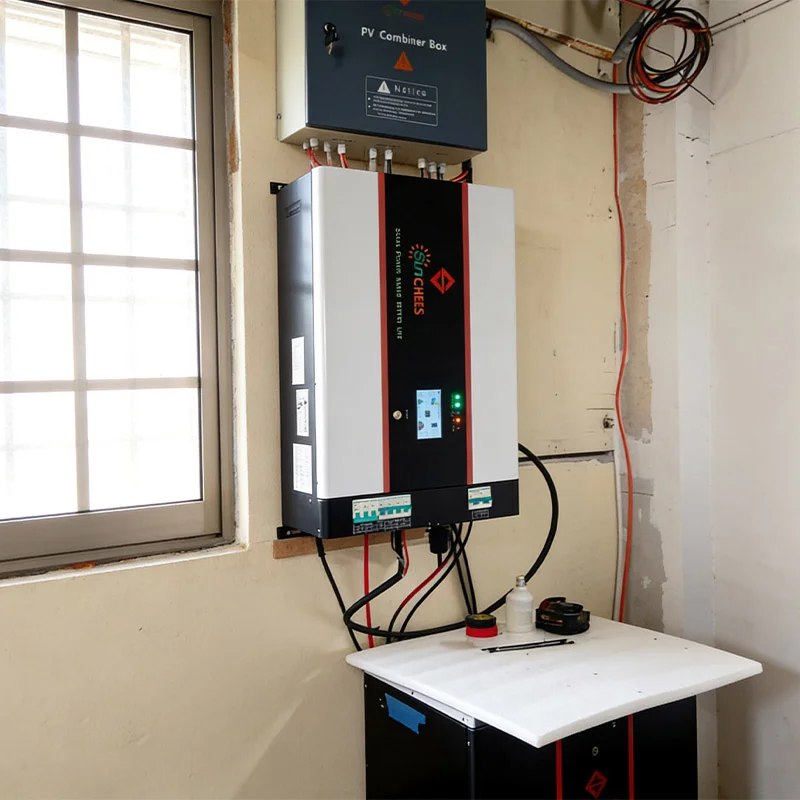
Why Solar Inverter Rated Power Is Not Just a Number
Solar inverter rated power usually refers to the inverter’s normal AC output capacity under defined operating conditions. In practical terms, it tells you how much load the inverter is designed to support during normal operation.
For example, if an inverter specification lists:
|
|
|
|
|
|
|
|
|
|
|
|
|
|
|
|
|
|
|
|
|
|
|
|
|
|
|
|
|
|
|
|
|
|
|
|
A buyer should not judge an inverter only by the product title. The title may say “10kW” or “15kW,” but the specification table should confirm the actual rated output power.
For serious projects, especially in hot regions, islands, rural sites, and areas with unstable grid supply, the inverter should be selected based on real load demand, startup surge, battery capacity, PV input, and installation environment.
Solar Inverter Rated Power vs Peak Power: What Is the Difference?
The difference between rated power and peak power is one of the most common sources of confusion.
|
|
|
|
|
|
|
|
|
|
|
|
|
|
|
|
|
|
|
|
|
|
|
|
|
|
|
|
|
|
A true continuous power of a solar inverter should support normal loads for long periods. Peak or surge power is only for short moments, such as when a pump, compressor, refrigerator, or air conditioner starts.
For example, a water pump may normally run at 1kW, but it may require several times more power at startup. If the inverter has weak surge capacity, the pump may fail to start even if the normal running wattage looks acceptable on paper.
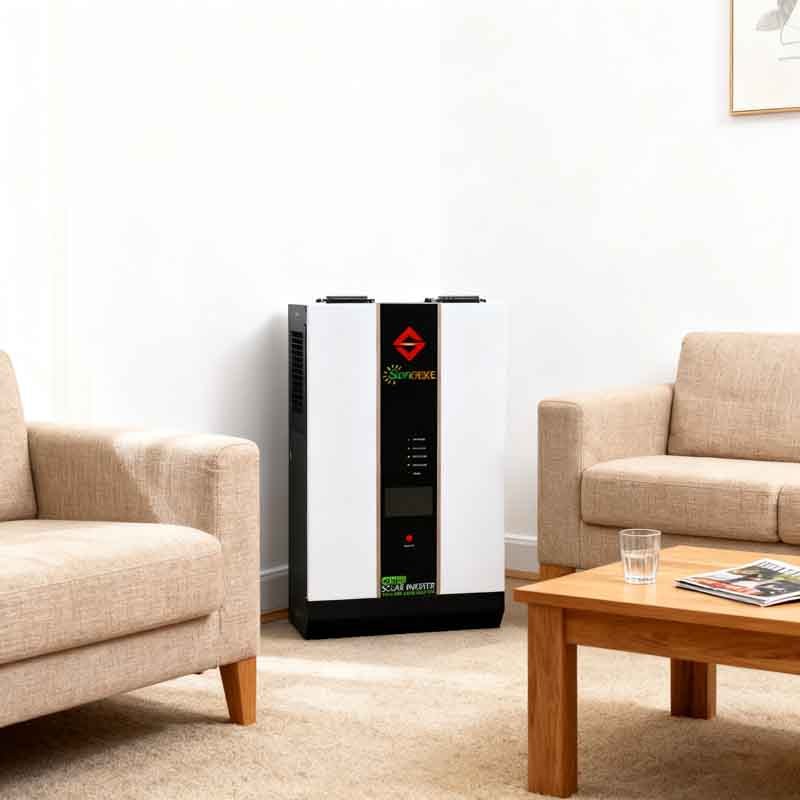
How to Check the True Continuous Power of a Solar Inverter
Before selecting an inverter, review these items carefully:
|
|
|
|
|
|
|
|
|
|
|
|
|
|
|
|
|
|
|
|
|
|
|
|
|
|
|
|
|
|
|
|
|
|
|
|
|
|
|
|
The safest way to verify solar inverter rated power is to ask for an official datasheet, not only a product title or quotation sheet.
Why Continuous Output Power Matters for Homes, Farms, and Commercial Backup
A solar inverter does not simply power one appliance. It must support the combined load of all devices running at the same time.
For example:
|
|
|
|
|
|
|
|
|
|
|
|
|
|
|
|
|
|
|
|
|
|
|
|
|
|
|
|
|
|
|
|
If your normal expected load is close to the inverter’s full rating, the system may work under light use but become unstable when multiple devices start together.
A better approach is to calculate:
Maximum simultaneous running load + startup surge margin + high-temperature margin + future load expansion
This is especially important for off-grid homes, farms, schools, clinics, shops, warehouses, and island properties where grid backup may be limited.
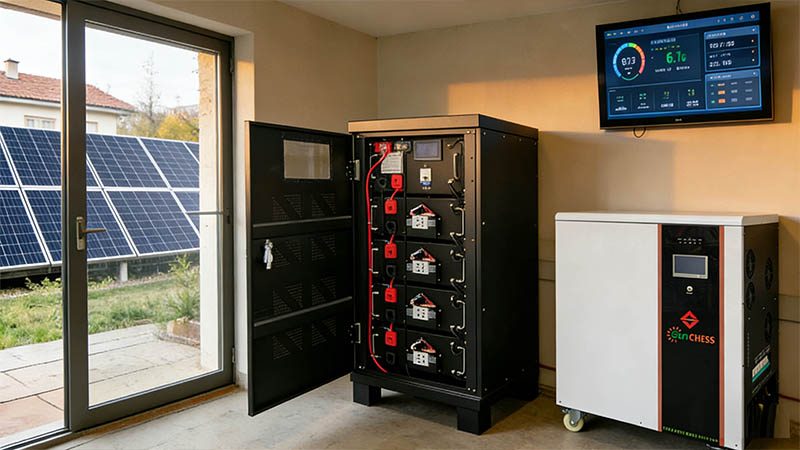
Reading a 15kW Solar Inverter Specification Correctly
A 15kW solar inverter should not only be described as “15kW” in the title. A buyer should look for specification details such as:
|
|
|
|
|
|
|
|
|
|
|
|
|
|
|
|
|
|
|
|
|
|
|
|
|
|
|
|
|
|
|
|
|
|
|
|
One important detail: PV power is not the same as AC output power.
For example, if a 15kW inverter has 9.6kW PV input, this does not mean the inverter can only output 9.6kW. It means the built-in solar controller can accept around that level of solar panel input. The AC output can still be rated at 15kW if supported by the inverter and battery bank. At full load, the system may use solar power and battery power together.
Why Pure Sine Wave Inverter Design Is Important
A pure sine wave inverter produces cleaner AC output than modified wave designs. This is important for appliances and equipment such as:
|
|
|
|
|
|
|
|
|
|
|
|
|
|
|
|
|
|
|
|
|
|
|
|
For homes and commercial backup systems, pure sine wave output is usually the safer choice because the system may need to power mixed loads, not only simple lighting.
Off Grid Hybrid Solar Inverter: What Buyers Should Confirm Before Ordering
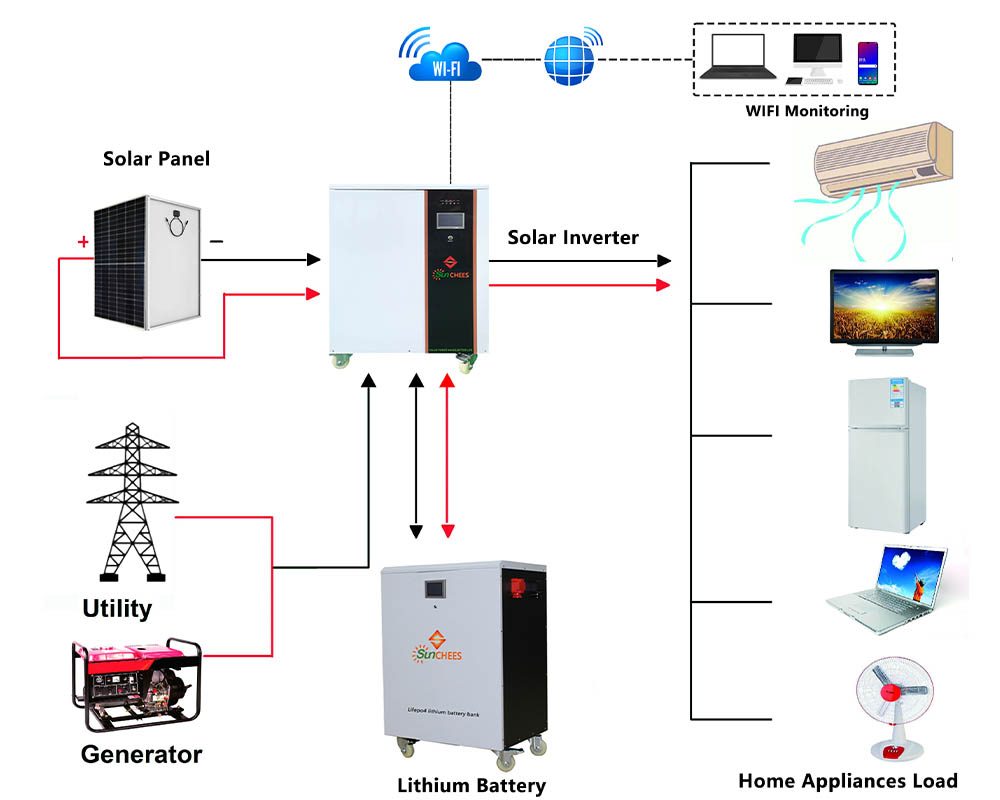
An off grid hybrid solar inverter is often used in systems that combine solar panels, lithium batteries, AC charging, and backup operation. Before ordering, buyers should confirm:
|
|
|
|
|
|
|
|
|
|
|
|
|
|
|
|
|
|
|
|
|
|
|
|
|
|
|
|
|
|
|
|
|
The inverter should not be considered as a standalone box. It should be matched with panels, batteries, cables, combiner box, controller settings, load demand, and installation environment.
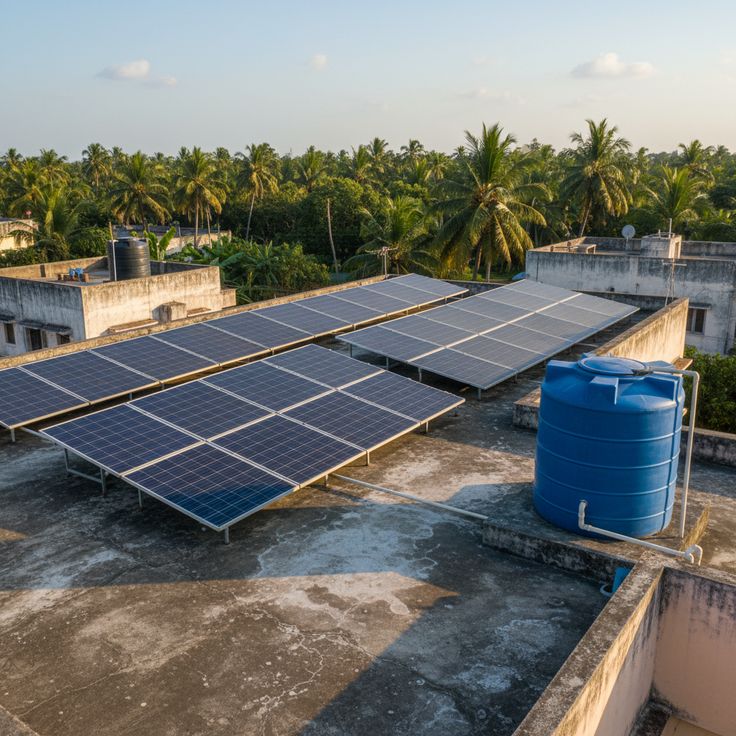
Sunchees Approach to Solar Inverter Rated Power and System Matching
Sunchees was founded in 2008 and is headquartered in Foshan, Guangdong, China. Instead of selling only individual components, Sunchees focuses on solar power system solutions, including off-grid solar systems, hybrid solar power systems, solar inverters, lithium batteries, solar air conditioner systems, and customized solar energy solutions.
For buyers, this system-level approach matters because inverter performance depends on component matching.
Sunchees develops and supplies solar inverters and lithium batteries designed to work together within complete system configurations. This helps reduce the risk of random third-party component mismatch, improves system stability, and makes troubleshooting easier.
Sunchees supports:
|
|
|
|
|
|
|
|
|
|
|
|
|
|
|
|
|
|
|
|
|
|
|
|
Sunchees is also active and visible online. Customers can find the company on Instagram, TikTok, YouTube, and Facebook, which helps overseas buyers check product videos, project examples, and company activity before ordering.
Installation and Commissioning: Why Local Support Matters
A good solar system is not only about equipment. Installation quality affects system safety, output stability, and long-term performance.
Sunchees works with local installation partners in selected markets. For some standard projects, local installers can complete installation and commissioning in about 5 days, depending on system size, site conditions, wiring complexity, and local requirements.
Buyers can contact Sunchees with:
|
|
|
|
|
|
|
|
|
|
|
|
|
|
|
|
|
|
|
|
|
|
|
|
|
|
|
For systems above 50kW, Sunchees can provide additional engineering support according to project requirements. For smaller systems, remote installation guidance can help local electricians complete the work correctly.
Should Solar System Equipment Be Mobile or Wall-Mounted?
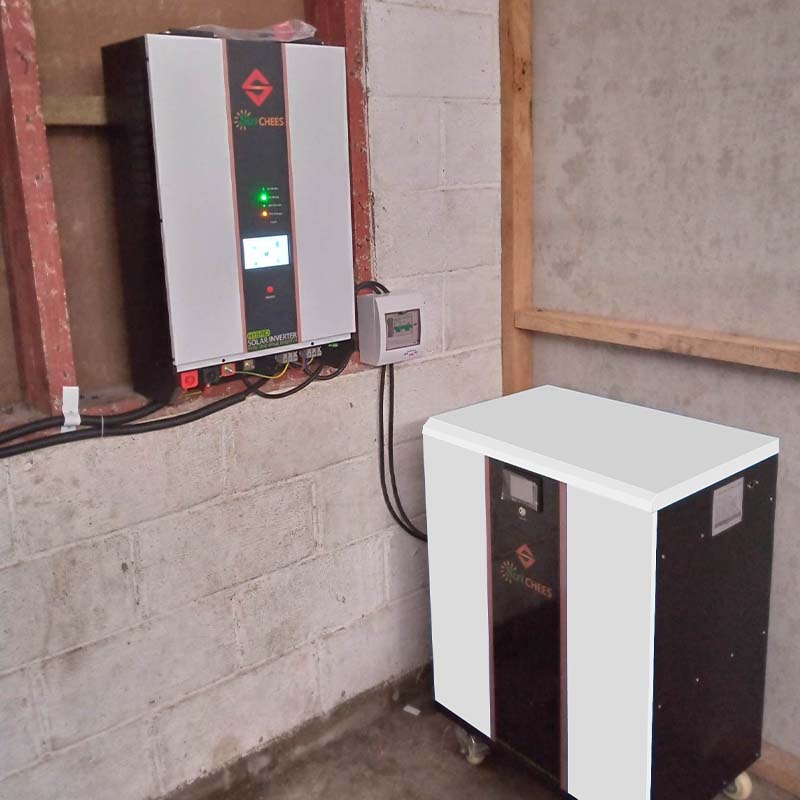
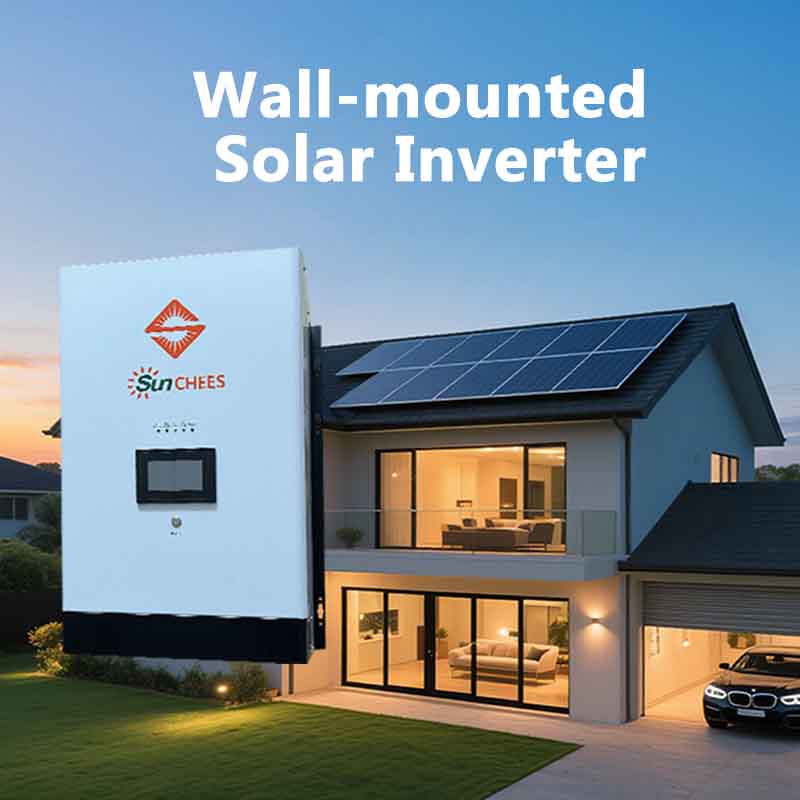
Some customers want inverter and battery equipment installed on the wall to keep it higher from the ground, especially in flood-prone areas. In some cases, raising equipment above floor level can reduce water exposure risk.
However, heavy energy storage equipment must be installed safely. Wall mounting is not always recommended, especially for large batteries, heavy inverters, or complete energy storage cabinets.
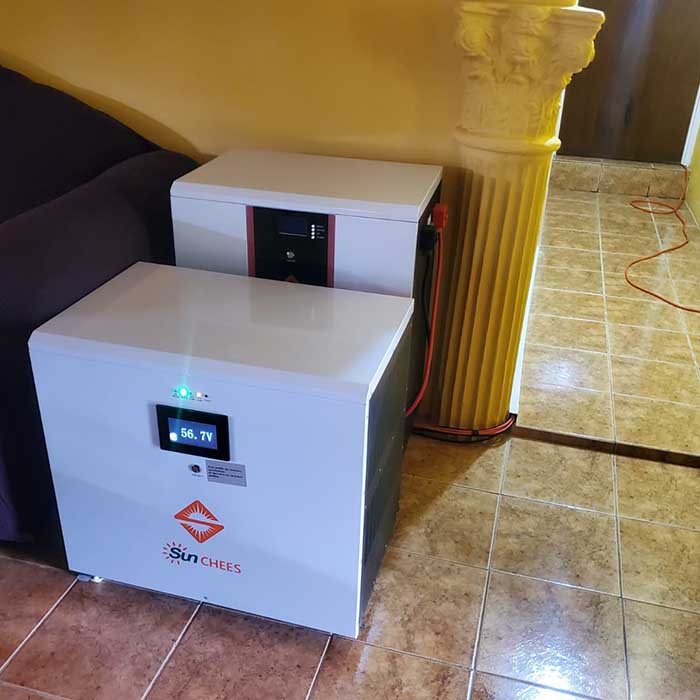
Sunchees can support movable system equipment with wheels, except for solar panels. This makes it easier to move the inverter and battery cabinet during maintenance, layout adjustment, or site cleaning. However, solar panels must remain fixed to a roof or ground mounting structure.
|
|
|
|
|
|
|
|
|
|
|
|
|
|
|
|
|
|
|
|
|
|
|
|
For flood-prone areas, the better solution is not simply “put everything higher.” The system should be designed with safe elevation, proper cabinet structure, cable protection, ventilation, and local electrical standards.
Free Upgrade to Double-Glass Bifacial Solar Panels
Sunchees currently supports a free upgrade to double-glass bifacial solar panels for selected projects, depending on order configuration and availability.
Compared with conventional single-sided modules, double-glass bifacial panels can generate electricity from both the front and rear sides when installation conditions allow reflected light to reach the back of the panel.
Potential benefits include:
|
|
|
|
|
|
|
|
|
|
|
|
|
|
|
|
|
|
Actual gain depends on installation height, ground reflectivity, tilt angle, shading, and local sunlight conditions. For ground-mounted systems, farms, open land, and island projects, bifacial modules can be a practical upgrade.
Delivery, Packaging, and After-Sales Support
For overseas buyers, delivery control and after-sales support are as important as the equipment itself.
Sunchees provides production tracking and project follow-up during the contract process. A dedicated person can update customers on production progress, packing, and shipment preparation.
Typical delivery references:
|
|
|
|
|
|
|
|
|
|
|
|
Typical packaging:
|
|
|
|
|
|
|
|
|
|
|
|
|
|
|
Warranty policy:
|
|
|
|
|
|
|
|
|
|
|
|
|
|
|
After each contract, Sunchees can conduct customer satisfaction follow-up to improve service experience and project execution.
Solar Inverter Rated Power Checklist for Buyers
Before you confirm an order, use this checklist:
|
|
|
|
|
|
|
|
|
|
|
|
|
|
|
|
|
|
|
|
|
|
|
|
|
|
|
|
|
|
|
|
|
|
|
|
|
|
|
|
|
A reliable system starts with clear specifications.
Example Buyer Questions to Ask Before Choosing a Solar Inverter
Use these questions when talking to a supplier:
- What is the solar inverter rated power in watts?
- Is this value the continuous output power or peak power?
- What is the overload capacity and how long can it last?
- What is the surge capacity and duration?
- What is the battery voltage?
- What battery types are supported?
- What is the MPPT voltage range?
- What is the maximum PV input power?
- Does the inverter support pure sine wave output?
- Can the system run inductive loads such as air conditioners, water pumps, and refrigerators?
- Does the inverter derate in high-temperature environments?
- Can the system be customized for my country, voltage, frequency, and installation site?
- Do you provide remote installation guidance or local installer support?
- Can the equipment be mobile, raised, or cabinet-mounted safely?
- What warranty and spare parts support are included?
These questions help separate a real system solution from a simple product quotation.
Conclusion: Solar Inverter Rated Power Should Be Verified, Not Assumed
Solar inverter rated power is one of the most important specifications in an off-grid or hybrid solar power system. Buyers should not rely only on product titles such as 10kW, 12kW, or 15kW. They should verify rated output power, continuous output power, overload capacity, surge duration, PV input, battery voltage, and operating environment.
For homes, farms, offices, schools, commercial buildings, and remote sites, a properly matched inverter can improve system stability and reduce long-term problems.
Sunchees provides complete solar power system solutions with matched inverters, lithium batteries, solar panels, charge controllers, mounting structures, cables, packaging, remote support, and customization options. For buyers in the Caribbean, Latin America, island markets, and off-grid regions, Sunchees can help design a practical system according to real load demand, site conditions, installation method, and backup power needs.
To choose the right system, contact Sunchees with your location, monthly electricity usage, main appliance list, required backup time, and installation site details.
FAQ
What is solar inverter rated power?
Solar inverter rated power is the normal AC output capacity of the inverter under specified conditions. It is the key number buyers should use when checking whether the inverter can support daily loads.
Is solar inverter rated power the same as peak power?
No. Solar inverter rated power refers to normal usable output capacity, while peak power or surge power is only for short-time startup loads such as pumps, refrigerators, compressors, and air conditioners.
How do I know the true continuous power of a solar inverter?
To know the true continuous power of a solar inverter, check the official specification table for rated output power, continuous output power, temperature conditions, overload capacity, surge duration, and battery voltage. If the product title and specification table are different, ask the supplier to confirm in writing.
Why does solar inverter overload capacity matter?
Solar inverter overload capacity matters because many appliances require higher power at startup than during normal operation. Air conditioners, water pumps, refrigerators, and motors may need several times their normal running power for a short period.
Is PV power the same as inverter output power?
No. PV power refers to the solar panel input or MPPT charging capacity. Inverter output power refers to the AC power supplied to appliances. A system can have different PV input power and inverter rated output power.
What is the advantage of a pure sine wave inverter?
A pure sine wave inverter provides cleaner AC output and better compatibility with refrigerators, air conditioners, pumps, washing machines, computers, communication equipment, and other sensitive or motor-based loads.
What is the best off grid hybrid solar inverter for a home?
The best off grid hybrid solar inverter depends on your total load, startup surge, battery backup requirement, local voltage, installation environment, and future expansion plan. For medium to large homes or commercial backup, a 15kW solar inverter may be suitable when properly matched with battery and PV capacity.
Can Sunchees customize a solar power system for my country?
Yes. Sunchees supports OEM and customized solar power system solutions, including solar inverter selection, lithium battery matching, solar panel brand options, solar air conditioner solutions, voltage and frequency configuration, and project-based system design.
How long does a Sunchees solar power system take to install?
For selected standard projects, Sunchees works with local installation partners who may complete installation and commissioning in about 5 days, depending on project size, site conditions, wiring complexity, and local requirements.
Can Sunchees solar system equipment be moved?
Some Sunchees system equipment can be designed with wheels and made movable, except for solar panels, which must be fixed to a roof or ground mounting structure. Wall-mounted installation should be evaluated carefully for safety, especially for heavy batteries and inverters.
Does Sunchees offer double-glass bifacial solar panel upgrades?
Sunchees can provide a free upgrade to double-glass bifacial solar panels for selected projects, depending on configuration and availability. Bifacial modules can generate power from both sides and may improve energy yield under suitable installation conditions.
 Inverter Surge Rating: Can This Solar Inverter Start Your Pump, AC or Compressor?
 You May Also Like



 Tel
Tel
 Email
Email
 Address
6th Floor, Zhonghe Zinan Industrial Park, No. 1 Zinan Changang West Road, Nanzhuang Town, Chancheng District, Foshan City, Guangdong Province. China (Mainland)