


 Whatsapp :
 Home
HomeHow to Ship a 12kW Solar System to Costa Rica
 Aug 06,2026
 0
0
 sunchees solar system
A 12kW solar system can enter Costa Rica through Moín or Puerto Caldera. The safest purchasing plan treats import clearance and local electrical approval as parallel workstreams. Before equipment leaves China, the buyer should ask the local electrical professional and serving distribution company to confirm the site voltage, phase, 60Hz frequency, intended operating mode and inverter-document requirements. At the same time, the customs broker should review the panels, inverter, battery, mounting and accessories separately for tariff classification and any Ley 7447 benefit.
A practical project sequence is: collect load data, identify the distribution company and system role, obtain a local technical review, freeze the equipment and battery documents, compare port and shipping options, complete TICA and customs work, then proceed with local installation, inspection and interconnection.
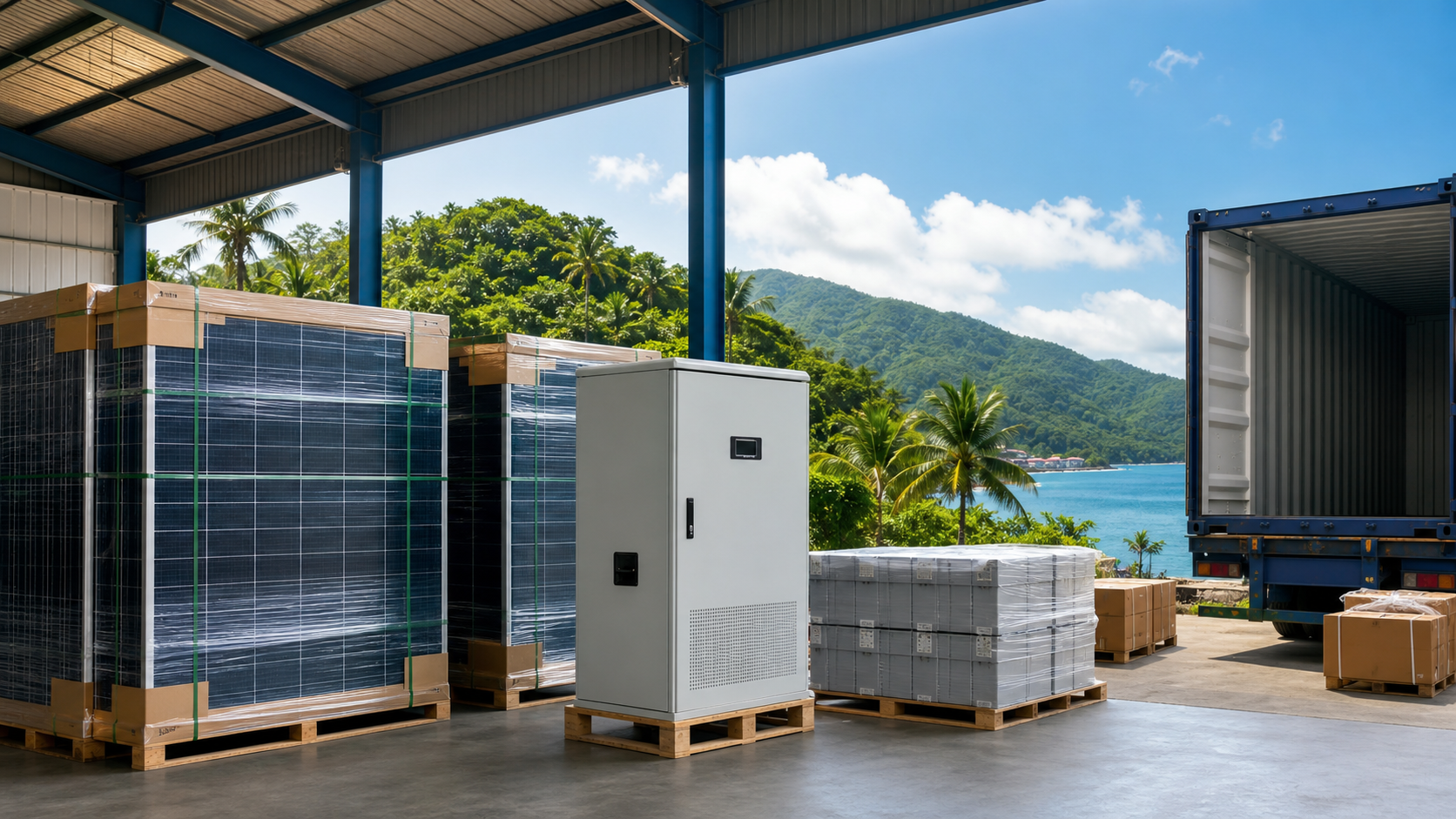
Educational illustration. The actual equipment, cargo configuration, port and local delivery follow the confirmed order and booking.
Start with the electrical role of the 12kW system
“12kW” may describe the inverter rating or be used informally for the solar array. A purchase-ready design separates three capacities:
|
|
|
|
|
|
|
|
|
|
|
|
|
|
|
|
Costa Rica’s Ley 10086 and ARESEP framework cover self-consumption without surplus, self-consumption with surplus, island operation and storage. The country is served by eight authorized distribution companies, including ICE, CNFL, ESPH, JASEC and several cooperatives. The actual serving company should confirm the current application, capacity, metering, fees and technical-document process for the project address.
The current Sunchees 8–15kW candidate-system page shows how modules, combiner equipment, battery, inverter, mounting and cables can form a package. Its listed inverter input is 220VAC/50Hz. Costa Rica operates at 60Hz, while CNFL’s published services include 120/240V, 120/208V, 240/480V and 277/480V configurations. The web configuration is therefore a starting point, not evidence of approval for a Costa Rican site. The final model must match the property and pass the relevant local review.
Prepare the local technical inputs before requesting a final quotation
Send the following information to Sunchees and the local professional team:
- the most recent 12 months of electricity bills and monthly kWh;
- the distribution company and service-account information shown on the bill;
- daytime loads, peak demand and essential backup loads;
- nameplate data and starting requirements for air-conditioning, pumps, refrigeration, kitchen or workshop equipment;
- service voltage, phase and frequency, with clear meter and main-panel photographs;
- roof or ground dimensions, construction, structure, shading and equipment-room location;
- whether the project will export surplus, retain grid backup, use island operation or operate off-grid; and
- the delivery address, access road, unloading, crane and temporary-storage conditions.
For a grid-connected project, ask the local engineer and serving distribution company to confirm the current forms, available capacity, drawings, inverter evidence, CFIA process, protection, metering and inspection requirements before payment. Earlier ICE guidance referenced forms GD01, GD02 and GD03, capacity confirmation, drawings and inspection; a buyer should use the serving company’s current documents rather than treating an older example as the final checklist.
Freeze one equipment list and one responsibility matrix
|
|
|
|
|
|
|
|
|
|
|
|
|
|
|
|
|
|
|
|
|
The responsibility matrix should name who provides the technical evidence, who manages the dangerous-goods booking, who applies for any tax benefit, who installs the system and who completes interconnection. Sunchees, the forwarder, customs broker, local engineer or electrician, distribution company and buyer each have a different role.
Choose between Moín and Puerto Caldera
Moín Container Terminal is on Costa Rica’s Caribbean coast. Puerto Caldera is on the Pacific side in Puntarenas. The route that looks shorter on a map may not produce the lowest landed cost because current sailings can involve transshipment, and inland trucking, dangerous-goods acceptance and destination charges can change the result.
Compare:
- current carrier sailings, transshipment points and estimated arrival;
- truck distance, road conditions and cost from each port to the final address;
- whether FCL and LCL services are available to the same destination;
- whether the route and terminal accept the actual lithium-battery booking;
- destination handling, free time, storage and examination arrangements; and
- the broker’s and trucking team’s operating experience at the port.
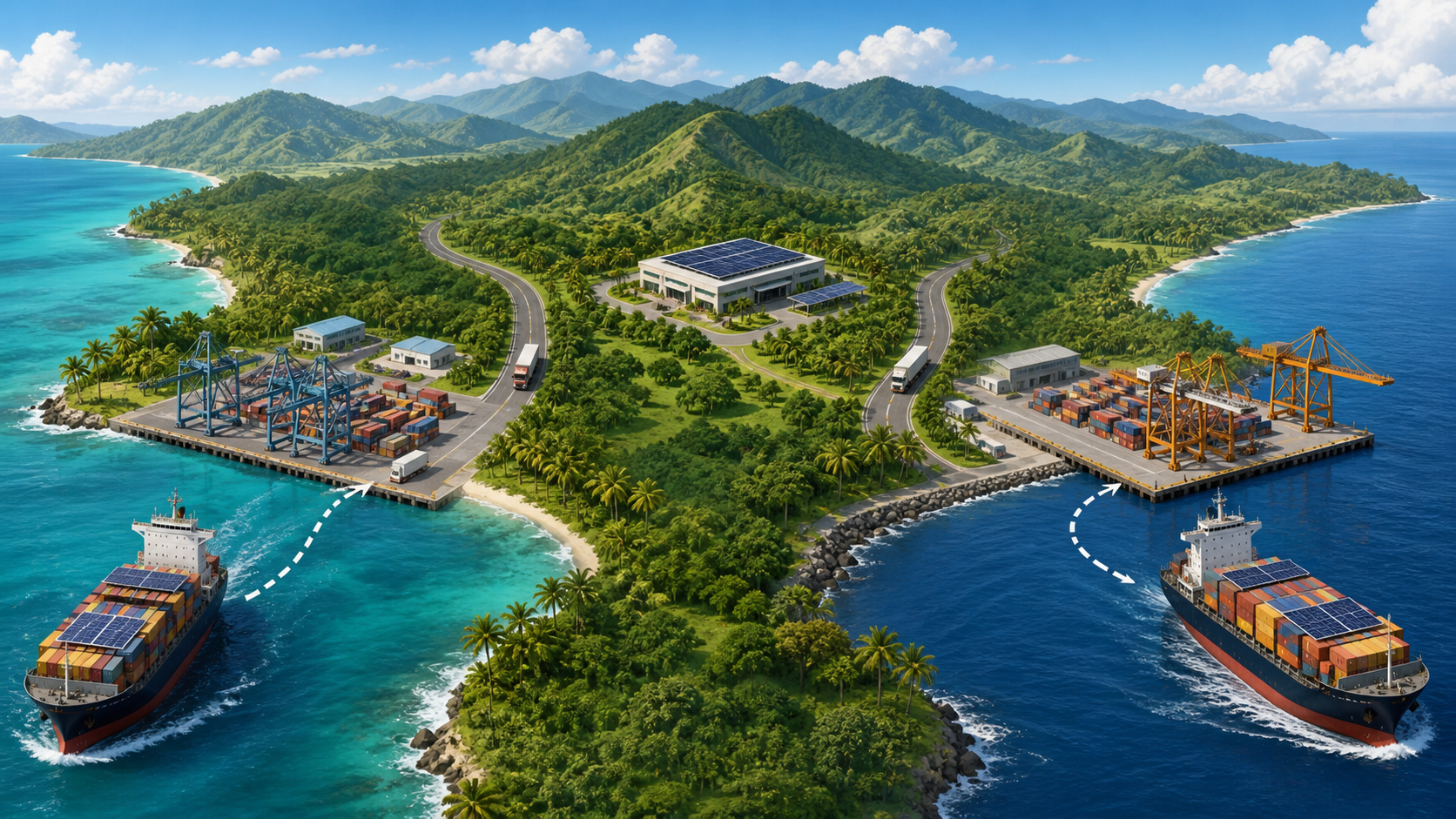
Conceptual route-choice illustration, not a geographic map. Select Moín or Caldera using current sailings, the final address, inland cost and dangerous-goods acceptance.
Compare FCL and LCL using the same cargo scope
The following figures are preliminary planning ranges, not a current freight offer. A final quotation needs the origin port, Incoterm, dimensions, weight, battery classification and local-delivery scope from the frozen bill of materials.
|
|
|
|
|
|
|
|
|
|
|
|
|
|
|
LCL can be attractive when a 12kW shipment does not fill a container. FCL may offer more operational control when the order includes many glass modules, heavy batteries or a route with LCL dangerous-goods restrictions. Compare both quotations using the same bill of materials, Incoterm and delivery endpoint.
Prepare ISPM 15 packaging and lithium-battery documents
Solid-wood pallets, crates and dunnage should comply with ISPM 15 and display the recognized official mark. Photograph the mark, package number, pallet condition and cargo restraint before loading, and retain the packaging supplier’s traceability records.
For lithium batteries, the dangerous-goods forwarder and carrier should review at least:
- the model-specific UN 38.3 test summary;
- the SDS or MSDS;
- chemistry, watt-hours, quantity, net weight and dimensions;
- the correct UN number and proper shipping name;
- packaging, marking, labelling and dangerous-goods declaration inputs;
- any China-side dangerous-goods packaging documentation required by the route; and
- any emergency-contact or carrier-specific statement.
A battery-equipped system may use a preliminary US$350–620 allowance for additional import-related costs. This is not a fixed battery tax or a complete dangerous-goods charge. Classification, customs value and benefit eligibility determine the import difference; DG booking, documentation, terminal handling and storage should be priced separately.
Use TICA—not an “ENS” assumption—for the sea manifest
Costa Rica’s Dirección General de Aduanas uses TICA for sea-cargo information. Under the current official resolution, the carrier or shipping line must transmit the manifest, master bill of lading and house bill of lading at least 24 hours before the vessel arrives.
For operational safety, the project team can freeze and submit the document set to the carrier and broker seven days or more before arrival. That is a planning buffer, not the formal legal wording. The commercial invoice, packing list, bill of lading, consignee data, weights, package counts, cargo description and dangerous-goods information must agree.
Review Ley 7447 benefits item by item
Ley 7447 and the official eligible-goods list provide a tax-benefit route for qualifying renewable-energy equipment. Photovoltaic modules and some control or conversion equipment appear within that framework, but a complete solar kit is not automatically exempt.
Before import, the broker or importer should prepare an itemized review:
|
|
|
|
|
|
|
|
|
|
|
|
|
|
|
|
|
|
|
|
|
For early budgeting, allow US$1,200–1,700 for customs clearance and related destination charges, plus the separate US$350–620 battery import allowance when relevant. The broker’s final estimate must reflect the declared value, classification, approved benefit and actual service scope.
Release, inland delivery and interconnection
After customs release:
- the broker confirms release, taxes and pickup documents;
- the trucking team arranges the vehicle and any crane around the address, cargo weight and unloading conditions;
- the receiving team records packaging condition, tilt or impact signs, glass and enclosure condition;
- models, quantities and serial numbers are checked, and any exception is reported within the contract notice period;
- the local professional installs and tests the system against the approved drawings;
- the serving distribution company completes the applicable inspection, metering, contract and interconnection steps; and
- the buyer receives as-built information, settings, test results, warranty documents, spares and a maintenance plan.
Start the interconnection review before import. Discovering a voltage, certificate or distribution-company problem only after the cargo arrives can create avoidable delay and rework.

Illustrative coordination scene. Engineering and interconnection review should begin before the equipment ships; it does not show a completed approval.
What Sunchees provides in this process
At Sunchees, we can use your 12 months of bills, load list, backup target, service details, roof or ground information and Costa Rica delivery address to prepare a candidate configuration, model data, bill of materials, drawing inputs, packing list and shipping-document package. For an order with lithium batteries, we provide the model documents for review by the dangerous-goods forwarder and carrier.
The local engineer and serving distribution company confirm 60Hz, voltage, phase, drawings, equipment evidence and interconnection. The broker or importer confirms TICA, tariff classification, Ley 7447 eligibility and clearance. Licensed local professionals remain responsible for construction, inspection, commissioning and maintenance. Before payment, we work with the project parties to freeze the final models and responsibilities.
Review the Sunchees 8–15kW system options, off-grid systems, hybrid solar systems and delivery terms.
Buyer checklist before payment
- PV kWp, inverter kW and battery kWh are stated separately.
- The serving distribution company and the site’s 60Hz voltage and phase are confirmed.
- The project role—self-consumption without surplus, with surplus, island operation or off-grid—is defined.
- The local engineer or distribution company has reviewed the proposed inverter and document route.
- The broker has reviewed panels, inverter, batteries, racking and BOS separately for tariff and Ley 7447 treatment.
- Moín and Caldera have been compared using current ocean service, inland delivery, port charges and DG acceptance.
- FCL and LCL quotations use the same bill of materials, Incoterm and endpoint.
- Wood packaging has traceable ISPM 15 marks and loading photographs.
- The lithium-battery UN 38.3 summary, SDS and DG booking are accepted for the route.
- TICA manifest data, bills of lading, invoice, packing list and consignee details agree.
- Local installation, inspection, metering, interconnection and after-sales responsibilities are assigned.
Frequently asked questions
Should a 12kW solar system enter through Moín or Caldera?
Moín is on the Caribbean coast and Caldera is on the Pacific side. Choose using current sailings, transshipment, inland trucking to the final address, dangerous-goods acceptance, destination charges and the local team’s port capabilities—not map distance alone.
Does Costa Rica require an ENS filing seven days before arrival?
The current official requirement is a TICA sea manifest transmitted by the carrier at least 24 hours before arrival. Freezing the documents seven days or more in advance is a sensible project buffer, but it is not the wording of the formal rule.
Are the freight and transit ranges a formal quotation?
No. FCL 50–62 days at US$4,320–5,160 and LCL 65–78 days at US$1,688–2,005 are preliminary planning figures. They need a date, origin port, Incoterm, final bill of materials and exact inclusions before booking.
Is a solar system automatically tax-free when imported into Costa Rica?
No. Ley 7447 provides a benefit route for listed qualifying equipment. Panels, inverter, battery, mounting and accessories must be reviewed item by item and the required application or permit process completed.
Can the current Sunchees 12kW catalogue configuration connect directly to the grid?
Not without project-specific selection and local review. The current web candidate lists 220VAC/50Hz, while Costa Rica uses 60Hz and the site may have one of several service configurations. The final model must match the site and serving distribution company’s process.
What documents are needed to ship lithium batteries?
Core inputs include the model-specific UN 38.3 test summary, SDS, watt-hours, quantity, weight, correct UN number and proper shipping name. The DG forwarder and carrier decide the final packaging, marking, declaration and route acceptance.
When should the interconnection process start?
Begin the technical review before payment and shipment. Confirming the electrical service, equipment evidence and distribution-company process only after arrival increases the risk of a model mismatch or rework.
Sources
 How to Ship a 15kW Solar System to the Cayman Islands
 You May Also Like



 Tel
Tel
 Email
Email
 Address
6th Floor, Zhonghe Zinan Industrial Park, No. 1 Zinan Changang West Road, Nanzhuang Town, Chancheng District, Foshan City, Guangdong Province. China (Mainland)