


 Whatsapp :
 Home
Home20 kw ground mount solar system: Cost, Land Requirements & Installation Guide
 Oct 16,2026
 3
3
 sunchees solar system
A 20 kw ground mount solar system can provide dependable electricity for large homes, farms, villas, small hotels, and commercial properties. Ground-mounted solar is especially useful when a property has available land but limited roof space, difficult rooftop access, or plans for future solar expansion.
But how much does a complete 20kW solar system cost? Is ground installation cheaper than putting solar panels on a two- or three-story roof? How much land do you need? And how many air conditioners can the system support?
For buyers in Jamaica, Barbados, Belize, and other Caribbean markets, these questions directly affect the total project budget.
Quick answer: A 20kW-class off-grid system with lithium battery storage may have an estimated total project cost of approximately 17,000–27,000 in selected Caribbean direct-import-and-installation scenarios. The final amount depends on the solar array, battery capacity, shipping, foundations, installation labor, and local requirements.
At Sunchees, we supply complete solar systems with mounting structures customized to the approved installation plan at no additional charge. Whether you choose ground installation, a flat roof, or a sloped roof, we provide the appropriate mounting brackets with your system.
This guide explains equipment costs, ground mount solar cost per watt, land requirements, household electricity needs, and practical installation considerations using a Sunchees 20kW-class off-grid system as an example.
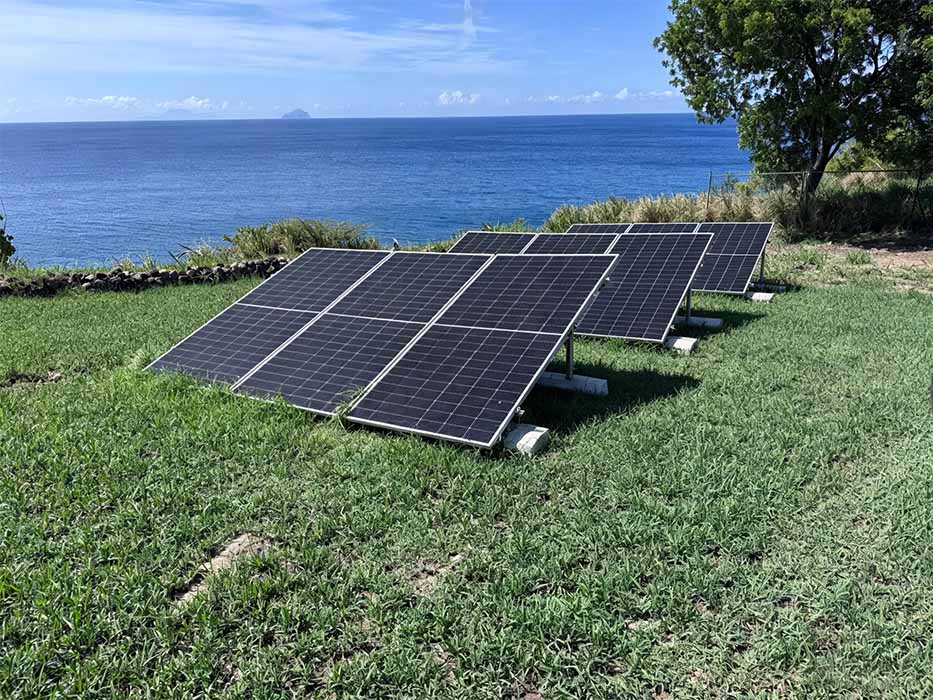
20 kw ground mount solar system: What Is Included?
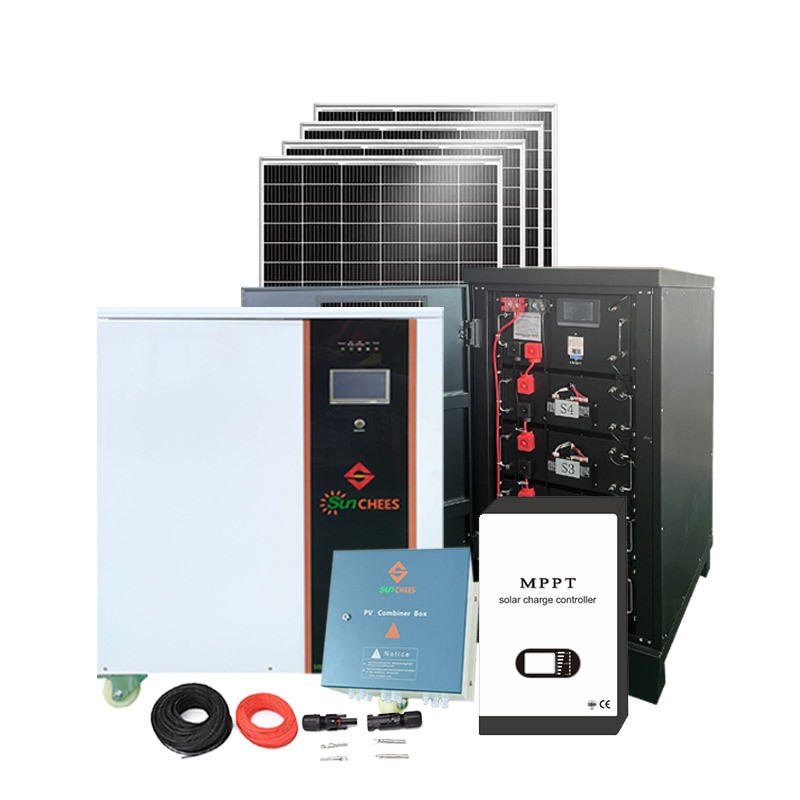
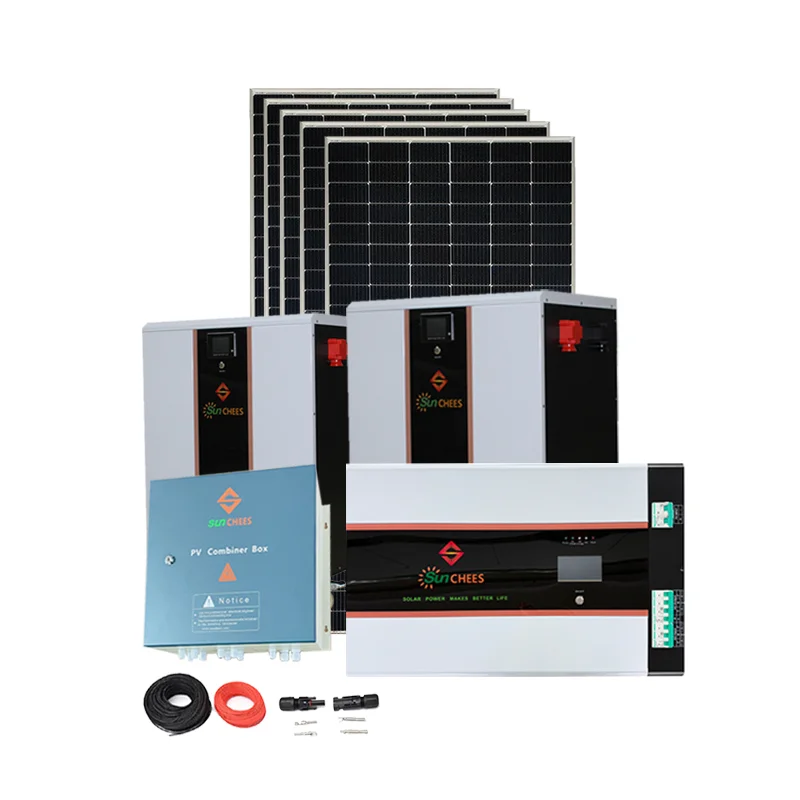
A complete ground-mounted solar system includes solar panels, an inverter, lithium battery storage, mounting structures, electrical protection devices, and the necessary connection accessories.
For a fully off-grid installation, battery storage is essential because it supplies electricity at night and during periods of limited sunlight.
Example Sunchees 20kW solar system configuration
The 20kW rating describes the inverter's output power, not necessarily the total capacity of the solar panels.
For example, 24 solar panels rated at 600W provide:
24 × 600W = 14,400W, or 14.4kWp
The inverter is rated at 20kW, while the battery stores electricity for periods when solar production is unavailable or insufficient.
Customers who need more daytime energy generation can request additional solar panels. A configuration using 34 panels rated at 600W would provide 20.4kWp, subject to appropriate inverter, controller, and system design.
Sunchees can customize solar panel capacity, inverter configuration, and lithium battery storage according to the customer's electricity requirements.
For exact technical specifications and available configurations, please refer to the relevant Sunchees product page.
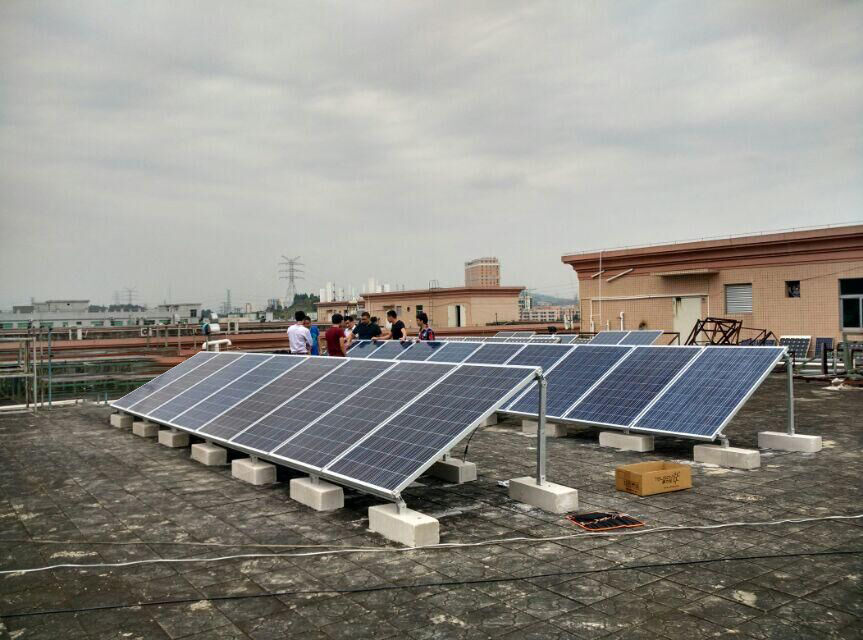
How Much Does a 20kw Solar System Cost?
The 20kw solar system cost depends on the system type, battery storage, panel capacity, and installation requirements.
A grid-connected solar system without batteries generally requires a lower initial investment than an off-grid system that must provide electricity at night.
Estimated 20kW solar system equipment costs
|
|
|
|
|
|
|
|
|
|
|
|
|
|
|
|
|
|
|
|
Prices are illustrative USD equipment budgets. Actual offers depend on the selected system and order requirements.
What does a complete 20kW solar system cost after installation?
Consider a Sunchees reference system with:
- 14.4kWp of solar panels.
- A 20kW off-grid inverter.
- Approximately 40.8kWh of lithium battery storage.
- An MPPT controller and electrical accessories.
- Customized solar mounting structures included in the equipment package.
A reference FOB China quotation for this equipment package is $11,230.
However, buyers should also consider shipping, customs clearance, and local installation expenses.
|
|
|
|
|
|
|
|
|
|
|
|
|
|
|
|
|
|
This example demonstrates how an equipment purchase of approximately $11,000 can result in a project budget of approximately $19,000 after transportation and basic installation.
The estimate does not include every possible tax, permit, additional foundation requirement, or exceptional site condition.
Are mounting structures included in the system price?
Yes. Sunchees supplies suitable mounting structures according to the approved installation plan at no additional charge.
After reviewing whether the panels will be installed on the ground, a flat roof, or a sloped roof, we provide the corresponding mounting brackets with the solar system package.
There is no additional equipment charge simply for selecting a different supported mounting arrangement.
Ground foundations, crane rental, site preparation, labor, and other local construction services are separate where applicable.
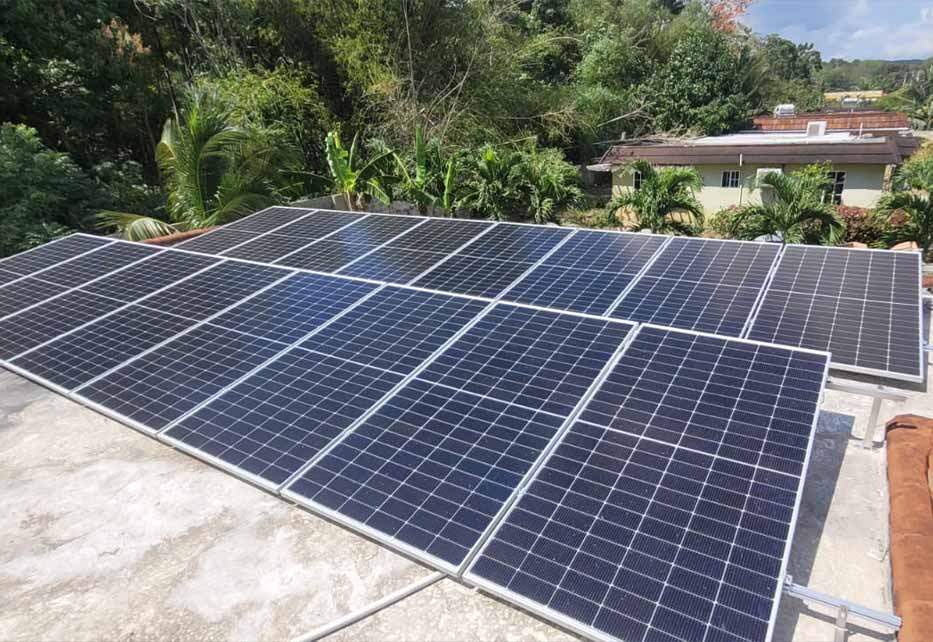
Ground Mount Solar Cost Per Watt: How to Compare Prices
The ground mount solar cost per watt is a useful metric for comparing the cost of different solar installations.
It is normally calculated using the installed photovoltaic capacity in watts.
Cost per watt ($/Wdc) = Total system cost ÷ Installed solar panel capacity
For the Sunchees reference configuration:
- 24 solar panels × 600W = 14,400W.
- Equipment quotation = $11,230.
- Equipment cost per watt = $11,230 ÷ 14,400.
The result is approximately $0.78/Wdc.
This figure includes the complete reference equipment package, including the inverter, lithium batteries, and supplied mounting structures. It is not the price of solar panels alone.
Equipment cost vs. installed cost per watt
|
|
|
|
|
|
|
|
|
|
|
|
|
|
|
|
|
|
|
|
These calculations show why a low factory equipment price does not necessarily mean an equally low installed project cost.
For ground-mounted systems, the additional cost often comes from foundation construction, trenching, transportation, and local labor.
With Sunchees, suitable customized mounting brackets are already included in the system package at no extra charge.
This allows buyers to focus on the actual site-related construction costs instead of purchasing separate standard mounting kits.
What is a reasonable ground mount solar cost per watt?
For the reference 14.4kWp PV system with approximately 40.8kWh battery storage, preliminary installed-cost budgets in selected Caribbean markets are approximately 1.18–1.86/Wdc.
These calculations include battery equipment, unlike a solar-only cost-per-watt figure.
When comparing quotations, buyers should check:
|
|
|
|
|
|
|
|
|
|
|
|
|
|
|
|
|
|
|
|
|
|
|
|
A system with a 20kW inverter and 14.4kWp solar array cannot be compared solely by price with a system that has a 16kW inverter, 15kWp solar panels, and a larger battery.
The best choice depends on how the customer intends to use the electricity.
Ground Mount vs. Rooftop Solar: Which Installation Costs More?
Ground mounting and rooftop installation have different cost structures.
Rooftop installation uses an existing building structure, which can reduce the need for independent foundations. However, higher buildings may require cranes, lifting equipment, scaffolding, and additional safety measures.
Ground-mounted installations are generally easier to access but require dedicated supports and foundation work.
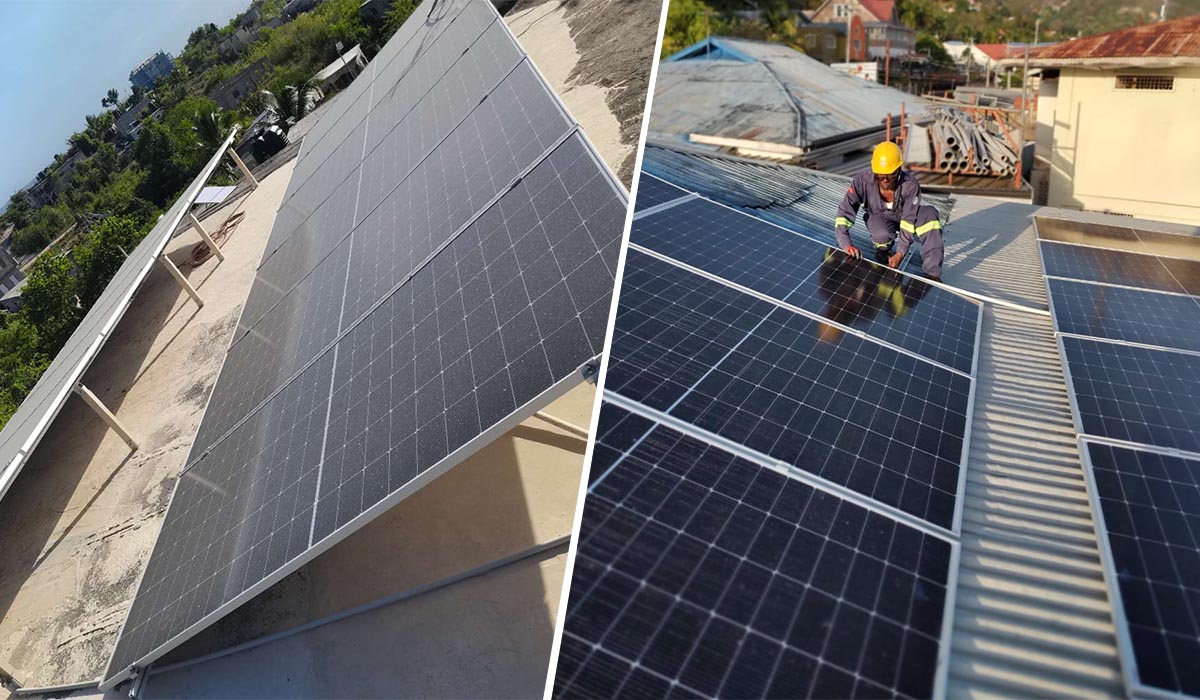
Ground mount vs. two-story and three-story rooftops
Estimated local installation costs
For a residential project using 24 large solar panels, the following ranges can help with early budgeting.
|
|
|
|
|
|
|
|
|
|
|
|
|
|
|
|
|
|
|
|
All figures are USD preliminary construction budget estimates, not fixed contractor quotations. Actual labor, civil works, lifting equipment, and site conditions determine the final installation price.
Why might a three-story rooftop installation cost more?
Installing large solar panels on a three-story building can involve additional equipment and labor.
Potential expenses include:
- Crane or material-lift rental.
- Additional labor for elevated panel handling.
- Scaffolding and fall-protection systems.
- Roof reinforcement or waterproofing.
- More complex electrical wiring routes.
- Restricted vehicle or equipment access.
On a flat, accessible site, ground mounting can sometimes cost less than a complicated rooftop installation.
However, ground mounting can become more expensive if substantial concrete foundations, land leveling, or long underground cable runs are required.
The correct choice depends on the actual property.
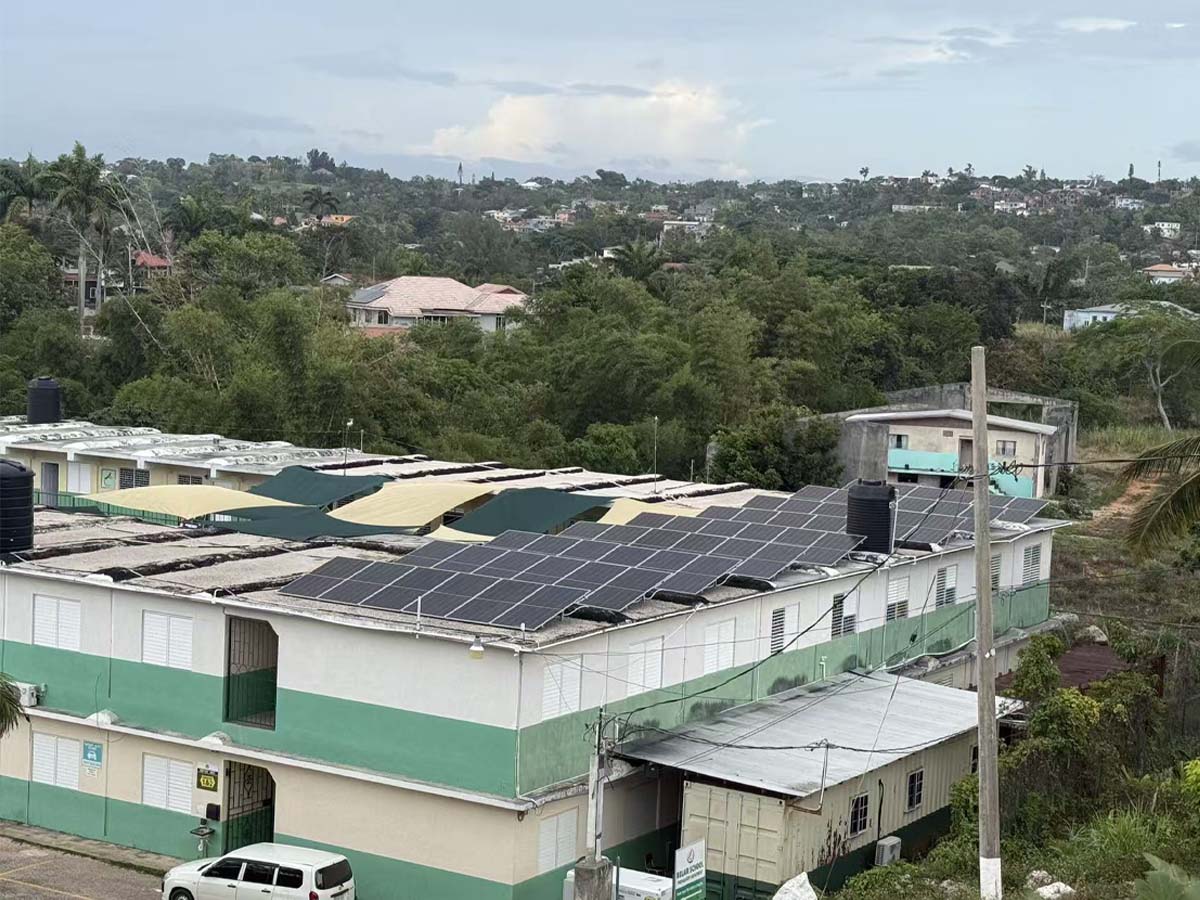
Free Customized Solar Mounting Structures from Sunchees
Every solar installation has different mounting requirements.
A ground-mounted array requires a different support arrangement from panels installed on a flat concrete roof or a sloped metal roof.
Sunchees provides mounting structures matched to the approved installation design at no additional charge.
After reviewing the project requirements, we select and supply the appropriate mounting components.
|
|
|
|
|
|
|
|
|
|
|
|
|
|
|
Customers do not need to purchase separate mounting hardware simply because they choose ground installation instead of rooftop installation.
The supplied mounting structures are included in the system equipment package.
This simplifies procurement and helps ensure that the selected brackets match the solar panel configuration.
Local foundation construction, land preparation, labor, and crane services may still involve additional costs.
Tell Sunchees your installation location and preferred installation method. We will match the appropriate mounting structure to your system at no extra charge.
How Much Does Ground-Mounted Solar Cost in Jamaica, Barbados, and Belize?
For international buyers, the final project cost includes more than equipment purchased from China.
Shipping distance, destination charges, site accessibility, local labor, and foundation requirements can affect the completed installation cost.
Estimated project budgets for the Caribbean
The following estimates use the Sunchees 14.4kWp solar array, 20kW inverter, and approximately 40.8kWh lithium battery reference configuration.
|
|
|
|
|
|
|
|
|
|
|
|
|
|
|
|
|
|
|
|
|
|
|
|
These are preliminary project-planning estimates, not guaranteed delivered-and-installed prices. Applicable import taxes, permits, unusual foundations, and additional civil works may increase the total.
Ground-mounted solar in Jamaica
Ground-mounted solar is suitable for Jamaican homes, farms, and other properties with sufficient clear land.
It can be especially attractive where rooftop installation would require expensive lifting equipment or structural adjustments.
Important design considerations include wind exposure, shading, electrical loads, and the distance between the solar panels and the inverter or battery location.
Ground-mounted solar in Barbados
For properties in Barbados, ground-mounted solar can provide accessible panel placement and easier routine maintenance.
System design should account for local wind exposure, coastal environmental conditions, and land availability.
The final project budget depends on the installation design and local construction requirements.
Ground-mounted solar in Belize
Ground mounting is an option for rural homes, farms, and properties in Belize where roof space is limited or independent power is needed.
For off-grid projects, correct battery sizing is particularly important because electricity must remain available during evenings and periods of reduced sunlight.
Site access, drainage, foundations, and the distance to the equipment area should be considered during planning.
Local installation in approximately five days
Sunchees works with local installation partners to support international solar projects.
For eligible projects with a prepared site and equipment available, onsite installation and commissioning can be completed in approximately five days.
Site surveys, permits, foundations, shipping, and customs clearance may take additional time.
To confirm installation arrangements, contact Sunchees with your exact location. We can review the project requirements and coordinate available installation support.
How Much Land Does a 20 kw ground mount solar system Need?
The land requirement depends on the solar panel configuration, mounting arrangement, tilt angle, row spacing, and maintenance access.
For a reference system using 24 panels rated at 600W, with approximate panel dimensions of 2,279 × 1,134mm, the total panel surface area is approximately 62m².
However, the complete ground installation requires additional space.
Estimated land requirements
|
|
|
|
|
|
|
|
|
|
|
|
|
|
|
For many residential projects with 24 panels, 120m² of relatively flat, unobstructed land is a useful initial planning allowance.
For example, a plot measuring 10m × 12m provides 120m².
The final area must be confirmed according to the panel dimensions, orientation, shading, mounting height, local setbacks, and required access.
How much space does a full 20kWp solar array require?
Using 600W modules, a 20.4kWp solar array would require 34 panels.
Compared with 24 panels, the module surface area increases from approximately 62m² to approximately 88m² if the modules have similar dimensions.
The complete installation footprint will be larger because ground-mounted panels need appropriate spacing and access.
Sunchees can customize the solar panel arrangement and mounting structure according to the available land.

What Can a 20 kilowatt solar system Power at Home?
A 20 kilowatt solar system can be suitable for a large family home with multiple air conditioners, refrigerators, water pumps, televisions, kitchen appliances, and lighting.
However, the correct system size depends on electricity consumption rather than bedrooms or household size alone.
Suitable household examples
|
|
|
|
|
|
|
|
|
|
|
|
|
|
|
|
|
|
|
|
These are indicative consumption scenarios. Actual demand depends on appliance efficiency, operating hours, and household habits.
Example electricity consumption for a four-bedroom family
|
|
|
|
|
|
|
|
|
|
|
|
|
|
|
|
|
|
|
|
|
|
|
|
|
|
|
|
|
|
|
|
|
|
|
|
|
|
|
|
|
|
|
|
|
|
|
|
|
|
|
A home with this usage profile may be suitable for the reference system, depending on local sunlight, nighttime battery demand, and system operating conditions.
Homes using electric water heaters, large electric cookers, dryers, swimming-pool pumps, or EV chargers may need a larger solar array or additional energy storage.
How Long Can a 20kw Off Grid Solar System Run at Night?
One of the key questions when purchasing 20kw off grid solar is how many hours the system can run without sunlight.
The answer depends primarily on usable battery energy and the average electrical load.
For illustration, a 40.8kWh nominal battery bank with 90% usable depth of discharge and 92% DC-to-AC conversion efficiency provides approximately:
40.8 × 0.90 × 0.92 = 33.8kWh usable AC energy
Example nighttime battery duration
|
|
|
|
|
|
|
|
|
|
|
|
|
|
|
|
|
|
|
|
|
These are example calculations using a fully charged battery and constant power consumption.
Actual battery runtime depends on the selected product, battery condition, discharge limits, operating temperature, and household demand.
Can the system run three air conditioners overnight?
Consider three efficient inverter air conditioners averaging 0.8kW each.
Over eight hours:
3 × 0.8kW × 8 hours = 19.2kWh
The rest of the household—such as refrigerators, lighting, and fans—will consume additional electricity.
A correctly designed system with suitable battery storage may support this type of nighttime use.
For larger homes or longer backup requirements, Sunchees can recommend increased lithium battery capacity.
How Much Electricity Can the Solar Panels Generate Per Day?
Daily solar production depends on solar panel capacity, local sunlight, system efficiency, temperature, shading, and weather.
A useful planning formula is:
Daily solar generation = Solar PV capacity × Peak sun hours × Performance ratio
For a 14.4kWp solar array:
|
|
|
|
|
|
|
|
|
|
|
|
|
|
|
|
|
|
|
|
These are estimates rather than guaranteed daily energy output.
Actual production varies with installation location and system design. Battery charging and discharge also involve energy losses.
For customers in Jamaica, Barbados, or Belize, a location-specific solar generation assessment can help determine how much solar panel capacity is needed to cover daily household electricity demand.
Why Choose Bifacial Double-Glass Solar Panels?
Bifacial solar panels can generate electricity from light received by both the front and rear sides of the module.
For ground-mounted installations, rear-side electricity generation can be useful because sunlight reflected from the ground may reach the back of the panels.
The additional generation depends on ground reflectivity, mounting height, row spacing, and site conditions.
Bifacial vs. monofacial solar panels
Free bifacial double-glass upgrade from Sunchees
Sunchees offers a free upgrade to bifacial double-glass solar panels for eligible solar system orders.
The available upgrade is designed to provide additional performance benefits, with a stated efficiency improvement of more than 1.5% for applicable module comparisons.
Actual annual energy yield depends on the selected panels and installation conditions.
Double-glass construction also provides a protective module design, while long-term hotspot resistance and reliability depend on manufacturing quality, module design, shading, and correct installation.
For ground-mounted installations with suitable rear-side light exposure, bifacial panels can be an attractive choice.
Can Solar Batteries and Inverters Be Moved After Installation?
The solar panels and ground-mounted support structure are installed in fixed positions.
However, Sunchees offers solar equipment configurations with wheeled, movable floor-standing cabinets.
These can contain batteries, inverter equipment, and related system components, depending on the selected model.
The wheeled arrangement can make equipment positioning and certain maintenance operations more convenient.
Electrical equipment should only be moved after safe disconnection and according to the manufacturer's instructions.
Are wall-mounted options available?
Yes. Customers who require wall-mounted equipment can request compatible wall-mounted models.
The movable floor-standing cabinet configuration is not designed to be attached directly to a wall.
What if the installation area is prone to flooding?
For properties exposed to flooding, electrical equipment should be positioned in an appropriately protected location.
An elevated equipment area or suitable wall-mounted product may help reduce exposure to floodwater.
However, heavy battery cabinets should not be installed on improvised elevated structures or mounted to walls that are not designed to support their weight.
Customers should inform Sunchees about flood risks during project planning so the equipment arrangement can be selected accordingly.
Why Choose Sunchees for a Complete Solar System?
Sunchees is a solar equipment manufacturer based in Foshan, Guangdong, China, established in 2008.
We supply off-grid and hybrid solar energy solutions for residential, agricultural, commercial, and remote power applications.
Our approach combines complete equipment packages, customizable system configurations, manufacturing support, and assistance with installation planning.
Integrated inverter and lithium battery development
Sunchees develops inverter and lithium battery products for use in complete solar energy systems.
By coordinating major system components, we help customers simplify equipment selection and obtain technical support through one manufacturer.
Each system is configured according to the customer's electrical requirements and intended operating conditions.
Customized solar systems and OEM services
Sunchees supports customization for:
- Residential off-grid solar systems.
- Hybrid solar power systems.
- Commercial and agricultural solar installations.
- Lithium battery storage configurations.
- Solar panel brands and module types.
- Solar-powered air-conditioning solutions.
- Large-capacity projects, including configurations from 30kW to 1MW.
Customers can request equipment configurations based on their electricity consumption, available installation area, backup requirements, and preferred voltage.
Free mounting brackets for different installation methods
One of the advantages of purchasing a complete Sunchees system is that the appropriate mounting structure is included at no additional charge.
After the installation design is reviewed, Sunchees supplies suitable brackets for ground-mounted, flat-roof, or sloped-roof projects.
Customers do not need to purchase separate standard mounting kits for different supported installation arrangements.
Local foundations, cranes, and installation labor are handled separately according to the project requirements.
Manufacturing and delivery services
|
|
|
|
|
|
|
|
|
|
|
|
|
|
|
|
|
|
|
|
|
|
|
|
|
|
|
|
|
|
|
|
|
|
|
|
Delivery and production schedules are confirmed according to order quantity, configuration, and contractual terms.
Warranty and after-sales support
Sunchees provides product-specific warranty arrangements for solar panels, lithium batteries, inverters, controllers, and related equipment.
For exact warranty coverage and technical specifications, please refer to the relevant product page and purchase agreement.
We also provide customer support for equipment selection, installation preparation, and after-sales requirements.
Follow Sunchees online
You can find our product updates, manufacturing activities, and solar project information on:
What Information Should You Provide for a Solar System Quotation?
To receive an accurate quotation, share the basic details of your property and electricity requirements.
|
|
|
|
|
|
|
|
|
|
|
|
|
|
|
|
|
|
|
|
|
|
|
|
|
|
|
|
|
|
|
|
|
Photos of the proposed installation area can help with system planning.
If your site has flooding risks, difficult access, significant shading, or unusual land conditions, include this information when contacting us.
Our team can help select the suitable solar equipment configuration and matching mounting structure.
Frequently Asked Questions
1. How much does a 20 kw ground mount solar system cost?
A 20 kw ground mount solar system with a substantial lithium battery bank may require a project budget of approximately 17,000–27,000 in the selected Caribbean direct-import-and-installation examples discussed above. The exact price depends on PV capacity, battery storage, shipping, foundations, local labor, and applicable charges. Sunchees includes mounting brackets matched to the approved installation plan at no additional charge.
2. What is the ground mount solar cost per watt for a complete system?
For the Sunchees reference package with 14.4kWp of panels and approximately 40.8kWh of battery storage, the example FOB equipment price is approximately $0.78/Wdc. Preliminary installed-project estimates in Jamaica, Barbados, and Belize are approximately 1.18–1.86/Wdc. These calculations include battery equipment and should not be directly compared with PV-only prices.
3. Why does 20kw solar system cost vary between suppliers?
Different systems can have different amounts of solar panel capacity, inverter power, and lithium battery storage. Shipping, equipment quality, mounting structures, local installation requirements, and warranty coverage also affect the price. Compare the complete specification and installation scope rather than the inverter rating alone.
4. Are mounting brackets free with a 20 kw ground mount solar system?
Yes. Sunchees provides mounting structures suitable for the approved installation plan at no additional charge. Ground-mounted, flat-roof, and sloped-roof projects can receive the corresponding mounting components as part of the system package. Local foundation work, crane rental, and installation labor may be charged separately.
5. How much land does a 20 kw ground mount solar system require?
For a 24-panel configuration using 600W solar panels, approximately 100–120m² of unobstructed land is a useful preliminary planning target. The exact area depends on panel spacing, tilt, site conditions, and maintenance access. A larger PV array may require additional land.
6. Can a 20 kilowatt solar system power a four-bedroom home?
A 20 kilowatt solar system can be suitable for a four-bedroom home with two or three inverter air conditioners, refrigerators, lighting, water pumps, and common household appliances. Daily electricity consumption and nighttime battery requirements should be checked before selecting the final configuration.
7. Can 20kw off grid solar run three air conditioners overnight?
A properly configured 20kw off grid solar system may support three inverter air conditioners overnight if battery capacity and appliance demand are compatible. For example, three units averaging 0.8kW each consume approximately 19.2kWh over eight hours. Other household loads must also be included.
8. Is ground mounting cheaper than rooftop installation on a three-story house?
It can be. Rooftop installation on a three-story building may require cranes, lifting equipment, scaffolding, and additional labor. Ground mounting avoids many high-altitude activities but requires independent foundations. Sunchees includes suitable mounting structures for either installation method at no additional equipment charge.
9. Does Sunchees provide free bifacial solar panel upgrades?
Sunchees offers a free upgrade to bifacial double-glass solar panels for eligible system configurations. Bifacial panels can generate additional electricity from reflected sunlight reaching the rear of the modules. Actual energy benefits depend on the selected product and installation conditions.
10. Can the battery and inverter be moved or installed above ground?
Sunchees offers movable floor-standing equipment configurations with wheels. For customers who require wall-mounted or elevated equipment, suitable alternatives can be discussed. Heavy floor-standing cabinets should not be directly attached to walls or placed on unsupported elevated platforms.
11. How long does local installation take?
For eligible, prepared projects, Sunchees' local installation partners can complete onsite installation and commissioning in approximately five days. Shipping, customs clearance, permits, foundations, and other preparation may require additional time. Share your exact location to confirm available installation support.
12. Can Sunchees customize a 20kw off grid solar system?
Yes. Sunchees supports custom solar panel quantities, lithium battery storage, inverter configurations, OEM requirements, and appropriate mounting structures. We can prepare a configuration based on the property's daily electricity consumption, available land, required voltage, and desired battery backup time.
Get a Customized 20 kw ground mount solar system Quote from Sunchees
A ground-mounted solar system can be an effective solution for homeowners, farms, and businesses that need reliable electricity and have sufficient outdoor installation space.
The right configuration depends on more than the 20kW inverter rating. Solar generation capacity, lithium battery storage, installation area, and overall project cost should all be considered.
With Sunchees, customers can benefit from:
- Complete off-grid and hybrid solar system configurations.
- Inverter and lithium battery development from the same manufacturer.
- Customized mounting structures included at no additional charge.
- Free bifacial double-glass solar panel upgrades for eligible systems.
- Flexible system configurations and OEM support.
- Remote technical installation guidance.
- Local installation partner coordination.
- Installation and commissioning in approximately five days for eligible, prepared projects.
Request your customized Sunchees quotation today.
Tell us your country, exact installation location, available land area, monthly electricity consumption, and desired battery backup duration.
Our team can recommend the appropriate solar system configuration, provide matching mounting structures, and help confirm shipping and installation arrangements for your project.
 Choosing a Standalone Solar System in the Caribbean: Workshops, Homes and Businesses
 You May Also Like



 Tel
Tel
 Email
Email
 Address
6th Floor, Zhonghe Zinan Industrial Park, No. 1 Zinan Changang West Road, Nanzhuang Town, Chancheng District, Foshan City, Guangdong Province. China (Mainland)